Lonicera morrowii A. Gray
Morrow’s honeysuckle
Morrow’s honeysuckle is native to Japan, Korea, and northeastern China. Brought to North America in 1852 by Dr. James Morrow as an ornamental, is escaped gardens and has become an invasive species in New England.
Plants: Deciduous shrubs are 6½–8′ (2–2.5 m) in size. Stems are hollow.
Leaves: Opposite, simple, narrowly ovate to oblong-elliptic. They are ⅞–1¾″ (2.5–5 cm) long, have blunt or pointed tips, with hairy undersides.
Flowers: Yellow, white, or sometimes pink flowers occur along leaf axils, in pairs. Each flower is ¾–1″ (1.9–2.5 cm) long, with a thin tube and two lips. The upper lip has four erect lobes, and the lower lip bends downward. Surfaces are hairy, especially the tube. There are five yellow-tipped stamens, and a white style, with a green, dome-shaped stigma.
Fruits: Bright red or orange berries are ¼–5/16″ (7–8 mm) in diameter.
Habitats: Anthropogenic (man-made or disturbed habitats), floodplains, forests, or wetland margins.
Edibility: Berries are poisonous  to humans. Birds enjoy them,
however. Unfortunately, the birds spread the seeds, and they do not even provide nutrition for the birds.
to humans. Birds enjoy them,
however. Unfortunately, the birds spread the seeds, and they do not even provide nutrition for the birds.
Online References:
Lonicera insularis Nakai

7/26/2025 · River Point Conservation Area, Falmouth, Maine · ≈ 12 × 8″ (30 × 20 cm) 
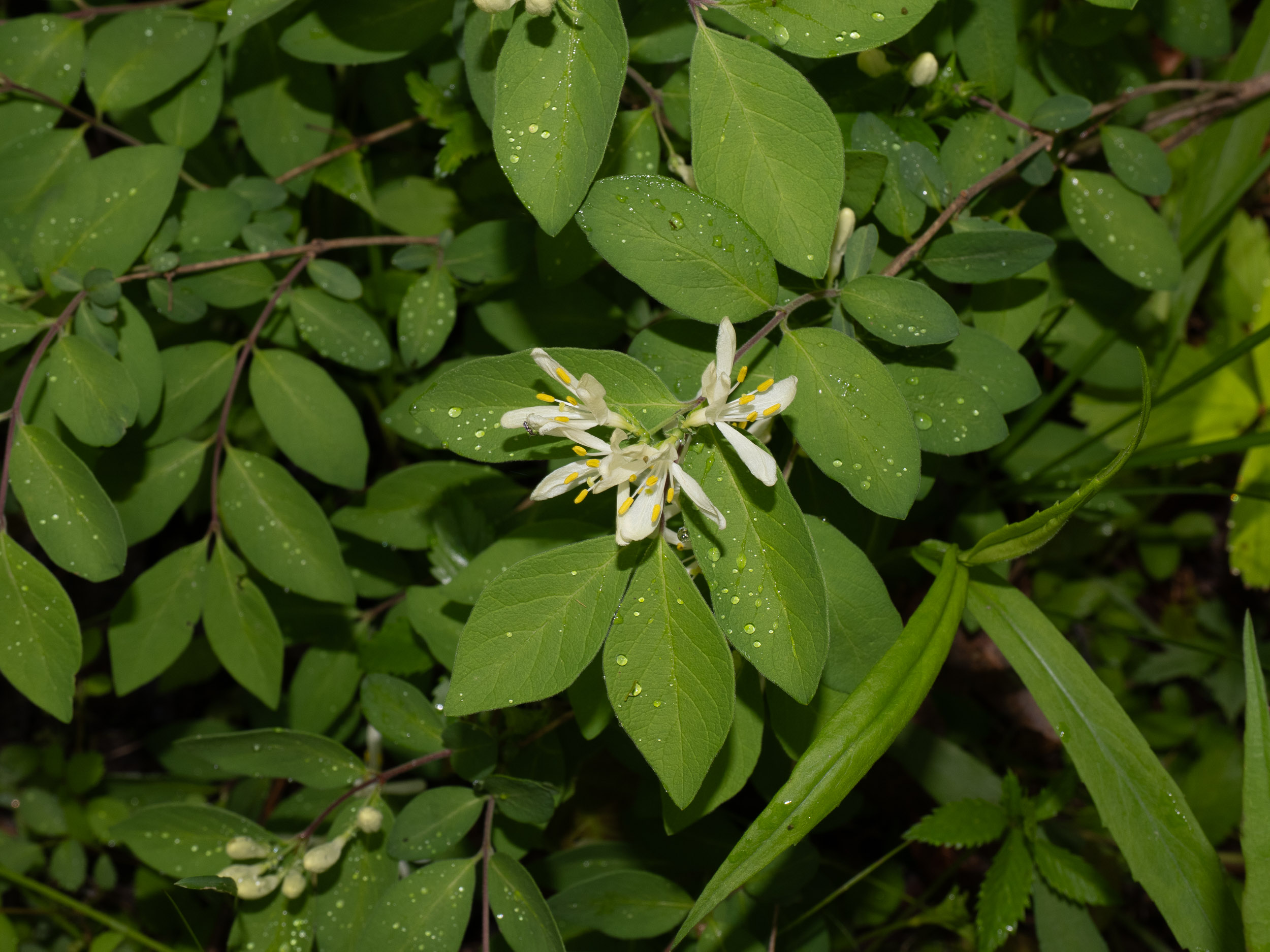
5/25/2023 · Maquoit Bay Conservation Land, Brunswick, Maine 
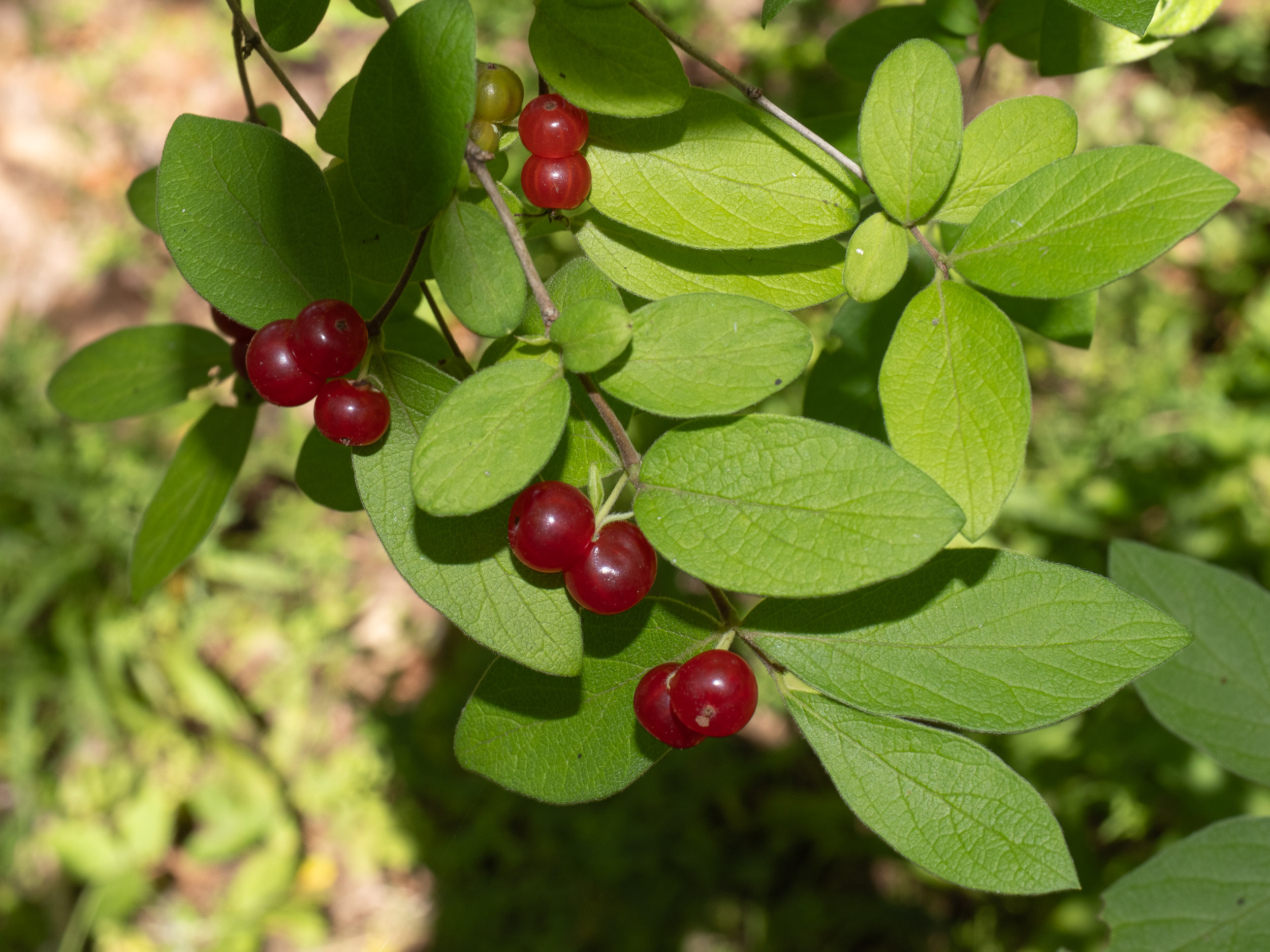
7/20/2023 · Curtis Farm Preserve, Harpswell, Maine 

7/20/2023 · Curtis Farm Preserve, Harpswell, Maine 

5/25/2023 · Maquoit Bay Conservation Land, Brunswick, Maine 
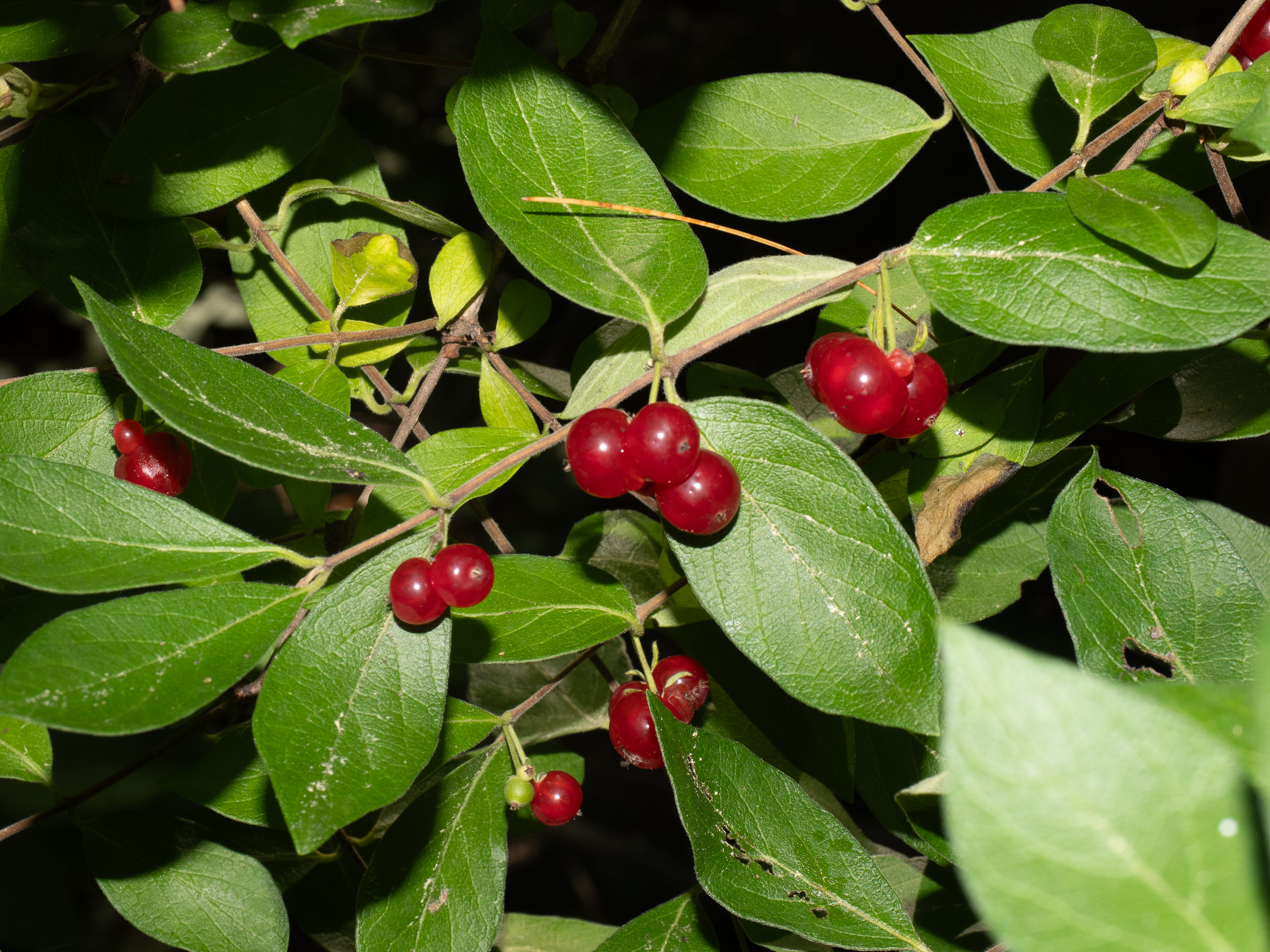
7/24/2023 · Tarbox Preserve, Topsham, Maine 
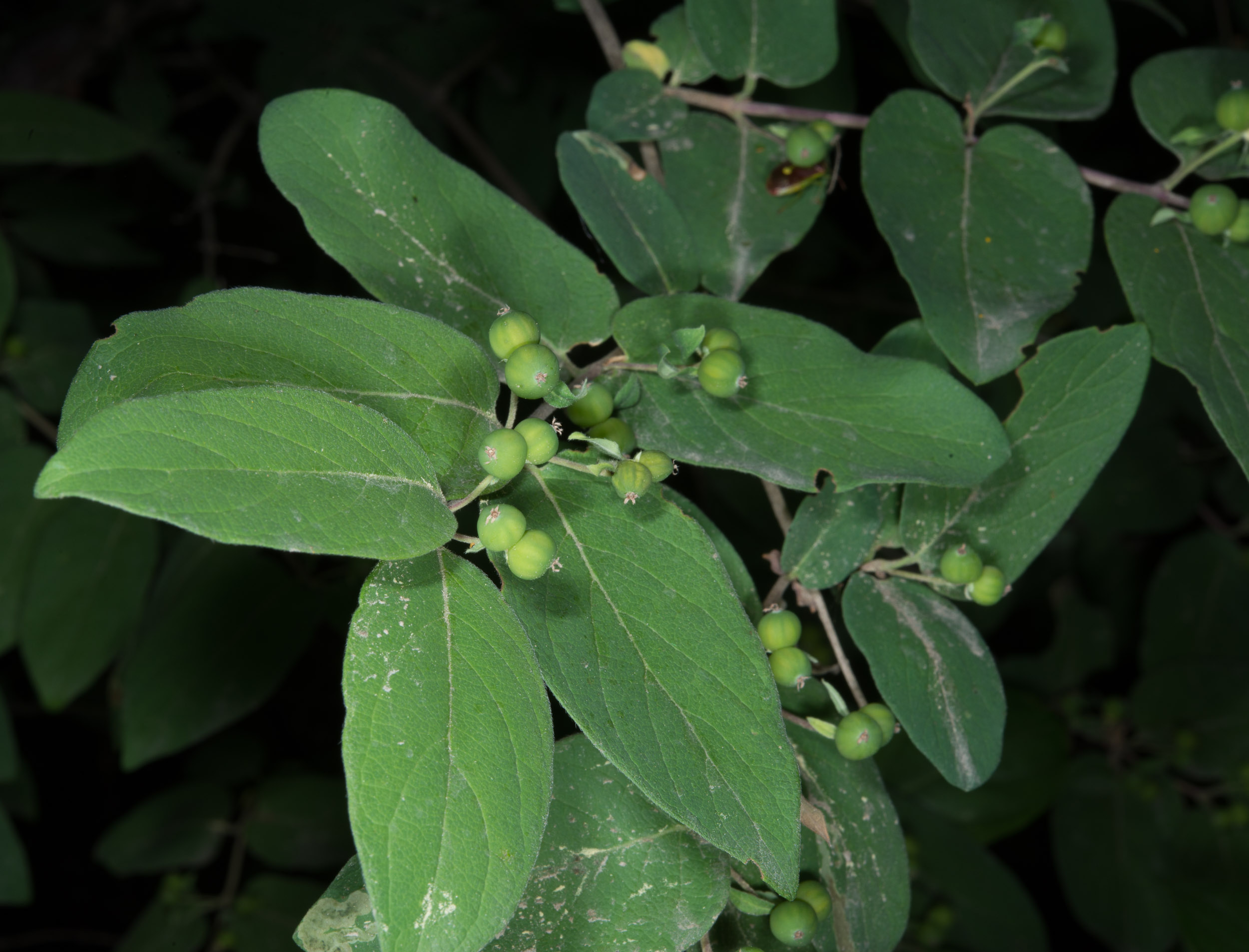
6/18/2015 · Beaver Brook Conservation Area, Hollis, New Hampshire · ≈ 7 × 5″ (17 × 13 cm) 
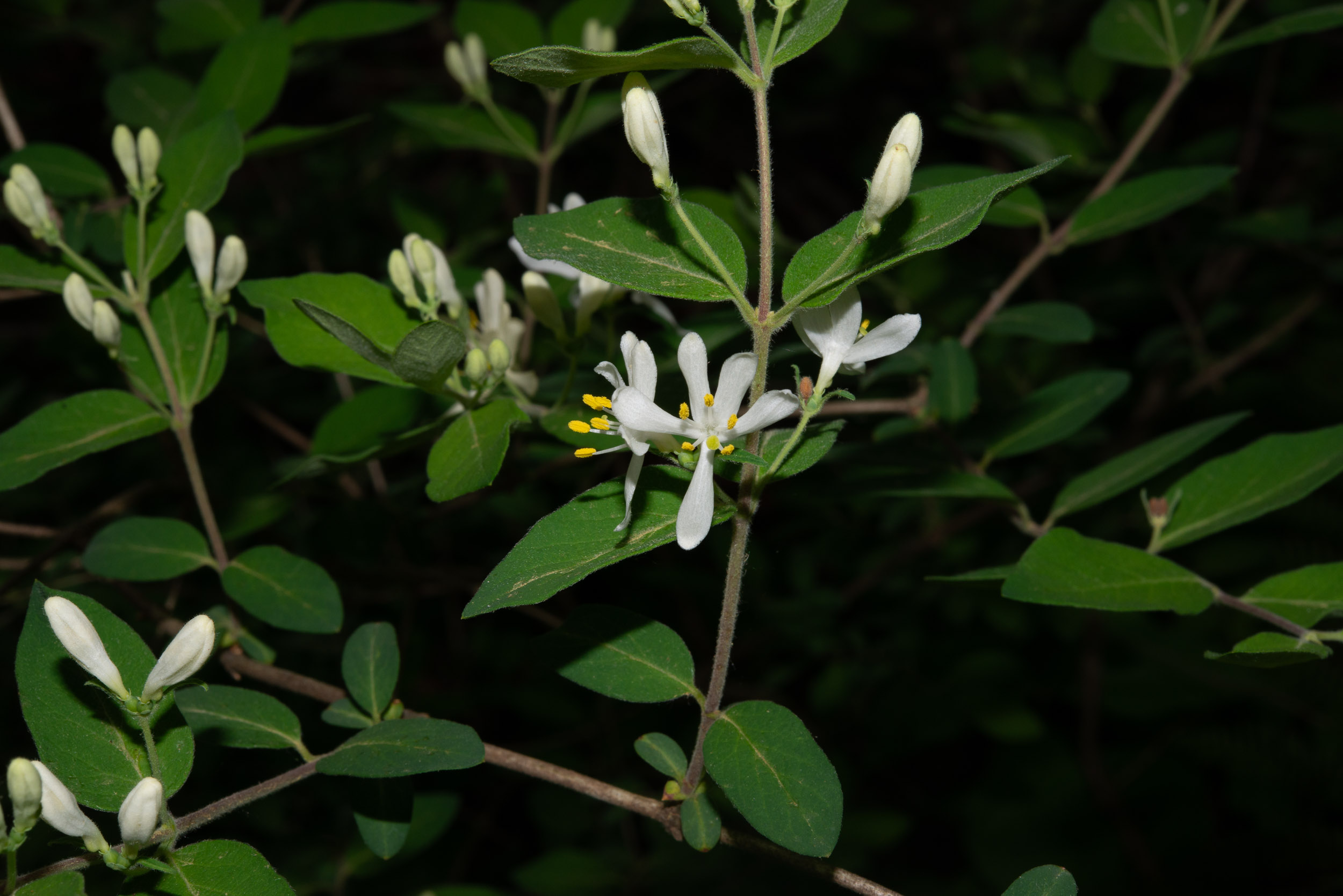
5/21/2013 · Beaver Brook Conservation Area, Hollis, New Hampshire · ≈ 8 × 5″ (19 × 13 cm) 

5/1/2023 · Tom and Susan's, Highland Green, Topsham, Maine 
| Kingdom | Plantae | Plants, but not fungi, lichens, or algae (from Stearn's Botanical Latin) |
| Subkingdom | Tracheobionta | Vascular plants—plants with a “circulatory system” for delivering water and nutrients |
| Division | Magnoliophyta | Flowering plants, also known as angiosperms |
| Class | Magnoliopsida | Dicotyledons—plants with two initial seed leaves |
| Subclass | Asteridae | A large class that encompasses asters |
| Order | Dipsacales | Includes viburnum, honeysuckle, snowberry, beautybush, twinflower, many others |
| Family | Caprifoliaceae | Honeysuckle family |
| Genus | Lonicera | Either Latin for honeysuckle, though this is not a “true” honeysuckle; or named for Adam Lonitzer (1528-1586), a German herbalist, physician and botanist who wrote a standard herbal text that was reprinted many times between 1557 and 1783 |
| Species | morrowii | For Dr. James Morrow (1877-1980), horticulturist and superintendent of the United States Plant Introduction Gardens at Chico, California |
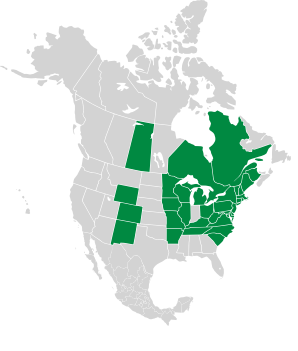
Lonicera morrowii description by Thomas H. Kent, not updated.

© FloraFinder.org. All rights reserved.