Lotus corniculatus L.
Bird’s foot trefoil
Bird’s foot trefoil is native to the temperate grassland regions of North Africa and Eurasia. They are naturalized in North America, now widespread, and invasive in some areas. The name stems from the fruits, which resemble a bird’s foot.
Plants: 6–24″ (15–60 cm) tall. Like other members of the pea family, these plants trap atmospheric nitrogen, making their own fertilizer, allowing them to colonize soils that other plants cannot.
Leaves: Pointed ovals in shape, leaves occur in groups of five per petiole. A group of three at the end emerge from the same point, and are ½ ⨉ ⅛″ (1.3 cm ⨉ 3.2 mm). The remaining two are lower, smaller, and opposite to each other.
Flowers: Attractive, bright yellow flowers appear in clusters of two to eight. Flowers become more orange in color over time. Each flower is bilaterally symmetrical, composed of 3 upper and 2 lower lobes, about ½″ (1.3 cm) around. Thin red lines are visible on the upper lobe at close quarters.
Fruits: Shaped like beans, about 1 ⨉ ⅛″ (2.5 cm ⨉ 3.2 mm), in small groups. The fruits’ long straight shape and emergence from a central point resemble a bird’s foot. Fruits are green, maturing to dark red.
Habitats: Old fields, grassy places, and roadsides.
In ultraviolet light, bird’s foot trefoil beckons bees (who, unlike us, can see ultraviolet) very differently—bright red, with blue edges! The photo is by Bjørn Rørslett, who has photographed many flowers in UV light.
Online References:
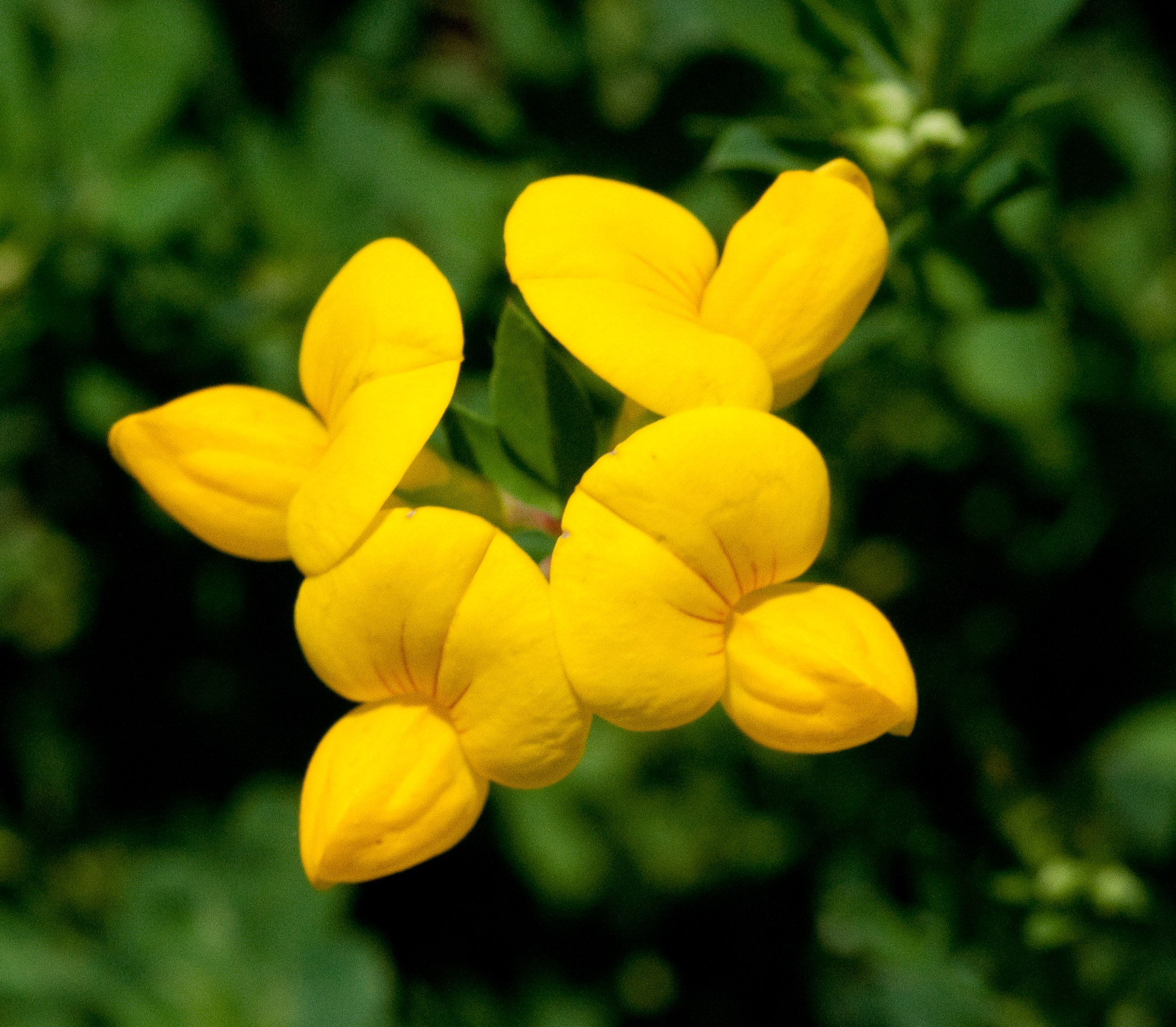
6/5/2010 · Nashua River Rail Trail, Groton Center, Groton, Massachusetts · ≈ 2½ × 2″ (6.1 × 5.3 cm) 

8/7/2013 · Amos Kendall Conservation Land, Dunstable, Massachusetts · ≈ 9 × 6″ (22 × 15 cm) 
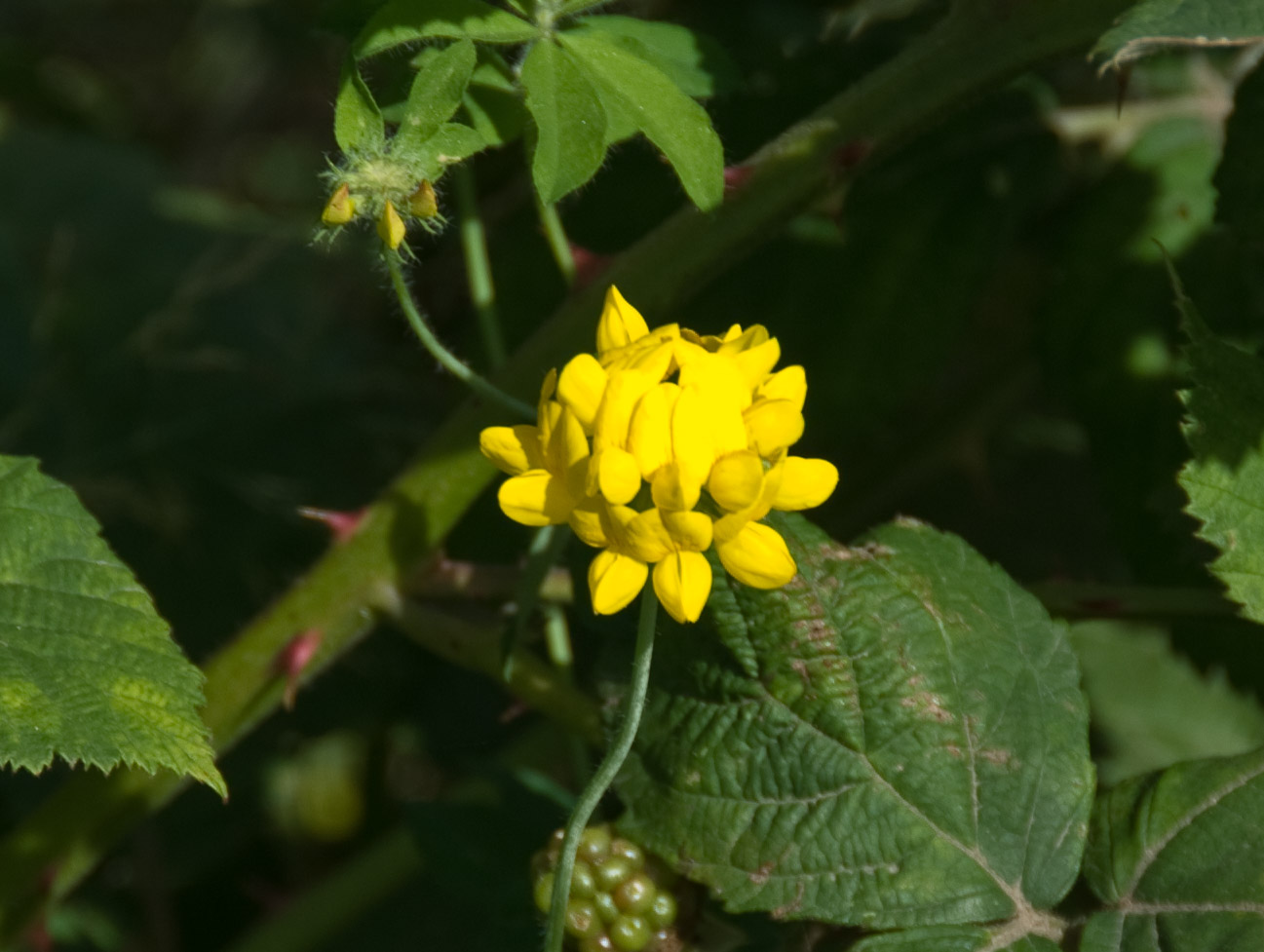
8/26/2007 · Oregon  ID is uncertain

9/3/2020 · Mitchell Field, Harpswell, Maine · ≈ 4½ × 3″ (11 × 7.5 cm) 

6/27/2012 · Townsend Wildlife Management Area, Townsend, Massachusetts · ≈ 4 × 3½″ (11 × 9.2 cm) 

6/5/2010 · Nashua River Rail Trail, Groton Center, Groton, Massachusetts · ≈ 1 × ⅞″ (2.7 × 2.5 cm) 

6/22/2023 · Florida Lake Park, Freeport, Maine 

6/27/2016 · Nashua River Rail Trail, near Na, Ayer, Massachusetts 
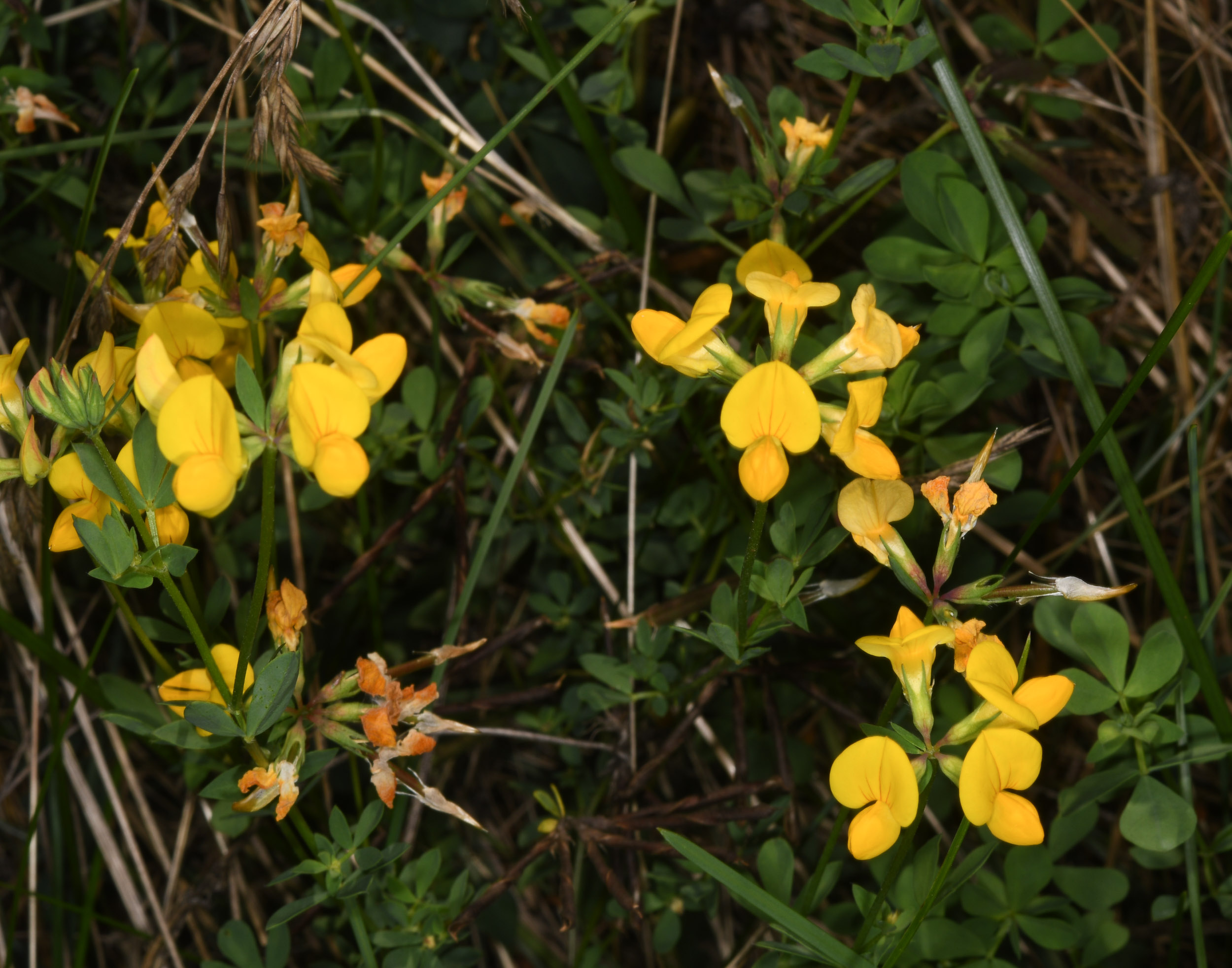
8/27/2016 · Williams Barn and Sørhaug Woods, Groton, Massachusetts 

9/3/2020 · Mitchell Field, Harpswell, Maine · ≈ 4½ × 7″ (12 × 18 cm) 
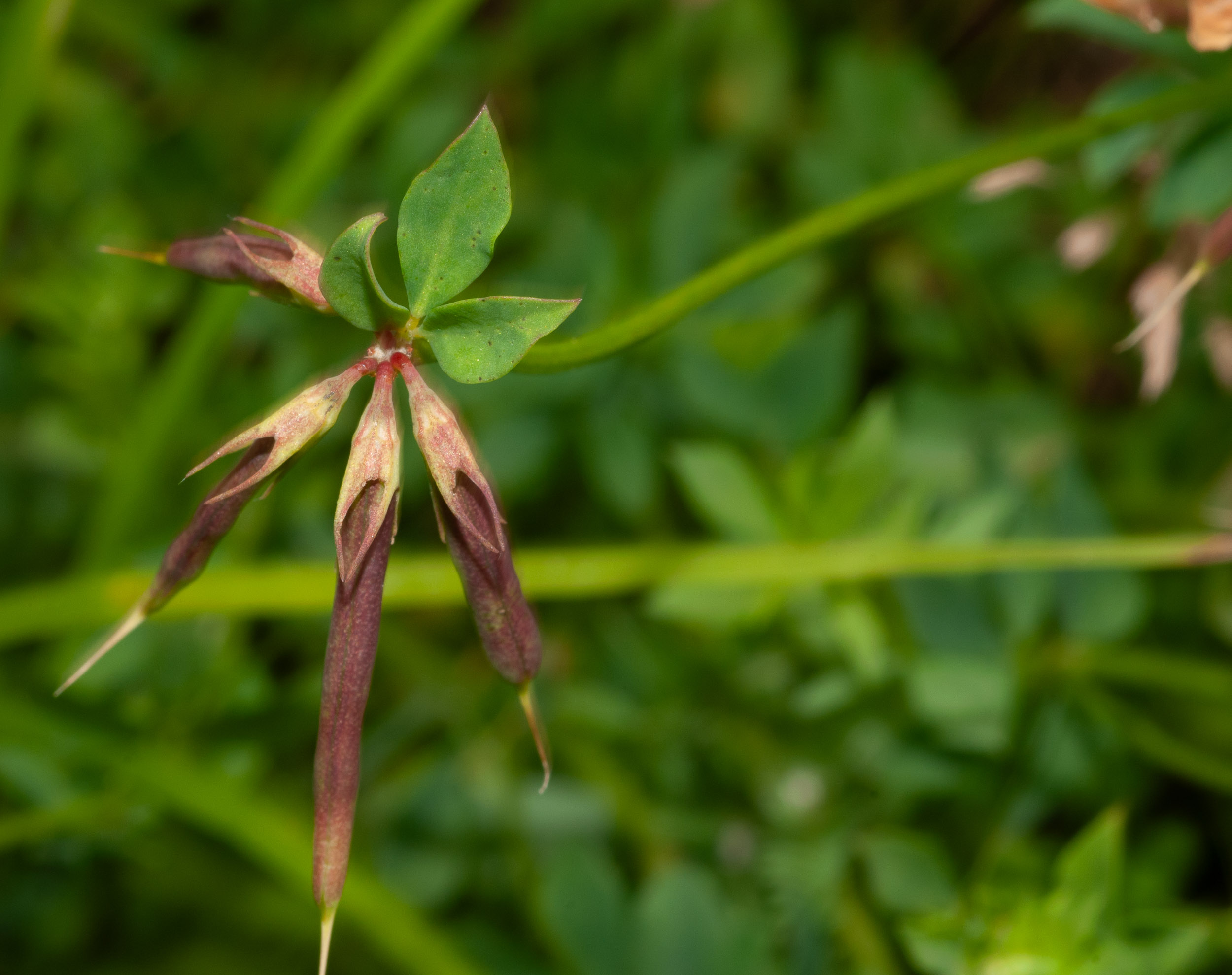
6/27/2012 · Townsend Wildlife Management Area, Townsend, Massachusetts · ≈ 4 × 3″ (9.9 × 7.9 cm) 

8/4/2006 · Mt. Mansfield, Stowe, Vermont ID is uncertain 

8/25/2007 · Oswald West State Park, Oregon ID is uncertain 

8/27/2016 · Williams Barn and Sørhaug Woods, Groton, Massachusetts 

Flowers redden as they age. · 6/27/2016 · Nashua River Rail Trail, near Na, Ayer, Massachusetts 

9/3/2020 · Mitchell Field, Harpswell, Maine · ≈ 6 × 4″ (16 × 11 cm) 

The closed buds are red. · 6/8/2012 · Townsend Wildlife Management Area, Townsend, Massachusetts · ≈ 3½ × 5″ (9.6 × 13 cm) 

6/8/2012 · Townsend Wildlife Management Area, Townsend, Massachusetts · ≈ 4½ × 3″ (11 × 7.9 cm) 
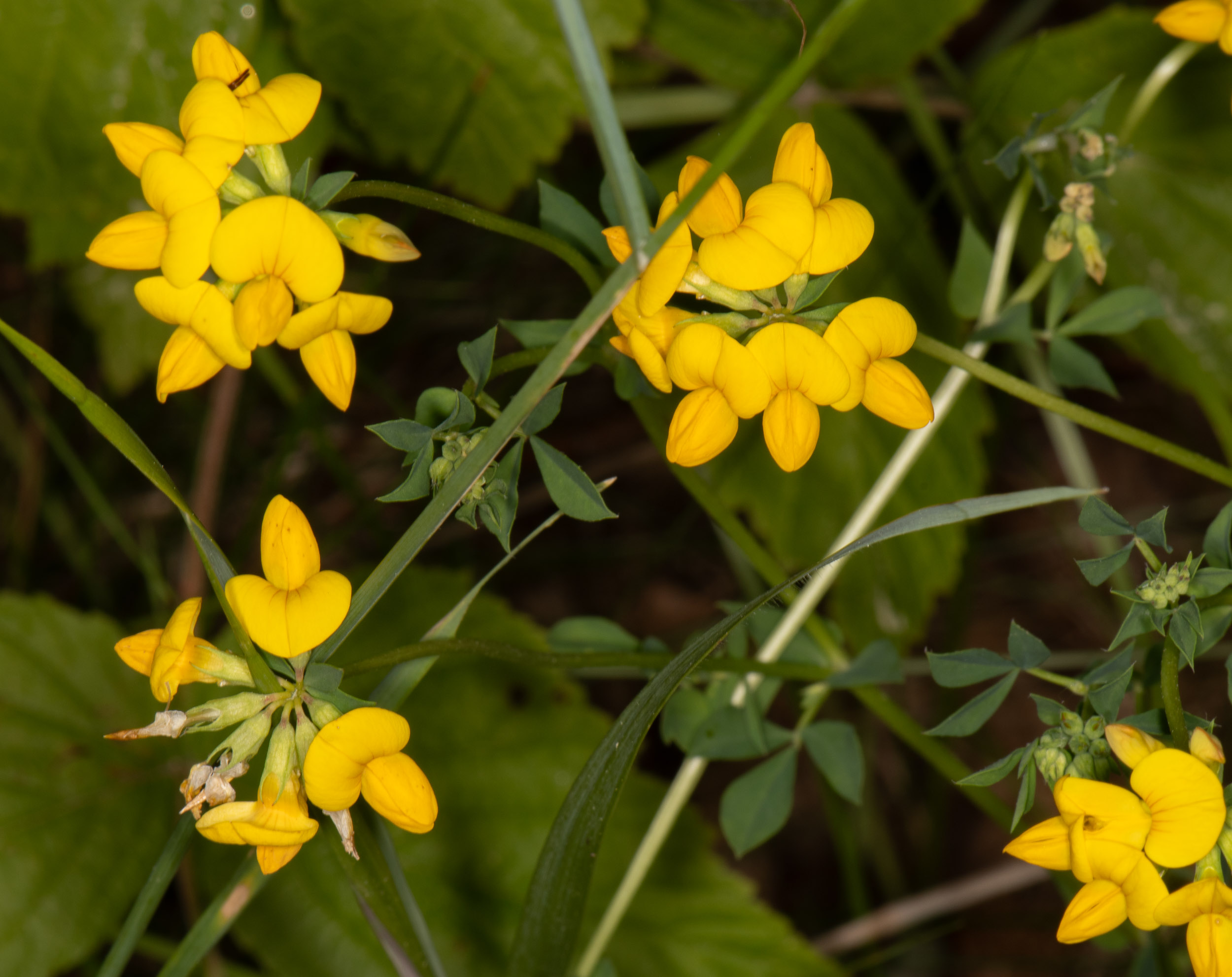
6/19/2021 · Long Reach Preserve, Harpswell, Maine · ≈ 5 × 4″ (13 × 10 cm) 

6/5/2010 · Nashua River Rail Trail, Groton Center, Groton, Massachusetts · ≈ 5 × 4½″ (13 × 11 cm) 

8/27/2016 · Williams Barn and Sørhaug Woods, Groton, Massachusetts 

5/30/2015 · Townsend Wildlife Area · ≈ 5 × 8″ (13 × 19 cm) 

6/27/2016 · Nashua River Rail Trail, near Na, Ayer, Massachusetts 
| Kingdom | Plantae | Plants, but not fungi, lichens, or algae (from Stearn's Botanical Latin) |
| Subkingdom | Tracheobionta | Vascular plants—plants with a “circulatory system” for delivering water and nutrients |
| Division | Magnoliophyta | Flowering plants, also known as angiosperms |
| Class | Magnoliopsida | Dicotyledons—plants with two initial seed leaves |
| Subclass | Rosidae | Roses, legumes, proteas, dogwoods, hydrangeas, mistletoes, euphorbias, grapes, many more |
| Order | Fabales | Legumes (pea and bean families) |
| Family | Fabaceae | Legume family (peas and beans) |
| Genus | Lotus | Includes trefoils and deervetches, but not (ironically) lotus flowers (Lotus, from Greek, meant a fruit that made people forget their homes) |
| Species | corniculatus | Means “horned” |

Lotus corniculatus description by Thomas H. Kent, not updated.

© FloraFinder.org. All rights reserved.