Lotus maculata ‘Gold Flash’
Lotus maculatus is native to the Canary Islands. This species isn’t related to lotuses, which are members of genus Nelumbo. It is not found in the wild in North America.
Plants: Perennials, mostly prostrate, 8–12″ (20–30 cm) tall and 1–1½′ (30–45 cm) around.
Leaves: Needle-like, and silvery gray. They look a little like dewy moss.
Flowers: Claw-shaped, often said to resemble a parrot’s beak, orange-yellow, with red tips, 1–2″ (2.5–5 cm) around, and often very dense. They occur in moist woods, thickets, and along stream banks.
Fruits: ?
Habitats: Wild plants come from a small area on the north side of the island of Tenerife, and are on the verge of extinction.
Online References:
Paghat's Garden (Lotus sp.)

8/1/2009 · Coastal Maine Botanical Gardens, Boothbay, Maine · ≈ 2 × 1½′ (68 × 45 cm) 
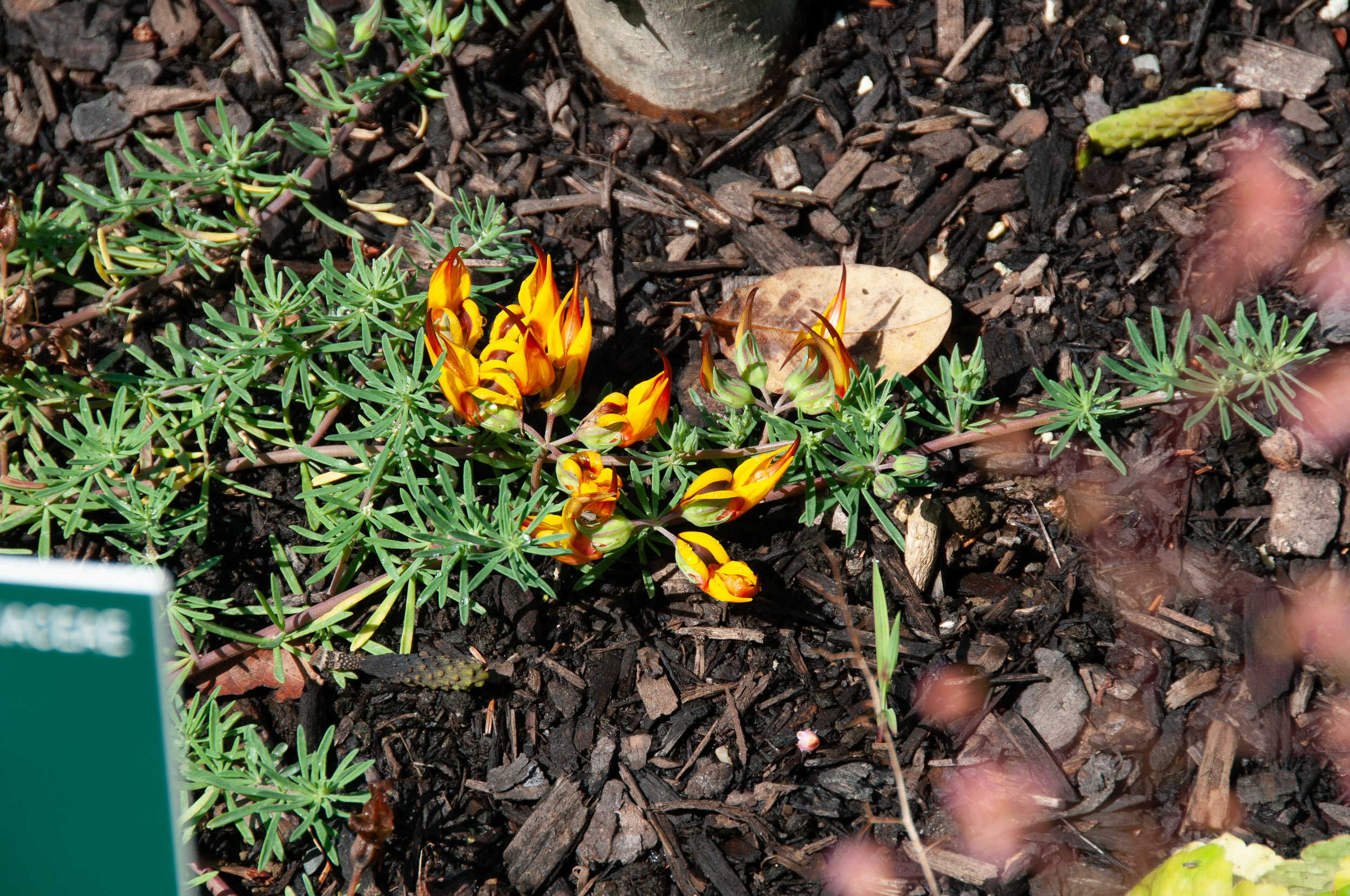
8/1/2009 · Coastal Maine Botanical Gardens, Boothbay, Maine · ≈ 8 × 5″ (19 × 13 cm) 
| Kingdom | Plantae | Plants, but not fungi, lichens, or algae (from Stearn's Botanical Latin) |
| Subkingdom | Tracheobionta | Vascular plants—plants with a “circulatory system” for delivering water and nutrients |
| Division | Magnoliophyta | Flowering plants, also known as angiosperms |
| Class | Magnoliopsida | Dicotyledons—plants with two initial seed leaves |
| Subclass | Rosidae | Roses, legumes, proteas, dogwoods, hydrangeas, mistletoes, euphorbias, grapes, many more |
| Order | Fabales | Legumes (pea and bean families) |
| Family | Fabaceae | Legume family (peas and beans) |
| Genus | Lotus | Includes trefoils and deervetches, but not (ironically) lotus flowers (Lotus, from Greek, meant a fruit that made people forget their homes) |
| Species | maculata | Spotted, referring to purple splotches on the stems of leaves or on petals |

Lotus maculata ‘Gold Flash’ description by Thomas H. Kent, not updated.

© FloraFinder.org. All rights reserved.