Lysimachia nummularia L.
Moneywort, creeping jenny
Creeping Jenny is a European native, introduced later to North America, where it has become naturalized. In some habitats it is considered an invasive species.
Plants: Plants are evergreens that remain at ground level, less than 1¾″ (5 cm) in height, spreading quickly into mats as their stems root.
Leaves: Opposite, rounded, and a bit ruffled, up to ¾″ (1.9 cm) in diameter. The leaves are coinlike, hence the species name, nummularia, meaning “resembling a coin.”
Flowers: Yellow cup-shaped flowers are ¾″ (2 cm) in diameter. Flowers appear in early summer.
Fruits: Seed capsules contain 1-5 seeds.
Habitats: Moist areas such as wet meadows, seeps, swamps, banks of streams and ponds, roadsides, and ditches.
Online References:
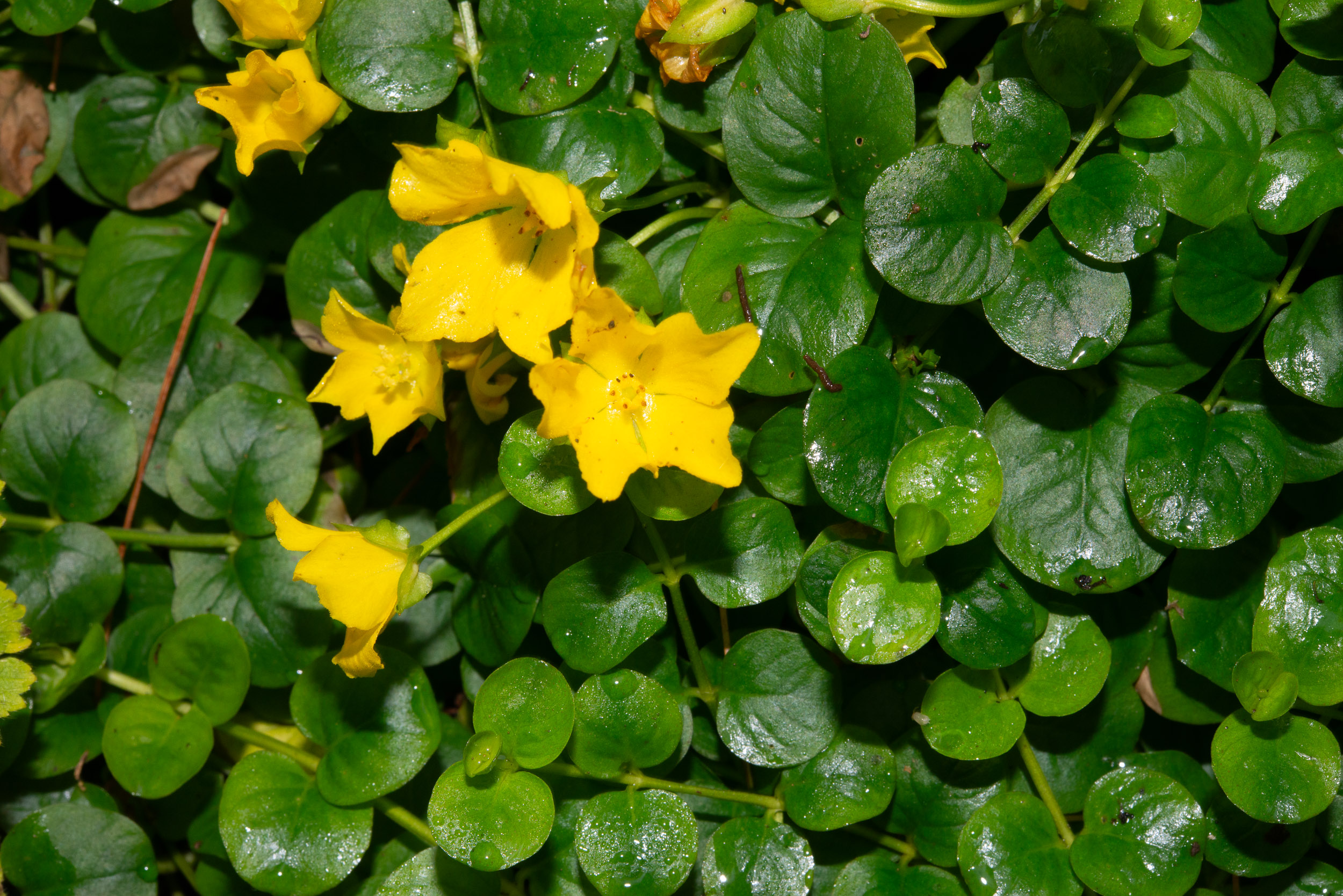
7/13/2015 · Moss Glen Falls, Granville, Vermont · ≈ 7 × 4½″ (18 × 12 cm) 

6/26/2026 · Damariscotta, Maine 

7/13/2015 · Moss Glen Falls, Granville, Vermont · ≈ 8 × 5″ (19 × 13 cm) 
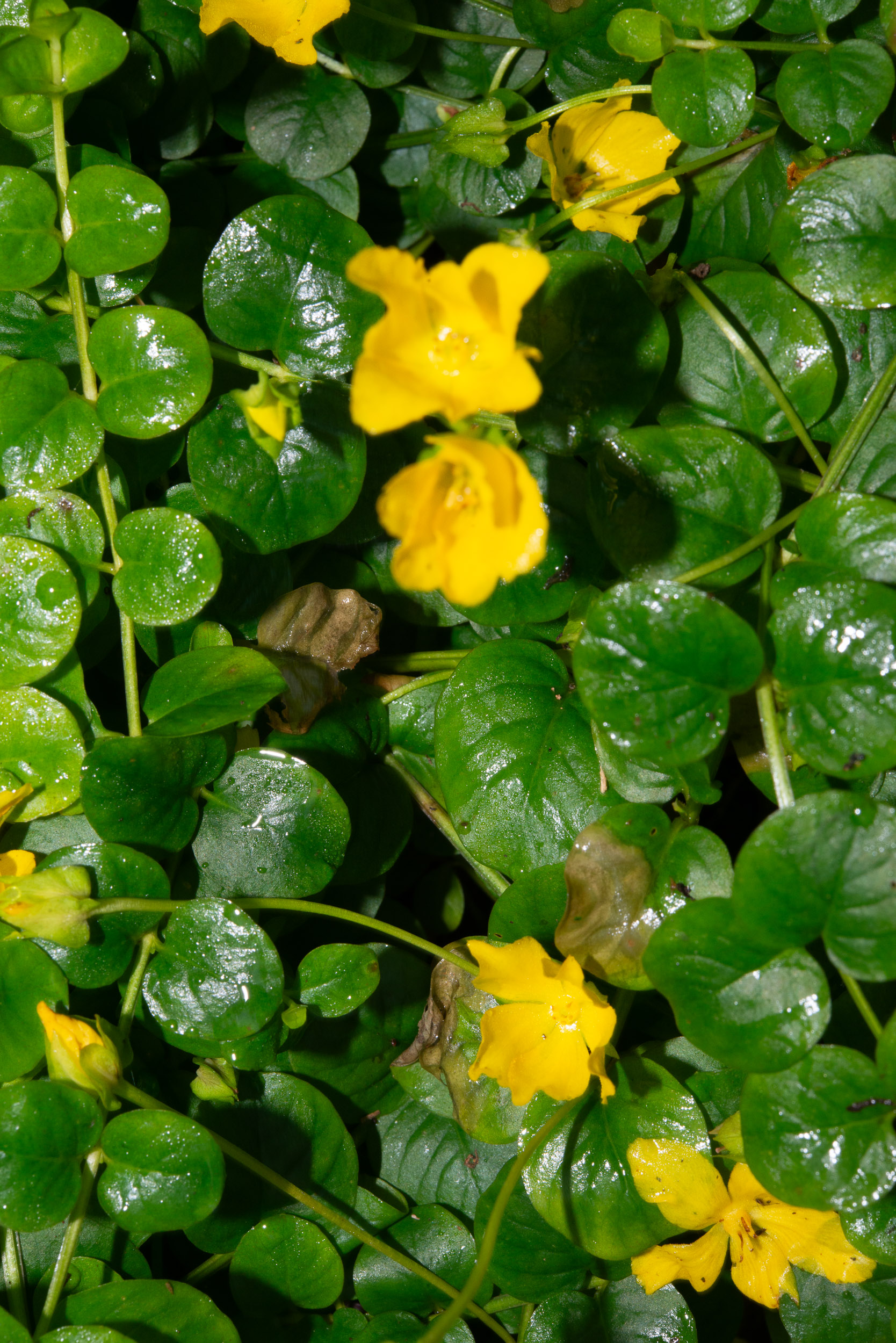
7/13/2015 · Moss Glen Falls, Granville, Vermont · ≈ 5 × 8″ (12 × 19 cm) 

6/26/2026 · Damariscotta, Maine 
| Kingdom | Plantae | Plants, but not fungi, lichens, or algae (from Stearn's Botanical Latin) |
| Subkingdom | Tracheobionta | Vascular plants—plants with a “circulatory system” for delivering water and nutrients |
| Division | Magnoliophyta | Flowering plants, also known as angiosperms |
| Class | Magnoliopsida | Dicotyledons—plants with two initial seed leaves |
| Subclass | Asteridae | A large class that encompasses asters |
| Order | Ericales | Tea, persimmon, blueberry, Brazil nut, azalea, many others |
| Family | Primulaceae | Primrose family |
| Genus | Lysimachia | Named for Lysimachus, a king of ancient Sicily, who “calmed a mad ox” with a member of this species |
| Species | nummularia | Resembling a coin, nummus, often applied to plants with small, almost circular leaves |

Lysimachia nummularia description by Thomas H. Kent, not updated.

© FloraFinder.org. All rights reserved.