Lysimachia terrestris (L.) Britton Sterns & Poggenb.
Swamp candles, bog loosestrife, lake loosestrife, earth loosestrife, bulbil loosestrife
Swamp candles—a marvelously appropriate name—sport their ghostly flames along the edges of fresh water. They are North American natives.
Plants: 9–36″ (22–91 cm) tall, on unbranched or sparingly-branched stems. Stems are light green, with a circular cross section, and smooth.
Leaves: Usually opposite, dotted, 1¼–4 ⨉ ¼–¾″ (3.2–10 cm ⨉ 6.3–19 mm), linear to elliptic, and entire. Leaf tops are hairless; bottoms are paler green and sometimes hairy. Leaves may have no petiole (leaf stem), or a short one.
Flowers: Flowers are the identifying feature of swamp candles, arranged in a near-perfect cylindrical raceme 4–12″ (10–30 cm) long, facing outward in all directions, flowering from the bottom up, like a flame racing up a dry plant. Each flower is a five-pointed yellow star, ½–¾″ (1.3–1.9 cm) around, with five stamens and a green ovary with a single style. There are two red spots at the base of each petal. Flowers appear from June to August.
Habitats: Fresh water edges, including lakes, swamps, ponds, and seasonally wet areas.
Fruits: Fruits are pocked with small depressions, and 1/16–⅛″ (3–3.5 mm) in length. This plant produces curious bublets, segmented red “fruits” at leaf axils, resembling little red hairless caterpillars. I cannot find any credible information on the purpose of the bulblets.
Online References:
References:
Clemants, Steven; Gracie, Carol, Wildflowers in the Field and Forest, Oxford University Press, 2006, p. 194
Lysimachia terrestris (L.) Britton Sterns & Poggenb. var. ovata (Rand & Redf.) Fernald

9/28/2013 · Wild Gardens of Acadia, Acadia National Park, Bar Harbor, Maine · ≈ 7 × 9″ (16 × 21 cm) 

7/6/2017 · Mt. Watatic, access road, Ashby, Massachusetts · ≈ 6 × 10″ (16 × 24 cm) 

7/6/2017 · Mt. Watatic, access road, Ashby, Massachusetts · ≈ 5 × 8″ (13 × 20 cm) 

6/26/2010 · Nashua River Rail Trail, Groton Center, Groton, Massachusetts · ≈ 7 × 6″ (19 × 14 cm) 

7/6/2017 · Mt. Watatic, access road, Ashby, Massachusetts · ≈ 8 × 5″ (20 × 13 cm) 

6/26/2010 · Nashua River Rail Trail, Groton Center, Groton, Massachusetts · ≈ 5 × 7″ (13 × 17 cm) 

9/20/2009 · Acadia National Park, Bar Harbor, Maine · ≈ 4½ × 6″ (11 × 15 cm) 

9/19/2009 · Acadia National Park, Bar Harbor, Maine · ≈ 1¾ × 1½″ (4.4 × 4.3 cm) 
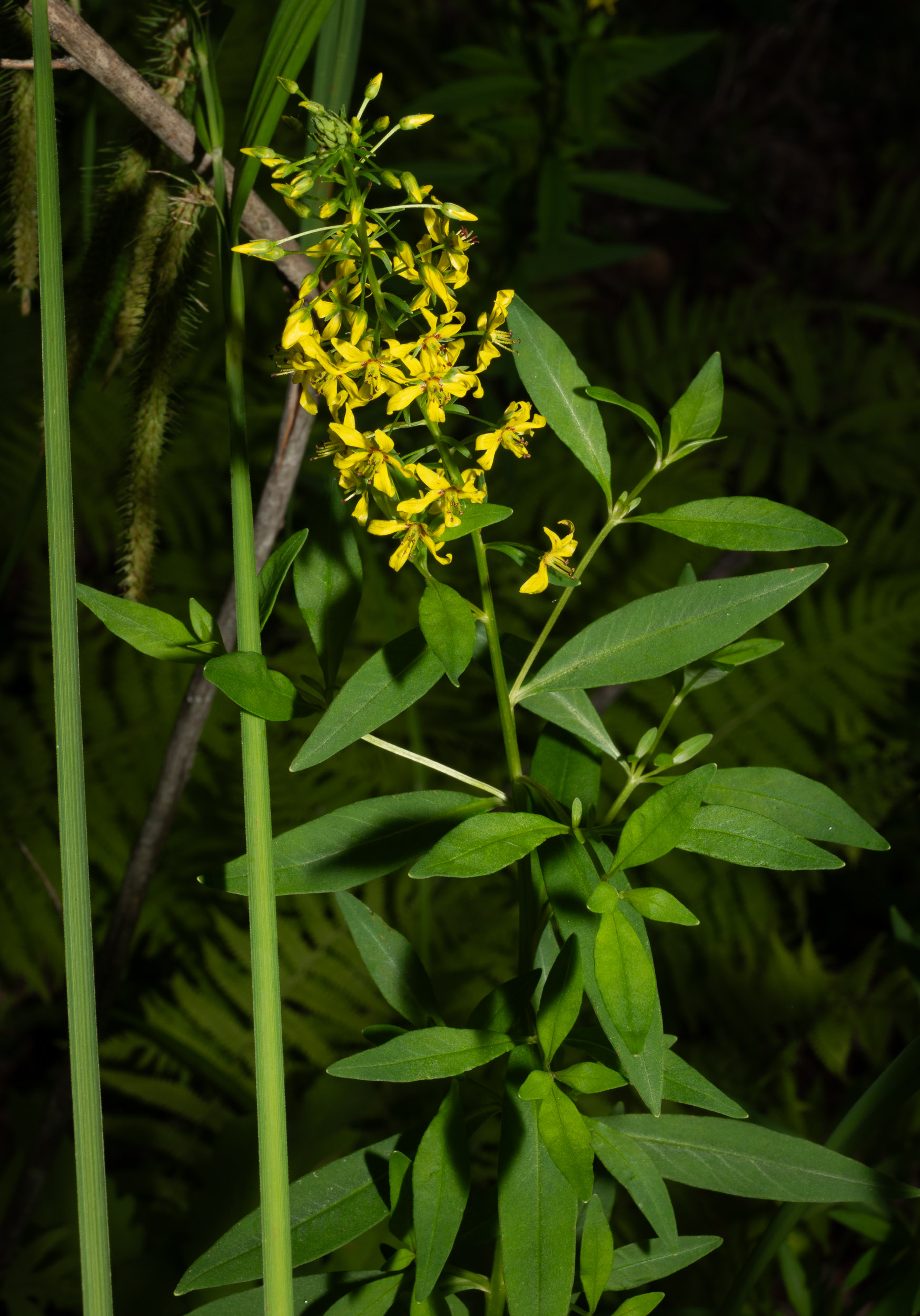
7/5/2025 · Cathance River Nature Preserve, Topsham, Maine · ≈ 6 × 9″ (16 × 22 cm) 

6/24/2015 · Nashua River Rail Trail, Groton Ctr, Groton, Massachusetts · ≈ 6 × 9″ (16 × 23 cm) 

7/6/2017 · Mt. Watatic, access road, Ashby, Massachusetts · ≈ 6 × 10″ (16 × 24 cm) 

6/26/2010 · Nashua River Rail Trail, Groton Center, Groton, Massachusetts · ≈ 4 × 6″ (10 × 14 cm) 

6/30/2010 · Nashua River Rail Trail, Groton Center, Groton, Massachusetts · ≈ 8 × 5″ (19 × 13 cm) 

9/19/2009 · Acadia National Park, Bar Harbor, Maine · ≈ 5 × 6″ (13 × 14 cm) 
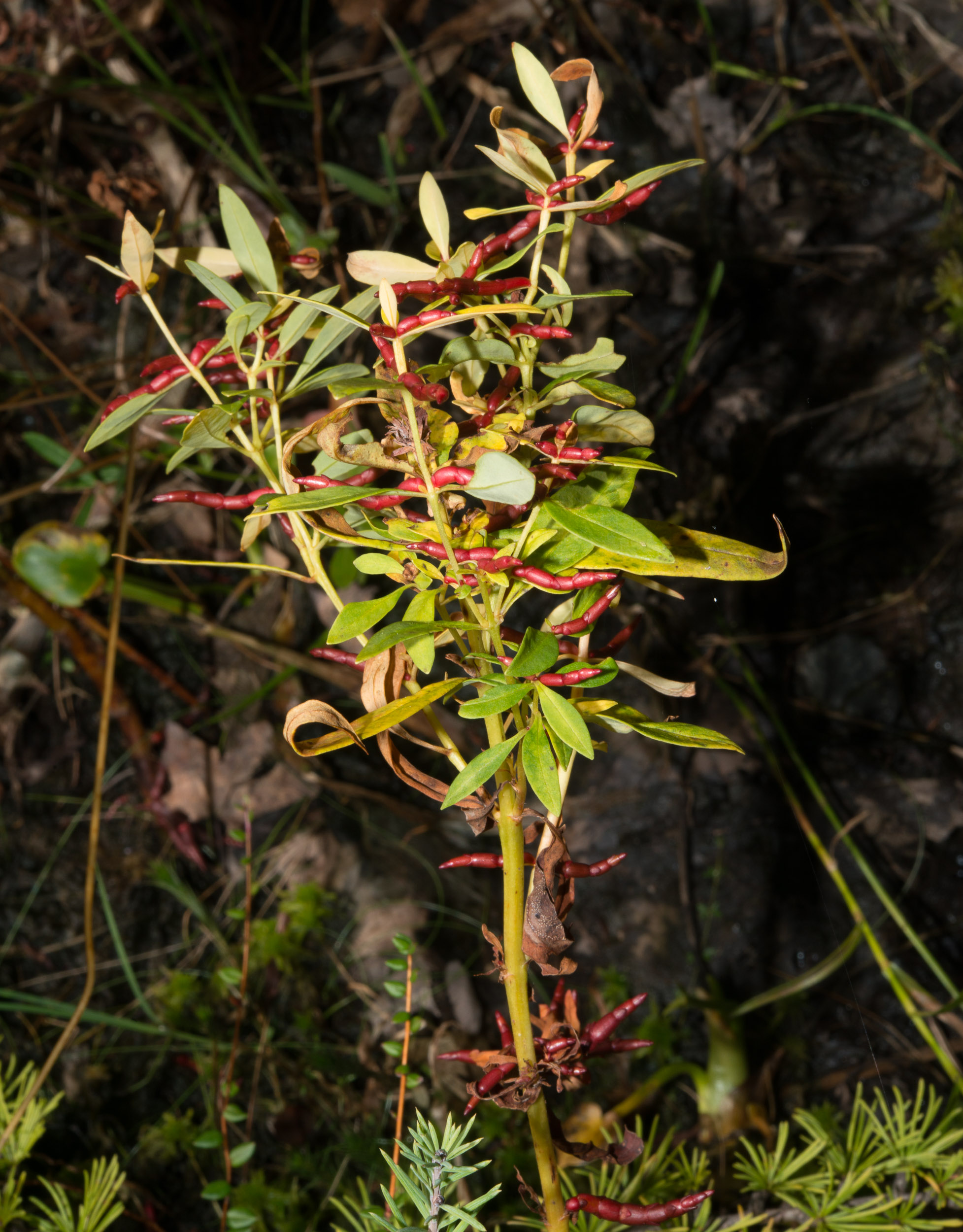
9/28/2013 · Wild Gardens of Acadia, Acadia National Park, Bar Harbor, Maine · ≈ 7 × 8″ (16 × 21 cm) 

7/6/2026 · Head of Tide Park, Topsham, Maine · ≈ 7 × 9″ (17 × 23 cm) 

The red “carrots” are bulbets. · 9/16/2016 · Sieur de Monts Botanical Gardens, Bar Harbor, Maine 
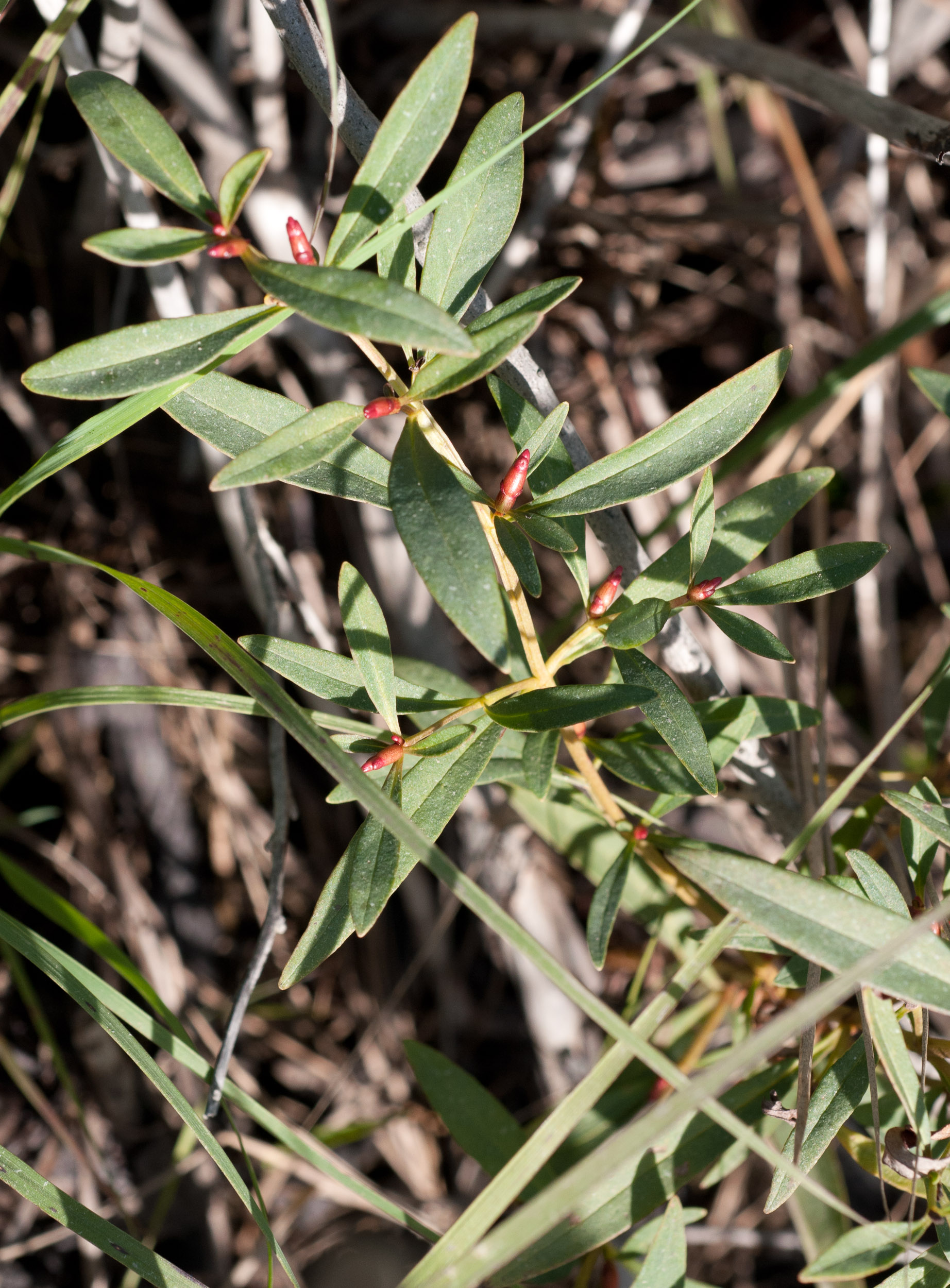
9/20/2009 · Acadia National Park, Bar Harbor, Maine · ≈ 5 × 7″ (13 × 17 cm) 
| Kingdom | Plantae | Plants, but not fungi, lichens, or algae (from Stearn's Botanical Latin) |
| Subkingdom | Tracheobionta | Vascular plants—plants with a “circulatory system” for delivering water and nutrients |
| Division | Magnoliophyta | Flowering plants, also known as angiosperms |
| Class | Magnoliopsida | Dicotyledons—plants with two initial seed leaves |
| Subclass | Asteridae | A large class that encompasses asters |
| Order | Ericales | Tea, persimmon, blueberry, Brazil nut, azalea, many others |
| Family | Primulaceae | Primrose family |
| Genus | Lysimachia | Named for Lysimachus, a king of ancient Sicily, who “calmed a mad ox” with a member of this species |
| Species | terrestris | Latin for “on land” |

Lysimachia terrestris description by Thomas H. Kent, not updated.

© FloraFinder.org. All rights reserved.