FloraFinder uses cookies only for correct operation. More info. Okay
Mentha spicata L.
Spearmint
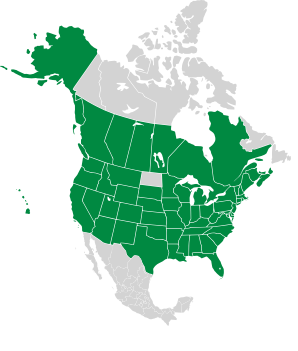
Spearmint is a herbaceous perennial, native to much of Europe and cooler parts of Asia. It is now
naturalized in temperate climates worldwide.
(Note that wintergreen comes from an unrelated species, Gaultheria procumbens.)
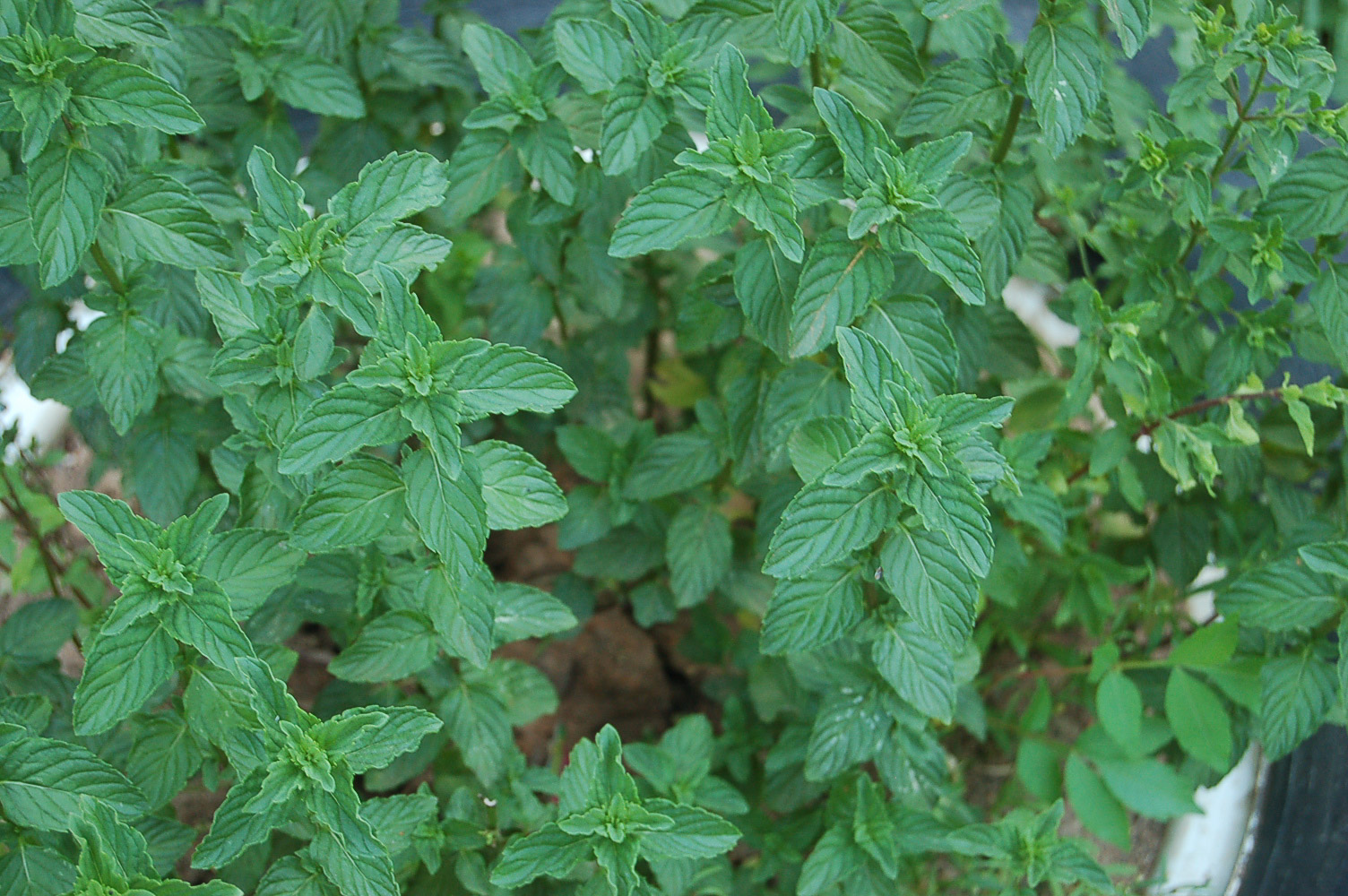
Plants: Like other members of the mint family, spearmint
has square stems. They are light green, sometimes tinged with red, and 1–2′ (30–60 cm) high.
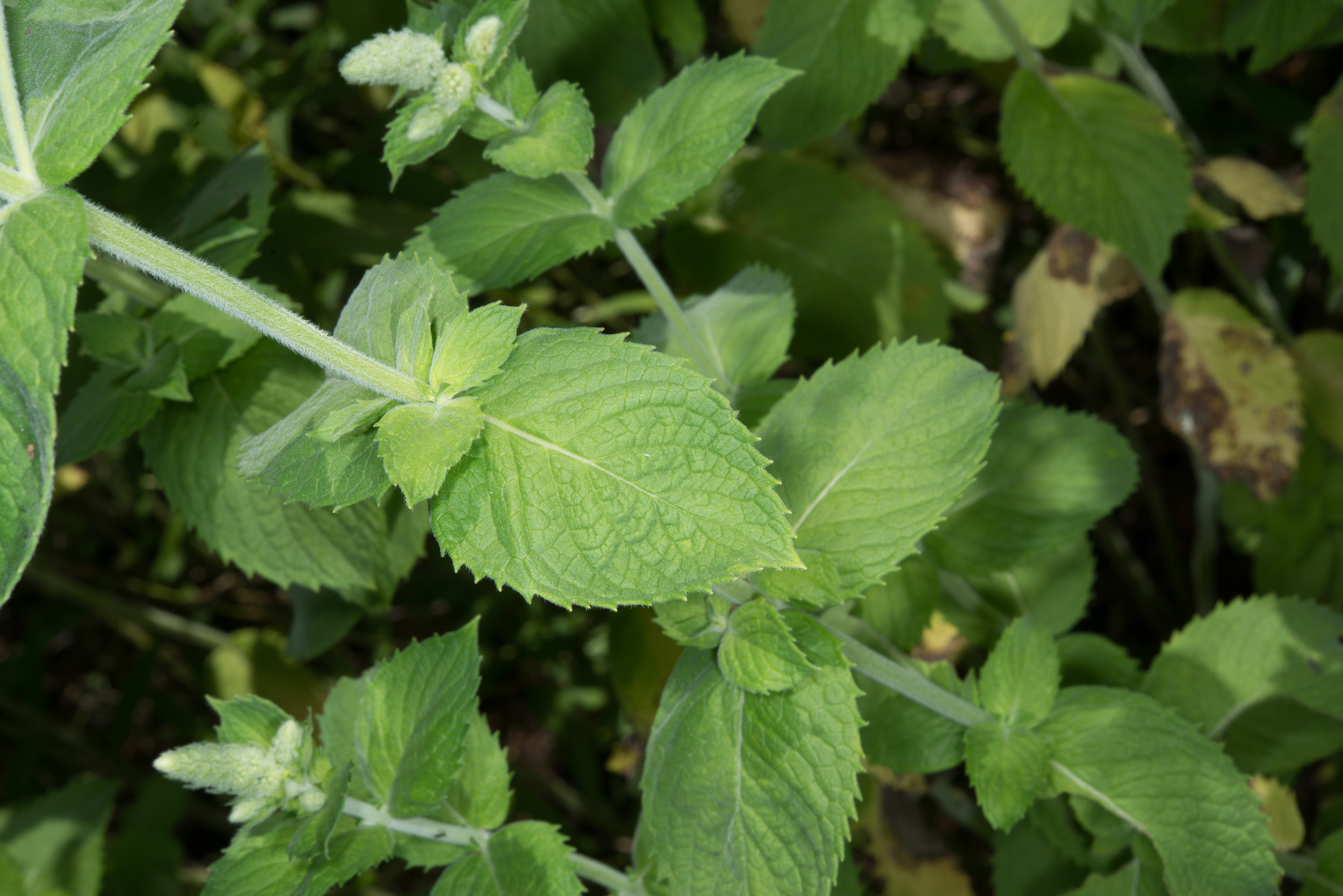
Leaves: Simple, opposite, 1¾–3½ ⨉ ½–1″ (5–9 ⨉ 1.5–3 cm), with serrated margins.
Leaves are nearly hairless and sessile, or nearly so. Crushed leaves have a distinct
spearmint odor.
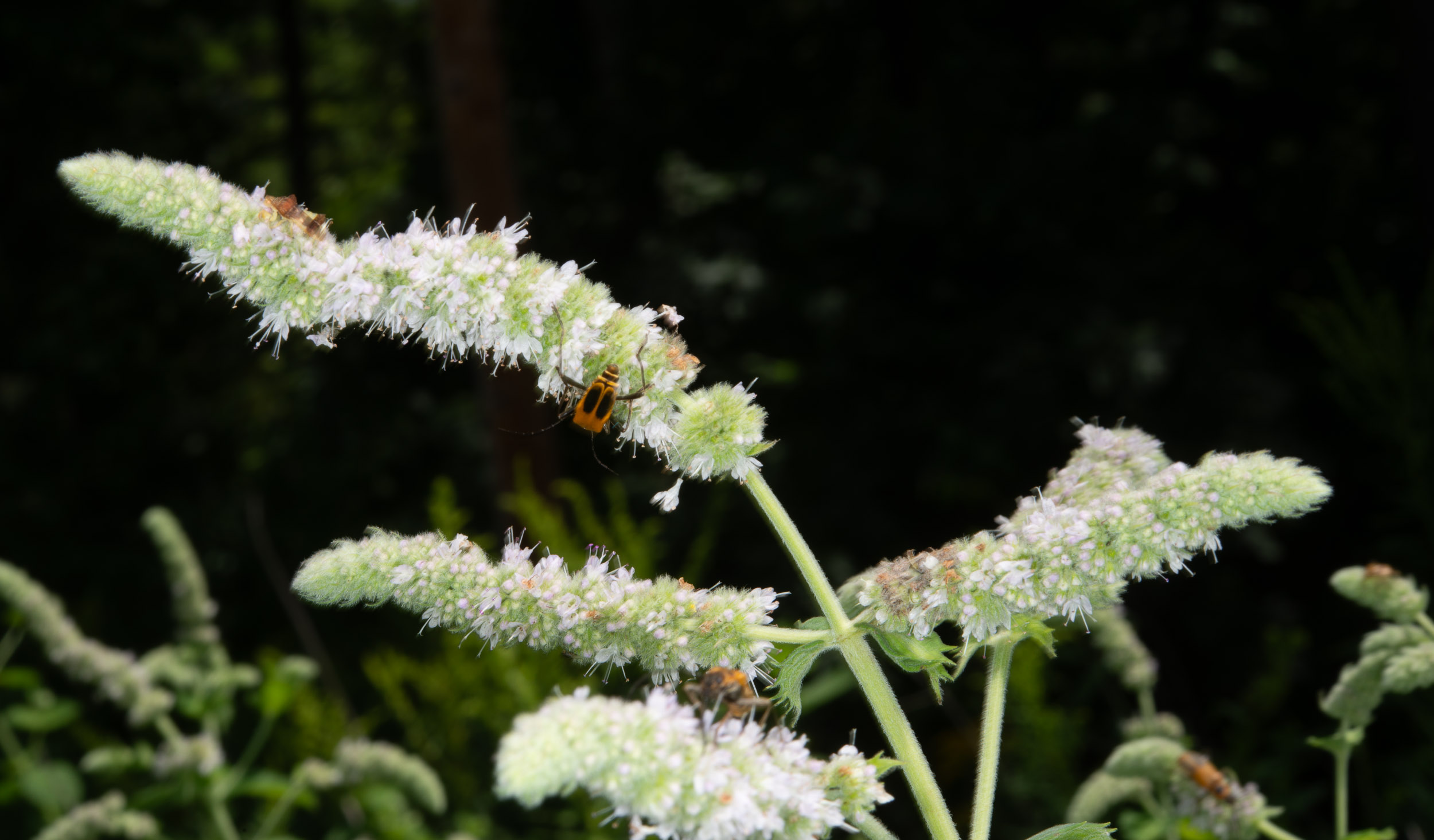
Flowers: Slender pink or white spikes up to
5″ (12 cm) long. Individual flowers are about ⅛″ (3.2 mm) long. Flowers
appear from July to September.
Fruits: Seeds are ~1/32″ (0.6–0.9 mm), contained in
a calyx that persists late in the season.
Habitats: Rich, moist soils in full sun to part shade.
Edibility: Spearmint is a popular flavoring agent for
teas, beverages, jellies, syrups, candies, ice cream, and lamb dishes.
Medical: Spearmint shows a wide range of
antimicrobial, antiparasitic, antidiabetic, anti-inflammatory, and anticancer effects.
Mentha cordifolia auct. Mentha longifolia auct. non (L.) Huds. Mentha longifolia (L.) Huds. var. mollissima (Borkh.) Rouy Mentha longifolia (L.) Huds. var. undulata (Willd.) Fiori Mentha spicata L. var. longifolia L. Mentha spicata L. var. spicata Mentha sylvestris L. Mentha viridis L.
From Minthe or Menthe, a water nymph in Greek mythology, who was transformed by Persephone into a mint plant in revenge for Minthe’s ongoing affair with Hades (husband of Persephone).