Pinesap is a North American native.
How does a pale cream-colored (reddish or brown in the fall) plant get its energy? It isn’t green (or purple), so
it cannot perform photosynthesis. Instead, it saphrophytic—it obtains energy from decaying plant matter
and from mycelia, the underground rootlike network of fungi. It is found on
shaded forest floors where its ability to thrive without light gives it an advantage. These are called
pinesap because they favor the acid soil of pine forest floors.
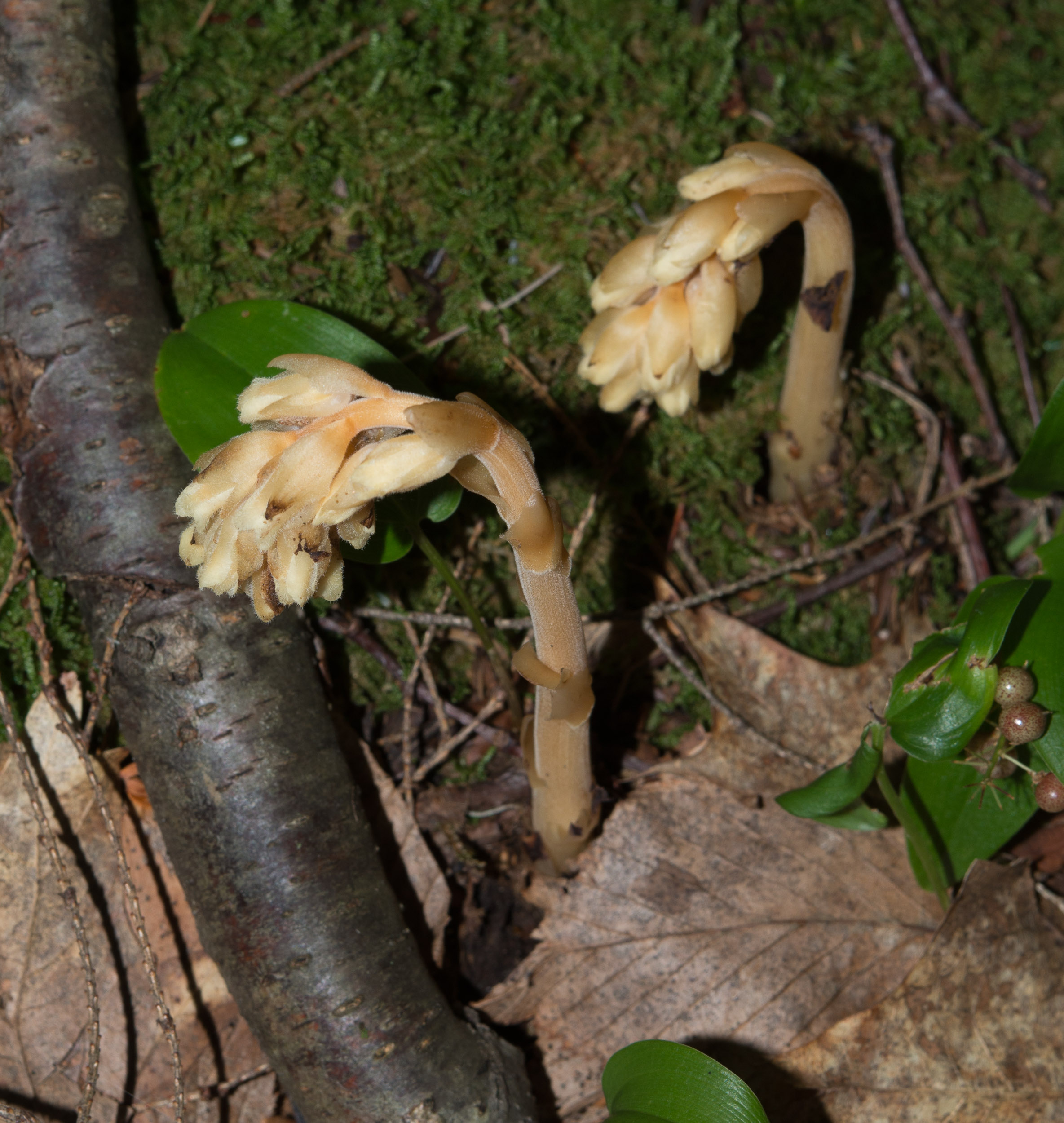
Plants: 3–10″ (7.6–25 cm) in height, unfolding
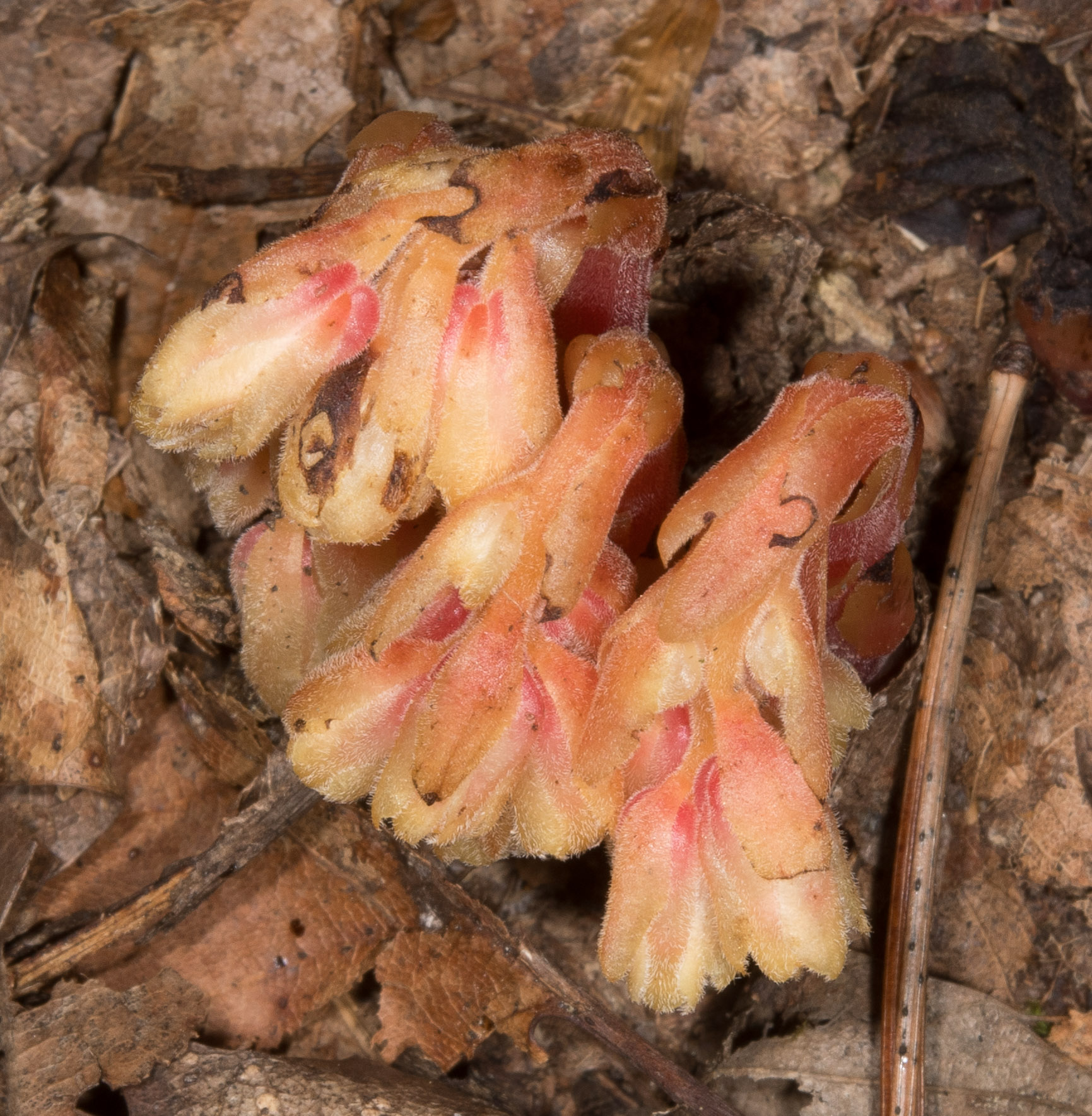
like fiddleheads from the ground. In the fall, plants may be tinged with bright
red.
Leaves: Stems are pale brown and apparently leafless. Actually
there arealternate leaves, but they are small (about ¼″ (6.3 mm)), closely
attached to the stem, and triangular in shape.
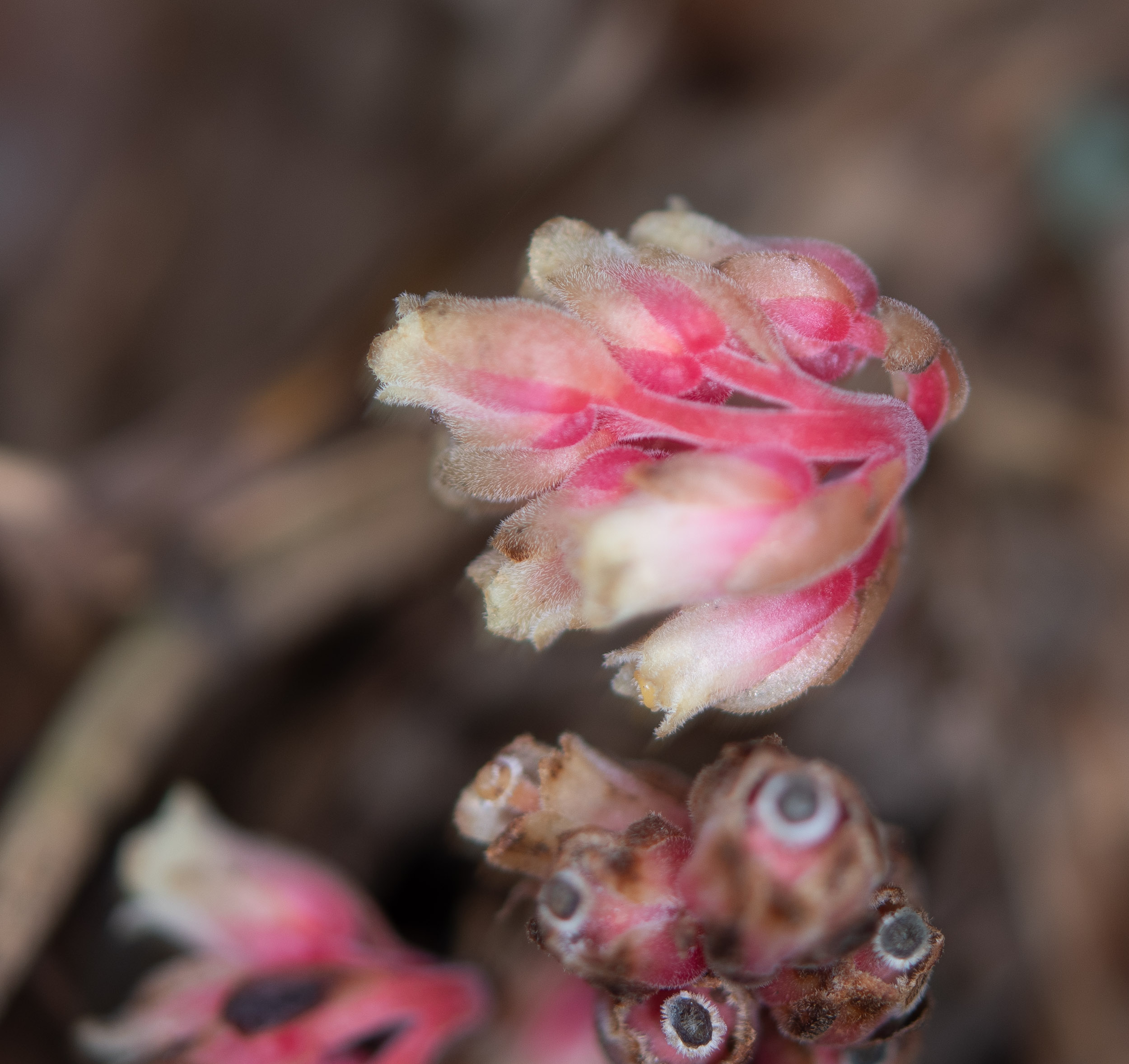
Flowers: Cream-colored, about ¼–½″ (6.3–12 mm) in size,
bell shaped, in clusters of about a dozen. Flowers appear from June to October.
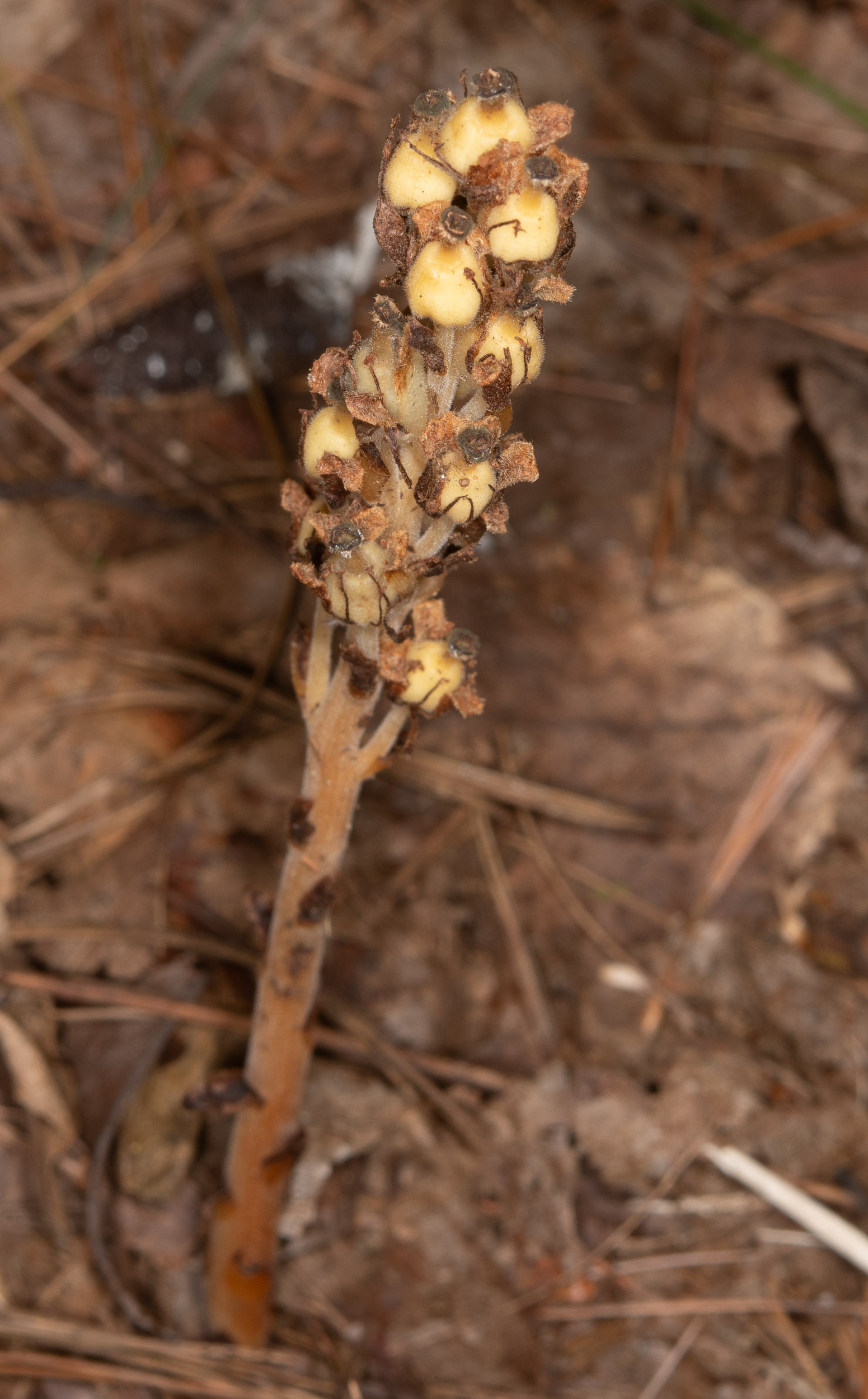
Fruits: Flowers mature to a capsule that dries and
splits along its sides, releasing seeds.
Habitats: On
shaded forest floors where its ability to thrive without light gives it an advantage. These are called
pinesap because they favor the acid soil of pine forest floors.
From Greek monos, “one,” and tropos, “direction,” since flowers always turn to the same side or, according to another source, referring to the sharp curve in the stem