Monotropa uniflora L.
Indian pipes, ghost plant, corpse plant
Indian pipes are natives of the temperate regions of Asia, South America, and North America. They are plants, members of the blueberry family, but unusual ones. Most plants use photosynthesis to convert sunlight into the energy they need to grow. Indian pipes lack chlorophyll—that’s why they’re white—and instead get their energy from parasitizing certain fungi. The fungi, in turn, derive their energy from trees. Indian pipes are able to grow on dark forest floors because they don’t need light. They even grow in the dark! (Remarkably, there are almost 3,000 species that similarly lack chlorophyll, and get their energy from other means. Since they don’t need to be green, they come in all kinds of colors.)
Plants: The ghostly pale color of these fragile-looking plants, and the nodding tops, makes them quite unique. In addition to white, plants may also be pink or, rarely, red. Plants are 4–10″ (10–25 cm) high.
Leaves: Pale white, scale-like, and flecked with black. You have to look hard to notice them.
Flowers: White, bell-shaped, about ¾″ (1.9 cm) long. They often occur in tight groups. Flowers nod downward during most of their lives, but point straight up when forming seeds—the genus, Monotropa, is named for this trait, meaning “once-turned.”
Fruits: A capsule. As it matures, the flower becomes erect, upward-pointing. Once ripened, seed is released through slits that open alongside the capsule.
Habitats: Indian pipes appear in rich forests, and are a sign of good hunting grounds for mushrooms.

Rare red form, from a mixed forest near Ithaca, NY, 7/12/2007, by Dave Matthews. 
Online References:
Monotropa brittonii Small

7/7/2012 · Gibbet Hill, Groton, Massachusetts · ≈ 9 × 13″ (23 × 32 cm) 
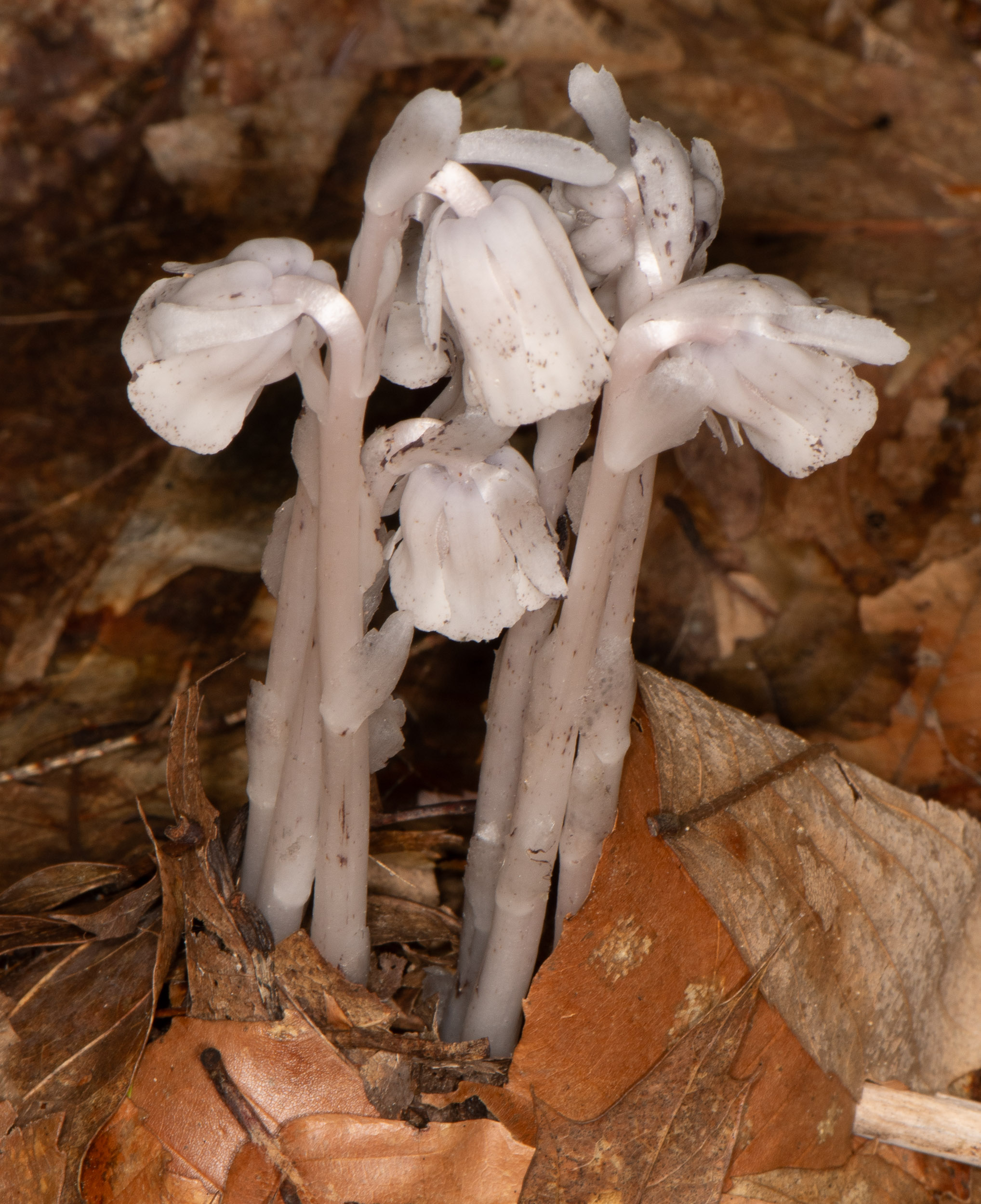
7/16/2021 · Cox Pinnacle, Brunswick, Maine · ≈ 5 × 5″ (12 × 12 cm) 
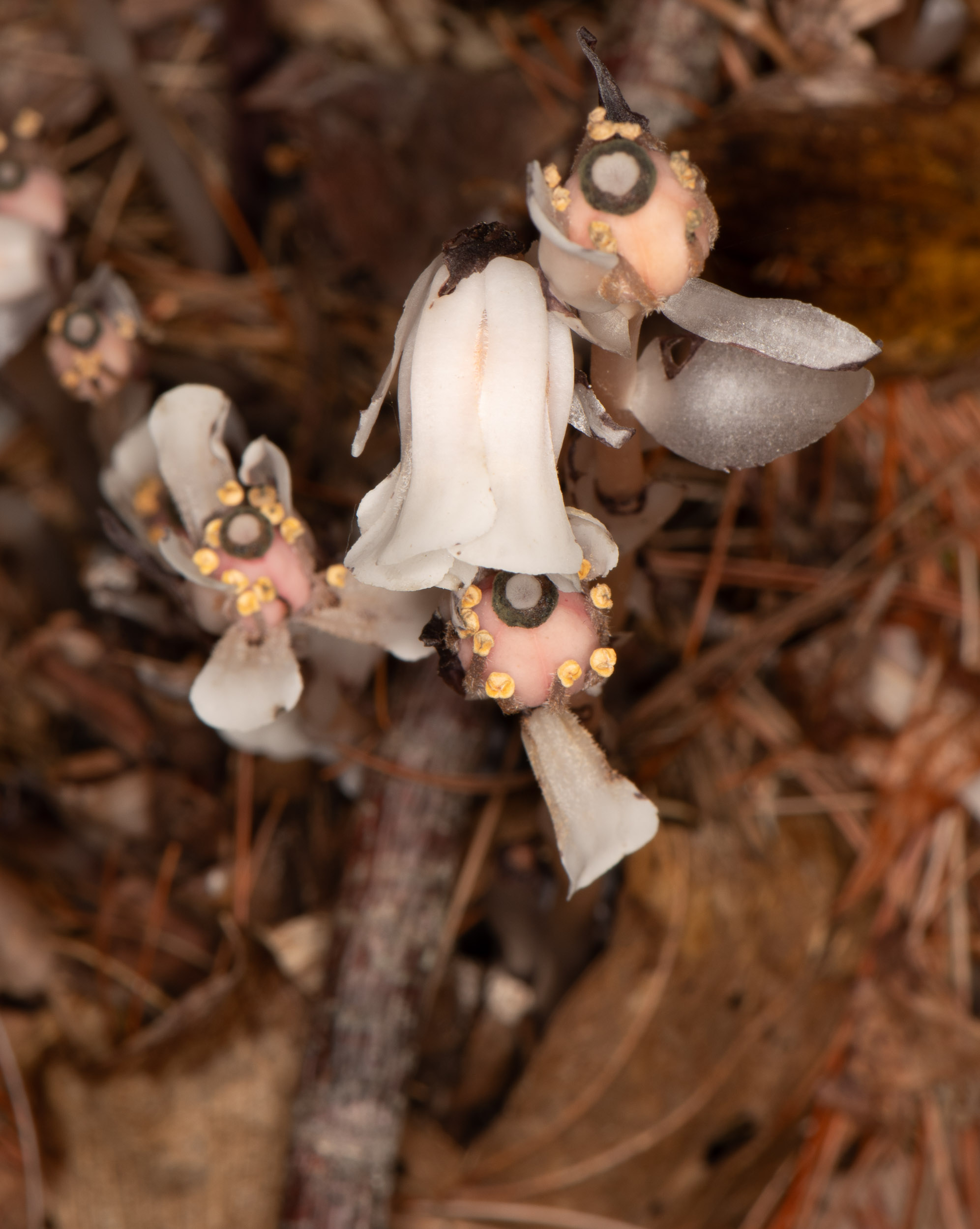
10/5/2021 · Wolfe’s Neck Woods State Park, Freeport, Maine · ≈ 3½ × 4½″ (9 × 11 cm) 
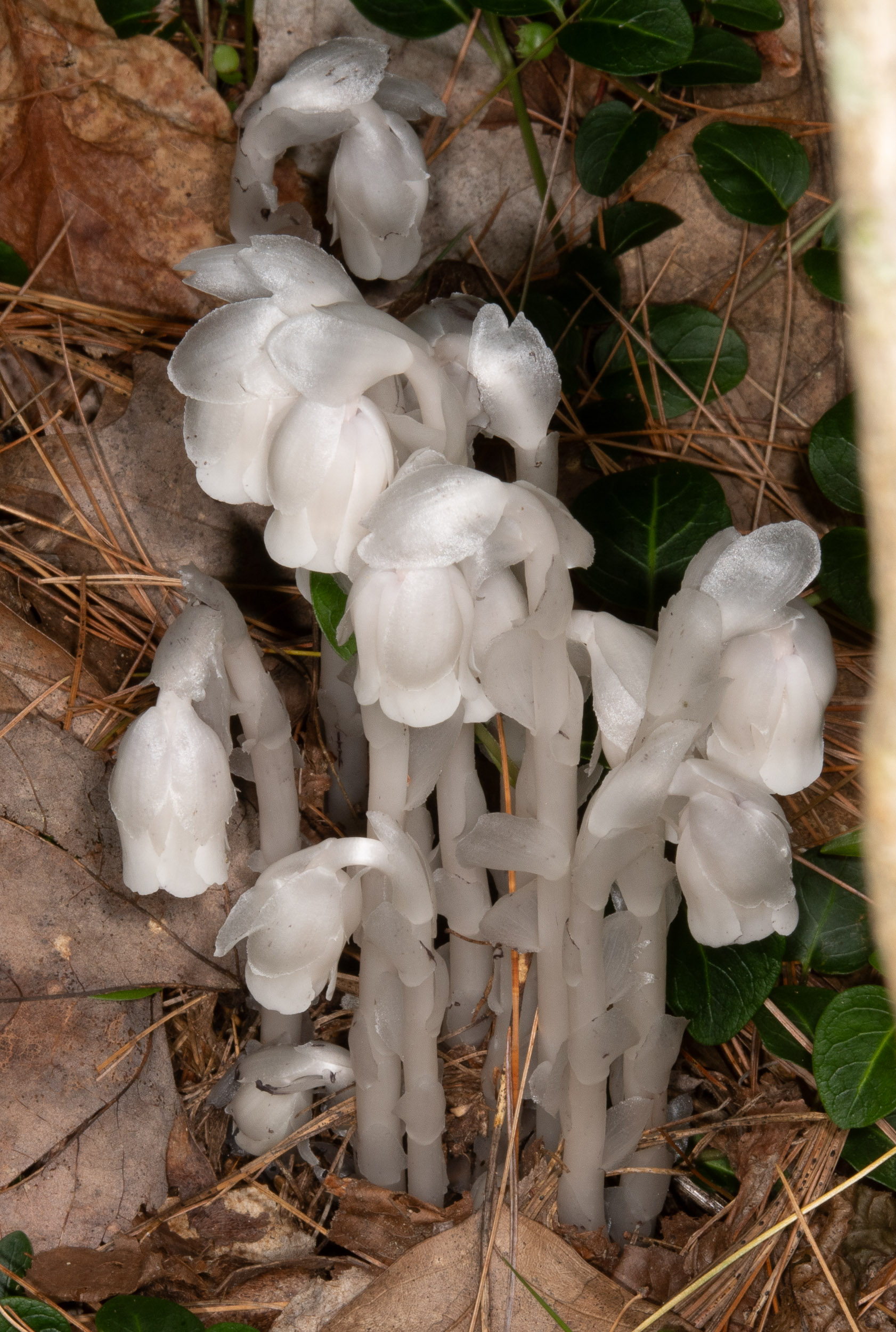
7/15/2019 · Beaver Brook Conservation Area, New Long Loop, Hollis, New Hampshire · ≈ 4½ × 7″ (11 × 17 cm) 
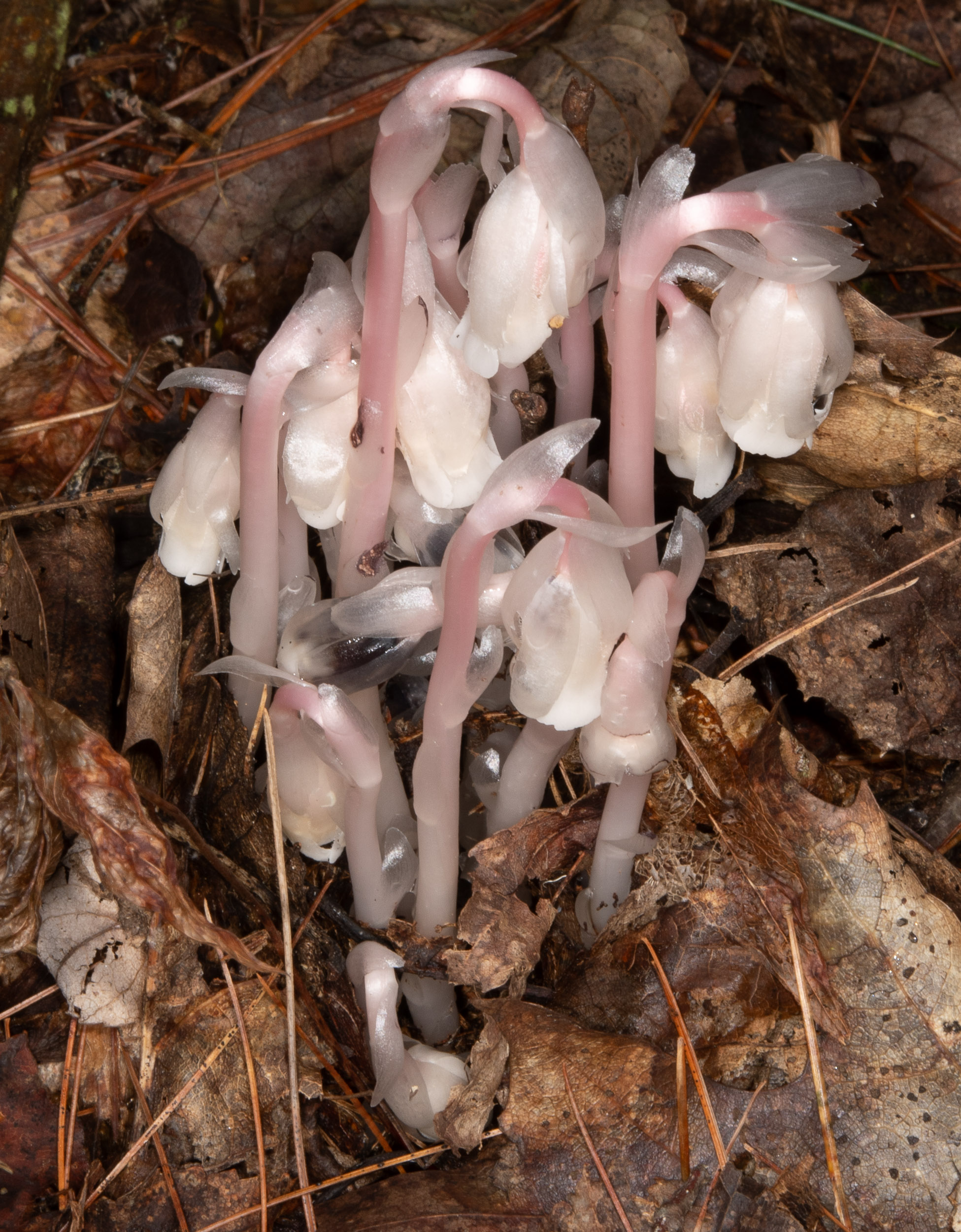
9/14/2023 · Nature Conservancy Access Trail, Sprague Pond, Phippsburg, Maine · ≈ 4 × 5″ (10 × 13 cm) 
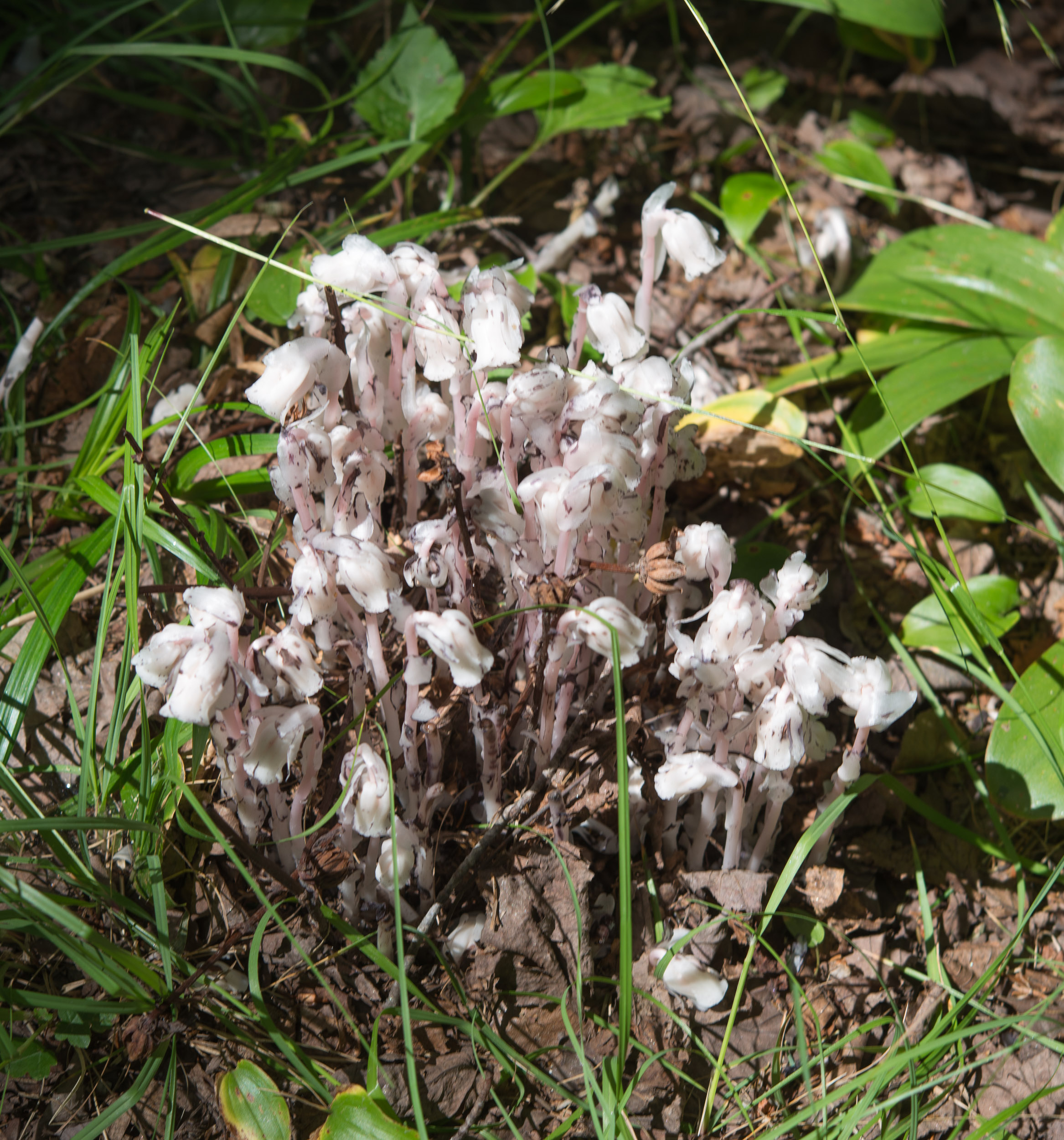
8/15/2015 · Moose Cave, Grafton Notch State Park, Newry, Maine · ≈ 1 × 1′ (32 × 34 cm) 
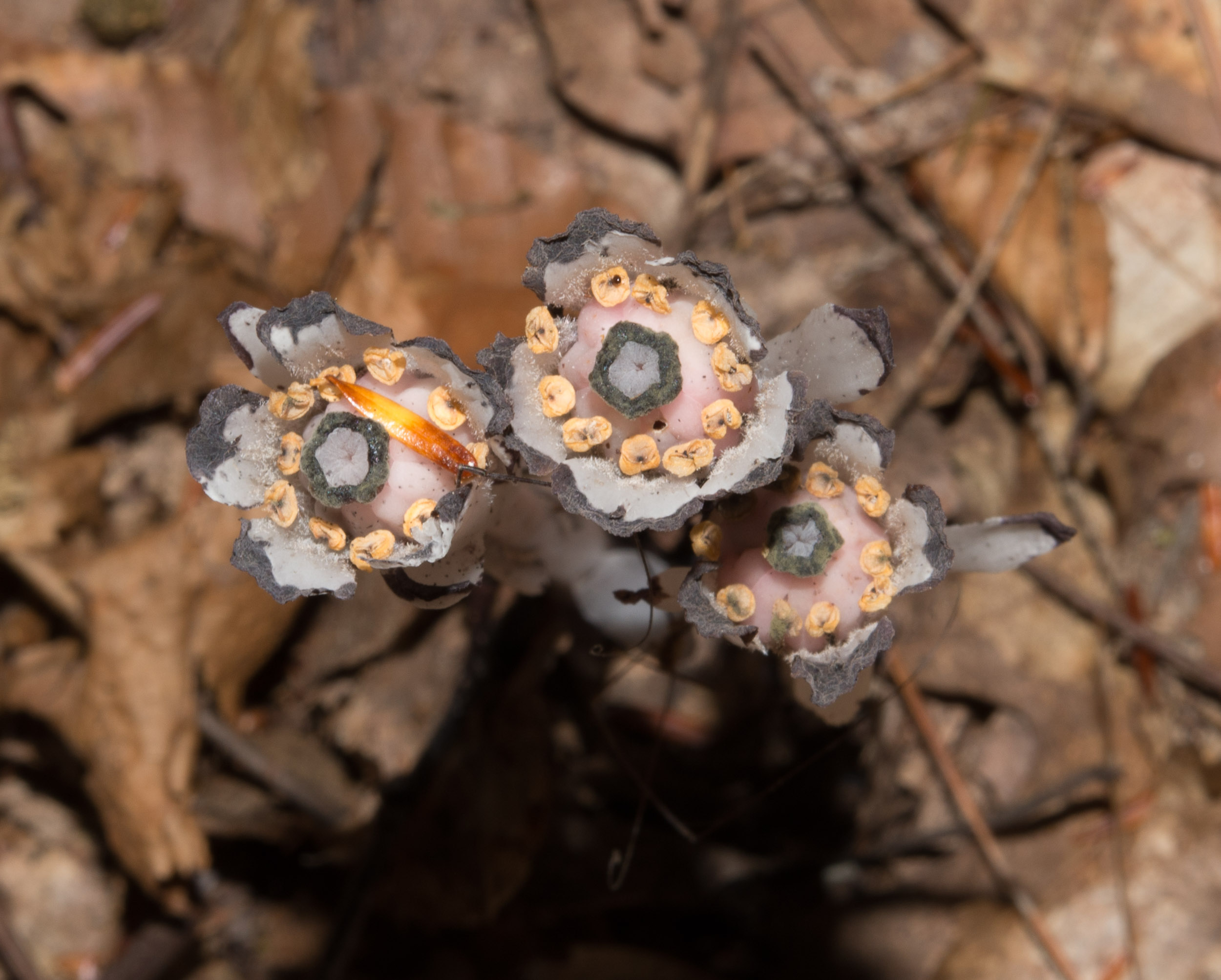
After pollination, the normally nodding flowers point upward. · 8/24/2013 · Cranberry Meadow Pond Trail, Monadnock Conservancy, Peterborough, New Hampshire · ≈ 3 × 2½″ (7.8 × 6.3 cm)  ID is uncertain
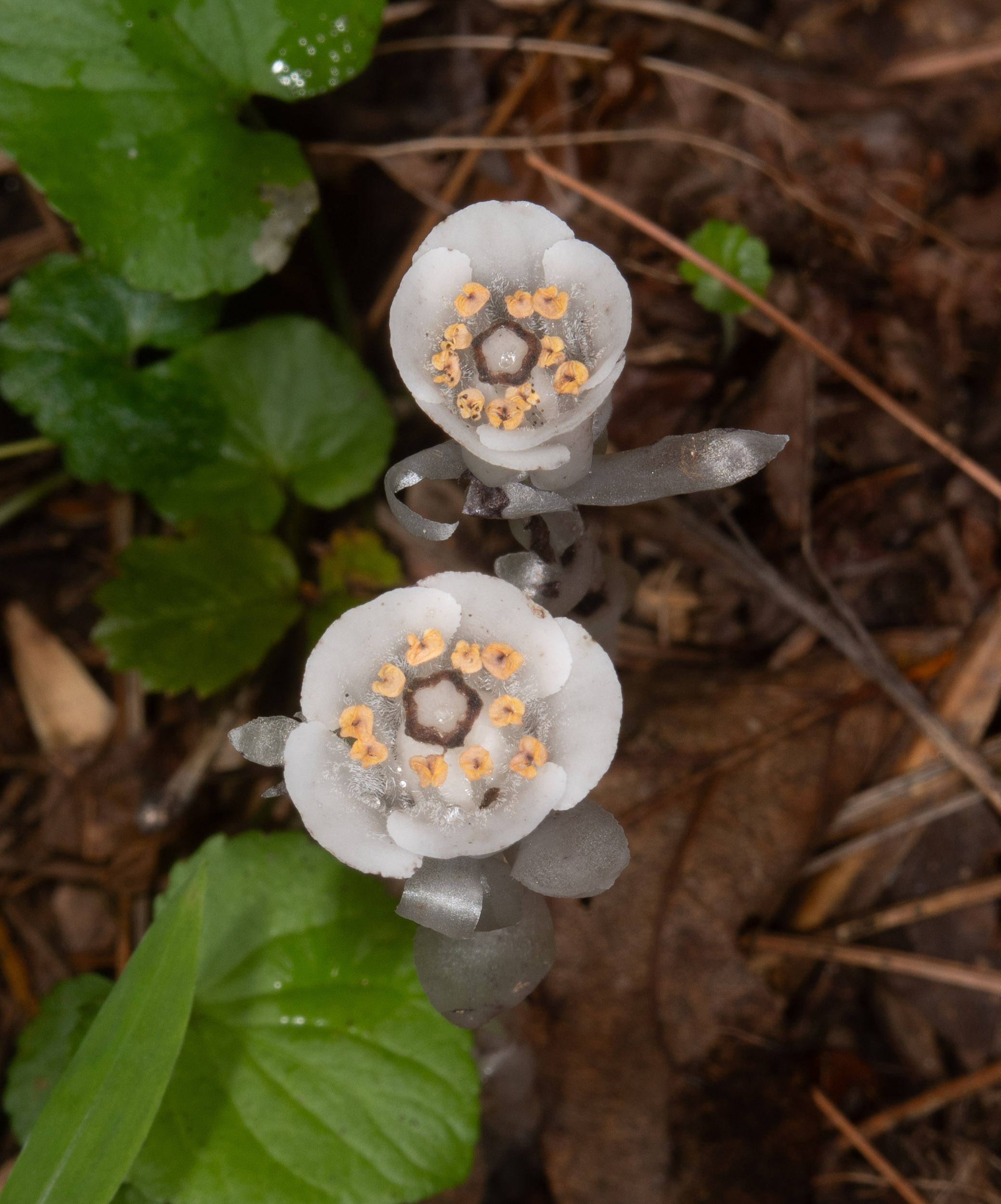
7/23/2017 · Pine Grove Furnace State Park, Pennsylvania · ≈ 2½ × 3″ (6.4 × 7.7 cm) 
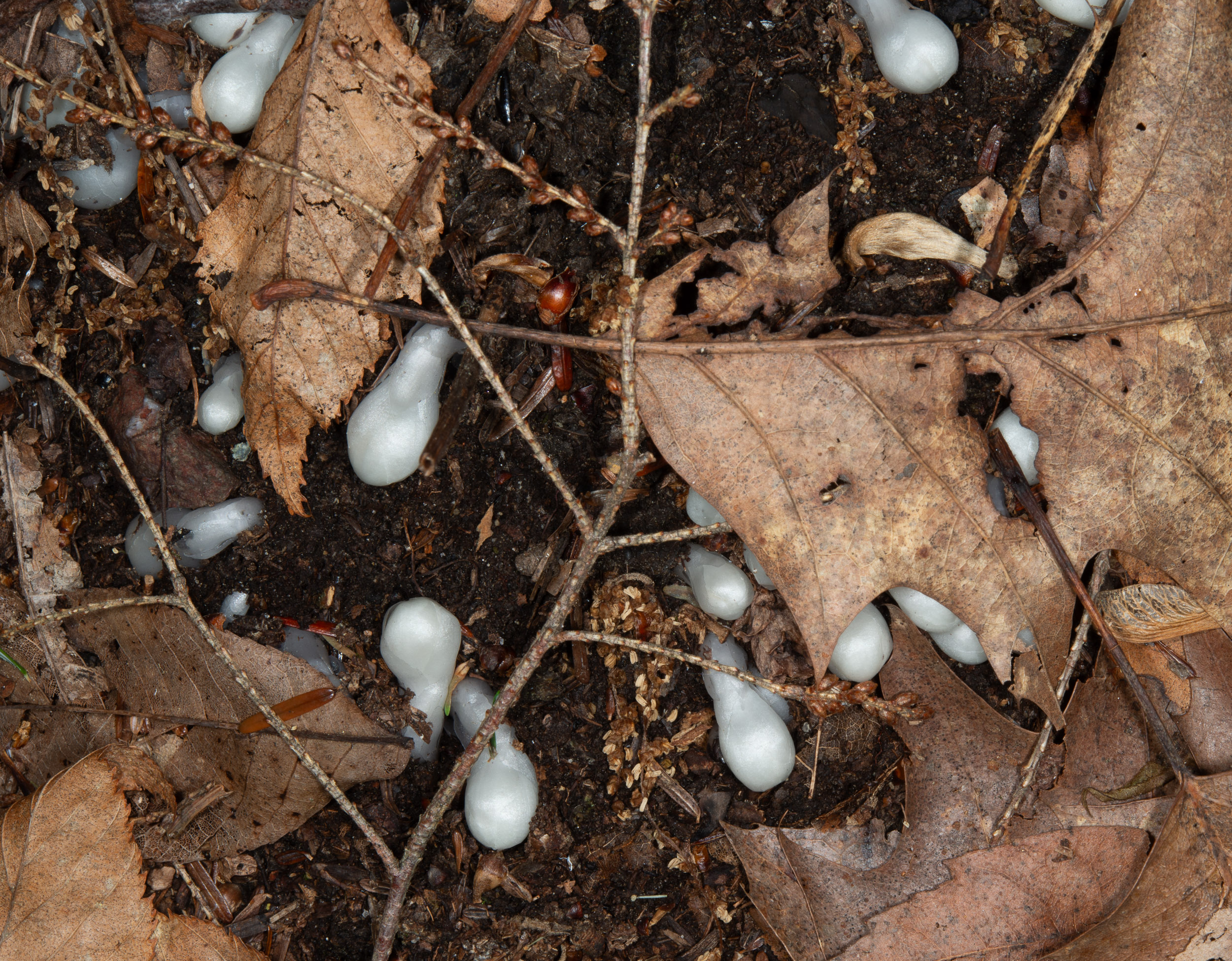
Plants are just emerging from the ground. · 6/28/2014 · Beaver Brook Conservation Area, Hollis, New Hampshire · ≈ 7 × 5″ (17 × 13 cm) 
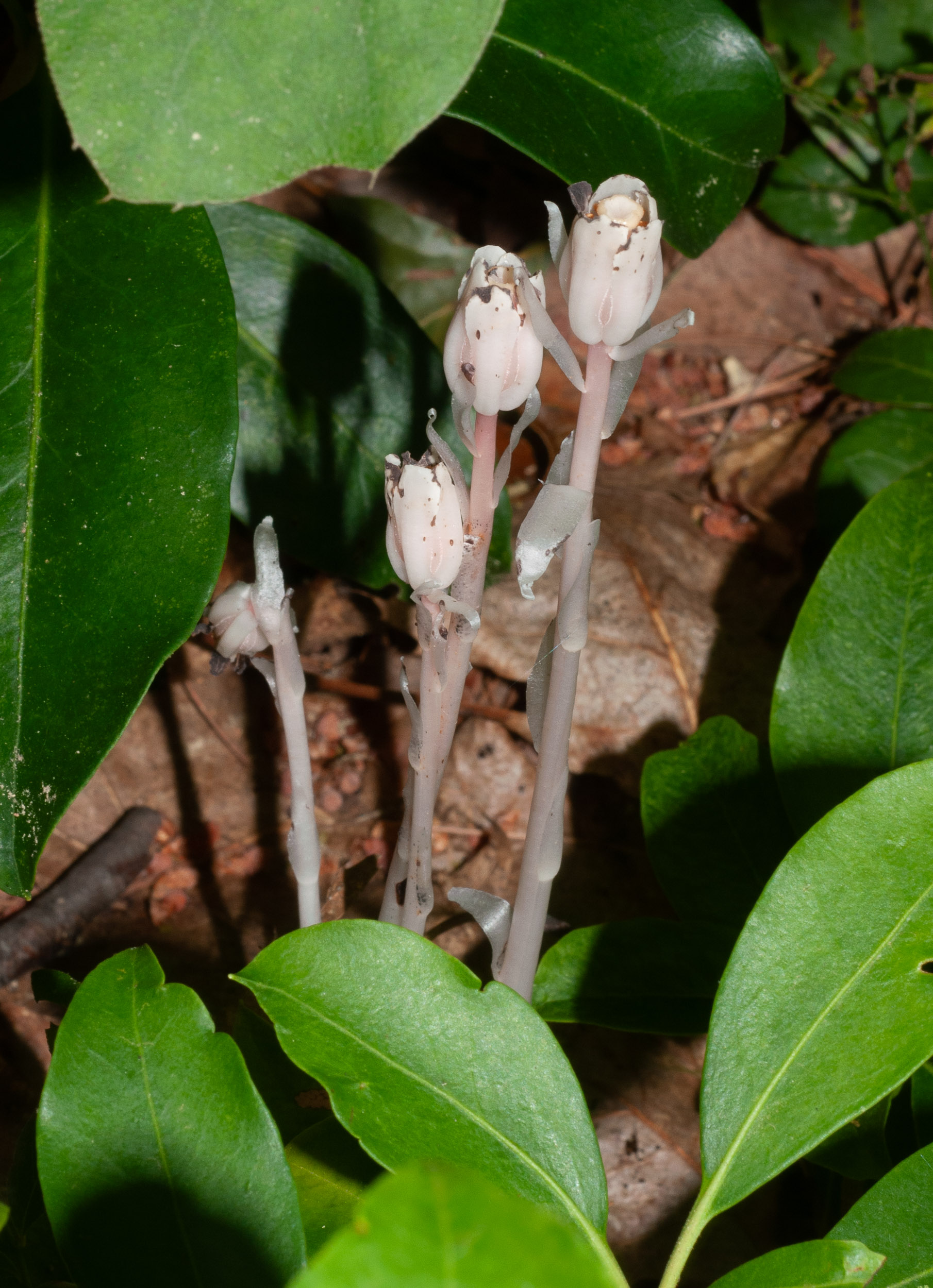
Usually these are nodding, not upright. · 7/3/2012 · Yellow Trail from Pearl Hill State Park to Willard Brook State Park, Ashby, Massachusetts · ≈ 4½ × 6″ (11 × 15 cm) 
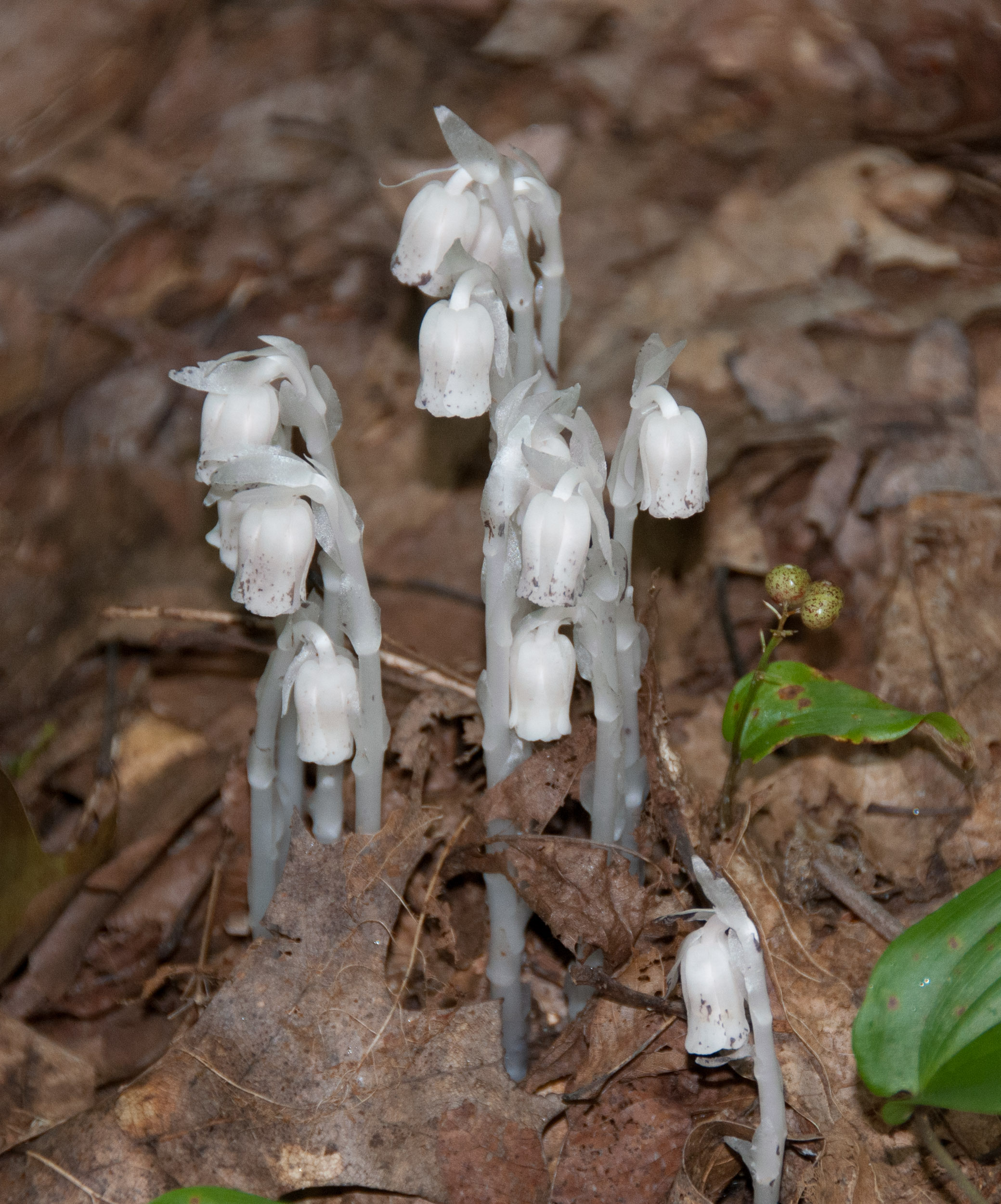
Nashoba Conservation Land on Mt. Lebanon Rd · 7/16/2009 · Mt. Lebanon St, Pepperell, Massachusetts · ≈ 4 × 5″ (10 × 12 cm) 

8/14/2015 · Roost Trail, Grafton Notch State Park, Newry, Maine · ≈ 5 × 4½″ (13 × 11 cm) 
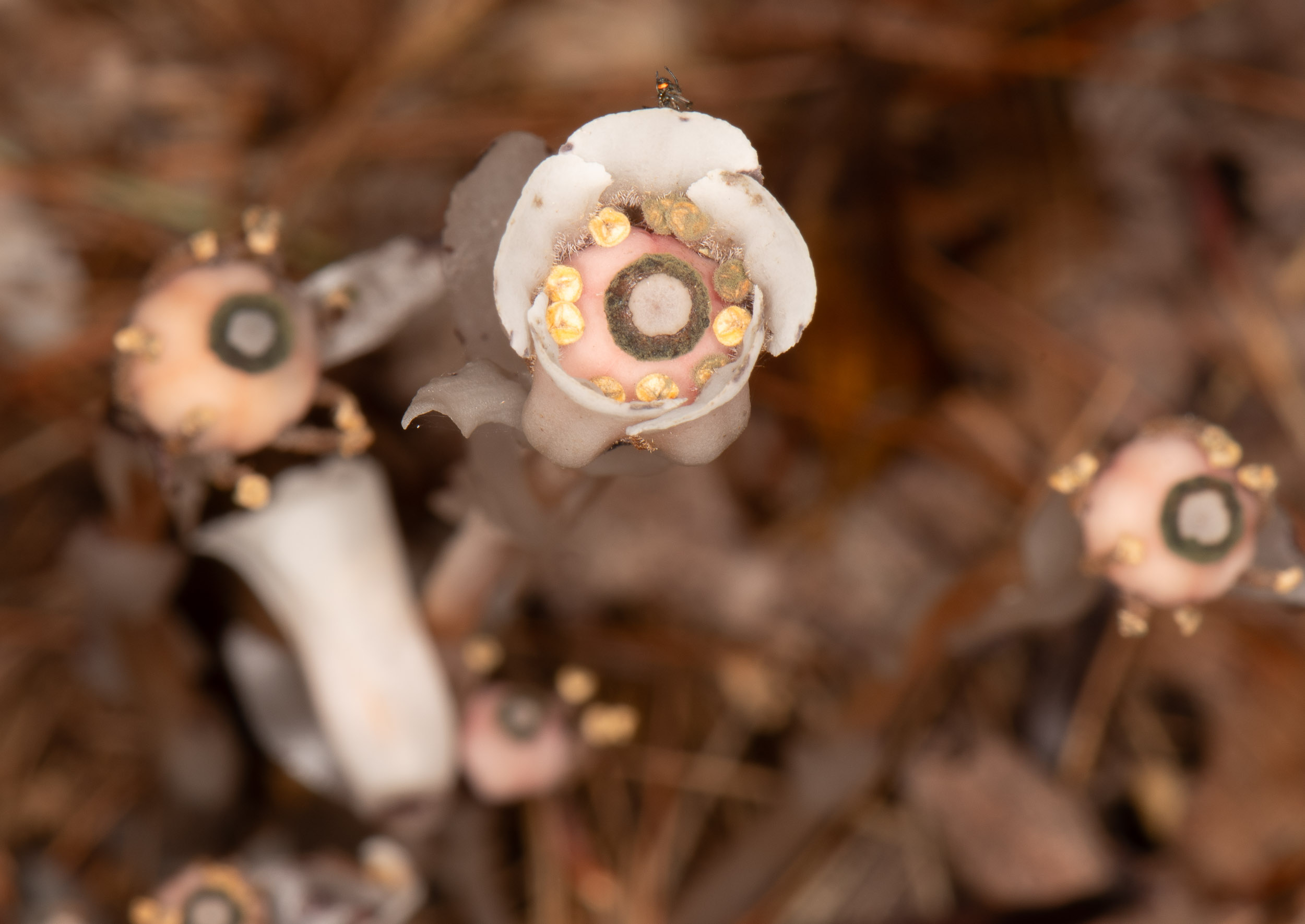
10/5/2021 · Wolfe’s Neck Woods State Park, Freeport, Maine · ≈ 3½ × 2½″ (9.2 × 6.5 cm) 
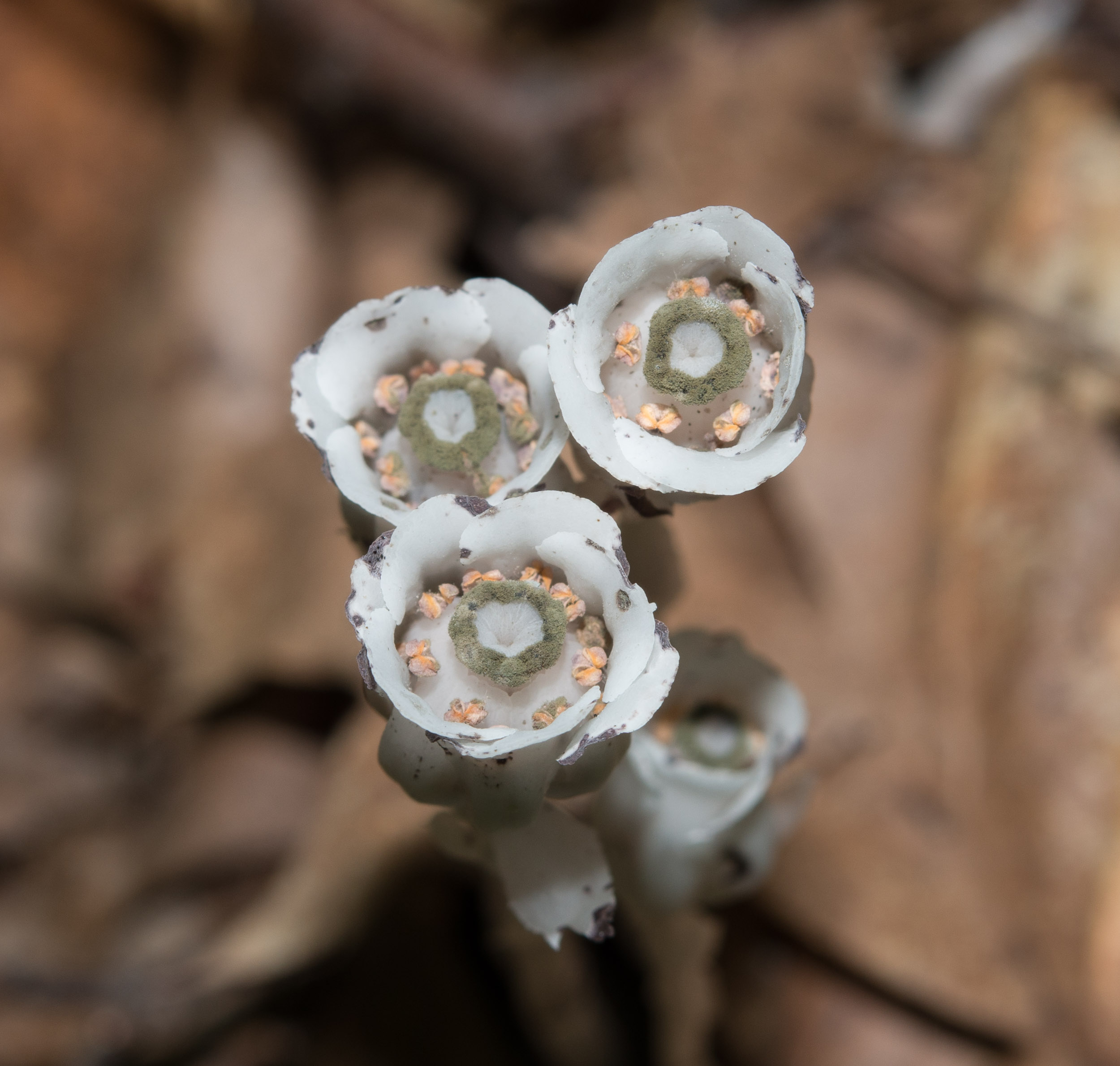
After pollination, the normally nodding flowers point upward. · 7/14/2013 · Ball Hill Trail, Leominster State Forest, Leominster, Massachusetts · ≈ 2½ × 2½″ (6.8 × 6.5 cm) 
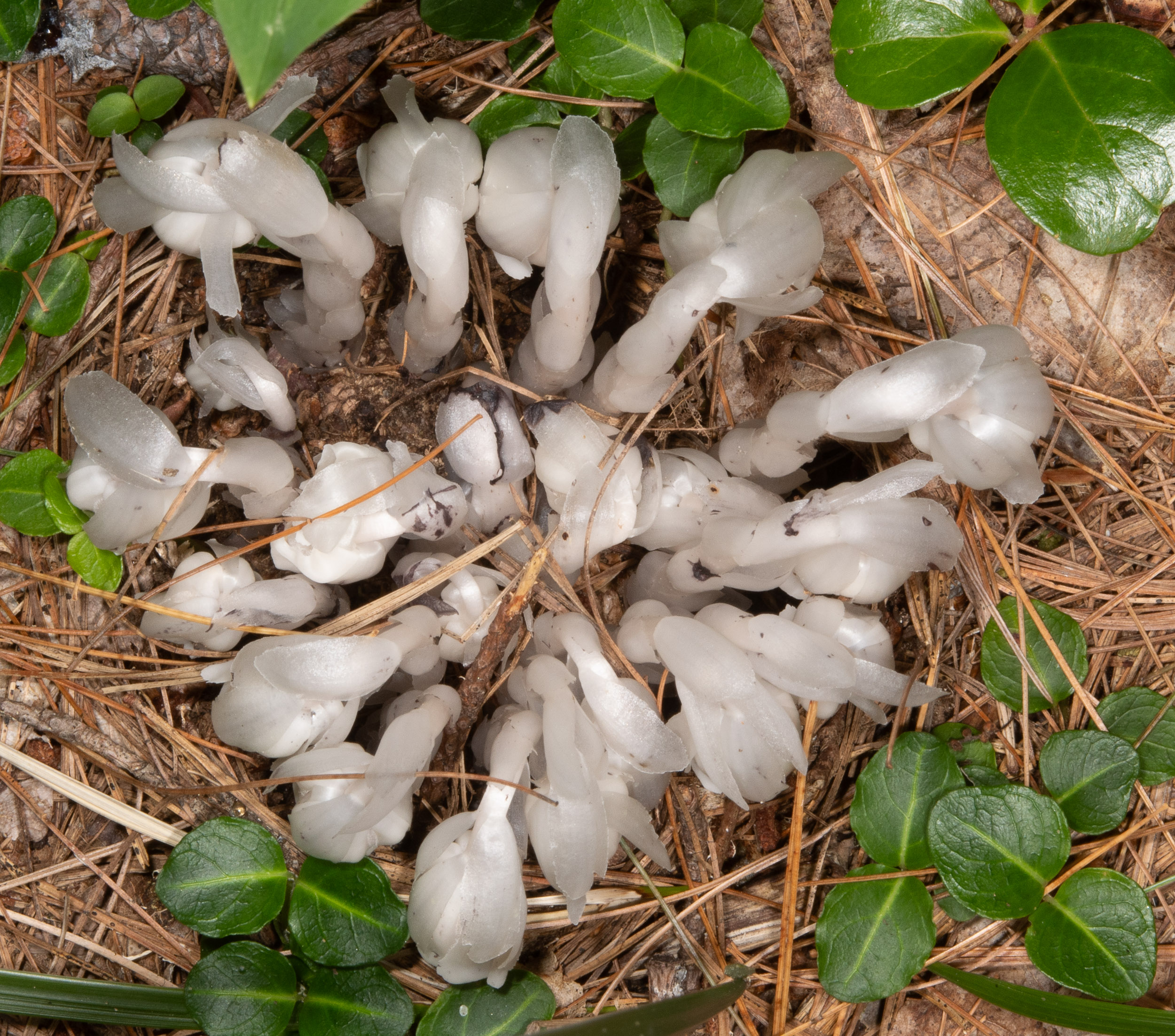
7/15/2019 · Beaver Brook Conservation Area, New Long Loop, Hollis, New Hampshire · ≈ 5 × 4½″ (13 × 12 cm) 

8/8/2009 · Nashua River Rail Trail, Groton, Massachusetts · ≈ 5 × 8″ (13 × 20 cm) ID is uncertain 
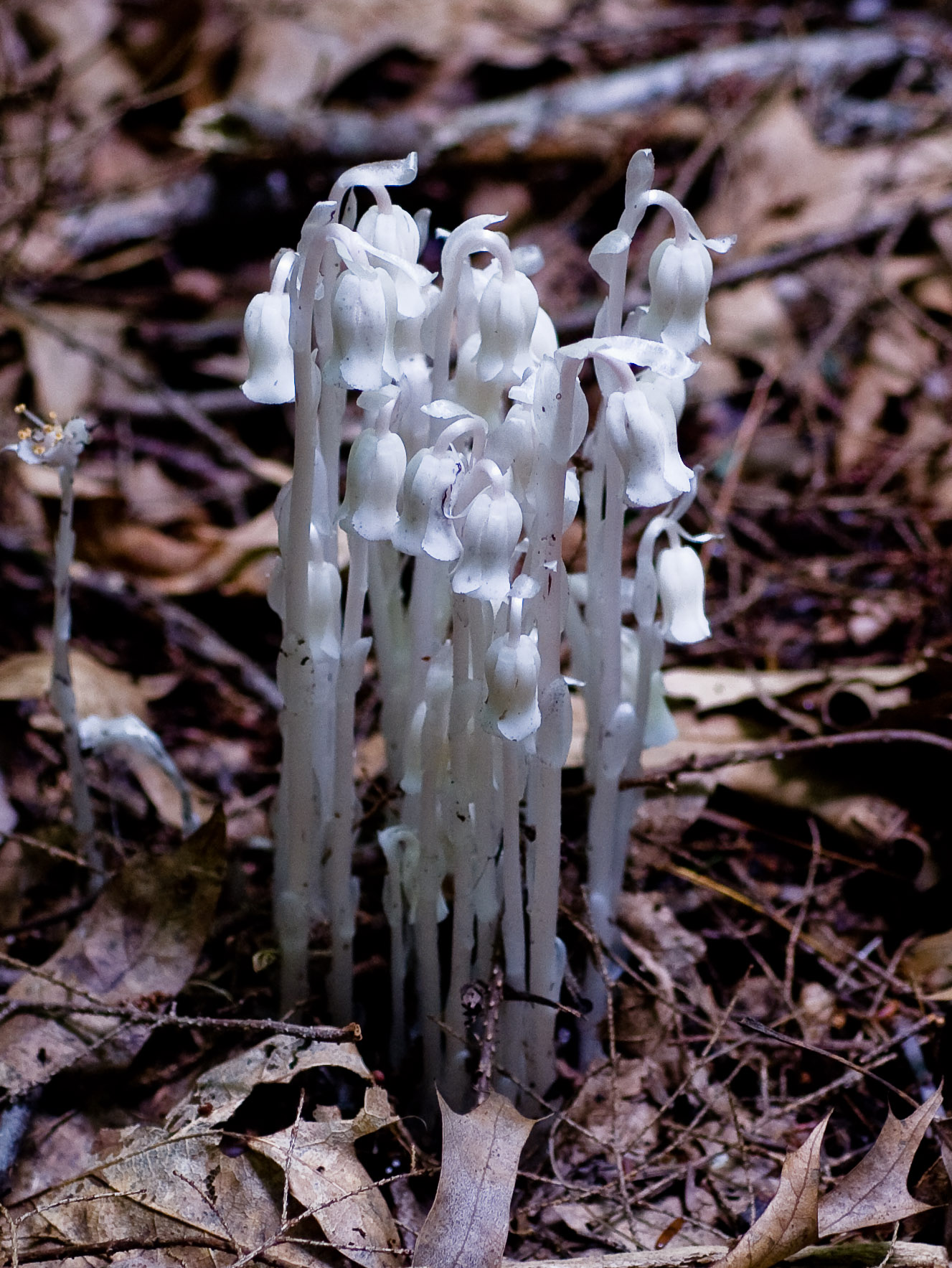
7/28/2009 · By Philip A. Despo 
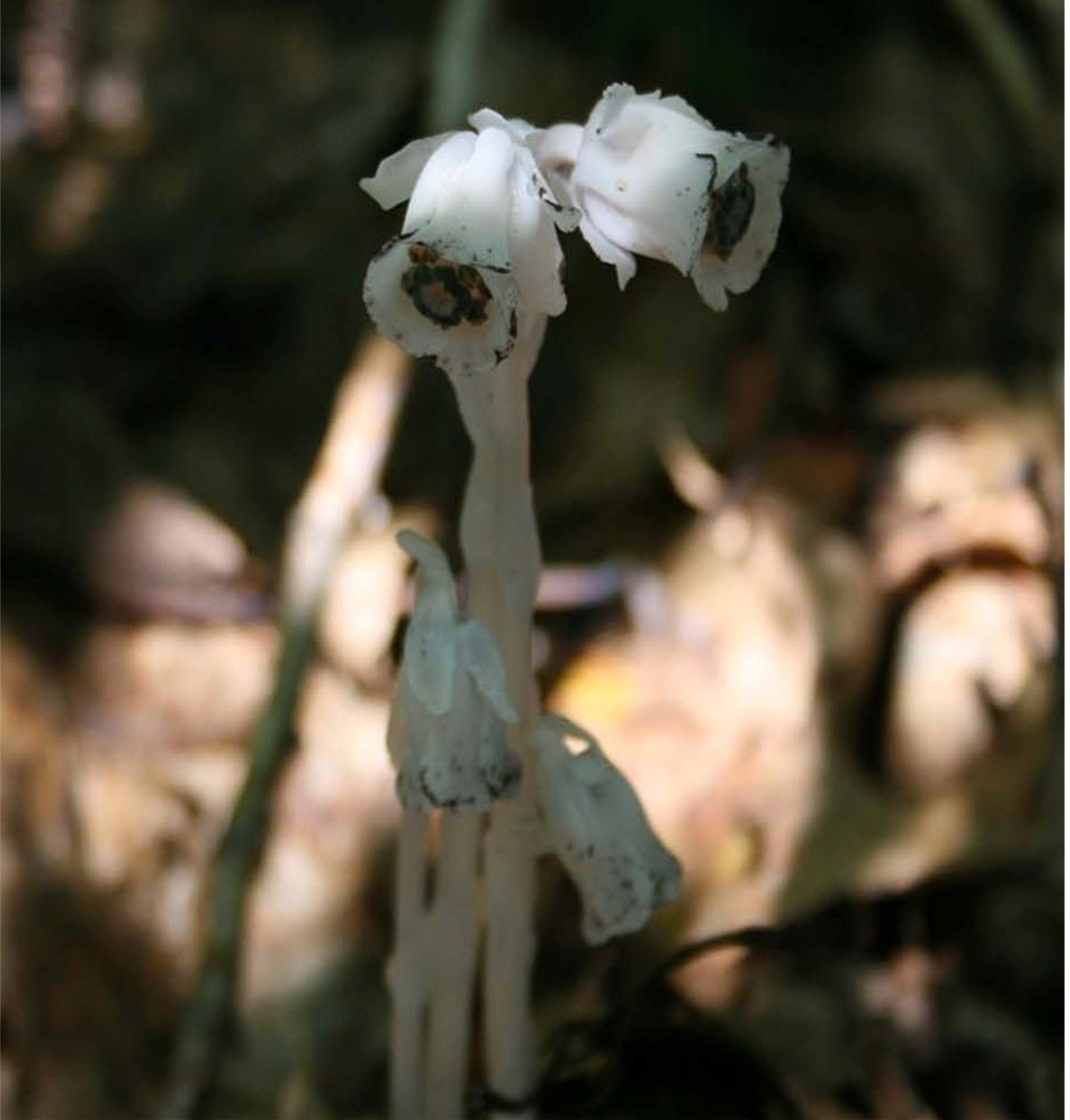
6/15/2007 · Maine · By Kathleen Williamson 
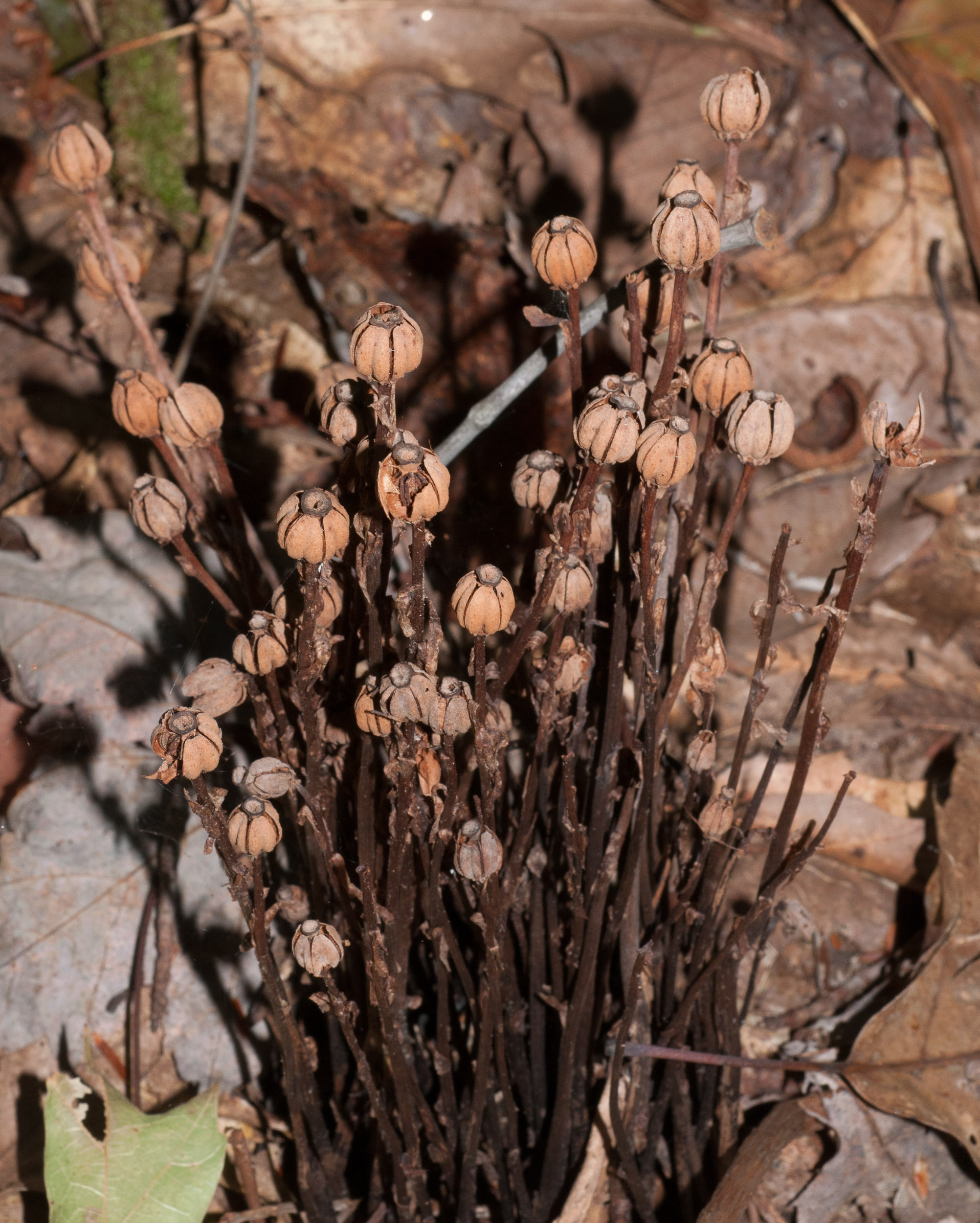
9/17/2012 · Blood Dragon Ravine, Jeff Smith Trail, Pepperell, Massachusetts · ≈ 6 × 7″ (14 × 18 cm) ID is uncertain 

8/15/2021 · Bass Falls Preserve, Alna, Maine · ≈ 7 × 8″ (16 × 19 cm) 

10/7/2018 · Shepley Hill, Groton, Massachusetts 
| Kingdom | Plantae | Plants, but not fungi, lichens, or algae (from Stearn's Botanical Latin) |
| Subkingdom | Tracheobionta | Vascular plants—plants with a “circulatory system” for delivering water and nutrients |
| Division | Magnoliophyta | Flowering plants, also known as angiosperms |
| Class | Magnoliopsida | Dicotyledons—plants with two initial seed leaves |
| Subclass | Asteridae | A large class that encompasses asters |
| Order | Ericales | Tea, persimmon, blueberry, Brazil nut, azalea, many others |
| Family | Monotropaceae | Monotropa family, which lack chlorophyll and get nutrition from parasitizing fungi |
| Genus | Monotropa | From Greek monos, “one,” and tropos, “direction,” since flowers always turn to the same side or, according to another source, referring to the sharp curve in the stem |
| Species | uniflora | Single-flowered |

Monotropa uniflora description by Thomas H. Kent, not updated.

© FloraFinder.org. All rights reserved.