Myosotis scorpioides L.
Forget-me-not, true forget-me-not
True forget-me-nots are native to Europe and Asia. They were introduced to North America and are now naturalized throughout much of the continent.
Plants: Usually low and creeping, sometimes erect and reaching 2′ (60 cm). Stems are hairy. See also the alpine forget-me-not, which is a brighter blue in color.
Leaves: Alternate. Lower leaves a usually spatulate, and 1–3 ⨉ ¼–¾″ (2.5–7.6 cm ⨉ 6.3–19 mm) in size, on short petioles. Further up, leaves become stalkless, smaller, and more oblanceolate in shape. Leaves are sparsely hairy.
Flowers: Forget-me-nots have pale- to medium-blue flowers with five petals and yellow centers. Flowers are ¼–5/16″ (6.3–8.5 mm) in size, appearing from May to October. As the plants develop, they unfurl, revealing rows of new flowers on stalks about ¼″ (6.3 mm) long.
Fruits: Four-parted (a schizocarp), splitting into four dark, shiny, egg-shaped nuggets.
Habitats: Wet places such as bogs, seeps, or riparian environments.

By Johann Georg Sturm (Artist: Jacob Sturm). 
Online References:
Myosotis palustris (L.) Hill

8/2/2009 · Gordon & Kathy’s, Prospect, Maine · ≈ 5 × 3½″ (13 × 8.7 cm)  ID is uncertain

5/16/2024 · Ridge Trail, Freeport, Maine · ≈ 6 × 4″ (16 × 11 cm) 
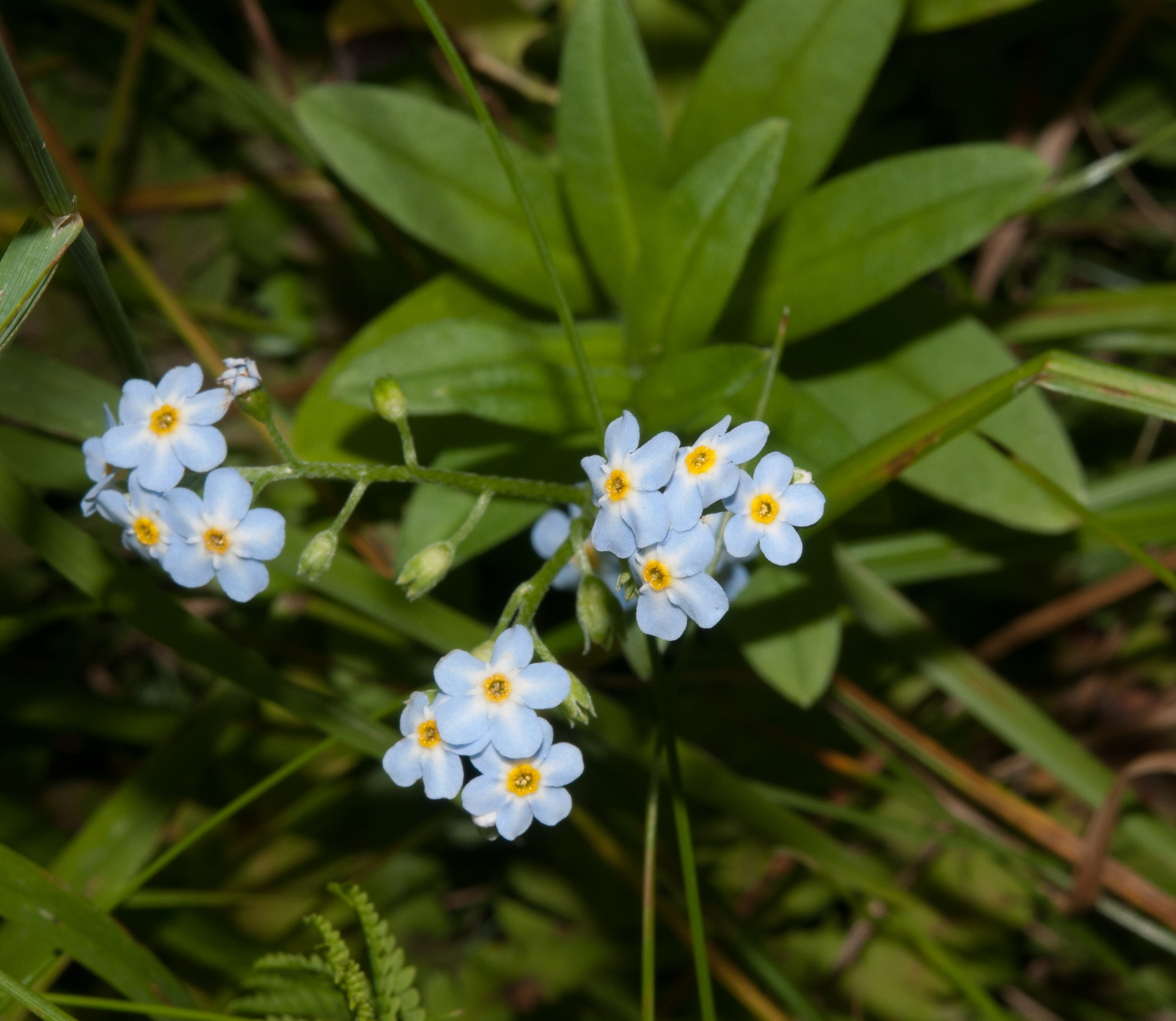
9/14/2013 · Whitewater Rafting Trip, Barryville to Pond Eddy Leg, Delaware River, Barryville, Pennsylvania · ≈ 3½ × 3″ (9.2 × 8 cm) 

8/2/2009 · Gordon & Kathy’s, Prospect, Maine · ≈ 3 × 2″ (7.7 × 5.8 cm) ID is uncertain 

These may be cultivars. · 5/16/2023 · Hamilton Audubon Sanctuary, Blue Trail, West Bath, Maine ID is uncertain 
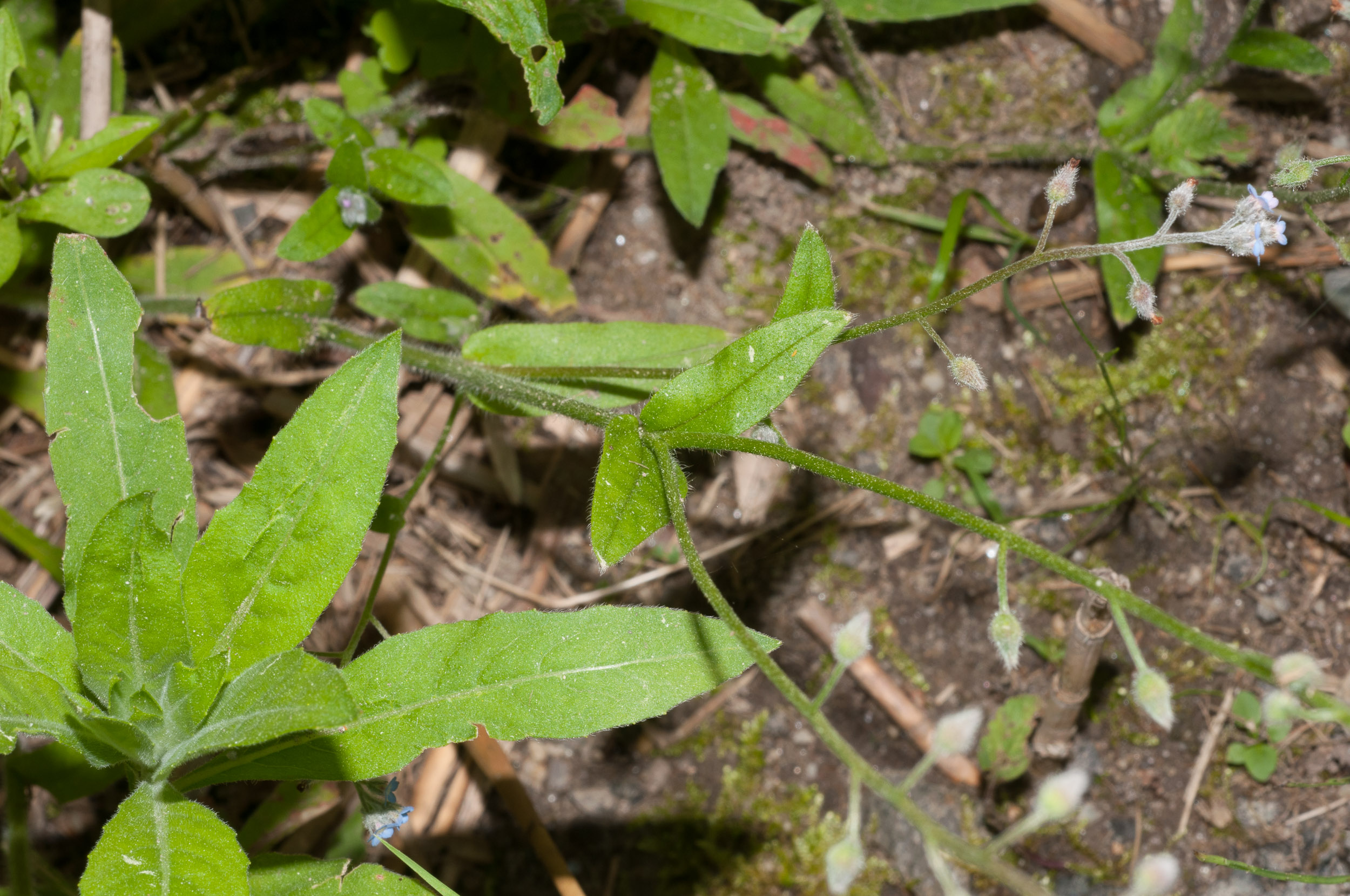
6/16/2012 · Brown St., Falmouth, Maine · ≈ 8 × 5″ (19 × 13 cm) 
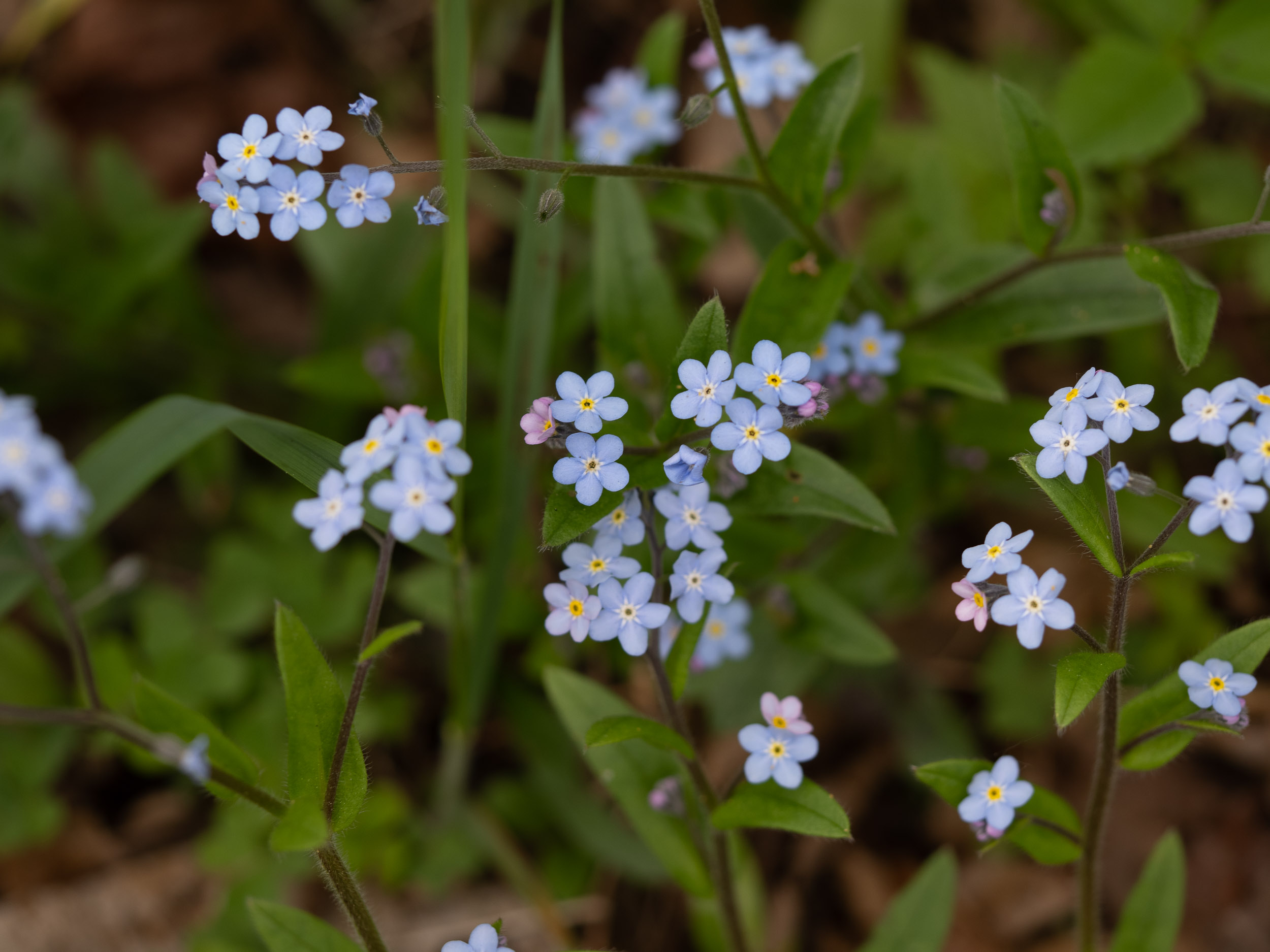
These may be cultivars. · 5/16/2023 · Hamilton Audubon Sanctuary, Blue Trail, West Bath, Maine ID is uncertain 

Probably a cultivar. · 5/27/2016 · Acton Arboretum, Acton, Massachusetts · ≈ 5 × 3½″ (13 × 9.2 cm) 

These may be cultivars. · 5/16/2023 · Hamilton Audubon Sanctuary, Blue Trail, West Bath, Maine ID is uncertain 

Probably a cultivar. · 5/8/2021 · Carol Martin’s, Highland Green, Topsham, Maine · ≈ 6 × 4″ (14 × 11 cm) 

These may be cultivars. · 5/16/2023 · Hamilton Audubon Sanctuary, Blue Trail, West Bath, Maine ID is uncertain 
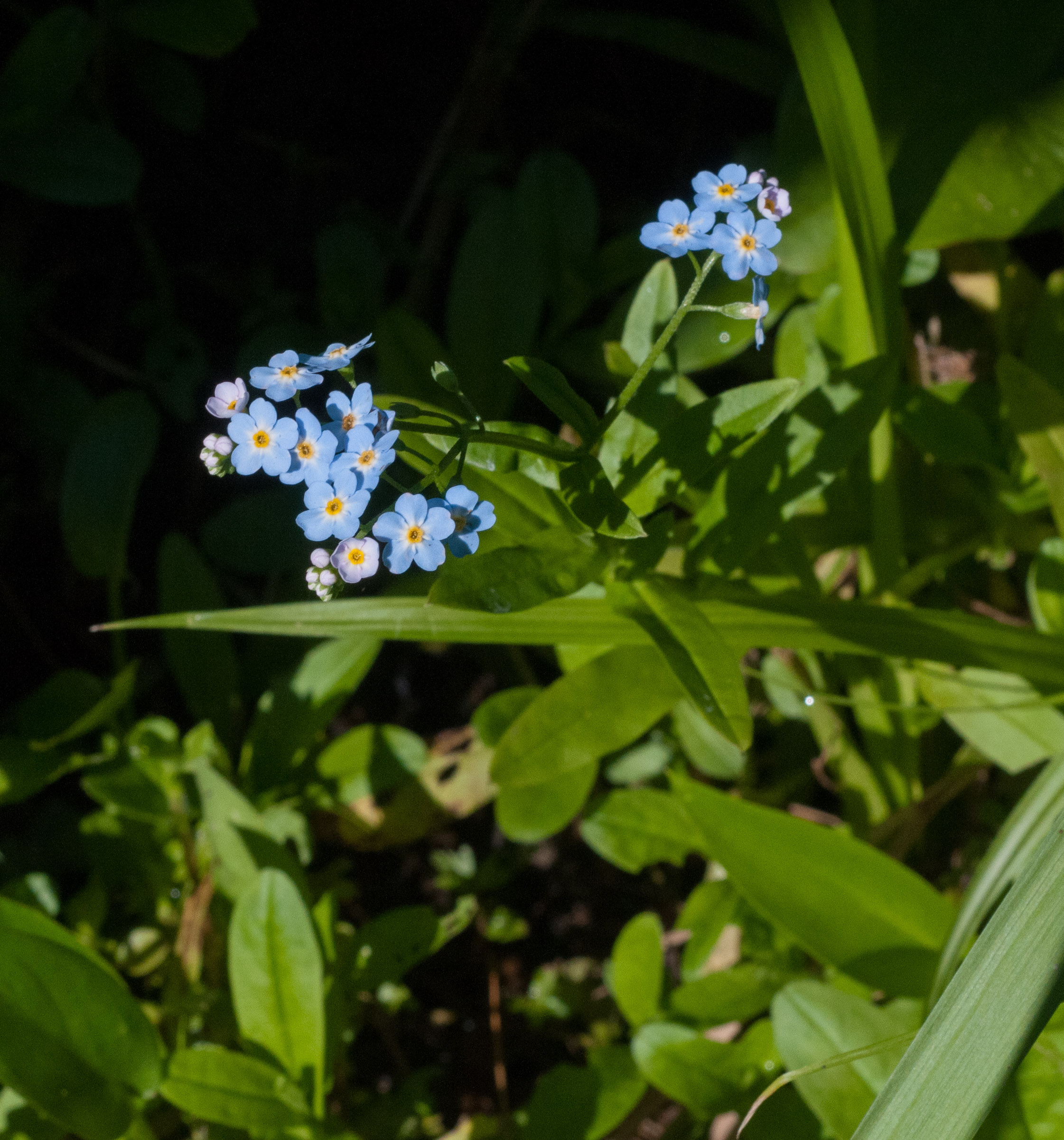
6/16/2012 · Groton Place and Sabine Woods, Groton, Massachusetts · ≈ 6 × 6″ (14 × 15 cm) 
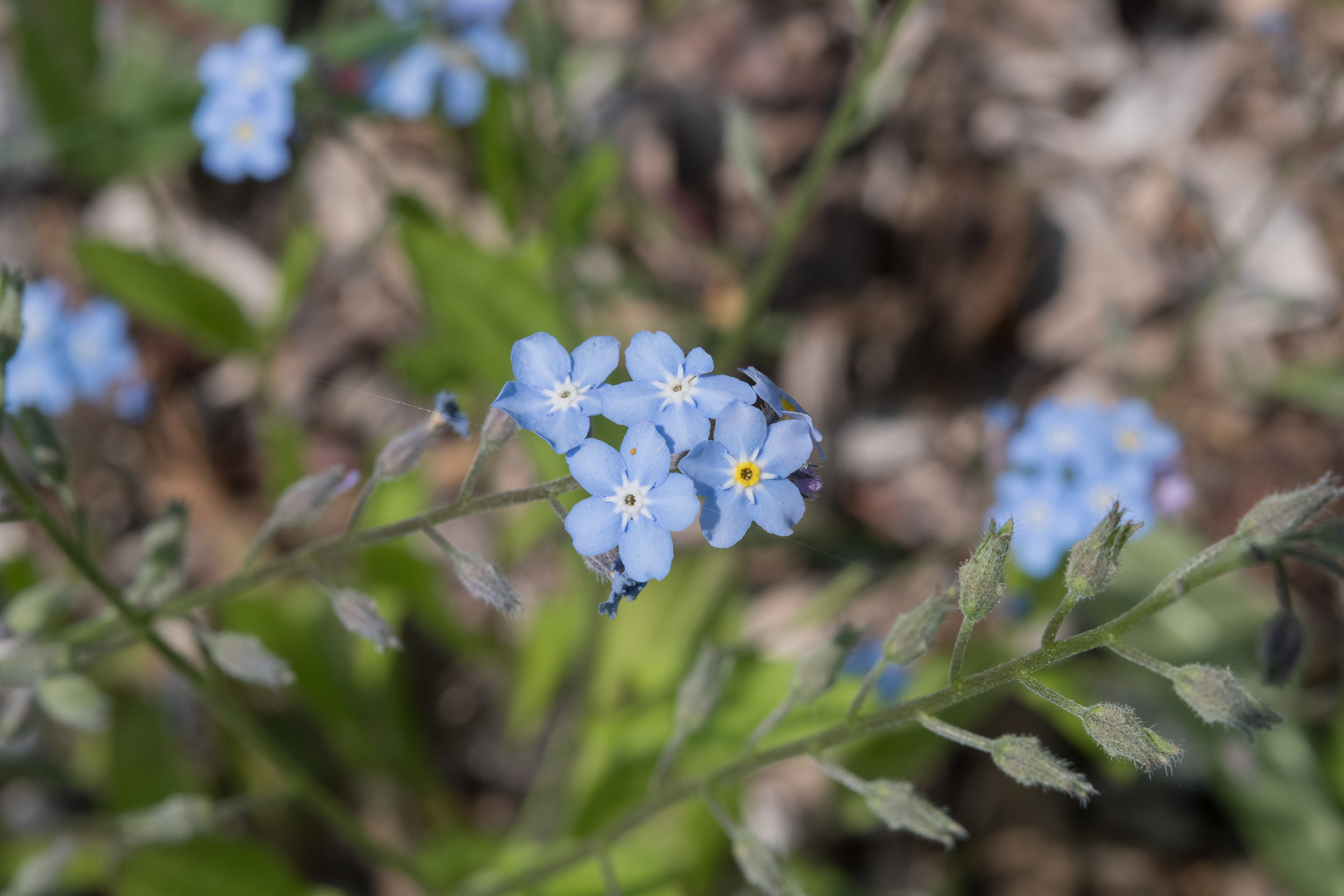
Probably a cultivar. · 5/27/2016 · Acton Arboretum, Acton, Massachusetts · ≈ 5 × 3″ (12 × 8.4 cm) 

5/16/2024 · Ridge Trail, Freeport, Maine · ≈ 7 × 4½″ (18 × 12 cm) 

6/16/2012 · Brown St., Falmouth, Maine · ≈ 3½ × 2½″ (9.8 × 6.6 cm) 

5/15/2021 · Tom and Susan’s, Highland Green, Topsham, Maine · ≈ 3½ × 2½″ (9.2 × 7 cm) 
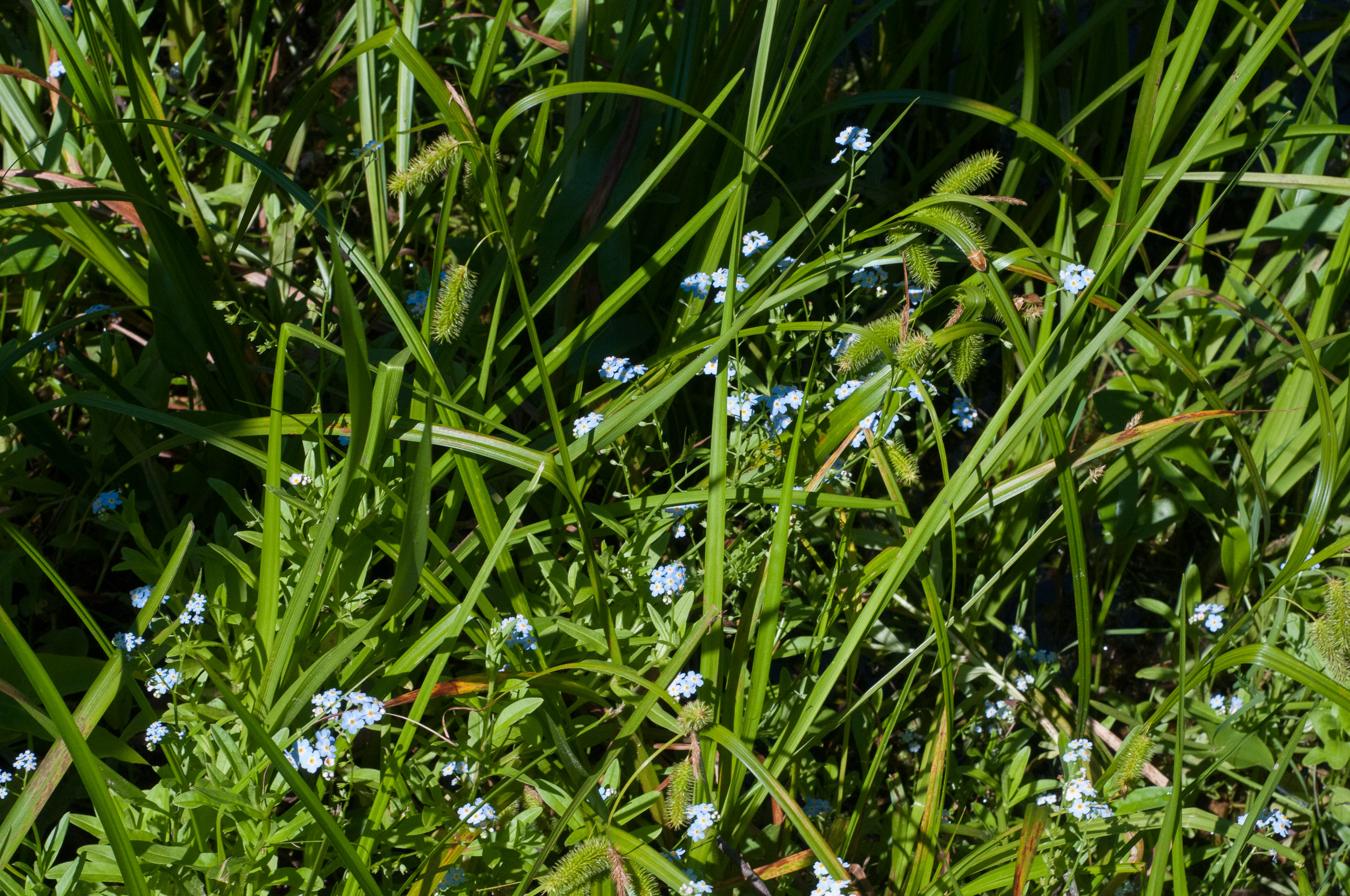
6/16/2012 · Groton Place and Sabine Woods, Groton, Massachusetts · ≈ 2 × 1′ (62 × 41 cm) 
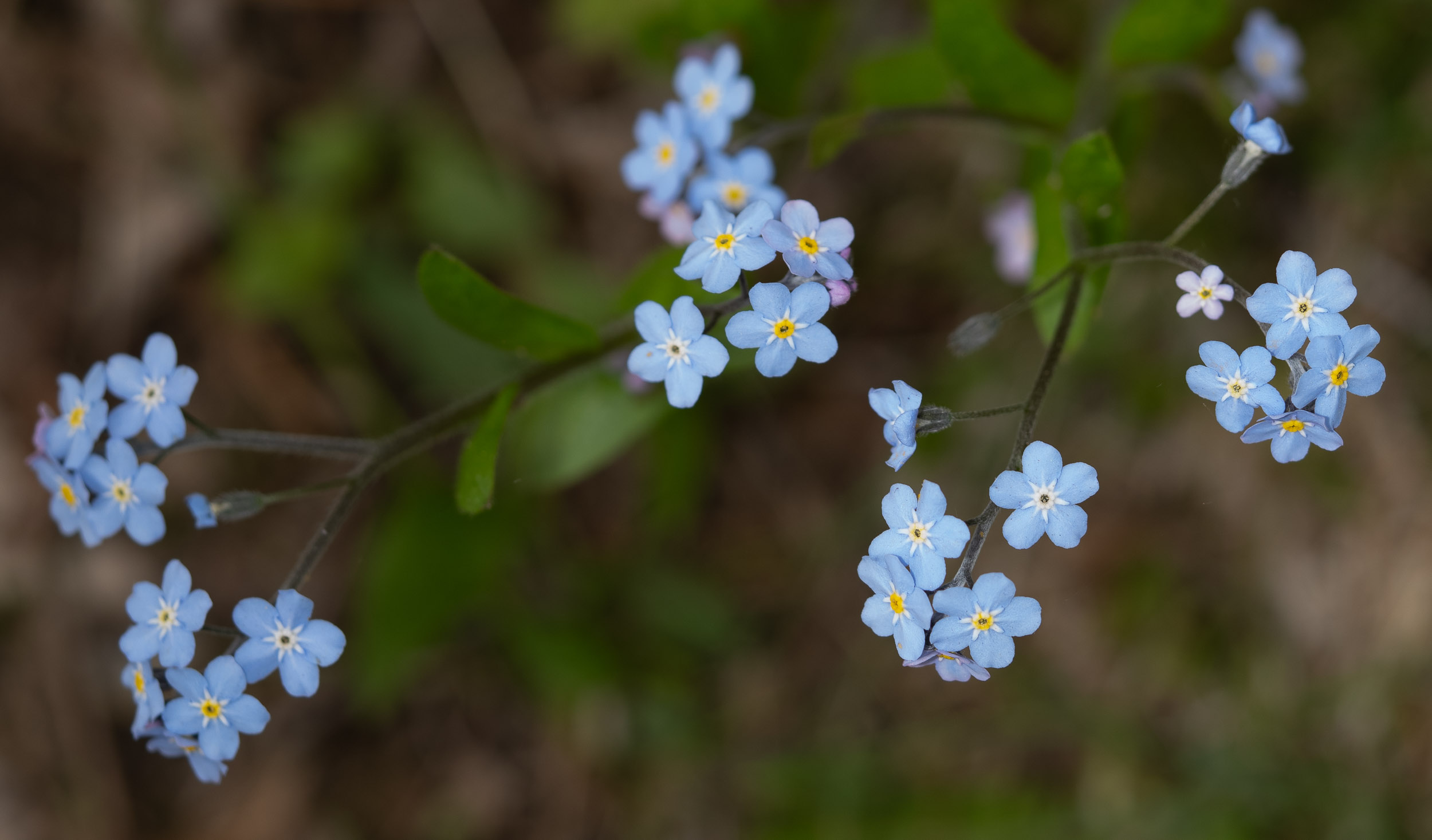
These may be cultivars. · 5/16/2023 · Hamilton Audubon Sanctuary, Blue Trail, West Bath, Maine ID is uncertain 

4/9/2011 · Sandy Point State Park, Annapolis, Maryland · ≈ 4½ × 3″ (11 × 7.9 cm) ID is uncertain 

These may be cultivars. · 5/16/2023 · Hamilton Audubon Sanctuary, Blue Trail, West Bath, Maine ID is uncertain 
| Kingdom | Plantae | Plants, but not fungi, lichens, or algae (from Stearn's Botanical Latin) |
| Subkingdom | Tracheobionta | Vascular plants—plants with a “circulatory system” for delivering water and nutrients |
| Division | Magnoliophyta | Flowering plants, also known as angiosperms |
| Class | Magnoliopsida | Dicotyledons—plants with two initial seed leaves |
| Subclass | Asteridae | A large class that encompasses asters |
| Order | Lamiales | Aromatic herbs and shrubs, including lavender, lilac, olive, jasmine, ash, teak, snapdragon, sesame, psyllium, garden sage, mint, basil, and rosemary |
| Family | Boraginaceae | Borages or forget-me-nots |
| Genus | Myosotis | From the Greek myos, “mouse,” and ous or otos, “ear,” from the shape of the leaves |
| Species | scorpioides | Resembling a scorpion |
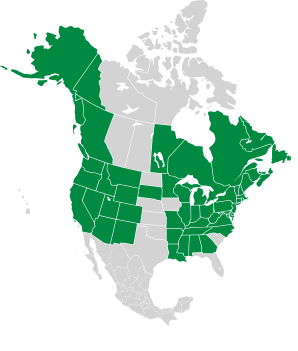
Myosotis scorpioides description by Thomas H. Kent, not updated.

© FloraFinder.org. All rights reserved.