Opuntia compressa J.F. Macbr.
Opuntia opuntia (L.) Karst., nom. inval.
Opuntia vulgaris Mill.
Opuntia ficus-indica (L.) Mill.
Indian fig, Barbary fig
Indian fig is native to central and southern Mexico, but it has long been cultivated and is naturalized in the southern United States, South Africa, Australia, and the Mediterranean. Cultivars are numerous, as these cacti are farmed, trapping water and converting it into biomass better than most plants. These cacti are able to grow “rain roots,” temporary roots that absorb water quickly after rain and wither away afterwards.
Plants: 3–20′ (1–6 m) high, usually smaller and shrublike, sometimes with a central trunk, resembling small trees. Stem segments are oval in shape, variously narrow or wide, tapering at the base, 8–24 ⨉ 4–10″ (20–60 ⨉ 10–25 cm) in size. The areoles, or spots that contain small tufts of spines, are ¾–1¾″ (2–5 cm) apart; the spines themselves are small or often absent.
Flowers: Yellow to orange to red, and 1¾–4″ (5–10 cm) in diameter.
Fruits: Large, juicy fruits (”tunas”) are up to 4″ (10 cm) long, yellow, orange, or reddish purple. They usually lack spines.
Habitats: These have been cultivated and spread far and wide from their original habitat, probably in the central Mexican valley, and are now found in dry tropical climates more or less worldwide.
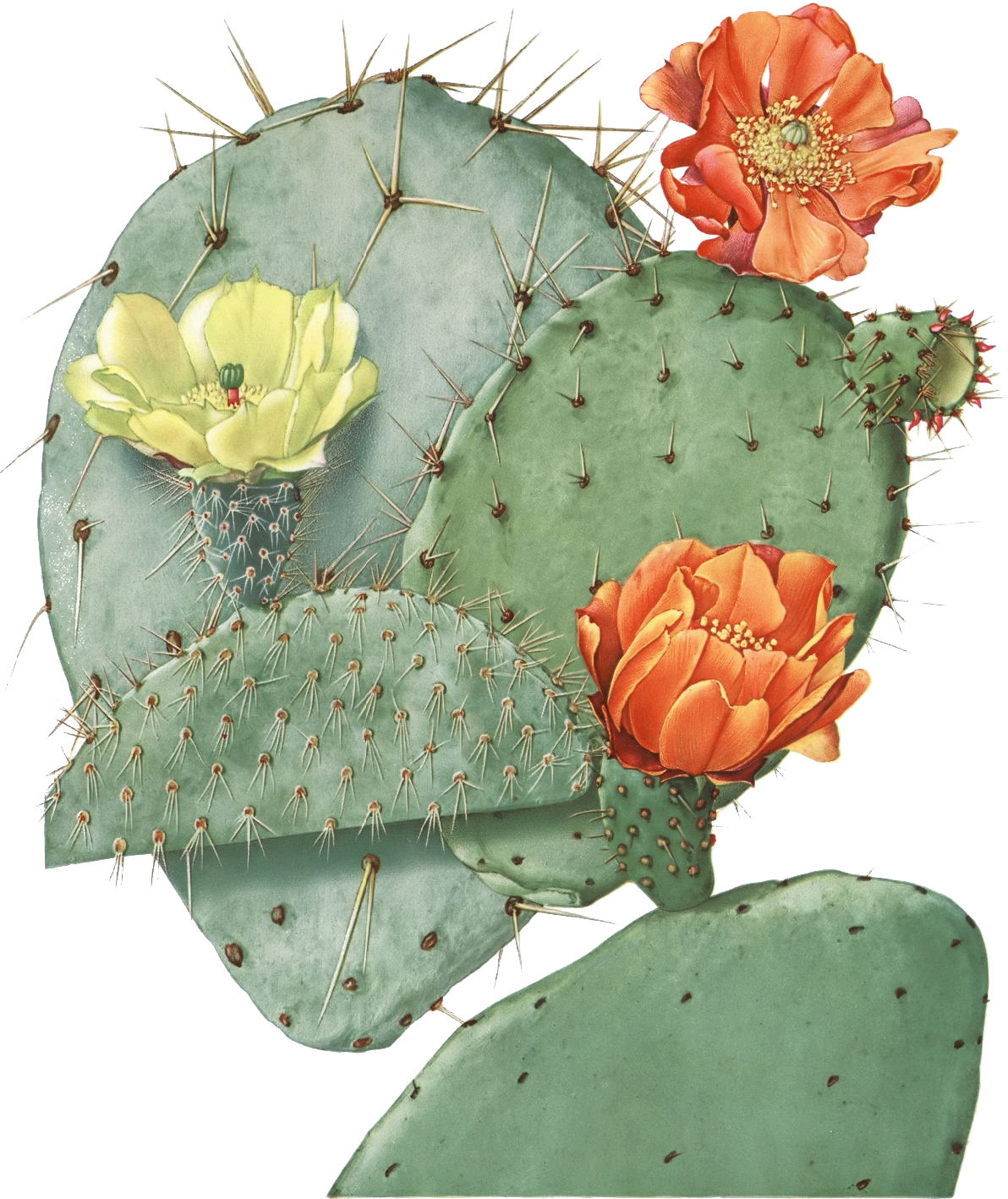
1. Opuntia leucotricha. 2. Opuntia ficus-indica (previously called O. maxima.) 3. Opuntia lasiacantha. 4. Opuntia robusta. From Britton, Nathaniel Lord, Rose, J. N., The Cactaceae: Descriptions and Illustrations of Plants of the Cactus Family, Press of Gibson Brothers, 1919. Drawn by Mary Emily Eaton; scanned by Daniel Schweich. 
Edibility: Prickly pear fruits have been eaten by people since ancient times. Most recipes that refer to “prickly pear cactus” refer to Indian figs, which are prized for their sweet, watermelon-like flavor and bright red/purple or white/yellowish color. They are eaten raw, usually with a little lemon juice; used to produce jams and jellies; or to create a Mexican alcoholic beverage called colonche; as well as for liqueurs and margaritas. The fresh flowers are edible. The seeds can be ground into a meal, the pads cooked like beans; even the stems yield an edible gum.
Medical: A study performed by Jeff Wiese, MD; Steve McPherson, MD; Michelle C. Odden, BS; Michael G. Shlipak, MD, MPH at the Health Sciences Center in New Orleans, Louisiana, found that an extract from this plant significantly reduced hangover symptoms from alcohol consumption. Provided, that is, that you have the foresight to take the extract five hours before you drink.
Online References:
References:
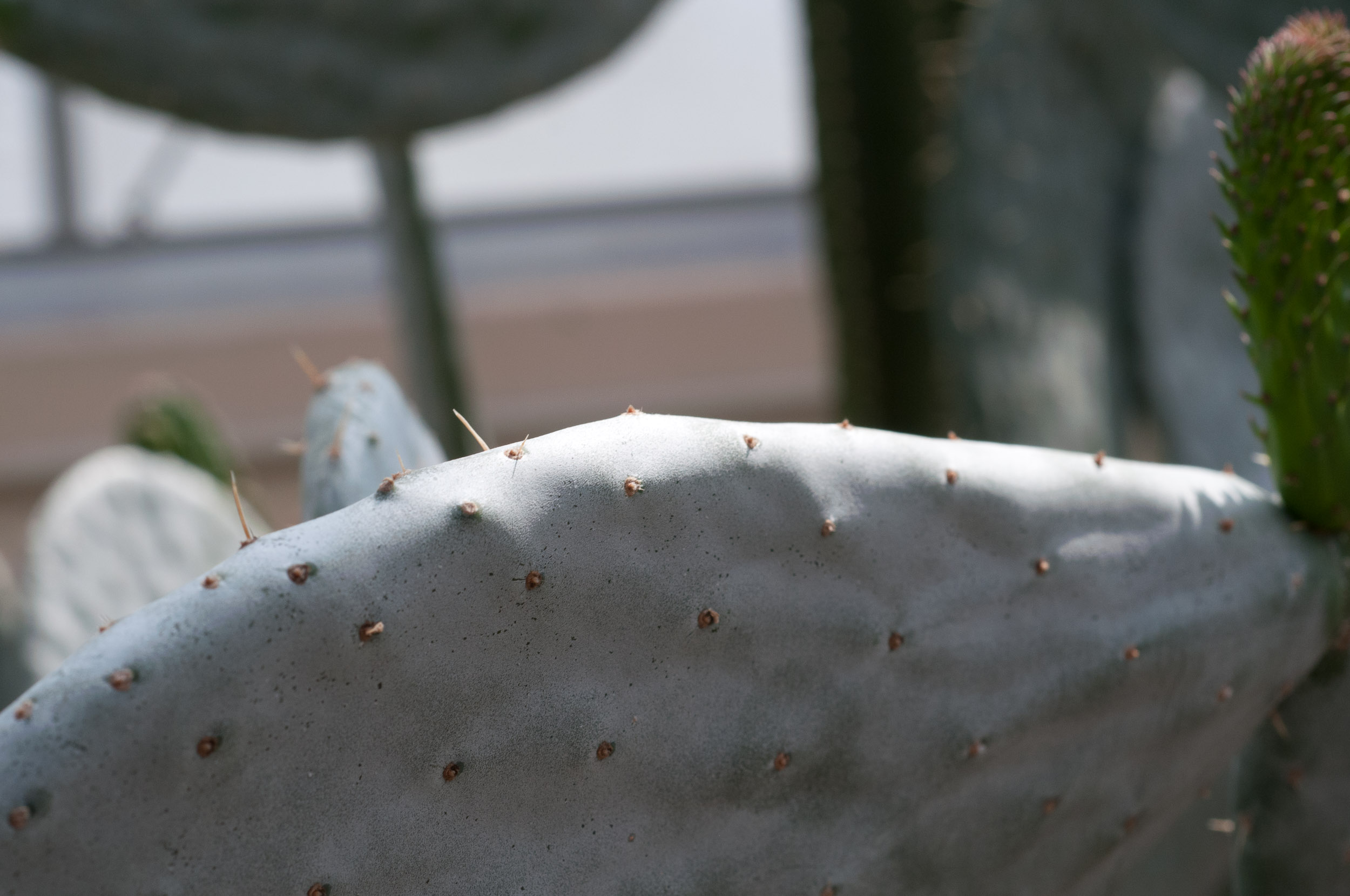
4/6/2011 · Howard Peters Rawlings Conservatory & Botanic Gardens, Druid Hill Park, Baltimore, Maryland · ≈ 9 × 6″ (22 × 14 cm) 

4/6/2011 · Howard Peters Rawlings Conservatory & Botanic Gardens, Druid Hill Park, Baltimore, Maryland · ≈ 2 × 1′ (62 × 41 cm) 

4/6/2011 · Howard Peters Rawlings Conservatory & Botanic Gardens, Druid Hill Park, Baltimore, Maryland · ≈ 3½ × 2½″ (9.8 × 6.6 cm) 

4/6/2011 · Howard Peters Rawlings Conservatory & Botanic Gardens, Druid Hill Park, Baltimore, Maryland 

4/6/2011 · Howard Peters Rawlings Conservatory & Botanic Gardens, Druid Hill Park, Baltimore, Maryland · ≈ 6 × 9″ (15 × 23 cm) 
| Kingdom | Plantae | Plants, but not fungi, lichens, or algae (from Stearn's Botanical Latin) |
| Subkingdom | Tracheobionta | Vascular plants—plants with a “circulatory system” for delivering water and nutrients |
| Division | Magnoliophyta | Flowering plants, also known as angiosperms |
| Class | Magnoliopsida | Dicotyledons—plants with two initial seed leaves |
| Subclass | Caryophyllidae | Cacti, many other succulents, carnivorous plants, and leadworts |
| Order | Caryophyllales | Includes cacti, carnations, amaranths, ice plants, and many carnivorous plants |
| Family | Cactaceae | Succulent (water-storing) plants, often spiny |
| Genus | Opuntia | Prickly pears |
| Species | ficus-indica | Indian fig |
Opuntia ficus-indica description by Thomas H. Kent, not updated.

© FloraFinder.org. All rights reserved.
