Oxypolis filiformis (Walter) Britton
Water dropwort, water cowbane
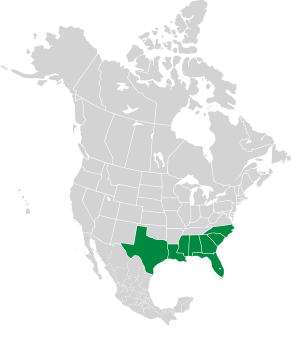
Water dropwort is native to the southeastern United States, and the northern Bahamian pineyards of the Bahamas.
Plants: Perennial plants have stems 3–5′ (91–152 cm) in height, with few branches.
Leaves: Basal rosette leaves are 2–3′ (60–91 cm) long, and terete. A few much smaller, more needlelike leaves appear along the otherwise bare stem.
Flowers: Flowers emerge on stalks 4–5′ (1.2–1.5 m) tall, arranged like starbursts, in umbels of umbels (I’m not repeating myself!). The large flowerhead has 4-10 lanceolate bracts at its base. The smaller umbels each contain 12-22 starlike white flowers. Each flower is stalked, about ⅛″ (3.2 mm) around, with five petals, five stamens with white or pinkish anthers, and a single pistil. Petals are often curved.
Fruits: Flattened brown samaras with wings along the entire edge.
Habitats: Shallow freshwater wetlands, savannas, and bogs, in rich wet muck.
Edibility:  Poisonous to eat, and leaves can
produce a contact dermatitis.
Poisonous to eat, and leaves can
produce a contact dermatitis.
Online References:
Tiedemannia filiformis (Walter) Feist & S.R. Downie

4/12/2015 · Shark Valley, Everglades National Park, Florida · ≈ 5 × 6″ (13 × 14 cm) 

4/12/2015 · Shark Valley, Everglades National Park, Florida · ≈ 6 × 9″ (16 × 23 cm) 
| Kingdom | Plantae | Plants, but not fungi, lichens, or algae (from Stearn's Botanical Latin) |
| Subkingdom | Tracheobionta | Vascular plants—plants with a “circulatory system” for delivering water and nutrients |
| Division | Magnoliophyta | Flowering plants, also known as angiosperms |
| Class | Magnoliopsida | Dicotyledons—plants with two initial seed leaves |
| Subclass | Asteridae | A large class that encompasses asters |
| Order | Apiales | Includes carrots, celery, parsley, and ivy |
| Family | Apiaceae | Carrot or parsley family, also includes angelica, anise, caraway, celery, chervil, cicely, coriander/cilantro, cumin, dill, fennel, hemlock, lovage, Queen Anne’s Lace, parsnip |
| Genus | Oxypolis | Another good example of the difficulty of finding out what some of these names mean: Munz says: from the Greek oxys, “sharp,” and polis, “city,” of uncertain application; while Jepson simply gives the definition as “sharp white.” Quattrocchi on the other hand says the name is from “sharp” and polos for “axis or pole,” referring to the leaves |
| Species | filiformis | Thread-like |
Oxypolis filiformis description by Thomas H. Kent, not updated.

© FloraFinder.org. All rights reserved.