Phoradendron californicum Nutt. var. leucocarpum (Trel.) Jeps.
Phoradendron californicum Nutt.
Desert mistletoe, mesquite mistletoe
Desert mistletoe is native to desert regions of southwestern North America. It is hemiparasitic, getting some energy from photosynthesis and water and nutrients from a host plant.
Plants: From a distance, desert mistletoe looks a little like a weird bird’s nest—a concentrated, green or reddish-brown, vaguely spherical blob of small woody branchlets suspended in a tree. Many such blobs, each up to 3′ (1 m) or so in size, may inhabit a single tree. Stems are silvery-green at first, finely hairy; later becoming hairless and green to reddish green.
Leaves: Practically nonexistent, 1/32–1/16″ (1–2.5 mm) long, pressed flat against stems, quickly drying to appear as scales.
Flowers: Inconspicuous yellowish flowers appear during the winter.
Fruits: Copious, white to reddish, glabrous, about ⅛″ (5 mm) around when fresh, shrinking to ⅛″ (3 mm) later, turning translucent when ripe. They spread themselves by explosive dehiscence. If you have an image of small seed grenades going off, you have the right idea.
Edibility: Poisonous  . Plants contain phoratoxins that increase
blood pressure, cause convulsions, or cause cardiac arrest. Berries, however, are edible, provided the
mistletoe is harvested from mesquite, ironwood, or catclaw acacia. Berries growing on palo verdes or
desert buckthorn are inedible, presumably because of toxins absorbed from the host trees. Berries from
safe trees are harvested when they turn translucent. They may be consumed raw, boiled or mashed into a
pudding, or boiled to a paste with a bit of potash added.
. Plants contain phoratoxins that increase
blood pressure, cause convulsions, or cause cardiac arrest. Berries, however, are edible, provided the
mistletoe is harvested from mesquite, ironwood, or catclaw acacia. Berries growing on palo verdes or
desert buckthorn are inedible, presumably because of toxins absorbed from the host trees. Berries from
safe trees are harvested when they turn translucent. They may be consumed raw, boiled or mashed into a
pudding, or boiled to a paste with a bit of potash added.
Habitats: Desert habitats containing woody, often leguminous plants.
Online References:
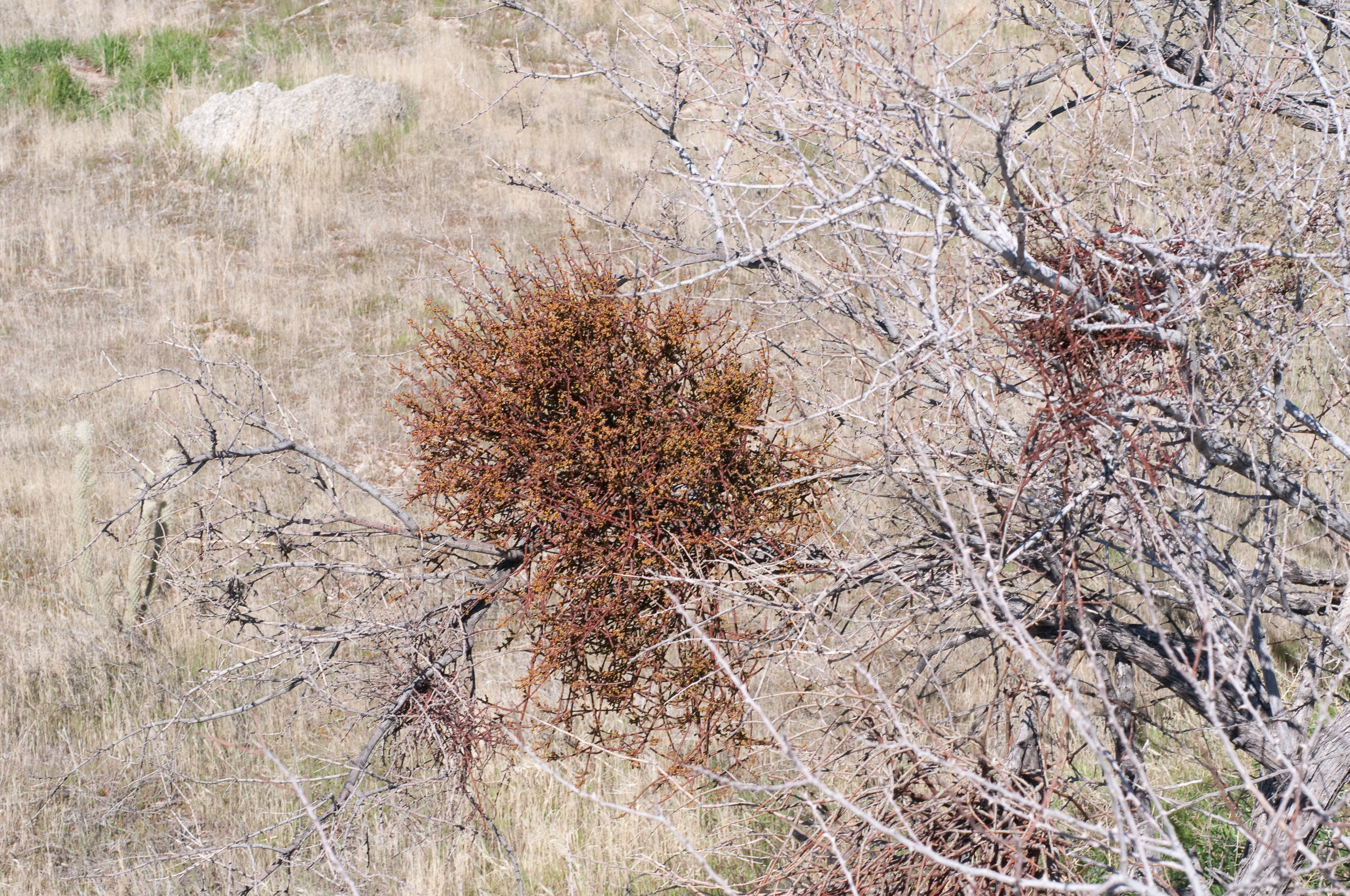
2/28/2010 · Anza-Borrego Desert State Park, California 
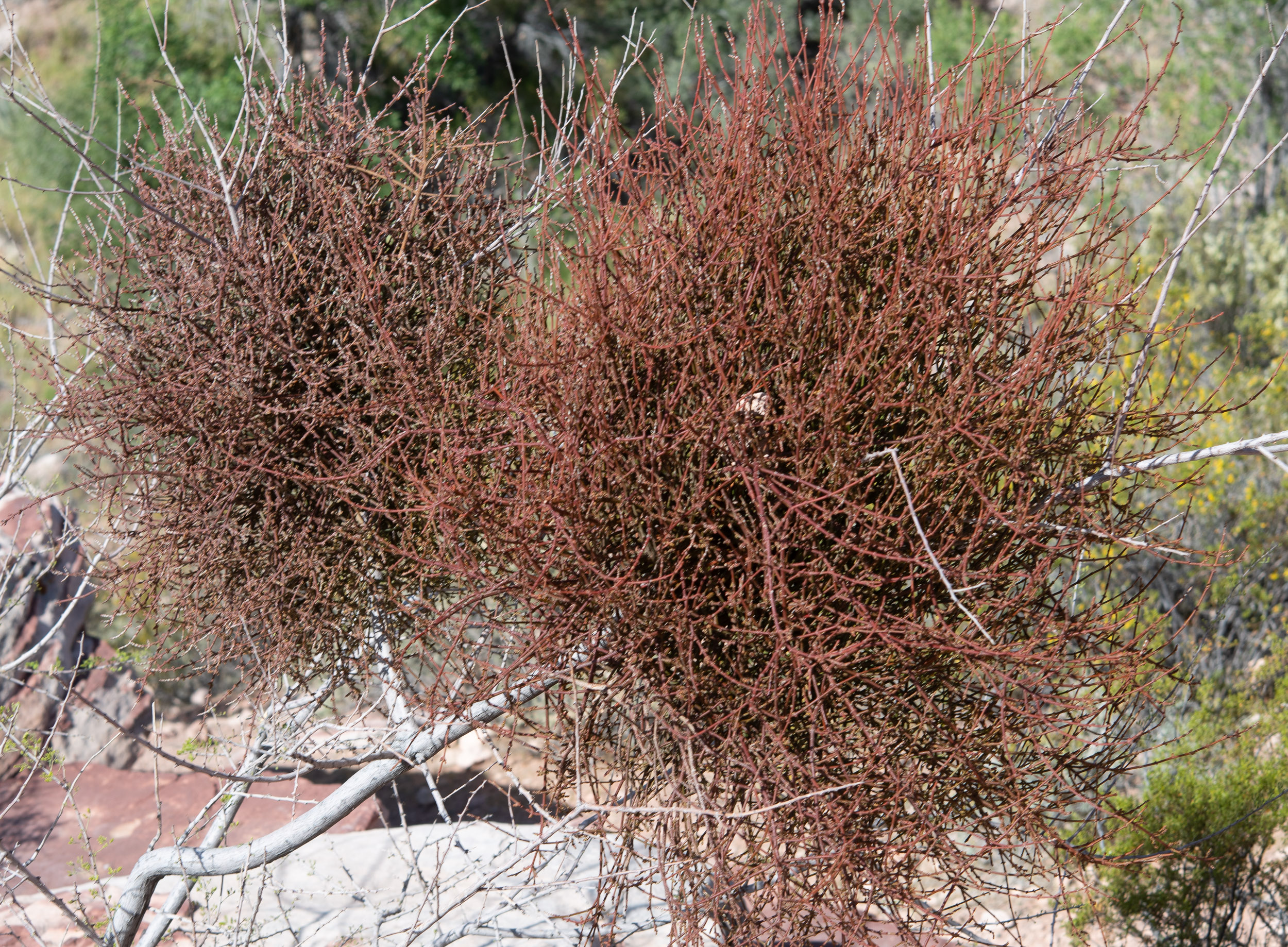
4/29/2018 · Red Spring Calico Basin, Red Rock Canyon, Nevada 
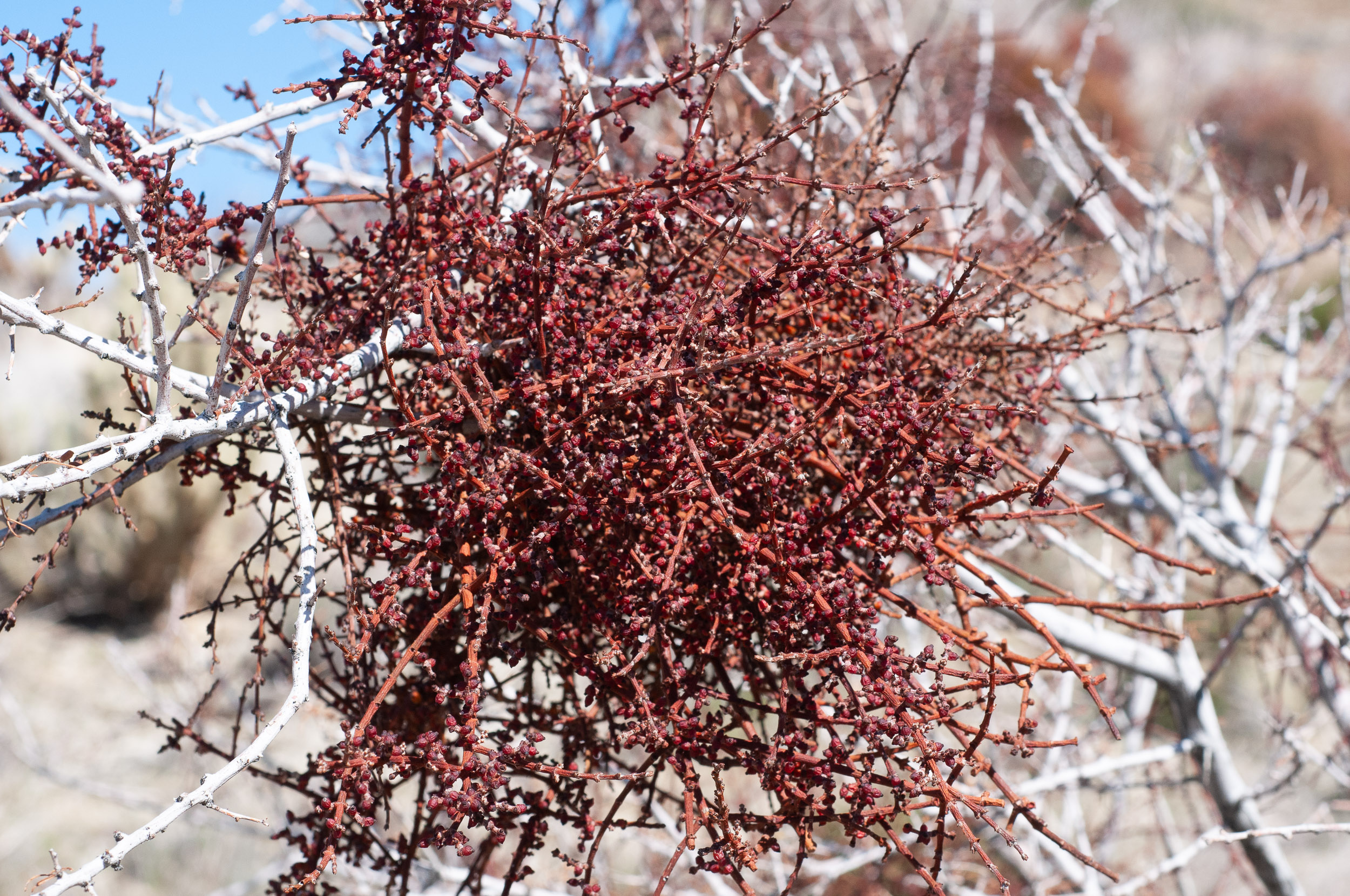
2/28/2010 · Anza-Borrego Desert State Park, California · ≈ 15 × 10″ (39 × 26 cm) 

4/29/2018 · Red Spring Calico Basin, Red Rock Canyon, Nevada 

5/3/2018 · Park Blvd, Joshua Tree National Park, California · By Susan M. Kent 

4/29/2018 · Red Spring Calico Basin, Red Rock Canyon, Nevada · ≈ 10 × 6″ (24 × 16 cm) 

4/29/2018 · Red Spring Calico Basin, Red Rock Canyon, Nevada 
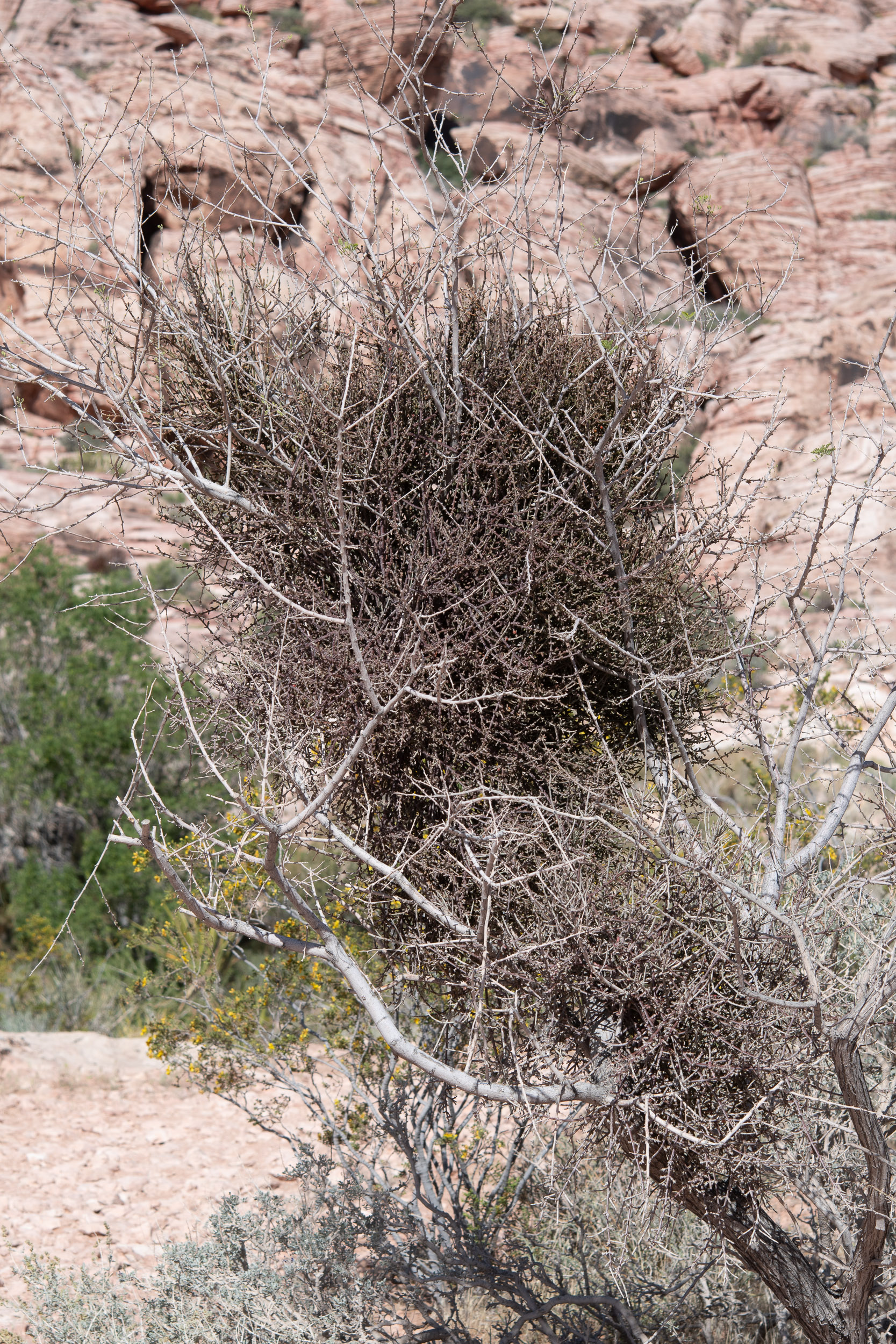
4/29/2018 · Red Spring Calico Basin, Red Rock Canyon, Nevada 
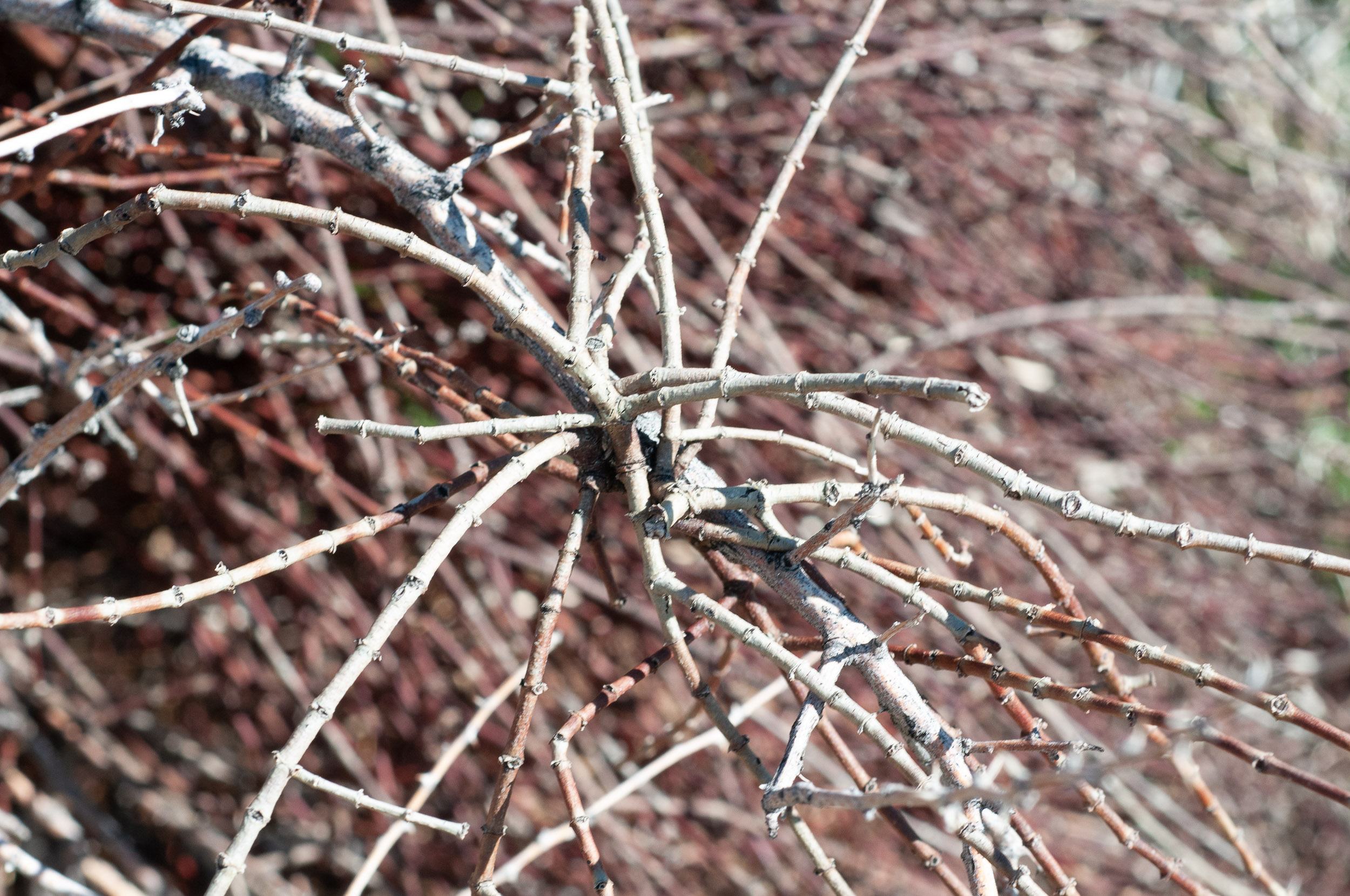
2/28/2010 · Anza-Borrego Desert State Park, California · ≈ 11 × 7″ (27 × 18 cm) 

2/28/2010 · Anza-Borrego Desert State Park, California · ≈ 17 × 12″ (44 × 29 cm) 

2/28/2010 · Anza-Borrego Desert State Park, California · ≈ 15 × 10″ (39 × 26 cm) 

8/26/2014 · La Ventana Natural Arch, El Malpais, New Mexico 
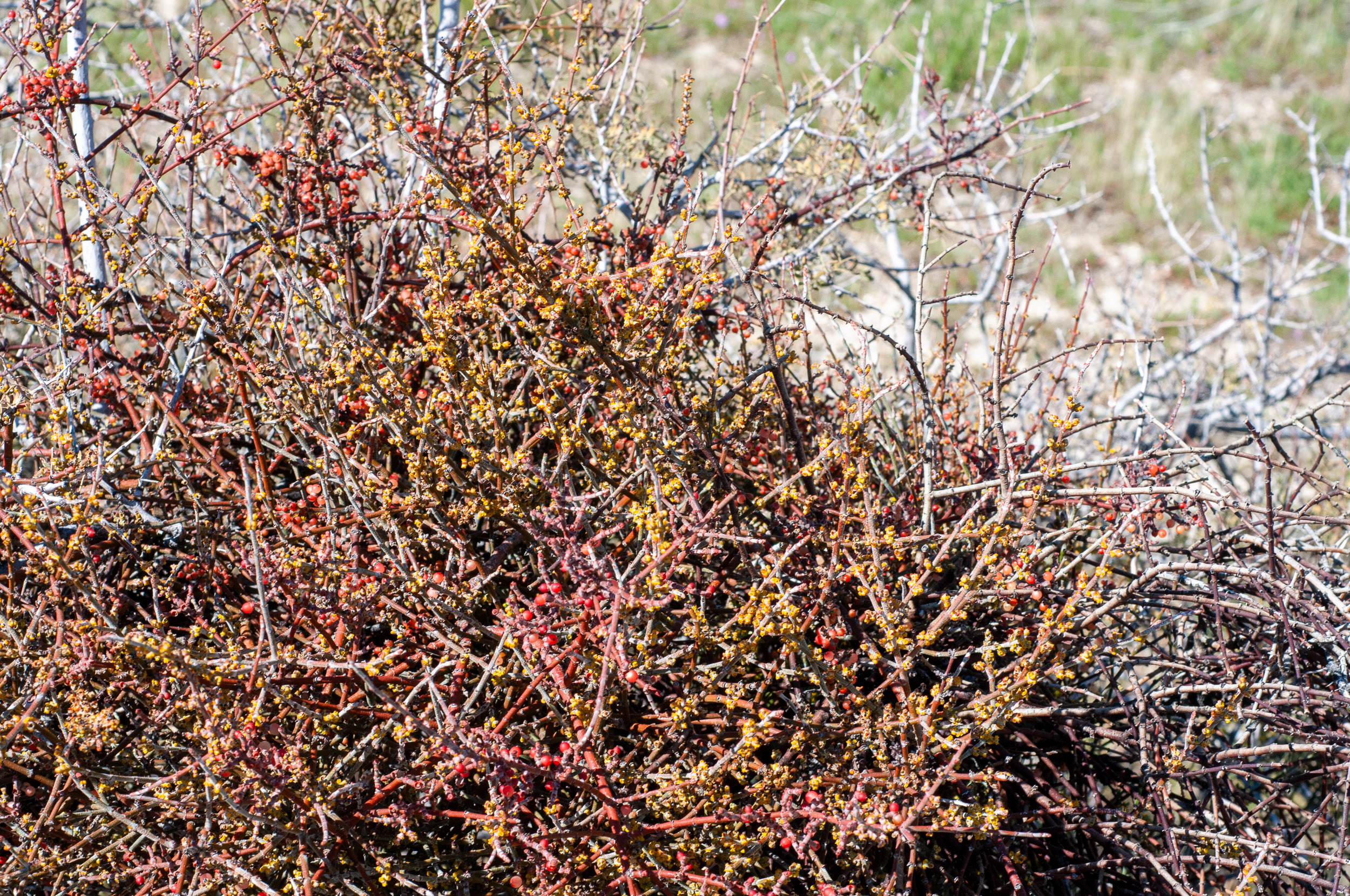
2/28/2010 · Anza-Borrego Desert State Park, California · ≈ 2 × 1′ (62 × 41 cm) 

5/3/2018 · Park Blvd., Joshua Tree National Park · ≈ 9 × 8″ (22 × 20 cm) 

4/29/2018 · Red Spring Calico Basin, Red Rock Canyon, Nevada · ≈ 10 × 6″ (24 × 16 cm) 
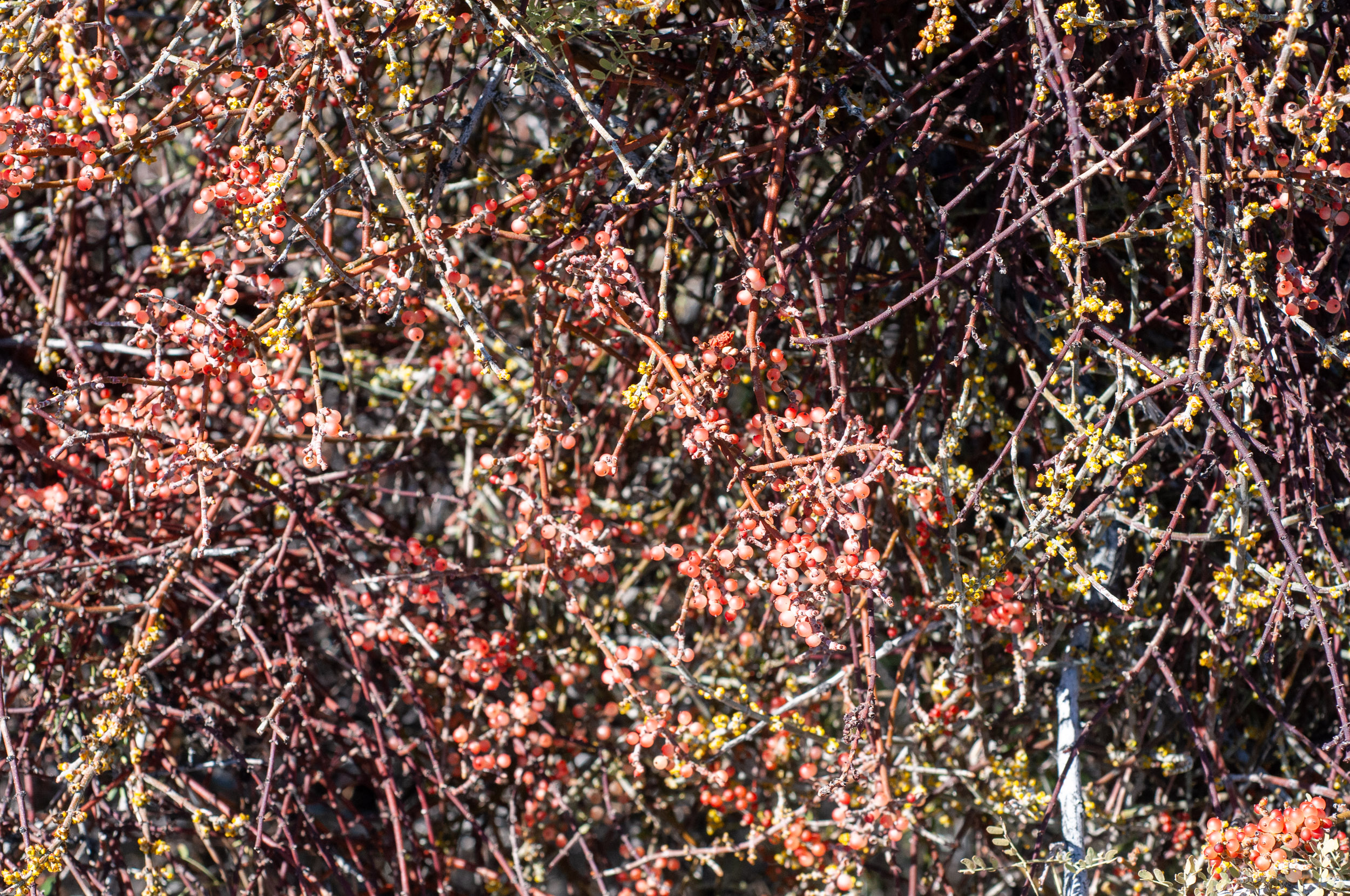
2/28/2010 · Anza-Borrego Desert State Park, California · ≈ 17 × 12″ (44 × 29 cm) 

2/28/2010 · Anza-Borrego Desert State Park, California 
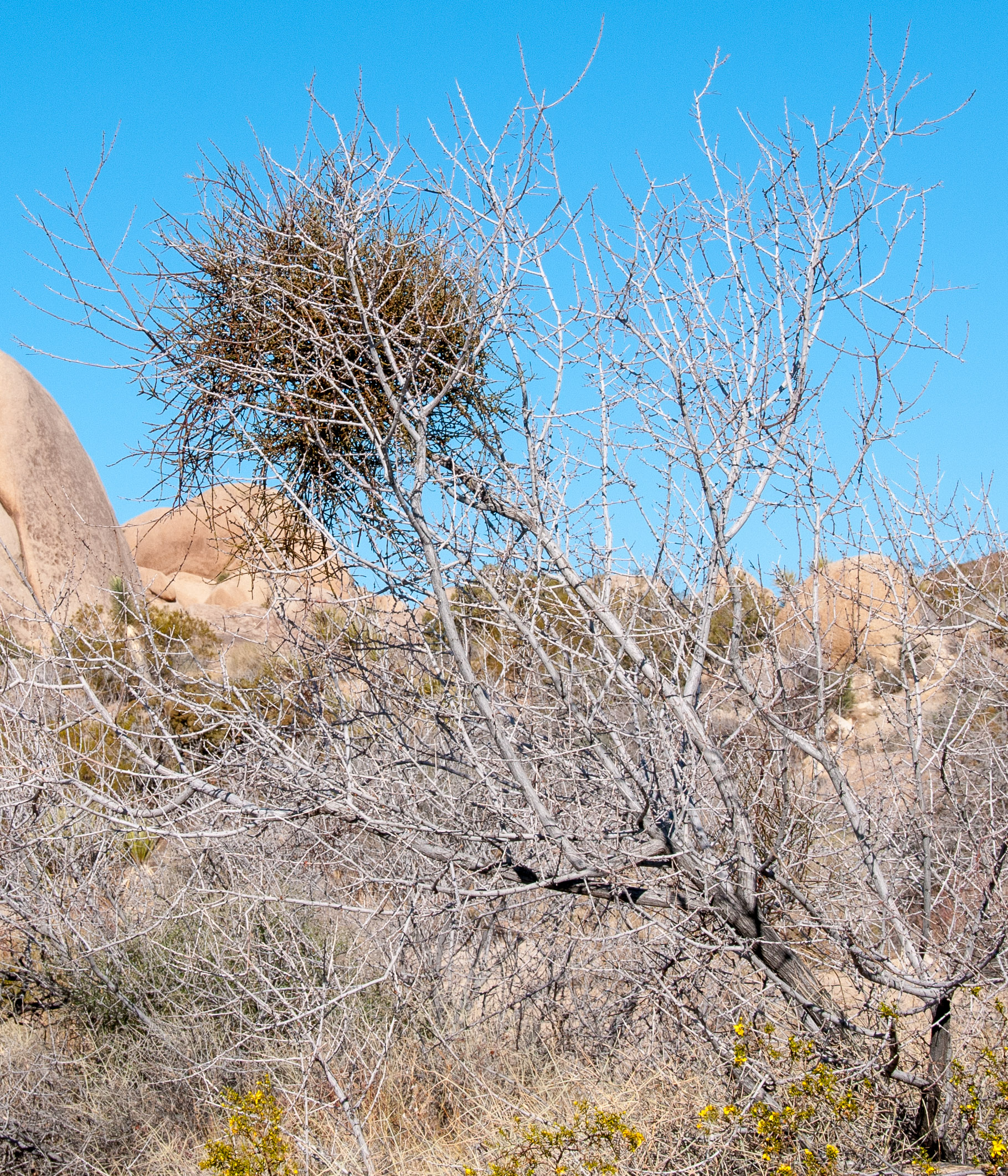
5/3/2018 · Park Blvd, Joshua Tree National Park, California · By Susan M. Kent 

4/30/2018 · Barber Peak Loop Trail, Mojave National Preserve, California 

8/26/2014 · La Ventana Natural Arch, El Malpais, New Mexico · ≈ 12 × 12″ (29 × 31 cm) 
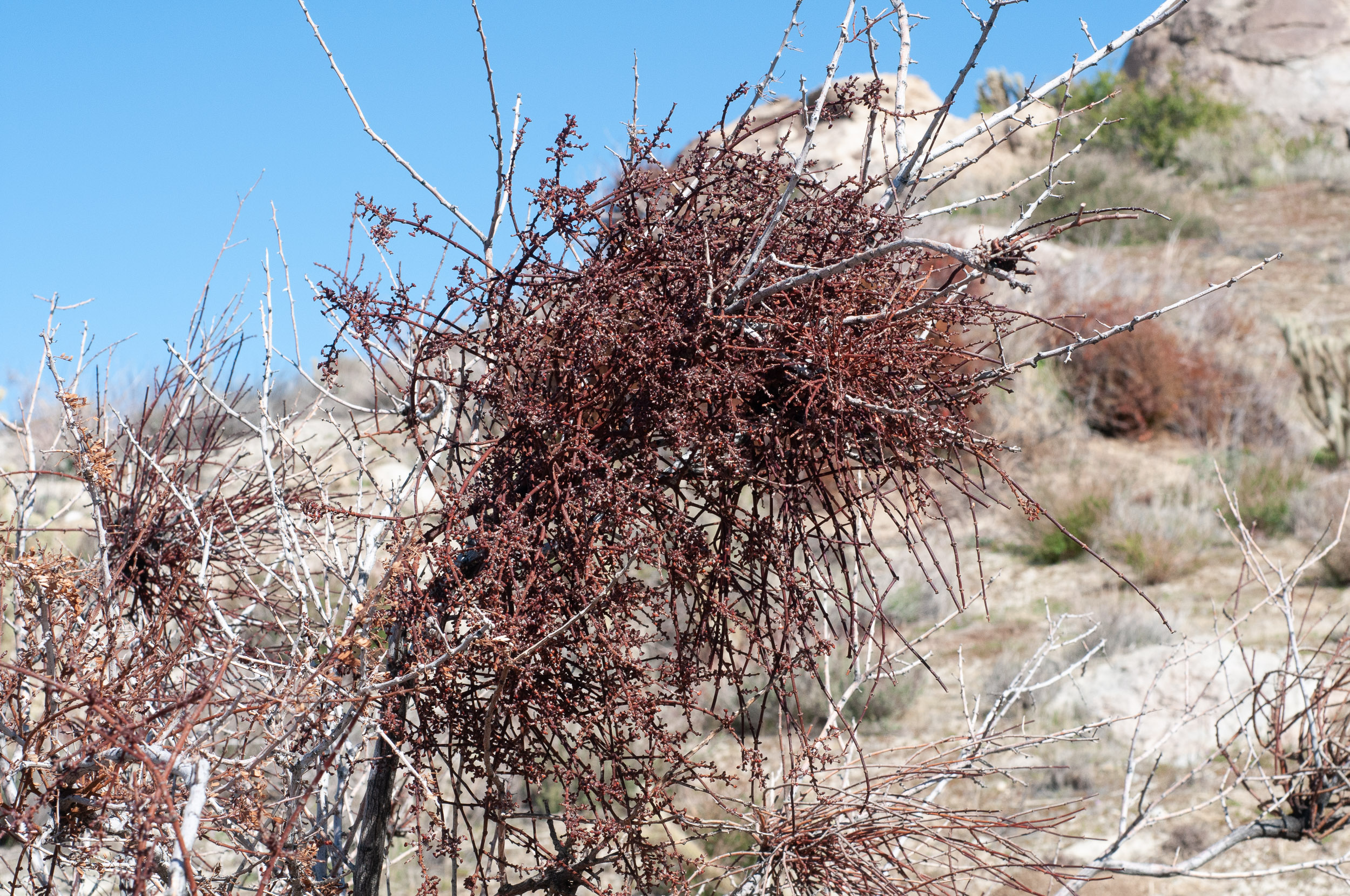
2/28/2010 · Anza-Borrego Desert State Park, California 
| Kingdom | Plantae | Plants, but not fungi, lichens, or algae (from Stearn's Botanical Latin) |
| Subkingdom | Tracheobionta | Vascular plants—plants with a “circulatory system” for delivering water and nutrients |
| Division | Magnoliophyta | Flowering plants, also known as angiosperms |
| Class | Magnoliopsida | Dicotyledons—plants with two initial seed leaves |
| Subclass | Rosidae | Roses, legumes, proteas, dogwoods, hydrangeas, mistletoes, euphorbias, grapes, many more |
| Order | Santalales | Mostly parasitic plants without a testa, |
| Family | Viscaceae | Mistletoes |
| Genus | Phoradendron | Mistletoes |
| Species | californicum | “From California” |
Phoradendron californicum description by Thomas H. Kent, not updated.

© FloraFinder.org. All rights reserved.
