x
FloraFinder uses cookies only for correct operation. More info. Okay


Phyla nodiflora (L.) Greene

Lippia, kurapia, frogfruit, turkey tangle fogfruit

Lippia is native to North and South America, Asia, and Africa. It is often grown as an ornamental plant.

Plants: Evergreen perennials are creeping and mat-forming, 2–6″ (6–14 cm) in height.

Leaves: Opposite, sessile or on short petioles, ⅛–1½″ long ⨉ ⅛–¾″ broad (5–40 ⨉ 4–20 mm), elliptic to oval. The lower half of each leaf is smooth-edged, while the upper half is toothed. P. nodiflora var. reptans has more diamond-shaped leaves.

Flowers: A purple center is surrounded by small, white-to-pink flowers on long, erect pedicels.

Fruits: Capsules, schizocarps, 1/32–1/16″ (1.5–2 mm) long, separate into two nutlets.

Habitats: Moist habitats with poorly to well-drained soils, in hammocks, beaches, and lawns and along roadsides.

Medical: Widely used for a variety of folk remedies, many of which have been confirmed by phytochemical analysis.

Online References:

Monaco Nature Encyclopedia

Wikipedia

References:

McMullen, Conley K., Flowering Plants of the Galápagos, Comstock Publishing Associates, 1999, p. 256

Lippia incisa (Small) Tidestr.
Lippia nodiflora (L.) Michx.
Lippia nodiflora (L.) Michx. var. reptans (Kunth) Kuntze
Lippia reptans Kunth
Phyla incisa Small
Phyla nodiflora (L.) Greene var. incisa (Small) Moldenke
Phyla nodiflora (L.) Greene var. longifolia Moldenke
Phyla nodiflora (L.) Greene var. nodiflora
Phyla nodiflora (L.) Greene var. reptans (Kunth) Moldenke
Phyla nodiflora (L.) Greene var. repens (Spreng.) Moldenke
Phyla nodiflora (L.) Greene var. rosea (D. Don) Moldenke


Phyla nodiflora (lippia, kurapia, frogfruit, turkey tangle fogfruit)

(Phyla nodiflora var. reptans) · 4/4/2025 · Puerto Baquerizo Moreno, San Cristóbal, Galápagos Islands, Ecuador

KingdomPlantaePlants, but not fungi, lichens, or algae (from Stearn's Botanical Latin)
SubkingdomTracheobiontaVascular plants—plants with a “circulatory system” for delivering water and nutrients
DivisionMagnoliophytaFlowering plants, also known as angiosperms
ClassMagnoliopsidaDicotyledons—plants with two initial seed leaves
SubclassAsteridaeA large class that encompasses asters
OrderLamialesAromatic herbs and shrubs, including lavender, lilac, olive, jasmine, ash, teak, snapdragon, sesame, psyllium, garden sage, mint, basil, and rosemary
FamilyVerbenaceaeVerbena (vervain) family, about 3,000 species
GenusPhylaFrom the Greek phyle, “tribe,” probably from the flowers being tightly clustered in heads
SpeciesnodifloraWith flowers borne from the nodes

About plant names...

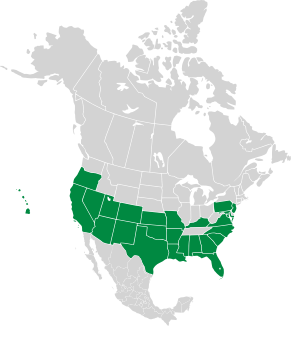
Range:

About this map...

Phyla nodiflora description by Thomas H. Kent, not updated.

© FloraFinder.org. All rights reserved.