Picea abies (L.) Karst.
Norway spruce
Norway spruce is native to northern, central, and eastern Europe, but have long been introduced into other temperate climates worldwide. Over 150 cultivars exist—some of the photos here are probably cultivars. They are popular as Christmas trees, and for timber.
Plants: Fast-growing evergreen trees are 115–180′ tall ⨉ 25–30′ around (35–55 ⨉ 7.6–9.1 m), with trunks up to 5′ (1.5 m) in diameter. They are conical when young, becoming more cylindrical in shape as they age. Secondary branches are drooping or pendulous. Young bark is orange brown, maturing to gray brown.
Leaves: Needle-like, blunt- or sharp-tipped, ⅜–½″ (1.2–1.4 cm) long. In cross-section, the needles look like a quadrangle—four sided, but not necessarily symmetric. All four sides are dark green. The needles are spirally arranged, and angled forward toward stem tips. They have fairly inconspicuous rows of stomatal lines, tiny pores that perform gas exchange. The stomata appear white against the dark green needles. There are 2-4 such rows on each of the four needle surfaces.
Flowers: Female flowers are pink.
Fruits: Pollen cones are ⅜–½″ (1–1.5 cm) long. Seed cones are 2–6 ⨉ ½–1½″ (6–16 ⨉ 1.5–4 cm), longer than those of other spruces. The green or reddish cones mature to orange brown. Seeds are black, ⅛–3/16″ (4–5 mm) long, with a pale brown wing ½″ (1.5 cm) in size.
Habitats: Widespread in boreal forests.
Online References:
Picea excelsa (Lam.) Link

4/2/2021 · Hackett and Minot Trails, Harpswell, Maine 

You can see the tiny whitish-looking stomata. Often they are less conspicuous. · 9/7/2020 · Calderwood Trails, Freeport, Maine · ≈ 2 × 2″ (5.7 × 5.5 cm) 

12/22/2011 · Groton Place and Sabine Woods, Groton, Massachusetts 

4/2/2021 · Hackett and Minot Trails, Harpswell, Maine 

12/22/2011 · Groton Place and Sabine Woods, Groton, Massachusetts 
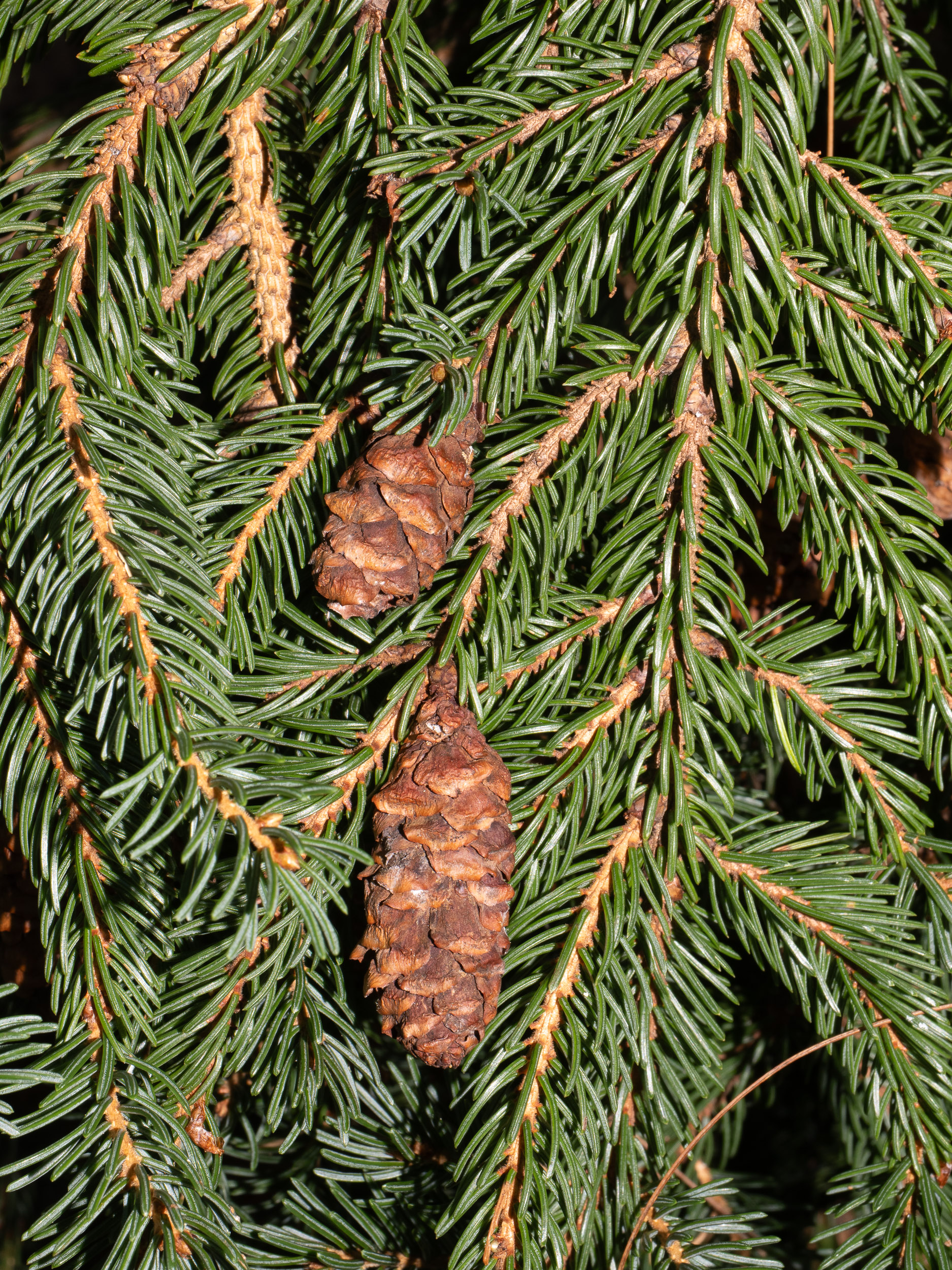
8/6/2023 · Byles Point Loop, Devil’s Back Trails, Orr’s Island, Maine 

8/6/2023 · Byles Point Loop, Devil’s Back Trails, Orr’s Island, Maine 

12/22/2011 · Groton Place and Sabine Woods, Groton, Massachusetts · ≈ 10 × 15″ (26 × 39 cm) 

4/2/2021 · Hackett and Minot Trails, Harpswell, Maine 

4/8/2021 · Long Reach Preserve, Harpswell, Maine · ≈ 6 × 4″ (14 × 10 cm) 

4/8/2021 · Long Reach Preserve, Harpswell, Maine · ≈ 7 × 4½″ (18 × 12 cm) 

8/6/2023 · Byles Point Loop, Devil’s Back Trails, Orr’s Island, Maine 
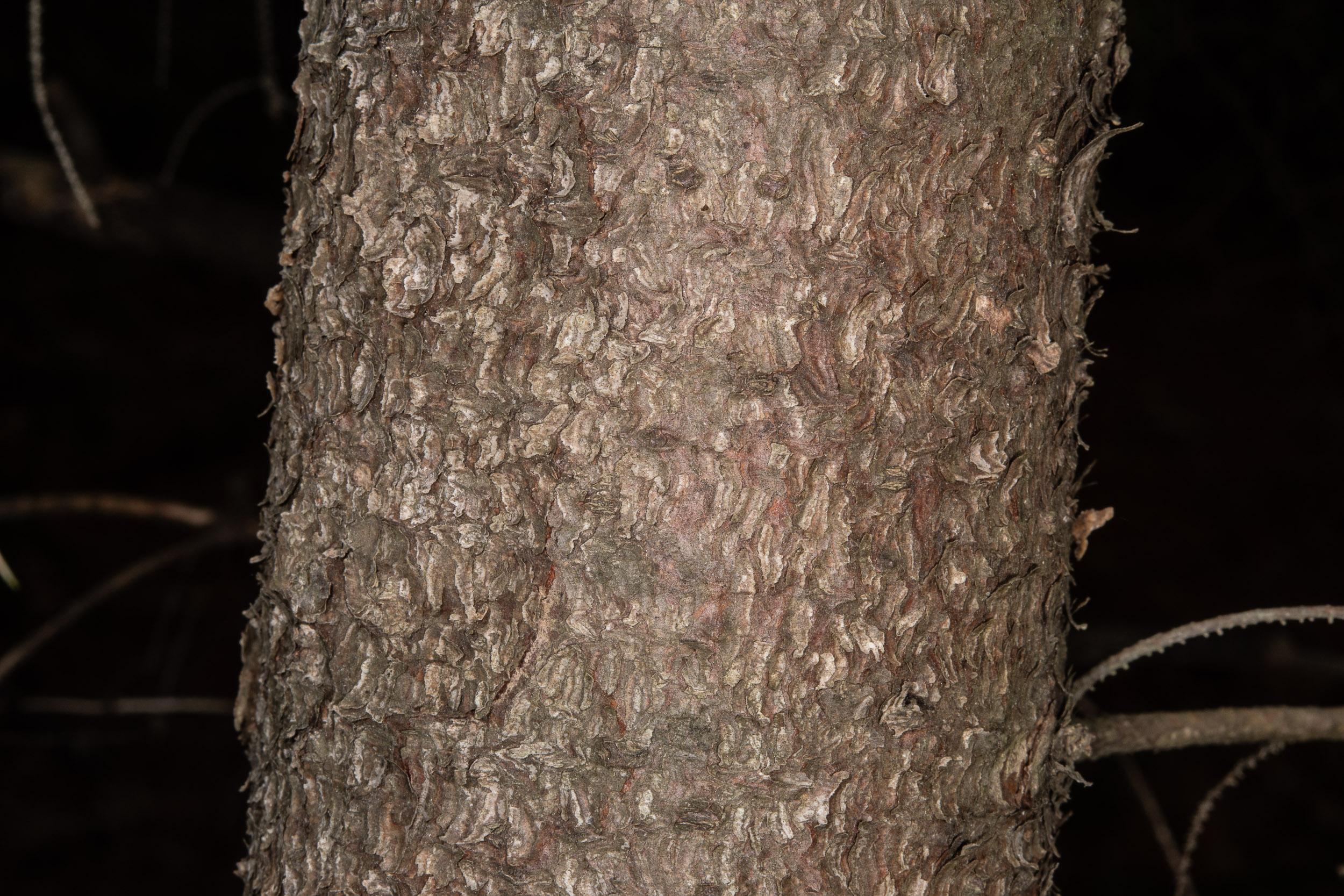
4/8/2021 · Long Reach Preserve, Harpswell, Maine · ≈ 6 × 4″ (15 × 10 cm) 

1/1/2012 · Big Tree Trail • Tudor Richards Natural History and Forest Trail, Hollis, New Hampshire 
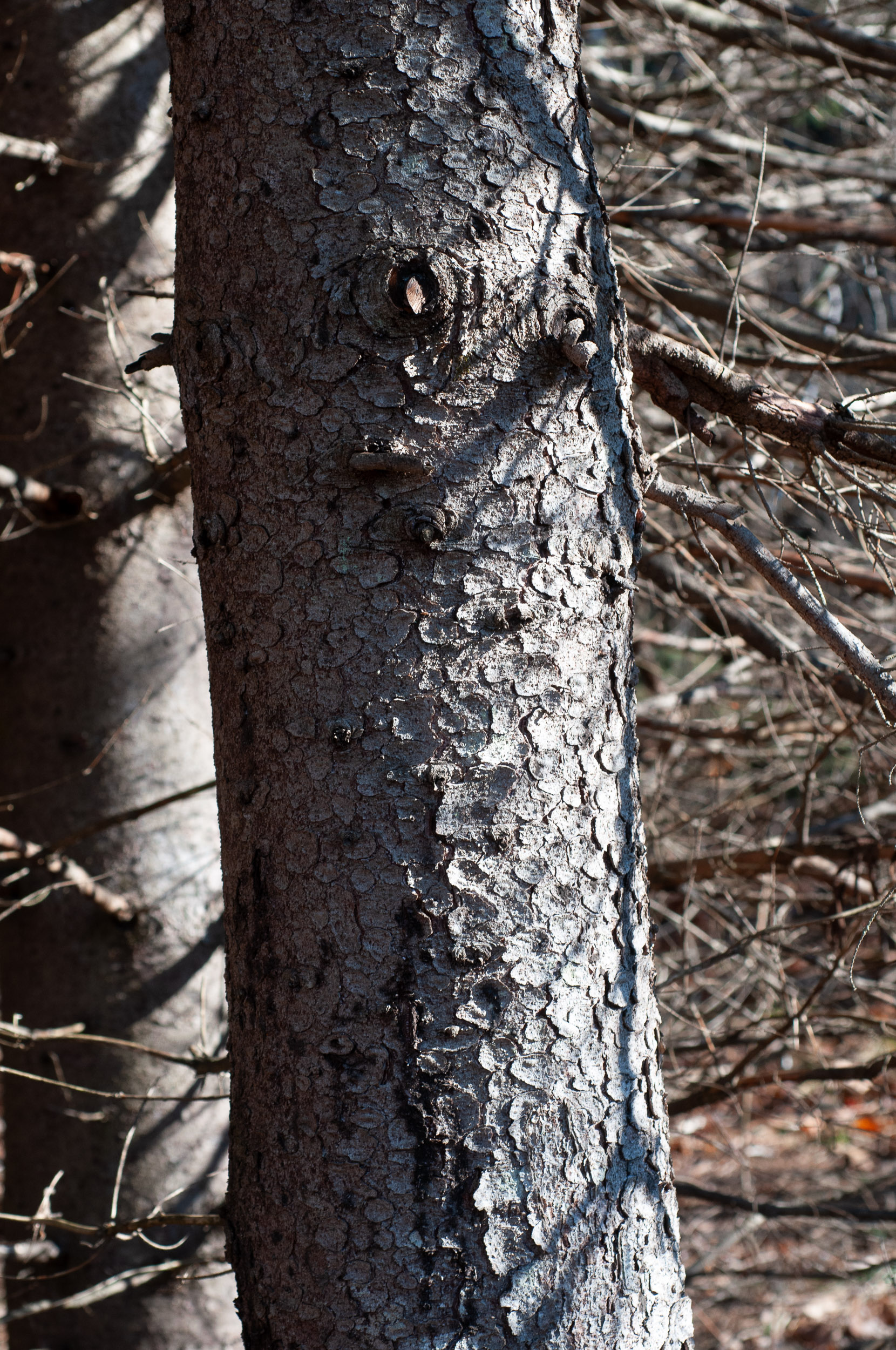
1/1/2012 · Big Tree Trail • Tudor Richards Natural History and Forest Trail, Hollis, New Hampshire 

4/2/2021 · Hackett and Minot Trails, Harpswell, Maine 

12/22/2011 · Groton Place and Sabine Woods, Groton, Massachusetts 

2/23/2011 

4/8/2021 · Long Reach Preserve, Harpswell, Maine · ≈ 6 × 4″ (16 × 11 cm) 

1/1/2012 · Big Tree Trail • Tudor Richards Natural History and Forest Trail, Hollis, New Hampshire 

9/7/2020 · Calderwood Trails, Freeport, Maine · ≈ 6 × 4″ (16 × 11 cm) 

4/8/2021 · Long Reach Preserve, Harpswell, Maine · ≈ 5 × 8″ (13 × 20 cm) 

12/22/2011 · Groton Place and Sabine Woods, Groton, Massachusetts 

4/8/2021 · Long Reach Preserve, Harpswell, Maine · ≈ 4½ × 7″ (12 × 18 cm) 
| Kingdom | Plantae | Plants, but not fungi, lichens, or algae (from Stearn's Botanical Latin) |
| Subkingdom | Tracheobionta | Vascular plants—plants with a “circulatory system” for delivering water and nutrients |
| Division | Coniferophyta | Conifers—cone-bearing trees (and a few shrubs) |
| Class | Pinopsida | Gymnosperms such as cedars, Douglas-firs, cypresses, firs, junipers, kauri, larches, pines, hemlocks, redwoods, spruces, and yews |
| Order | Pinales | Cone-bearing plants: cedar, cypress, fir, juniper, larch, pine, redwood, spruce, yew, and others |
| Family | Pinaceae | Pine family: cedars, firs, hemlocks, larches, pines and spruces |
| Genus | Picea | Spruce; means “pitch” |
| Species | abies | Latin name for silver fir |

Picea abies description by Thomas H. Kent, not updated.

© FloraFinder.org. All rights reserved.