Pinus edulis Engelm.
Pinyon pine, two-needle pinyon, piñon, twoneedle piñon
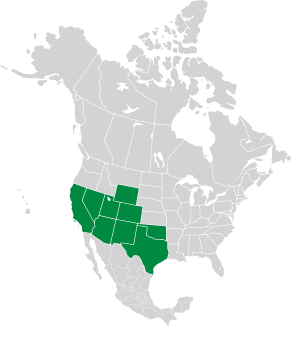
Pinyon (piñon) pines are natives of the western United States. Pinyon and Juniper forests have spread throughout many regions in the American southwest.
Plants: Trees are typically about 10–20′ (3–6.1 m) tall. The crown is dense, conical or rounded.
Leaves: Typically there are two blue-green needles per group, but sometimes 1 or 3. Needles are upwardly curved, about 1¼″ (3.2 cm) long. Needles have 2 or 3 sides, depending on the number of needles in the group.
Fruits: Cones are oval to round, yellowish to red-brown, up to 1¼″ (3.2 cm) around.
Habitats: On dry mountain slopes and plateaus, at elevations of 4921–6890′ (1.5–2.1 km), max 1.7 mi (2.7 km).
For further information, see the Pinus comparison tables.
Online References:
References:
Pinus cembroides Zucc. var. edulis (Engelm.) Voss
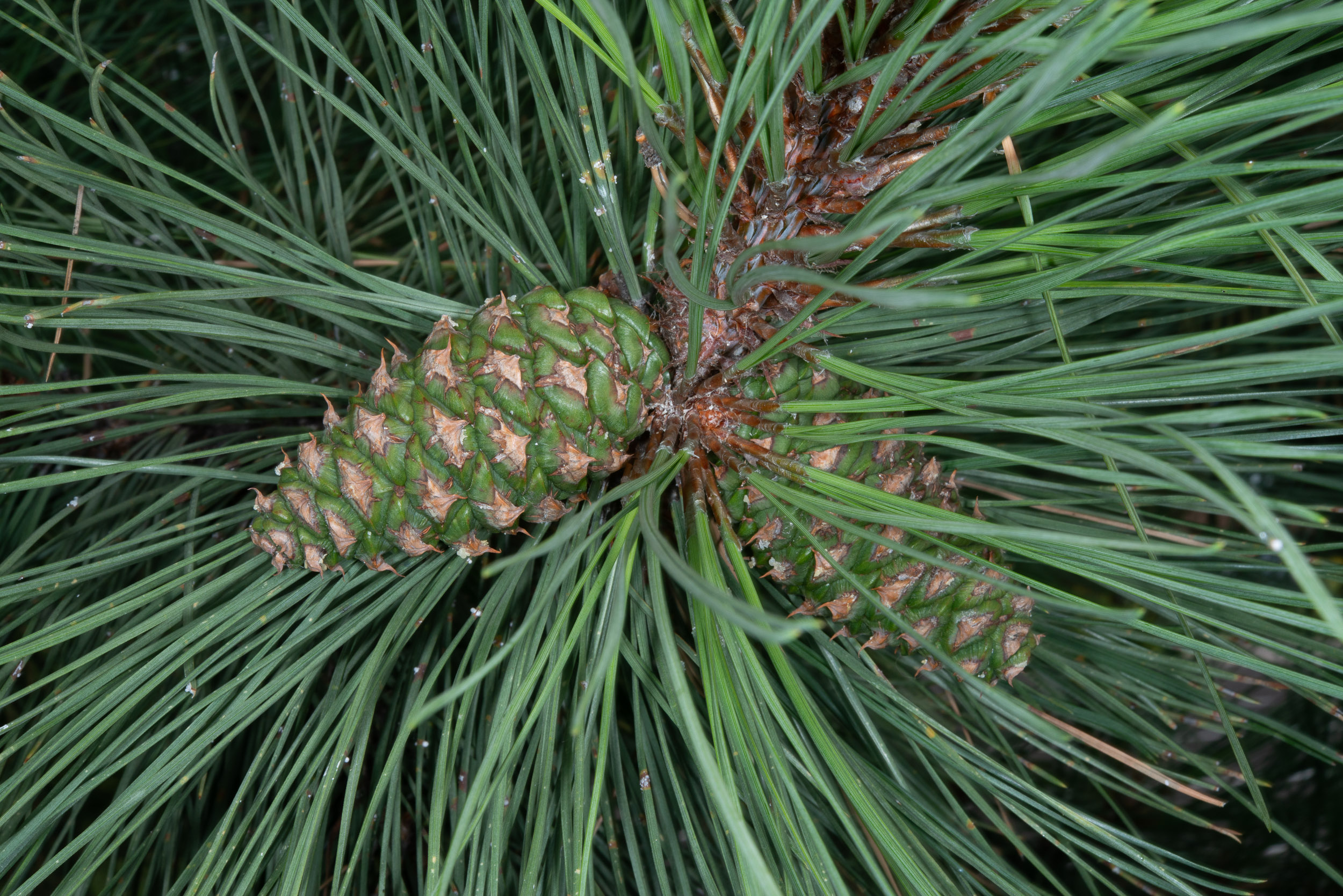
8/26/2014 · El Malpais Information Center, National Parks Service, El Malpais, New Mexico · ≈ 11 × 7″ (28 × 18 cm) 
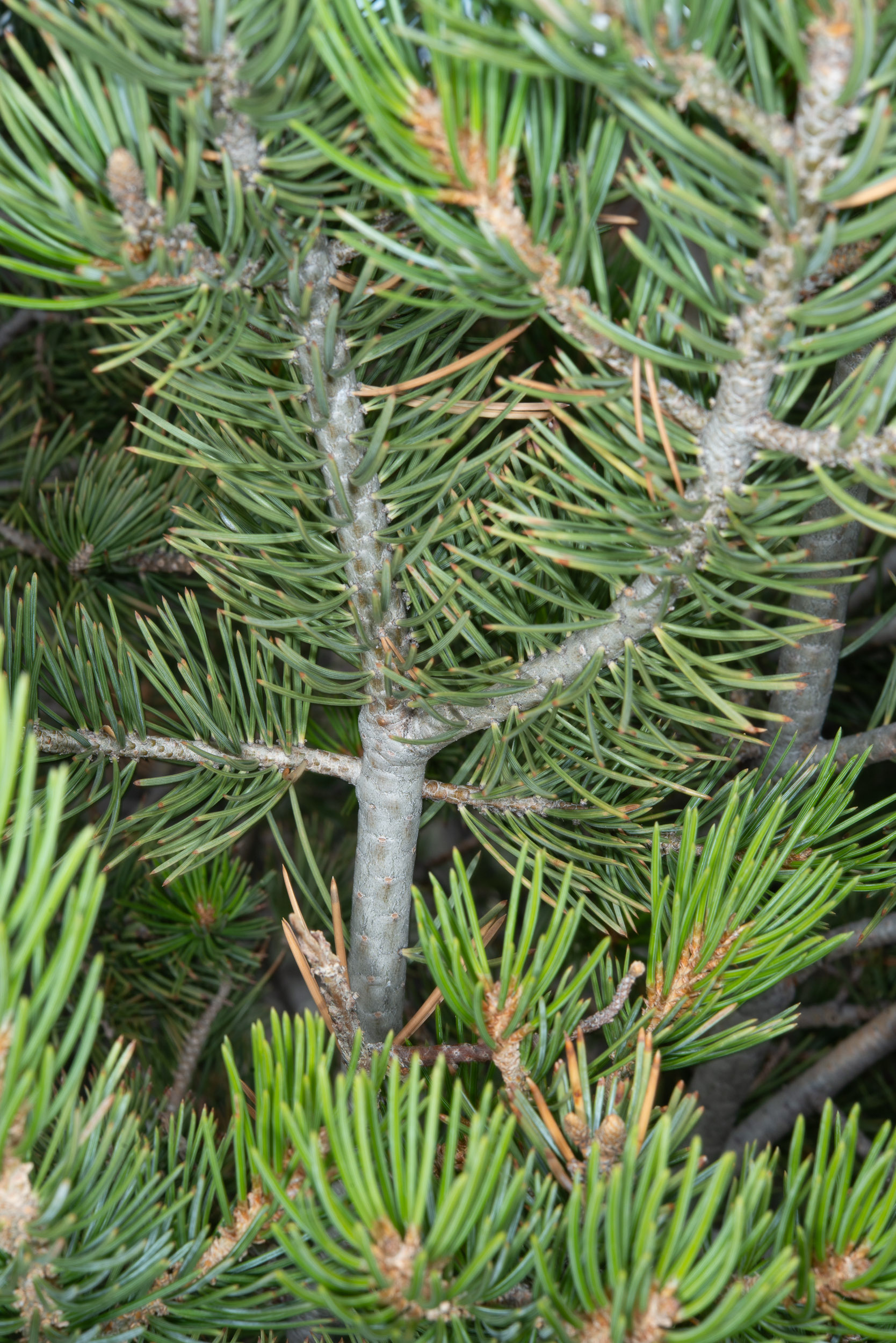
8/28/2014 · New Mexico · ≈ 7 × 11″ (18 × 28 cm) 

8/26/2014 · Sandstone Bluffs, Rte. 117, El Malpais National Monument, New Mexico · ≈ 9 × 6″ (23 × 16 cm) 
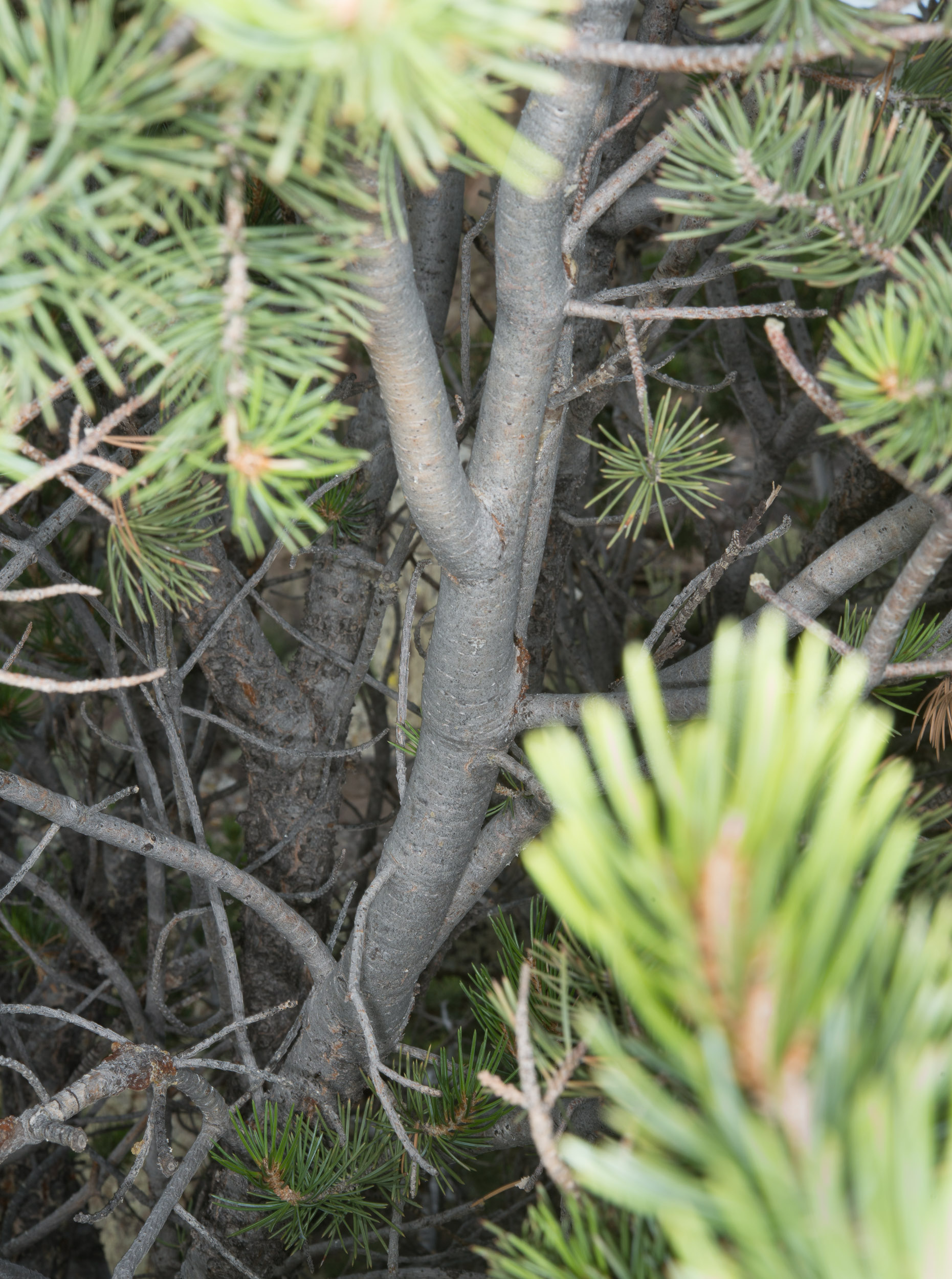
8/28/2014 · New Mexico · ≈ 1 × 1½′ (39 × 53 cm) 

5/31/2009 · Grand Canyon, North Rim, Arizona · ≈ 7 × 4½′ (2.2 × 1.5 m) 
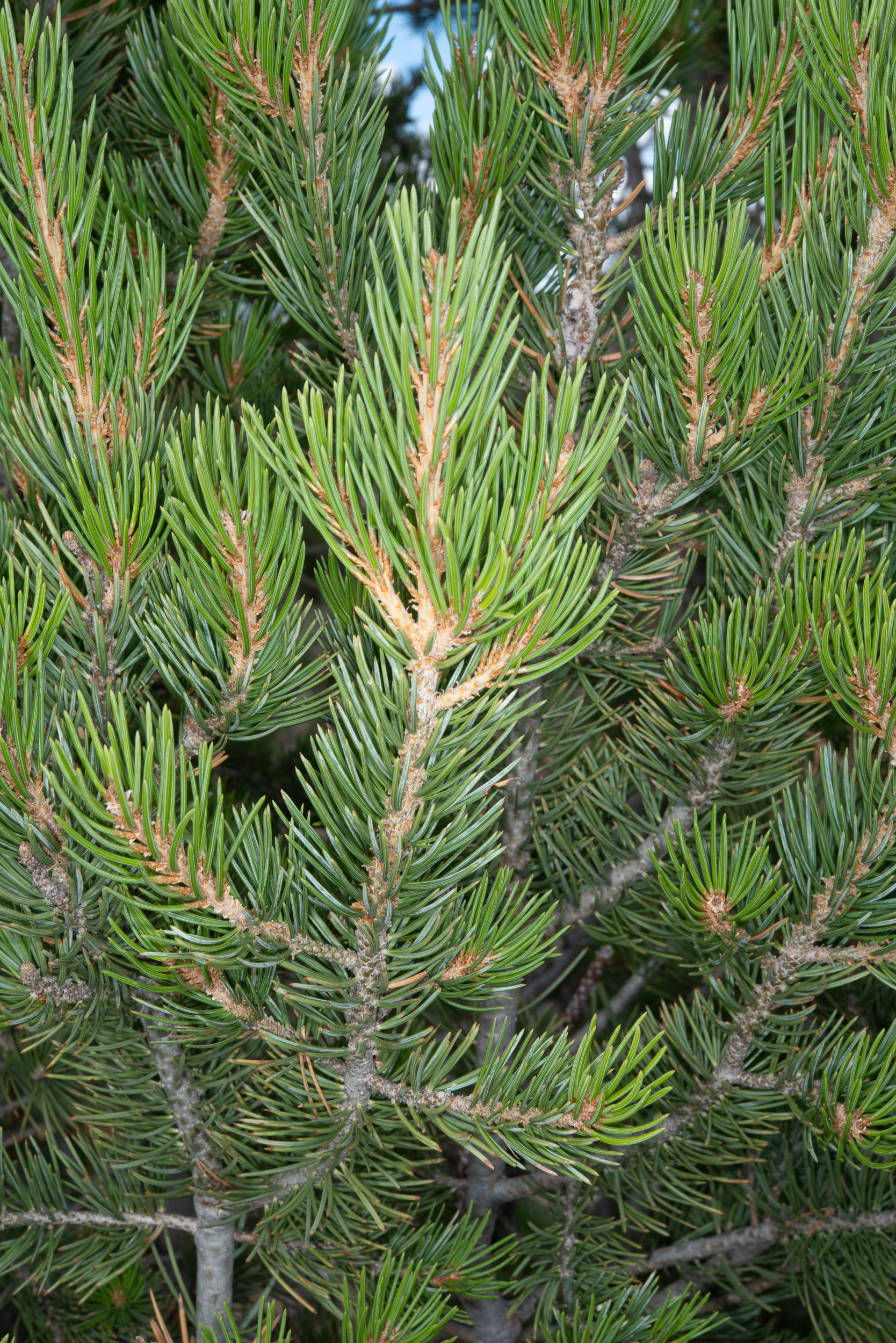
8/28/2014 · New Mexico · ≈ 10 × 15″ (25 × 37 cm) 
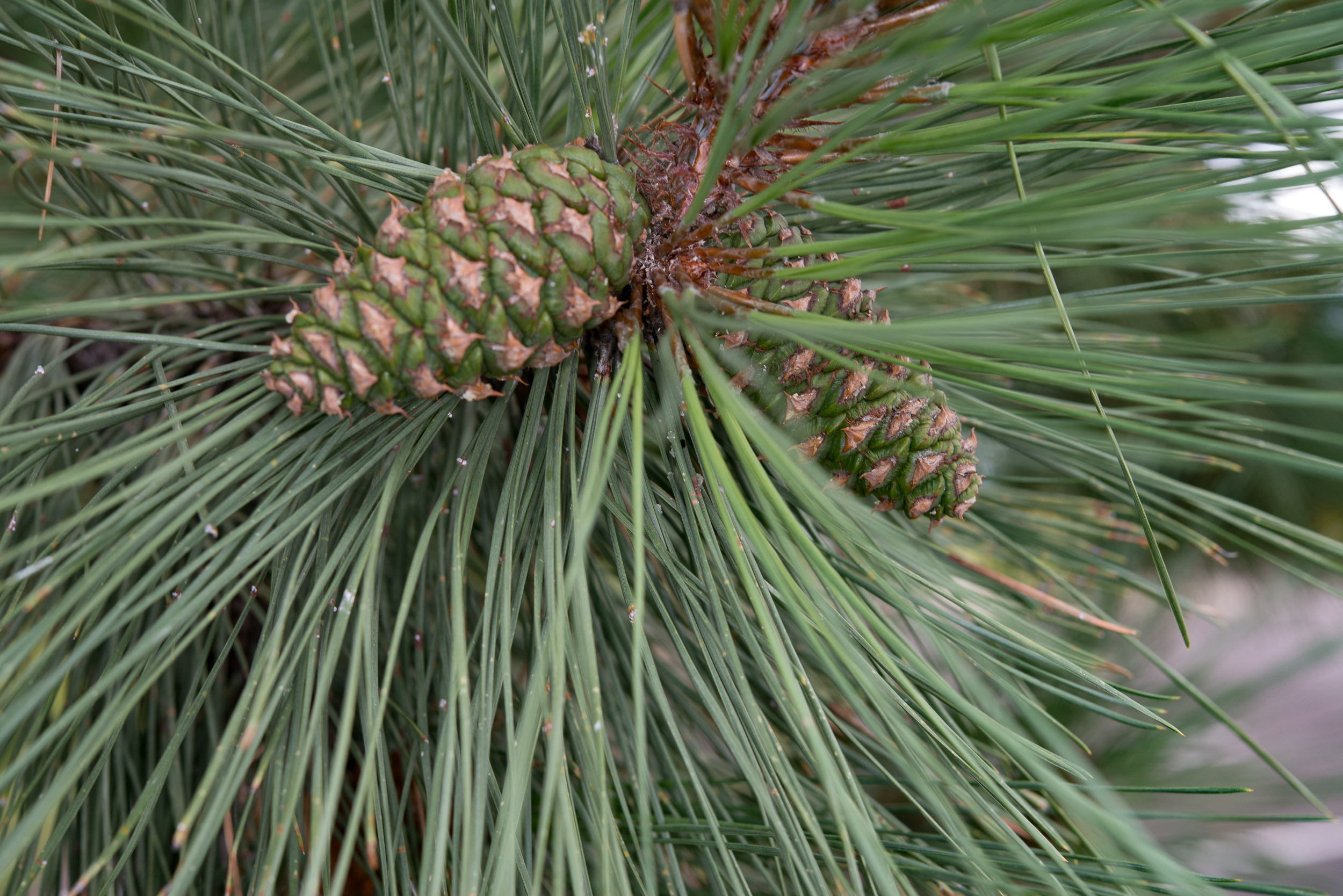
8/26/2014 · El Malpais Information Center, National Parks Service, El Malpais, New Mexico · ≈ 12 × 8″ (31 × 21 cm) 

8/26/2014 · Sandstone Bluffs, Rte. 117, El Malpais National Monument, New Mexico · ≈ 11 × 7″ (28 × 18 cm) 
| Kingdom | Plantae | Plants, but not fungi, lichens, or algae (from Stearn's Botanical Latin) |
| Subkingdom | Tracheobionta | Vascular plants—plants with a “circulatory system” for delivering water and nutrients |
| Division | Coniferophyta | Conifers—cone-bearing trees (and a few shrubs) |
| Class | Pinopsida | Gymnosperms such as cedars, Douglas-firs, cypresses, firs, junipers, kauri, larches, pines, hemlocks, redwoods, spruces, and yews |
| Order | Pinales | Cone-bearing plants: cedar, cypress, fir, juniper, larch, pine, redwood, spruce, yew, and others |
| Family | Pinaceae | Pine family: cedars, firs, hemlocks, larches, pines and spruces |
| Genus | Pinus | Latin for “pine” |
| Species | edulis | “Edible,” since the nuts in the cones are edible |
Pinus edulis description by Thomas H. Kent, not updated.

© FloraFinder.org. All rights reserved.