|
Polygonatum biflorum (Walter) Elliott
Smooth Solomon’s-seal, King Solomon’s-seal, great Solomon’s seal
Similar species
|
| |
You are here
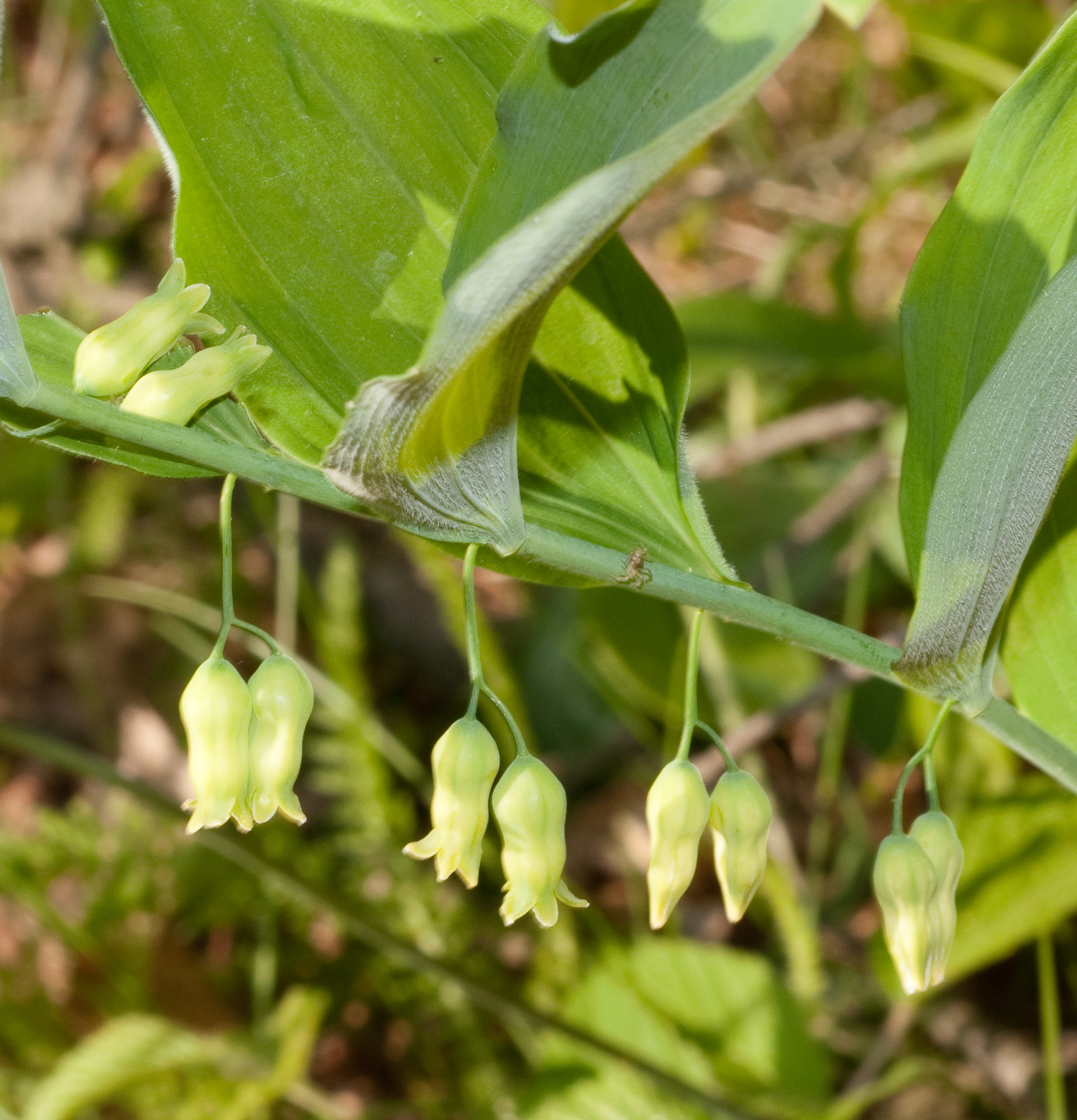
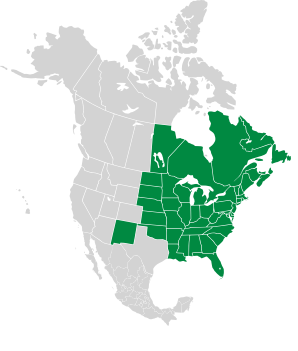
Polygonatum biflorum |
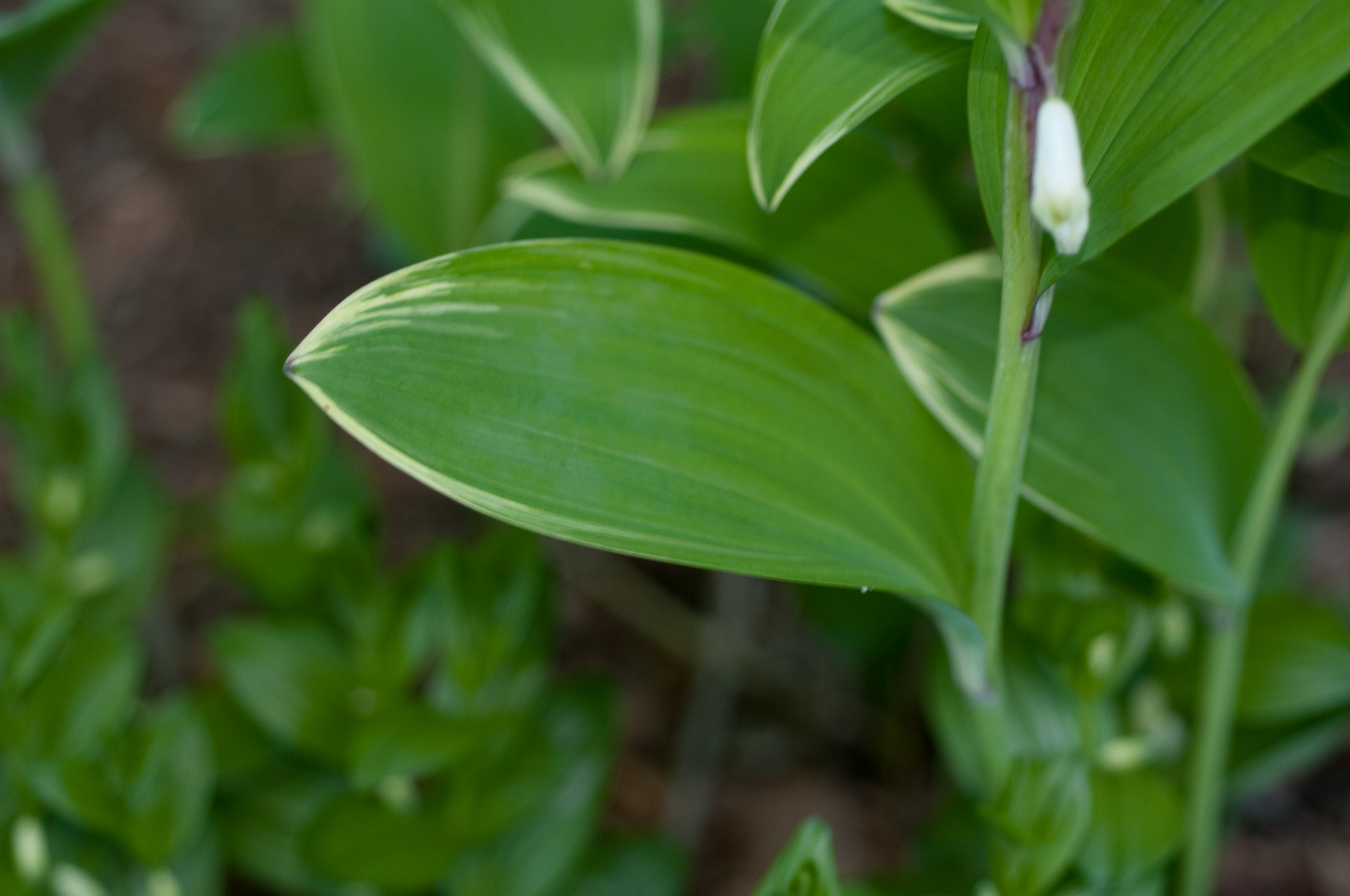
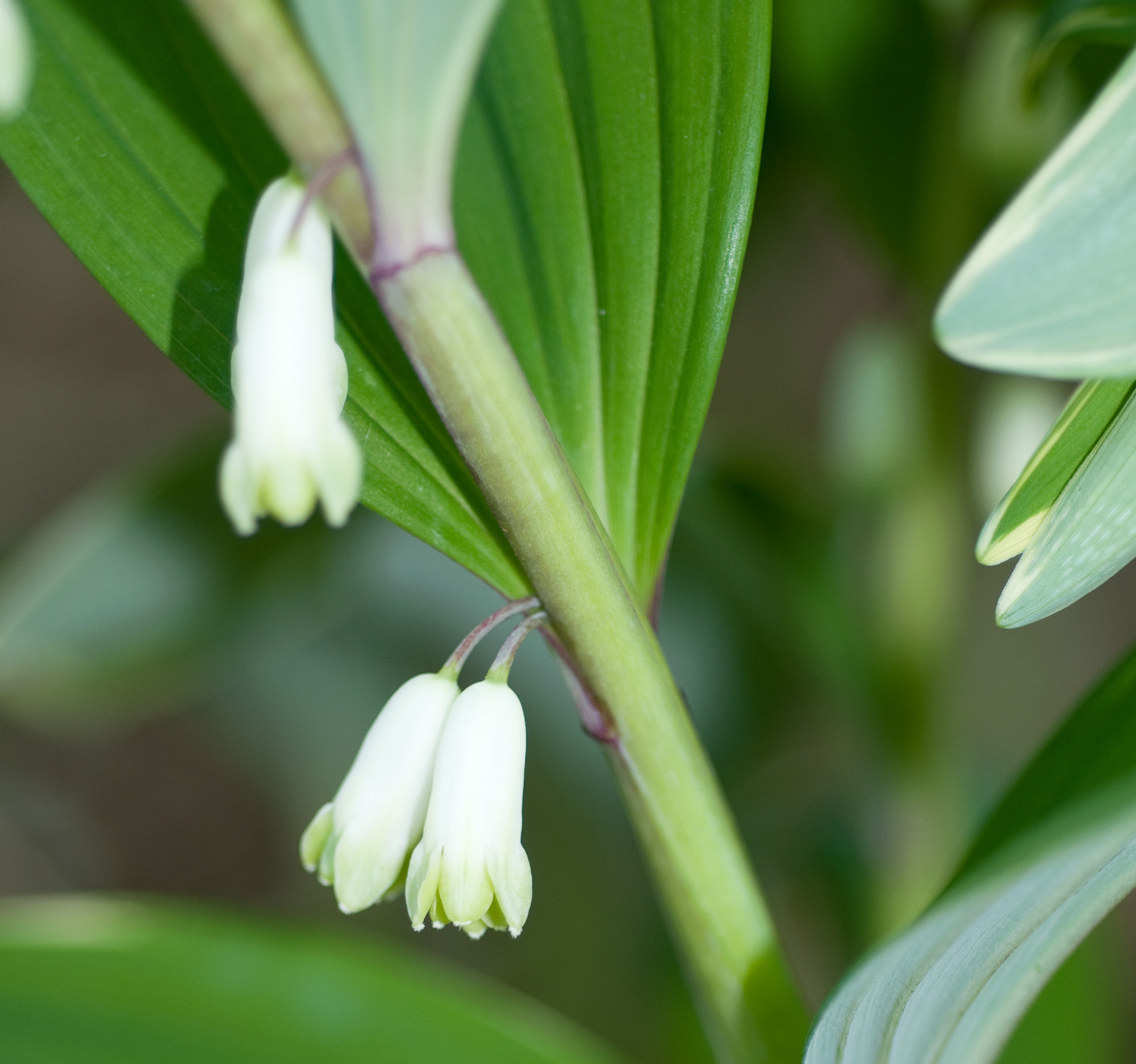
Polygonatum odoratum var. pluriflorum ‘Variegatum’ |
Polygonatum humile |
| Common Name |

smooth Solomon’s-seal |

variegated Solomon’s seal |

dwarf Solomon’s seal |
| Plant |
Up to 4′ (1.2 m) in length, often bent to grow sideways, perhaps to capture as much light as possible. |
Reaches 8–20″ (20–50 cm). |
Plants are 6–9″ tall ⨉ 1–1½′ around (15–22 ⨉ 30–45 cm), comfortable in the full or partial shade under trees. |
| Leaves |
Yellow-green leaves appear alternately along the stem. They are oval, pointed at each end, up to 7″ (18 cm) long by 2½″ (7 cm) wide. |
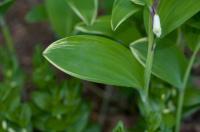 
Oval, green fringed with white, 3–9″ (7.6–22 cm) long. |
Elliptical, green, 1–3″ (2.5–7.6 cm) long. |
| Flowers |
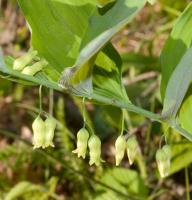
Delicate greenish-white or yellowish-green bell-shaped flowers hang downward in groups of 1-5 flowers, each about ½ ⨉ ⅛″ (1.3 cm ⨉ 5 mm). |
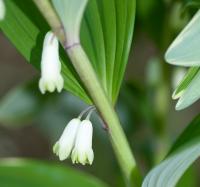
White or greenish-white, like long bells, about ½″ (1.3 cm) long, hanging downward, often in pairs. Whiter than P. biflorum.. |
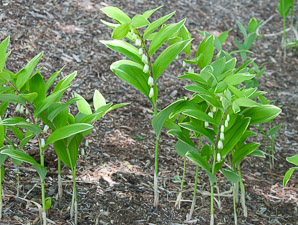
White, bell-shaped, about ¼″ (8.3 mm) long, hanging singly from stem. |
| Fruit |
Bluish-black fleshy berries. |
Dark blue to black, less than ¼″ (6.3 mm) around. |
Berries are shiny, black, hanging down from arched stems, and about ¼″ (6.3 mm) around. |
| Range/ Zones |

USDA Zones: 3-9 |

USDA Zones: 4-8 |

USDA Zones: 5-8 |
| Habitats |
Woods, prairies, in sandy, loamy soil. |
Wooded areas, dappled shade, deep shade |
Full to partial shade in temperate climates |
© FloraFinder.org. All rights reserved.