Pleuropterus cuspidatus (Siebold & Zucc.) Moldenke
Pleuropterus zuccarinii (Small) Small
Polygonum cuspidatum Siebold & Zucc. var. compactum (Hook. f.) L.H. Bailey
Polygonum zuccarinii Small
Reynoutria japonica Houtt.
Polygonum cuspidatum Siebold & Zucc.
Japanese knotweed, Mexican bamboo
Another story of a good plant gone bad. Japanese knotweed is a native of Japan, China, and Korea. Introduced to Europe and North America as an ornamental plant, it has been so successful that it is considered one of the 100 worst invasive species. Fast-growing root systems form dense hedges that crowd out other species.
Plants: Japanese knotweed stems are jointed and hollow like bamboo. Thin branches are reddish. Plants reach up to 12′ (3.7 m).
Leaves: Oval, wider near the base, 2–6″ (5–15 cm) long and 1–4″ (2.5–10 cm) wide.
Flowers: Flowers appear in multiple upward pointing spikes containing many tiny white to pale yellow flowers.
Fruits: Seed pods are shaped like inverted hearts, about ⅛″ (3.2 mm) long.
Habitats: Wet areas and disturbed areas.
 |
Two similar knotweeds. |
Edibility: Thicker young shoots, gathered early in the spring, can be cooked in boiling water or a steamer and served with butter, like asparagus. And like asparagus, they cook quickly, and should be served as soon as they are easily pricked with a fork.
Medical: Historically, extracts from Japanese knotweed have been used to treat menstrual cramps and postpartum depression. Other ingredients aid in treatment of burns; these are also used in skin lotions. There are many other purported but unconfirmed health benefits.
Online References:
? (PDF)
Klemow.wilkes.edu (a technical summary of the medical properties)

7/27/2016 · Michaux State Forest, Caledonia State Park, Fayetteville, Pennsylvania · ≈ 10 × 15″ (26 × 37 cm) 

10/20/2013 · Barrett Park, Leominster, Massachusetts · ≈ 7 × 5″ (16 × 12 cm) 
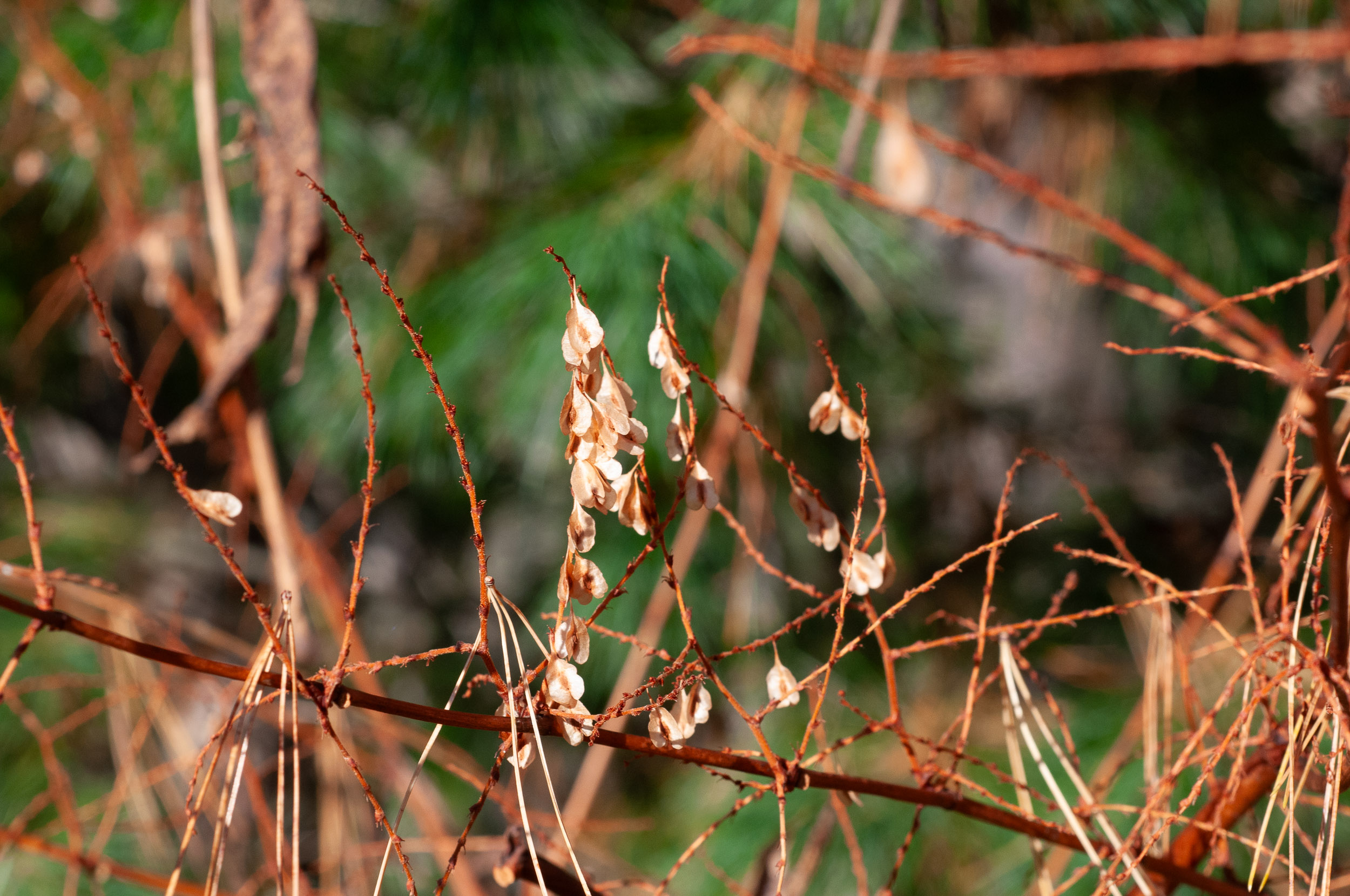
10/25/2009 · Nashua River Rail Trail, Nashua, New Hampshire · ≈ 9 × 6″ (23 × 15 cm) 

4/24/2016 · Blue Trail, Willard Brook State, Ashby, New Hampshire 

10/20/2013 · Barrett Park, Leominster, Massachusetts · ≈ 8 × 5″ (19 × 12 cm) 

Looks like evil asparagus. · 4/26/2021 · Papermill Trail/Miller Park, Lisbon, Maine 

7/27/2016 · Michaux State Forest, Caledonia State Park, Fayetteville, Pennsylvania · ≈ 1½ × 1′ (52 × 34 cm) 

4/24/2016 · Blue Trail, Willard Brook State, Ashby, New Hampshire 

4/29/2017 · Willard Brook State Park, Ashby, Massachusetts · ≈ 5 × 8″ (13 × 20 cm) 

10/25/2011 · Nashua River Rail Trail, Dunstable, Dunstable, Massachusetts · ≈ 15 × 10″ (39 × 26 cm) 

9/24/2010 · Nissitissit River Wildlife Management Area, Pepperell, Massachusetts · ≈ 11 × 7″ (27 × 18 cm) 

9/3/2009 · Nashua River Rail Trail, Ayer, Massachusetts · ≈ 9 × 6″ (22 × 14 cm) 

9/3/2009 · Nashua River Rail Trail, Ayer, Massachusetts · ≈ 11 × 7″ (27 × 18 cm) 
| Kingdom | Plantae | Plants, but not fungi, lichens, or algae (from Stearn's Botanical Latin) |
| Subkingdom | Tracheobionta | Vascular plants—plants with a “circulatory system” for delivering water and nutrients |
| Division | Magnoliophyta | Flowering plants, also known as angiosperms |
| Class | Magnoliopsida | Dicotyledons—plants with two initial seed leaves |
| Subclass | Caryophyllidae | Cacti, many other succulents, carnivorous plants, and leadworts |
| Order | Caryophyllales | Includes cacti, carnations, amaranths, ice plants, and many carnivorous plants |
| Family | Polygonaceae | Knotweed or smartweed family |
| Genus | Polygonum | Greek poly, “many,” and gonu, “knee,” for the swollen jointed stems |
| Species | cuspidatum | “Tipped with a firm point” |
Polygonum cuspidatum description by Thomas H. Kent, not updated.

© FloraFinder.org. All rights reserved.
