FloraFinder uses cookies only for correct operation. More info. Okay
Populus tremuloides Michx.
Quaking aspen, trembling aspen, American aspen, mountain aspen, golden aspen, trembling poplar, white poplar, popple
Quaking aspen, so called because of the way its leaves flutter in the wind, is native
to temperate North America. (Don’t confuse this with the European aspen, whose scientific
name is confusingly similar: P. tremula.)
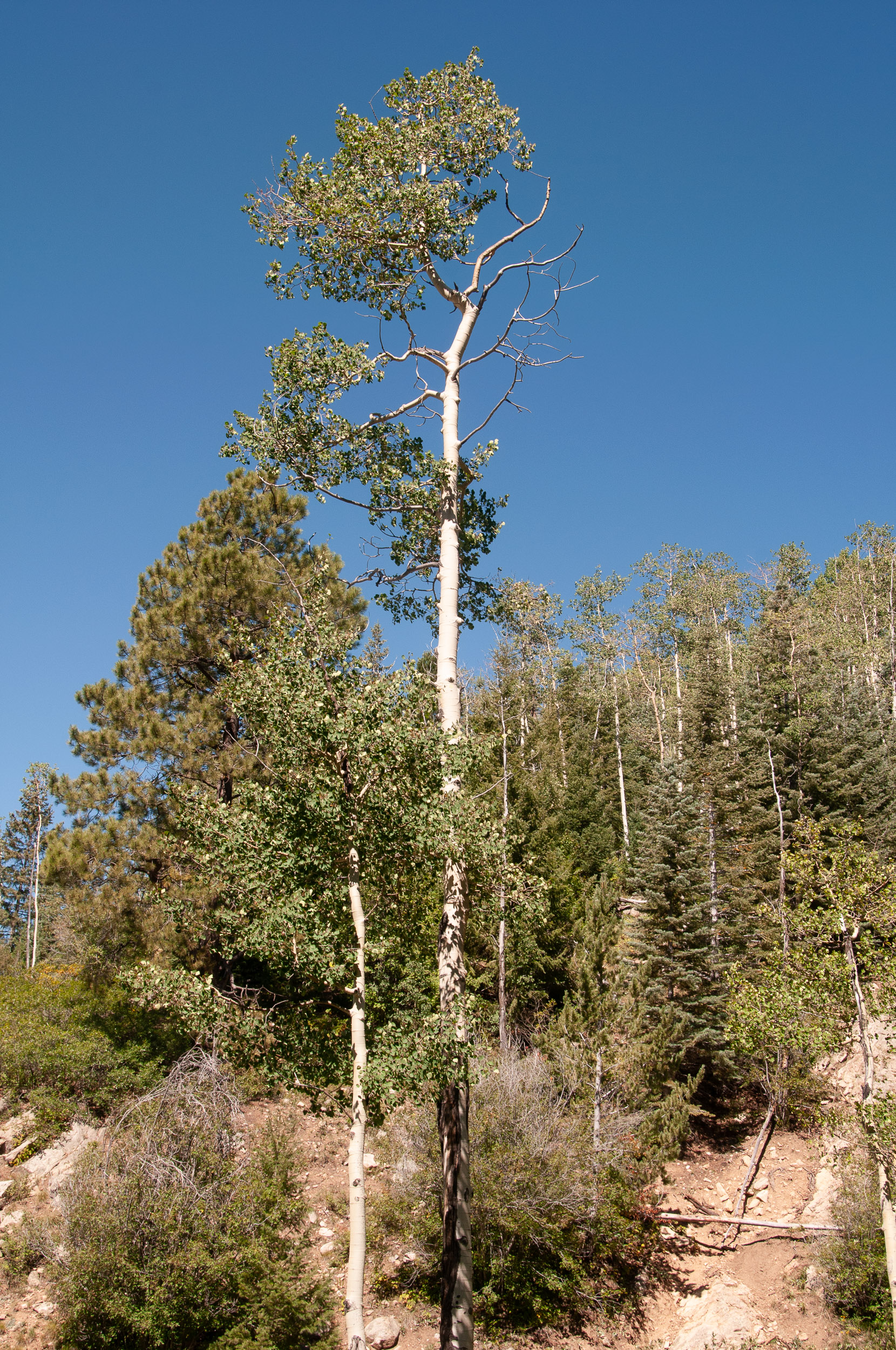
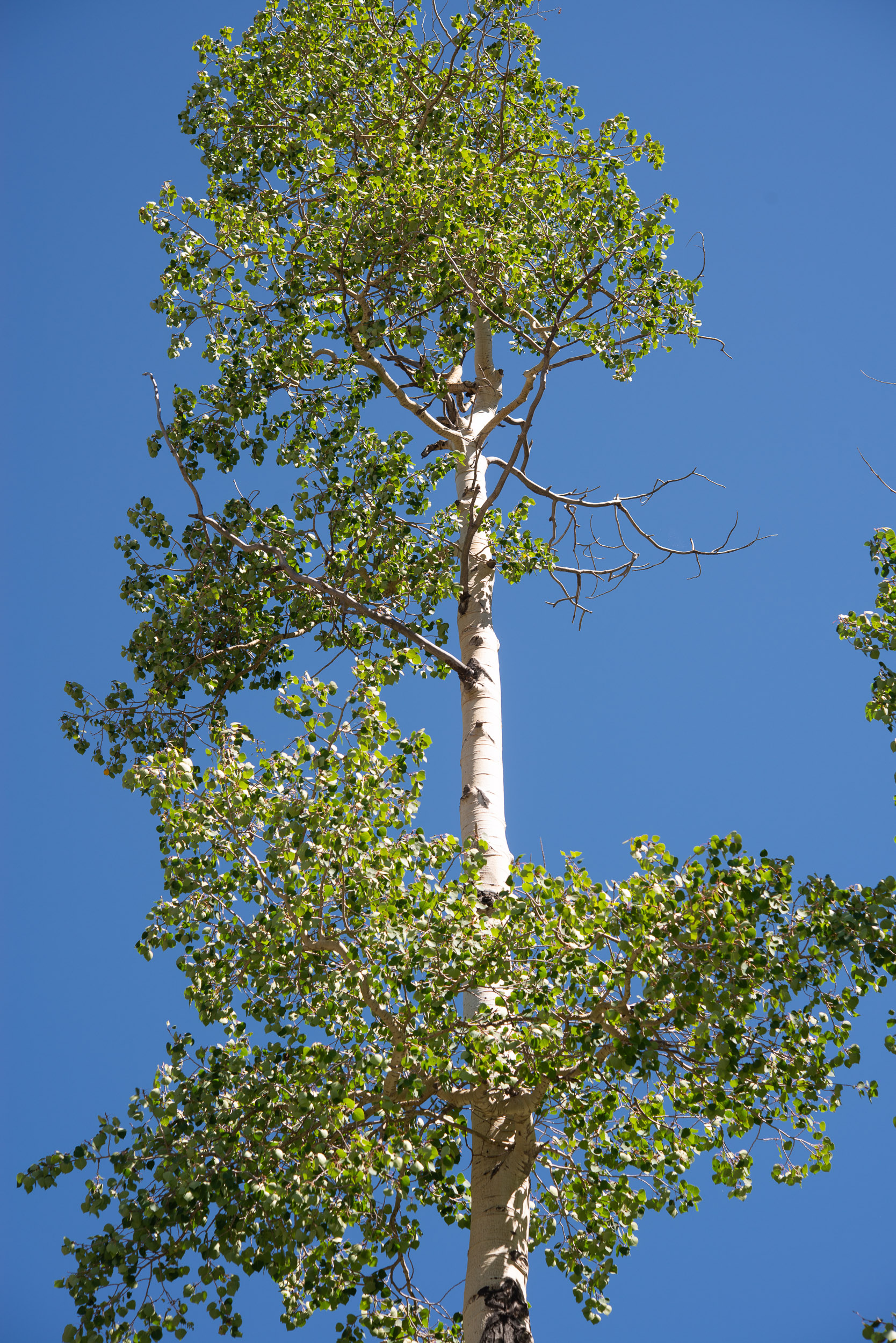
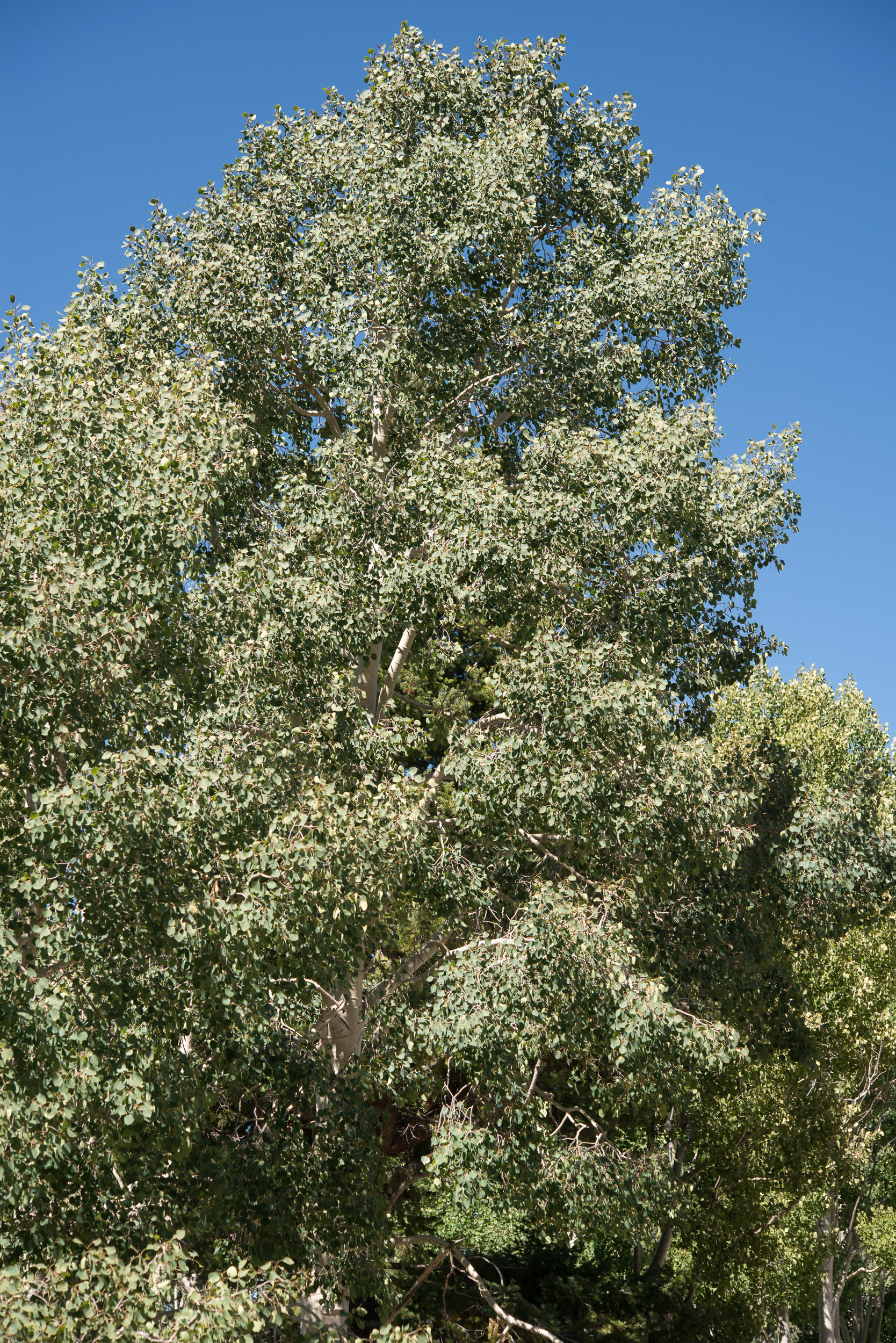
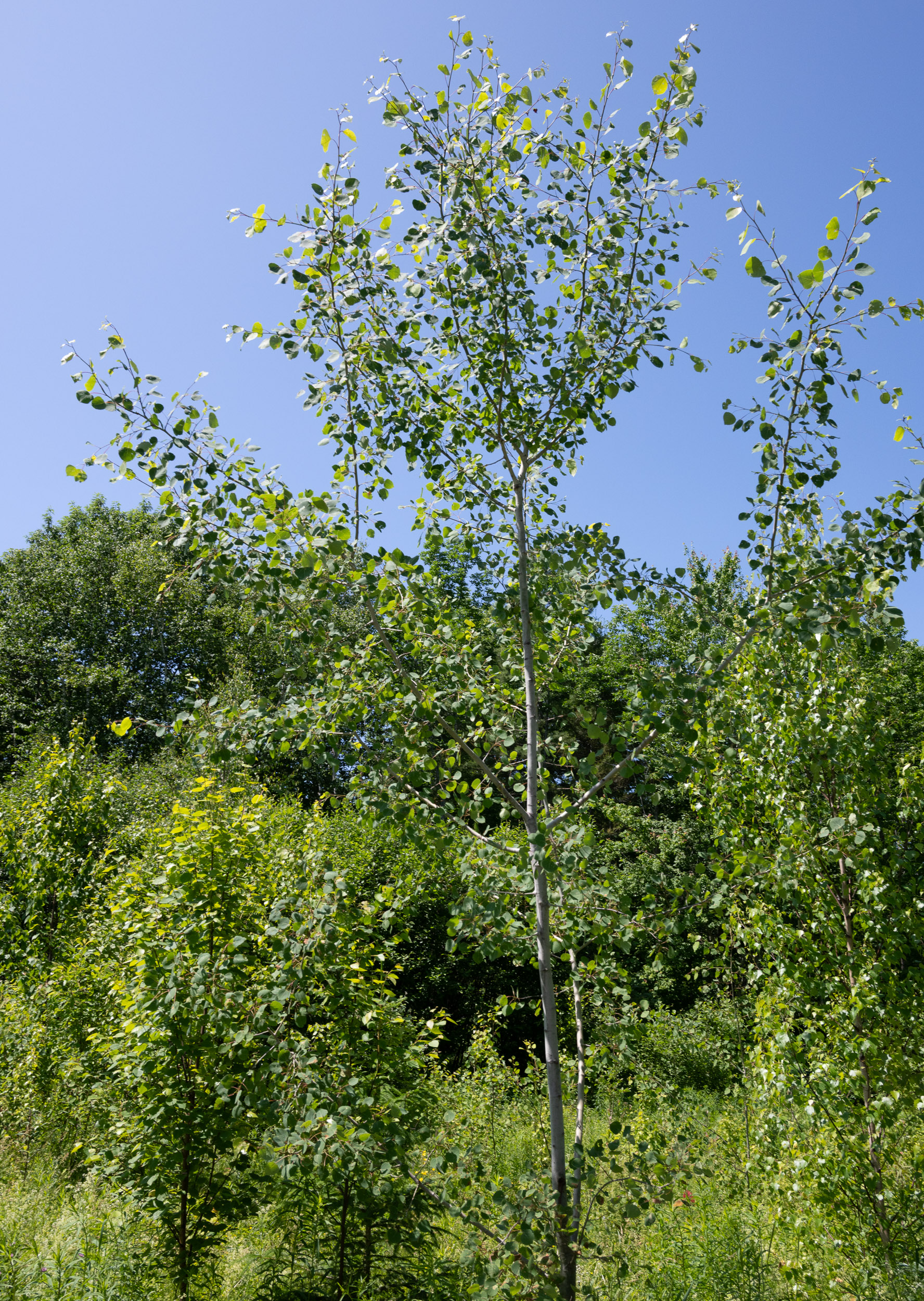
Plants: 49–59′ (15–18 m) tall, very fast-growing, with fairly smooth
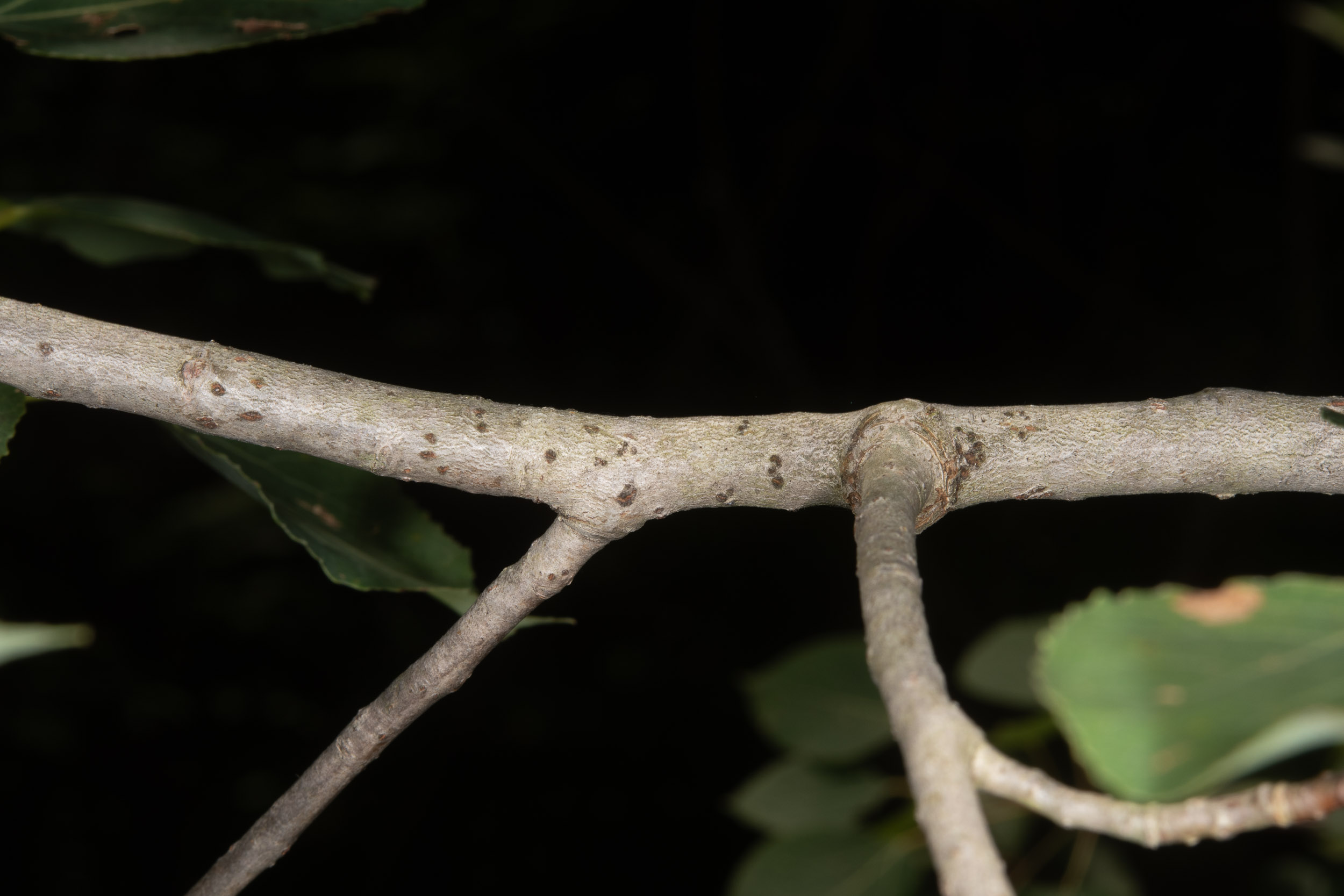
pale whitish gray bark. The bark has black horizontal scars and conspicuous black knots.
Quaking aspens can form large clonal colonies, spreading via
roots. Trunks may live for a hundred years, but roots may be hundreds or thousands
of years old. A single aspen clone may cover over a hundred acres!
According to the US Forest Service, one clone in Utah was found to be 80,000 years old,
although 5,000 to 10,000-year-old clones are more typical.
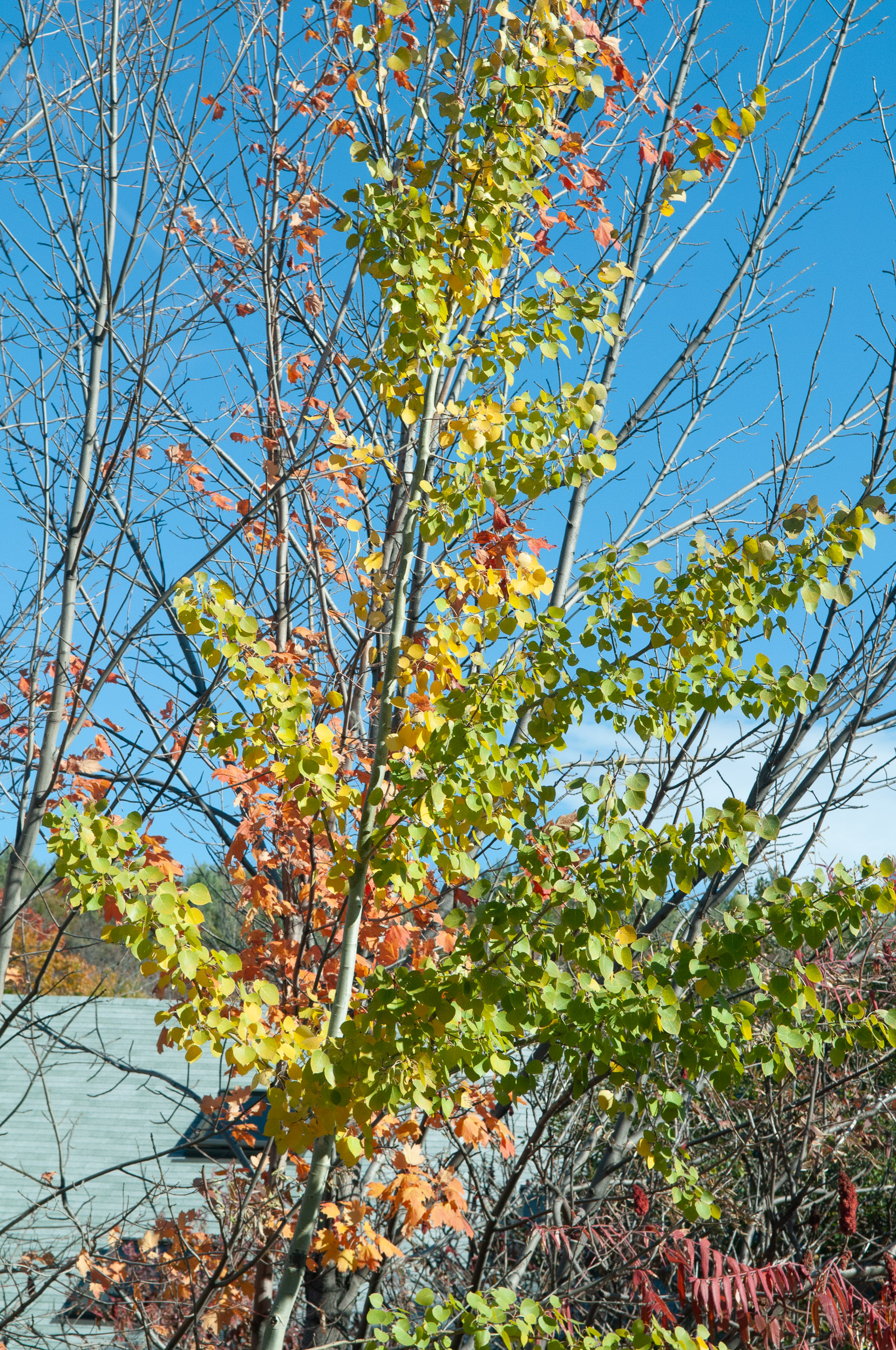
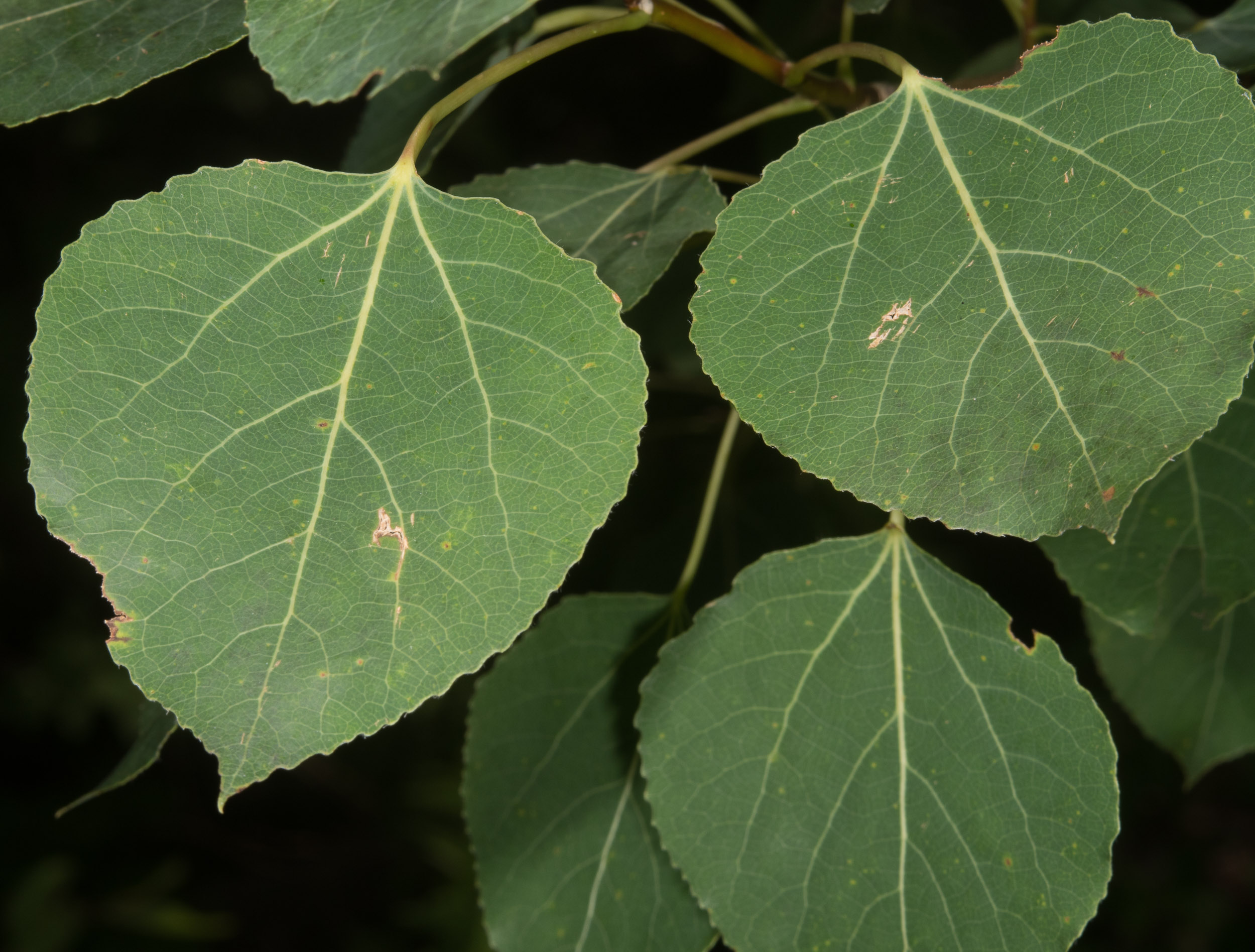
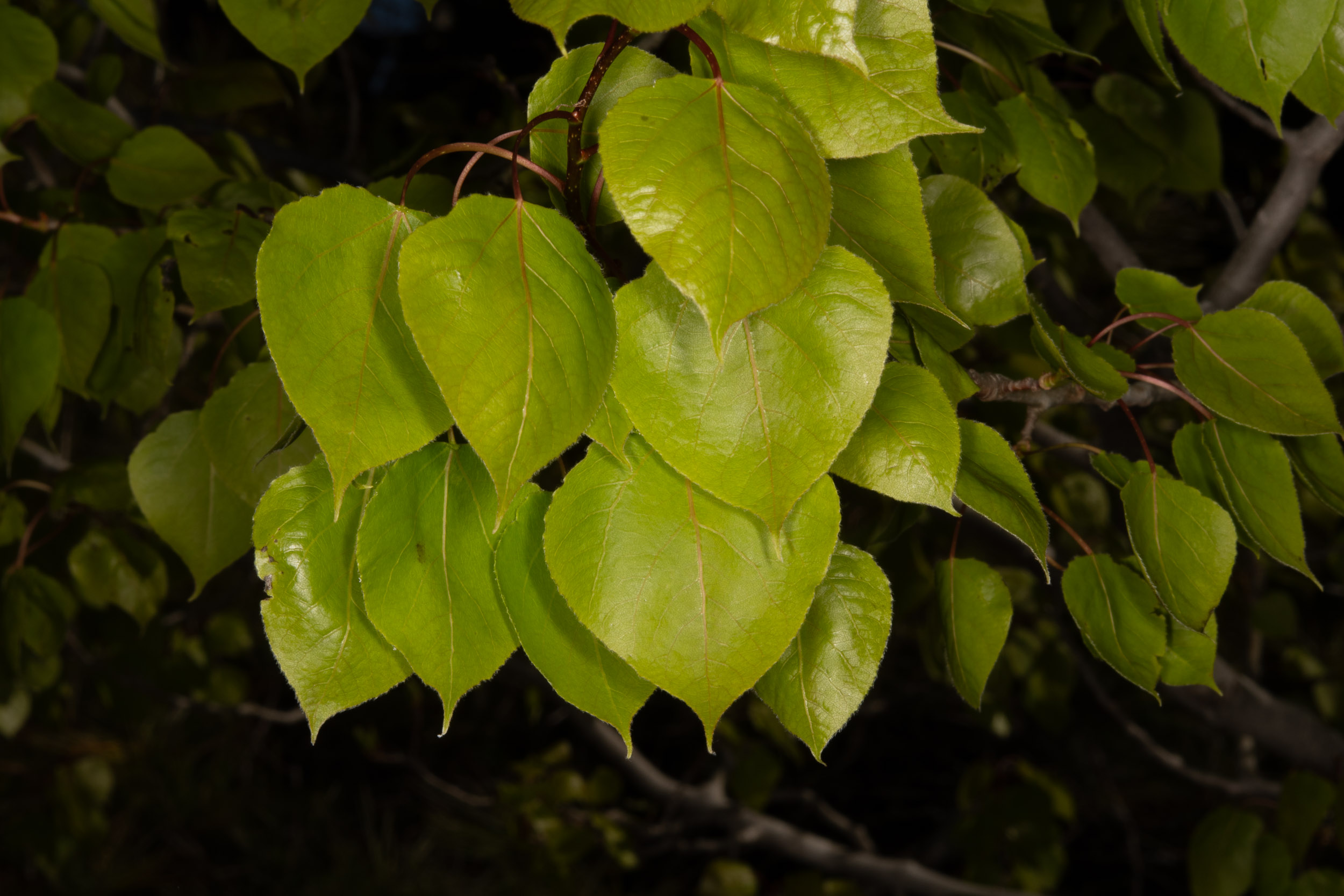
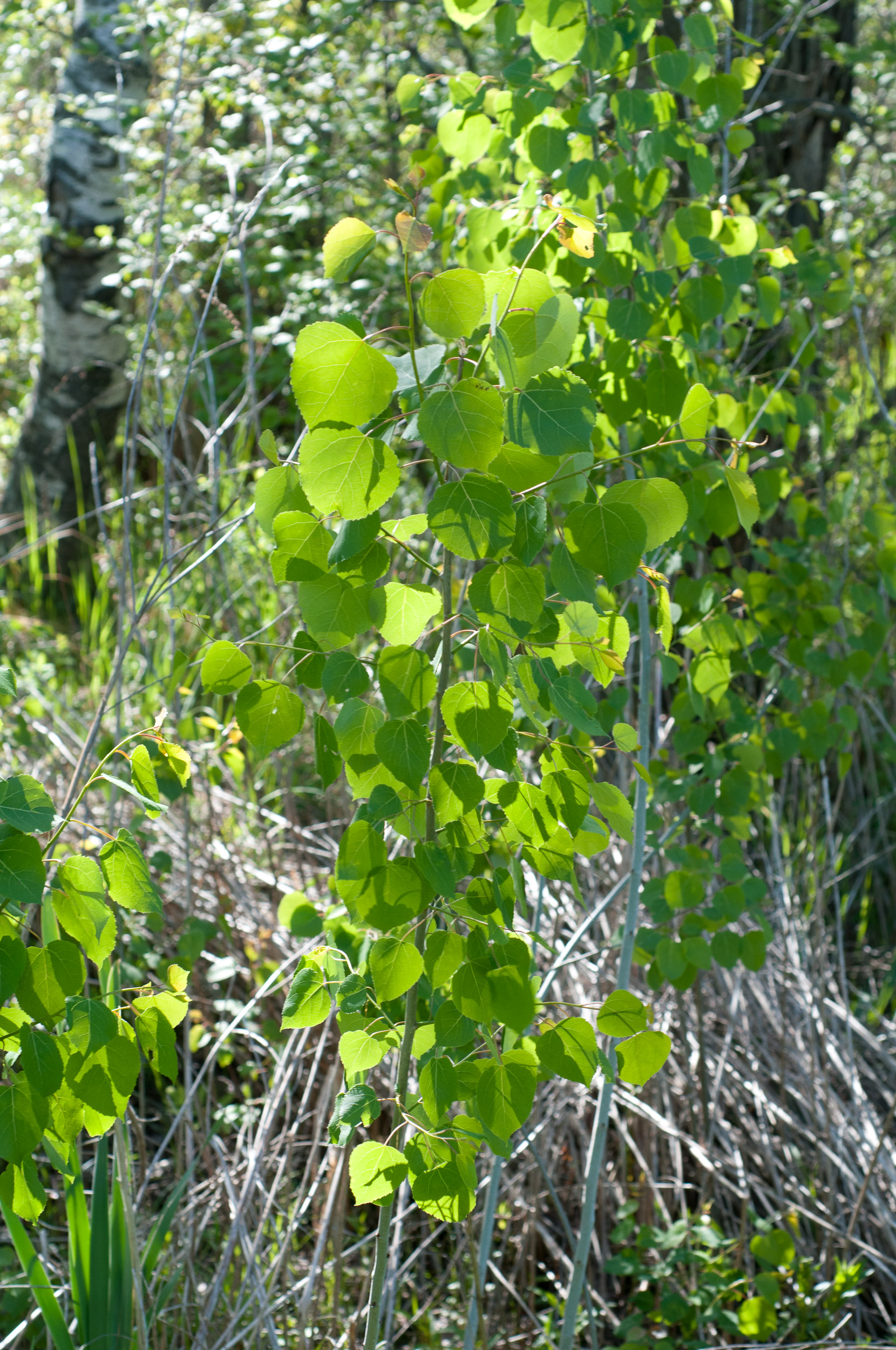
Leaves: Glossy green atop, pale beneath, becoming
yellow or gold-colored in the fall. Leaves are approximately round, 1½–2″ (4–6 cm) around,
on petioles (stems) ⅛–¼″ (3–7 mm) long.
They have small, rounded teeth.
Flowers: Plants are dioecious: male and
female flowers appear on separate trees. The flowers are catkins 1½–2½″ (3.8–6.4 cm)
long. They appear from April to May.
Fruits: 4″ (10 cm) length of up to several dozen
capsules, each ⅛″ (6 mm),
hanging
like pearls on a broken string. The capsules contain up to 10 tiny seeds wrapped in cottony balls
for wind dispersal.
Habitats: Forest edges, forests, meadows and fields, shrublands or thickets, woodlands.
Populus aurea Tidestr. Populus cercidiphylla Britton Populus ×polygonifolia Bernard Populus tremuloides Michx. var. aurea (Tidestr.) Daniels Populus tremuloides Michx. var. cercidiphylla (Britton) Sudw. Populus tremuloides Michx. var. intermedia Vict. Populus tremuloides Michx. var. magnifica Vict. Populus tremuloides Michx. var. rhomboidea Vict. Populus tremula L. ssp. tremuloides (Michx.) Á. Löve & D. Löve Populus tremuloides Michx. var. vancouveriana (Trel.) Sarg. Populus vancouveriana Trel.
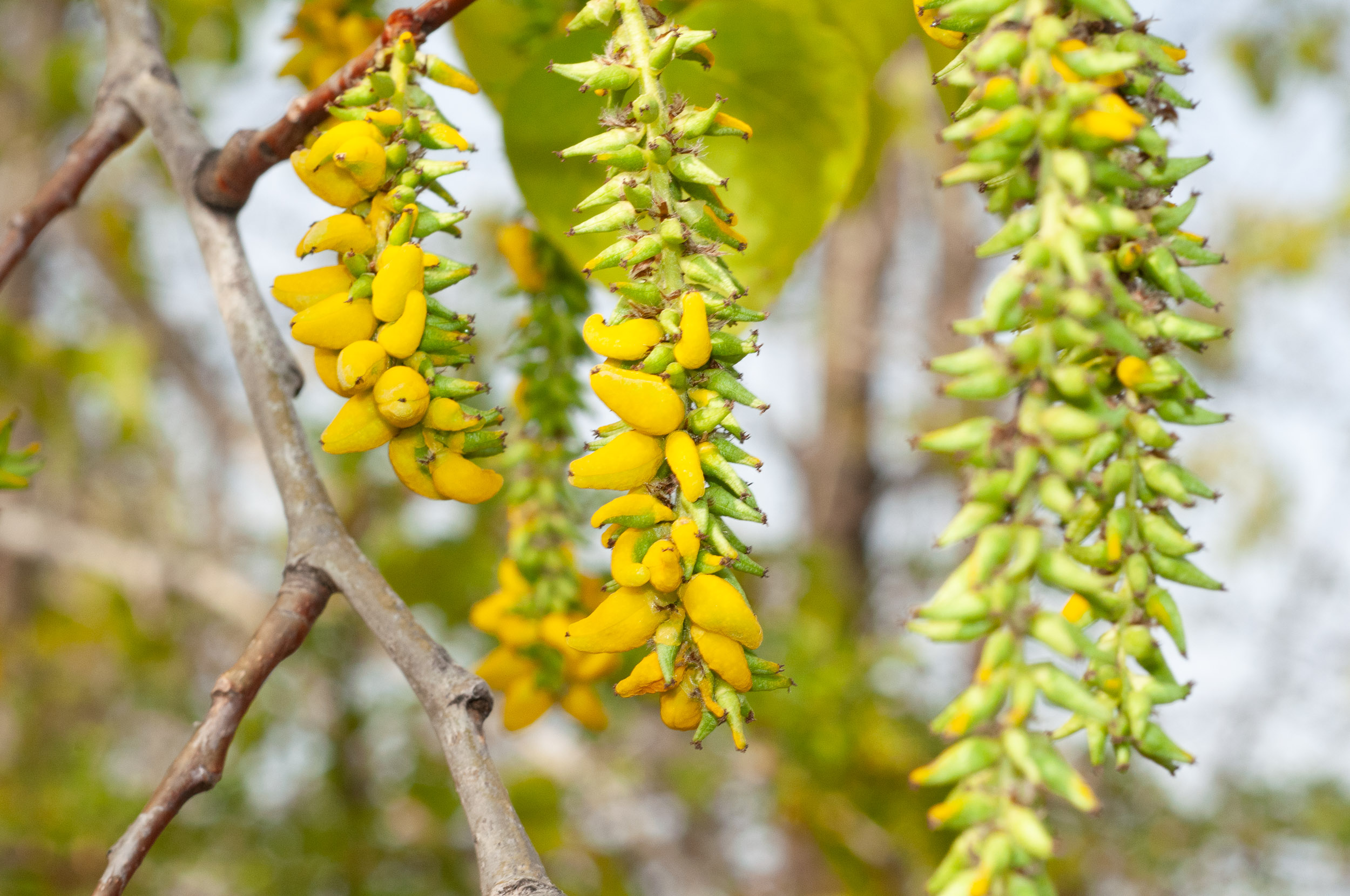
The yellow capsules are infected by Taphrina johansonii, an ascomycete. The healthy capsules are green. · 4/21/2010 · Nashua River Rail Trail, Groton Center, Groton, Massachusetts · ≈ 7 × 4½″ (17 × 11 cm)
7/18/2017 · Tobyhanna State Park, Pennsylvania · ≈ 6 × 4″ (16 × 11 cm)
7/7/2025 · Woodward Point Preserve, Brunswick, Maine · ≈ 8 × 7″ (21 × 17 cm)
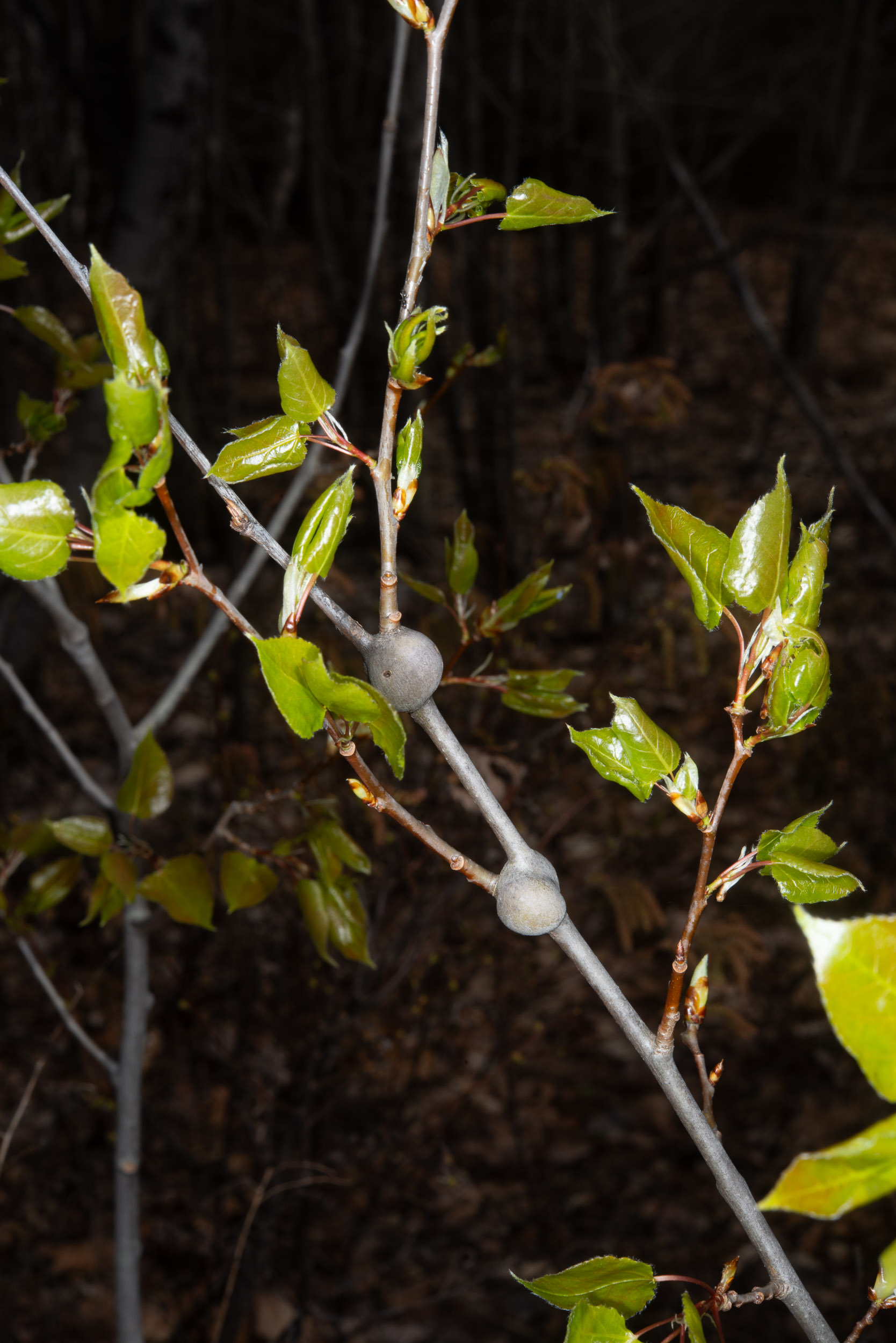
The gall is created by Euhexomyza schineri, or poplar twiggall fly · 4/20/2017 · Townsend Wildlife Management Area, Townsend, Massachusetts · ≈ 7 × 4½″ (16 × 11 cm)
8/31/2014 · New Mexico
7/18/2017 · Tobyhanna State Park, Pennsylvania · ≈ 6 × 4″ (14 × 10 cm)
10/23/2010 · Warwick Mills, New Ipswich, New Hampshire
8/31/2014 · New Mexico
8/31/2014 · New Mexico
7/18/2017 · Tobyhanna State Park, Pennsylvania · ≈ 5 × 4″ (13 × 10 cm)
5/13/2010 · Nashua River Rail Trail, Groton Center, Groton, Massachusetts · ≈ 7 × 6″ (18 × 14 cm)