Prunus serotina Ehrh.
Black cherry
Black cherry is native to eastern North America.
Plants: Deciduous trees are 49–79 ⨉ 30–59′ (15–24 ⨉ 9–18 m) in size. Young trees have shiny bark with horizontal lenticels. As trees age, the bark becomes scaly or flaky. The largest of the cherry trees, its hard, fine-grained wood is valued for furniture.
Leaves: Alternate, 1¾–5 ⨉ ¾–1½″ (5–13 ⨉ 2–4 cm), glossy, ovate to lanceolate, with finely serrated margins.
Flowers: Racemes of white, five-petaled flowers, 4–6″ (10–15 cm) long, contain several dozen fragrant flowers. Flowers appear from April to May.
Fruits: Red drupes ripen to purple-black, and are ⅛–⅜″ (5–10 mm) in diameter.
Habitats: A wide range of soils in cool and moist regions.
Edibility: Bitter and inedible fresh, but they can be cooked to prepare jams and jellies. Note that bark, leaves, and roots contain poisonous cyanide-related compounds, producing a characteristic odor.
Online References:

Red galls are caused by the black cherry gall mite, Eriophyes cerasicrumena. · 5/20/2012 · J. Harry Rich State Forest, Groton, Massachusetts · ≈ 5 × 3½″ (13 × 9.2 cm) 

7/23/2025 · Curtis Farm Preserve, Harpswell, Maine · ≈ 6 × 5″ (16 × 13 cm) 

5/16/2024 · Ridge Trail, Freeport, Maine 
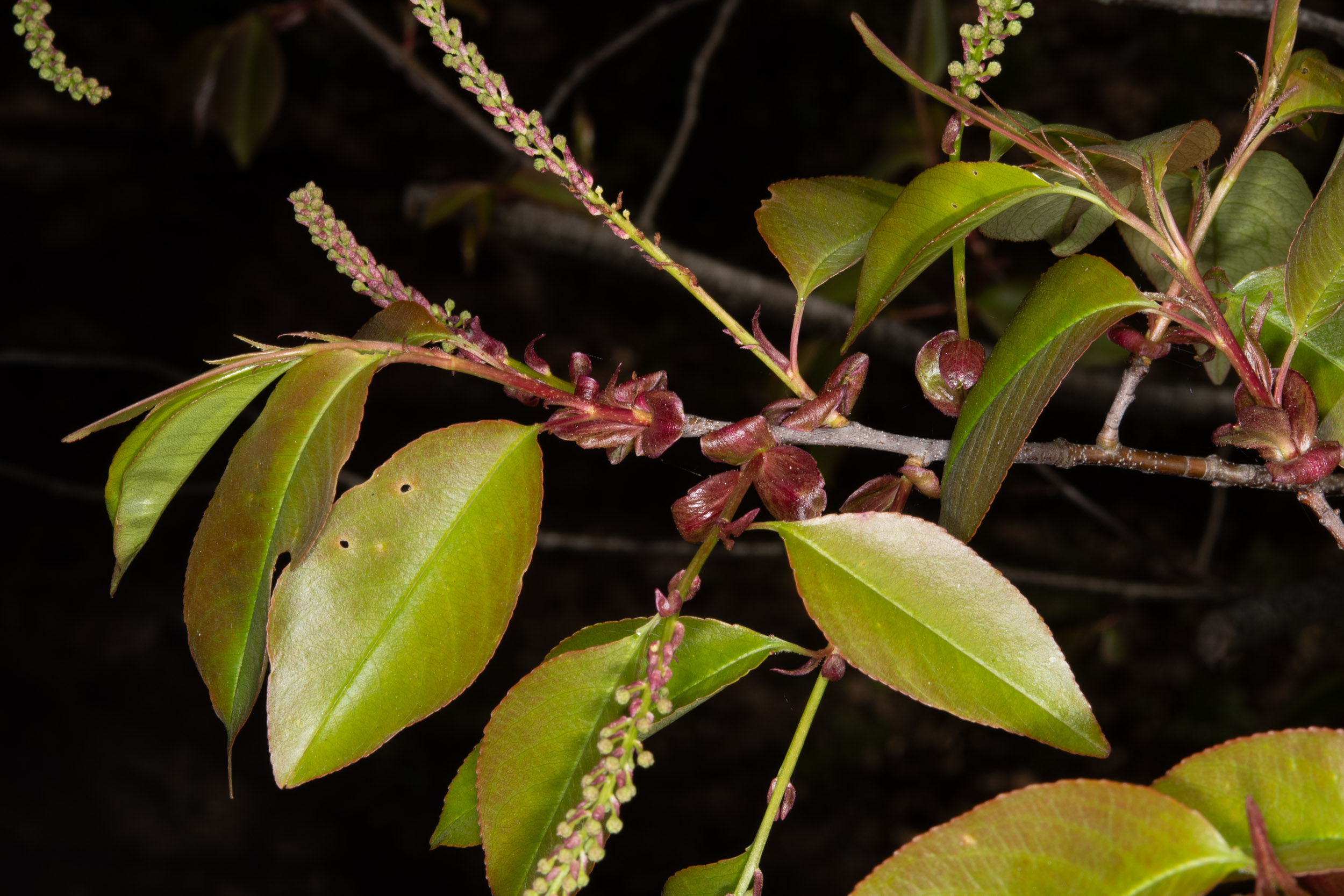
5/17/2024 · The Highlands, Topsham, Maine · ≈ 8 × 5″ (20 × 13 cm) 
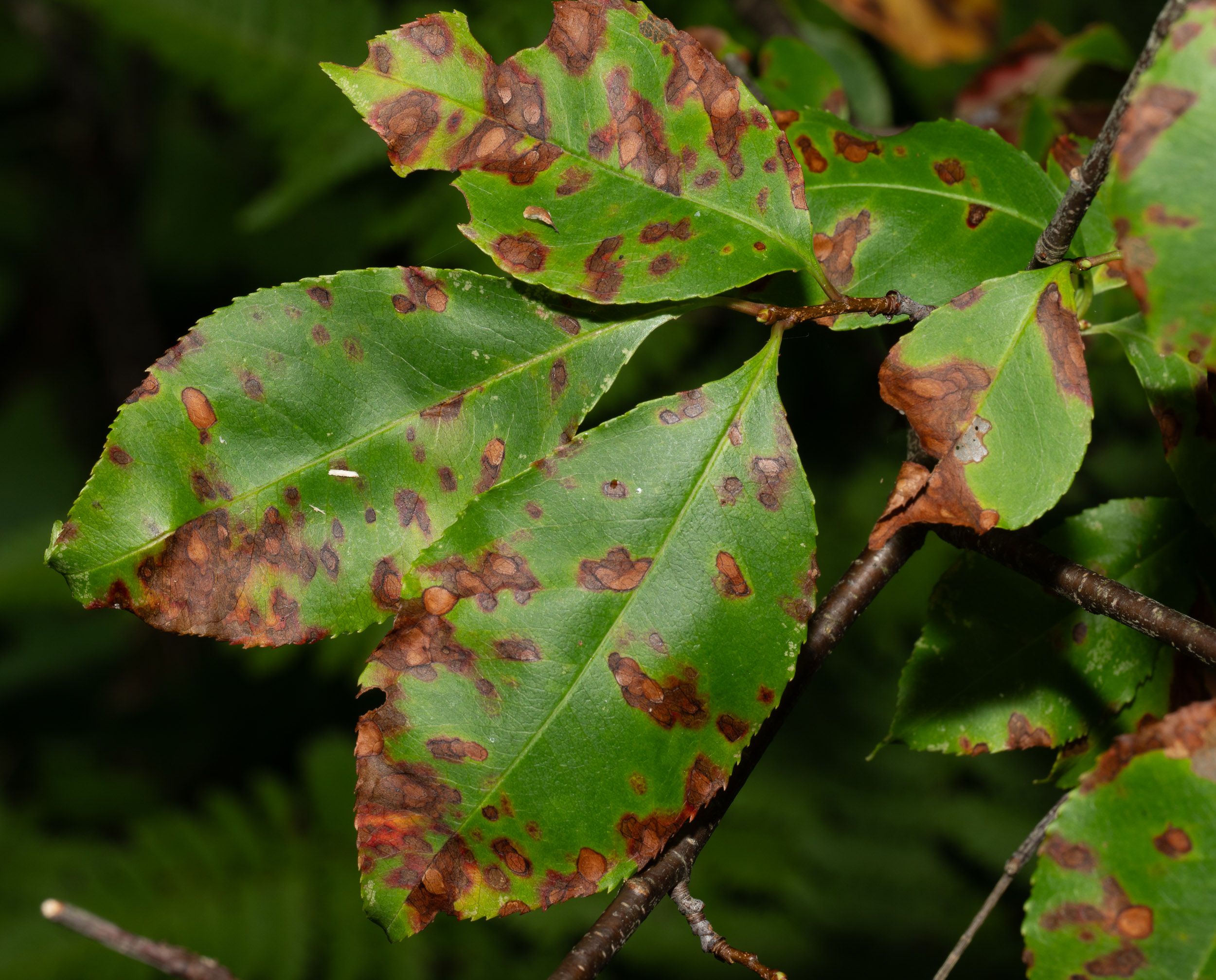
The blight is probably shot hole blight (Stigmina carpophila) · 8/4/2025 · Tarbox Preserve, Topsham, Maine · ≈ 6 × 4½″ (15 × 12 cm) 
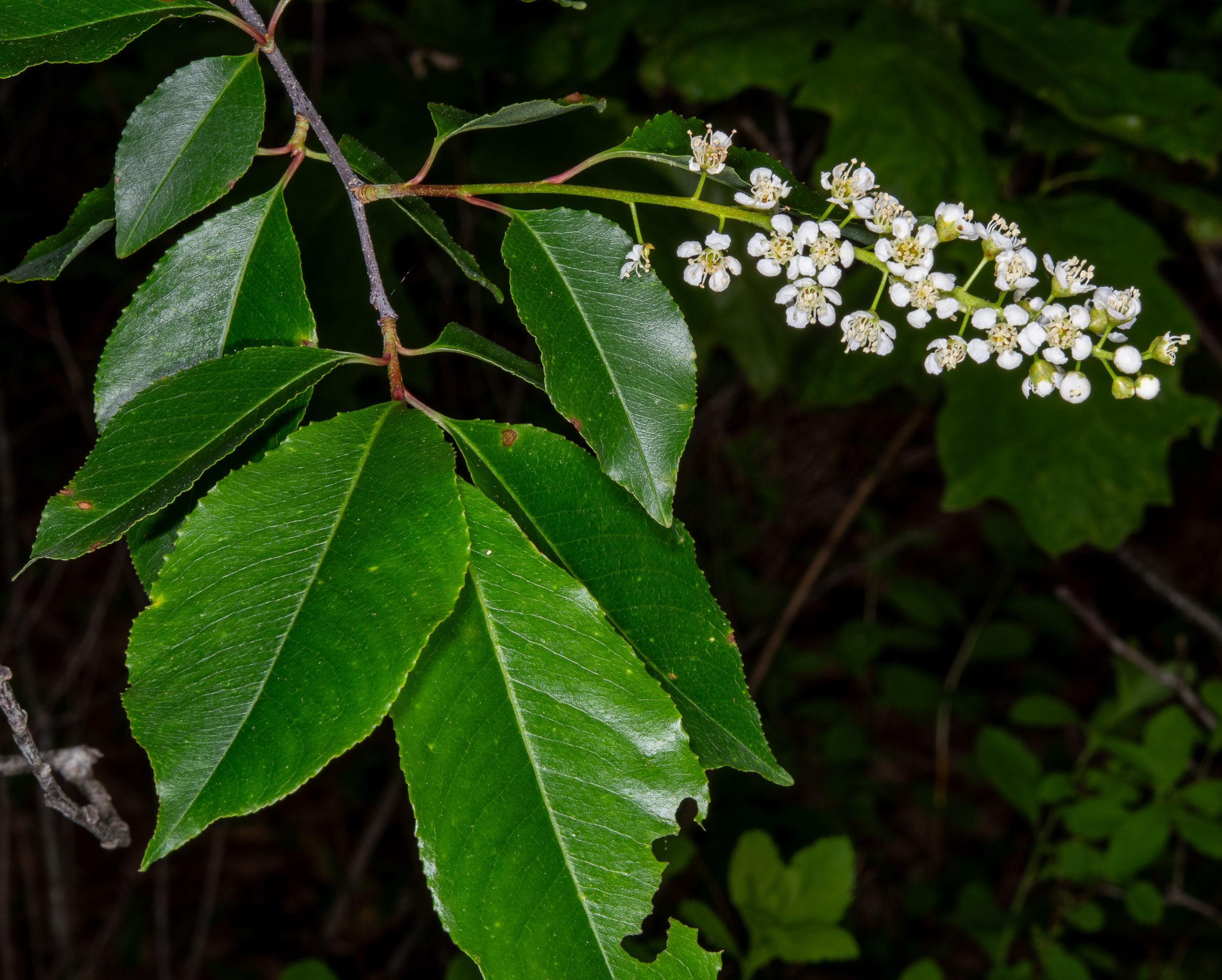
6/9/2025 · Curtis Farm Preserve, Harpswell, Maine · ≈ 8 × 6″ (20 × 16 cm) 
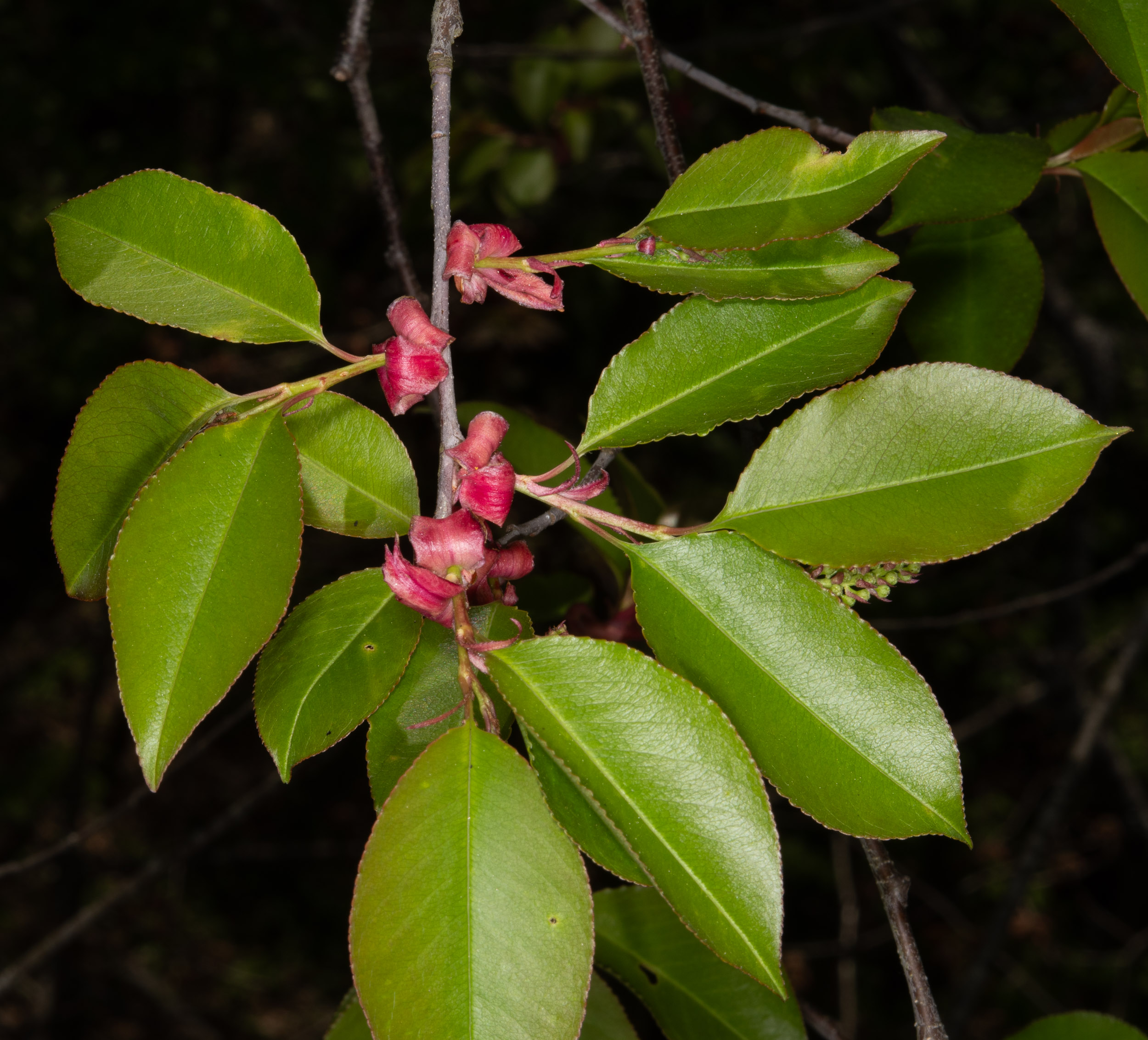
5/17/2024 · The Highlands, Topsham, Maine · ≈ 7 × 6″ (18 × 16 cm) 

Galls are from the black cherry gall mite (Eriophyes cerasicrumena) · 7/21/2026 · Denny Reed Trail, Phippsburg, Maine · ≈ 3½ × 3″ (9.6 × 8.1 cm) 

6/15/2025 · Morse Mountain Preserve, Phippsburg, Maine · ≈ 11 × 8″ (26 × 21 cm) 
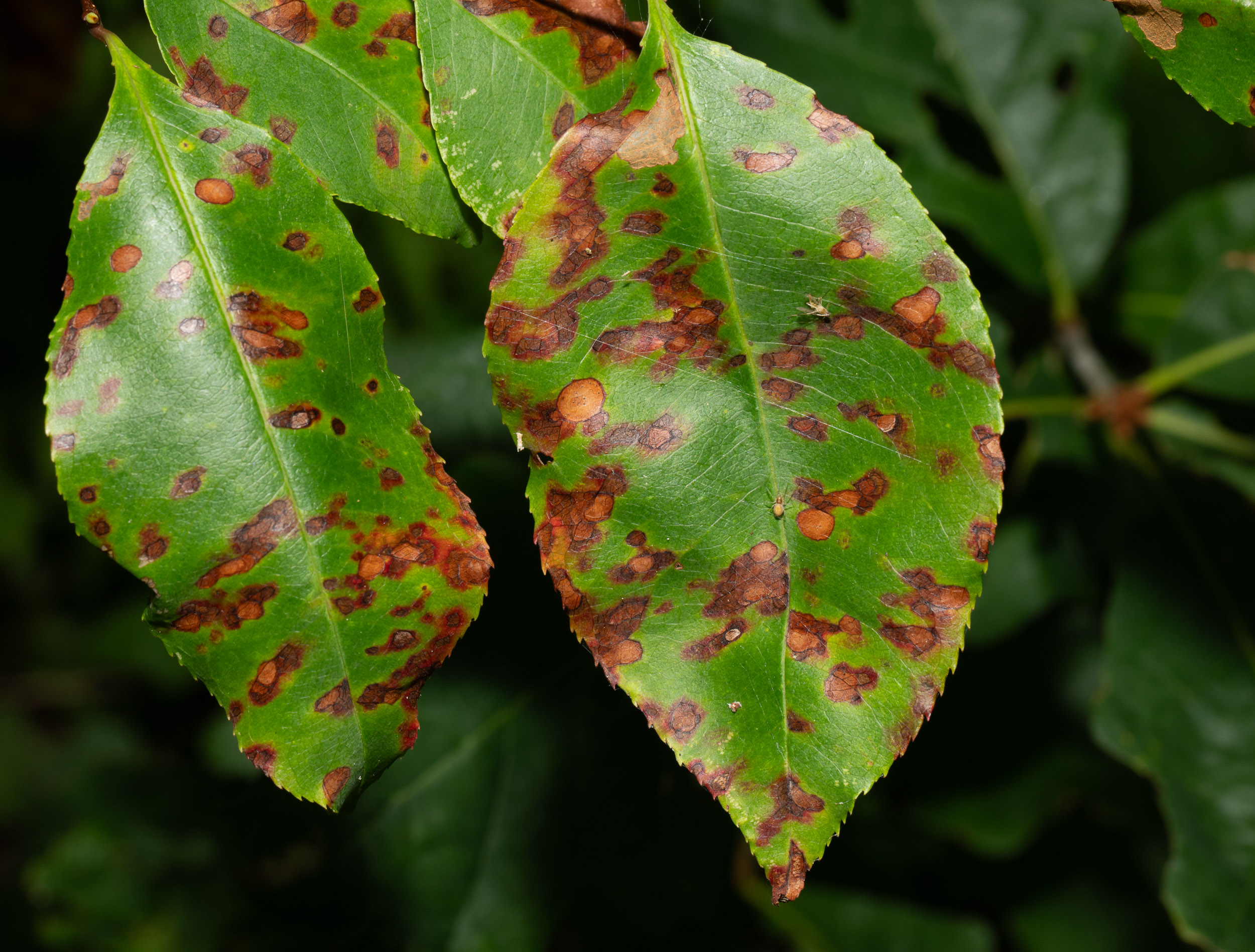
The blight is probably shot hole blight (Stigmina carpophila) · 8/4/2025 · Tarbox Preserve, Topsham, Maine · ≈ 6 × 4½″ (15 × 12 cm) 

8/19/2025 · Saunders Memorial Park, Boothbay, Maine · ≈ 7 × 10″ (17 × 25 cm) 
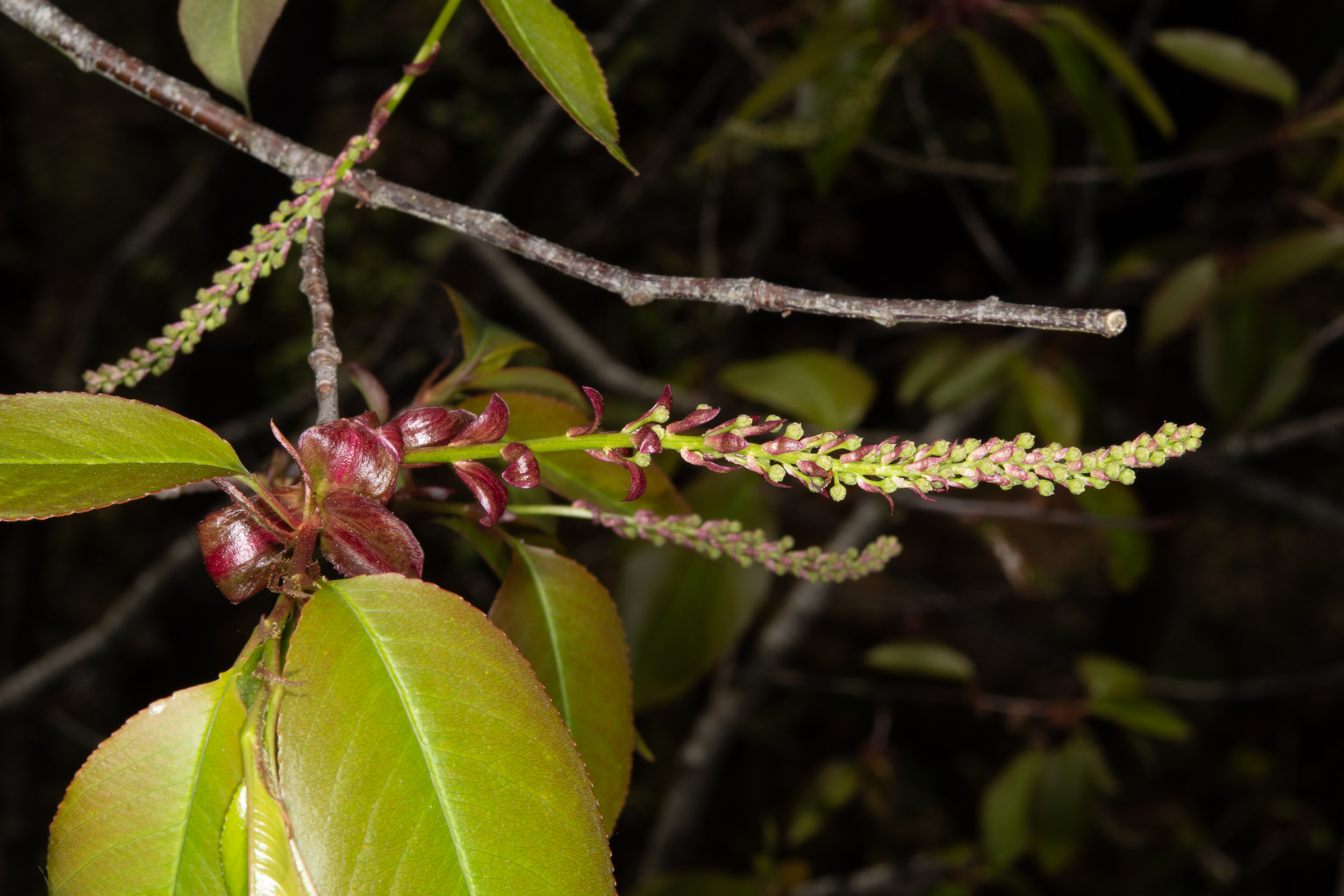
5/17/2024 · The Highlands, Topsham, Maine · ≈ 7 × 4½″ (18 × 12 cm) 
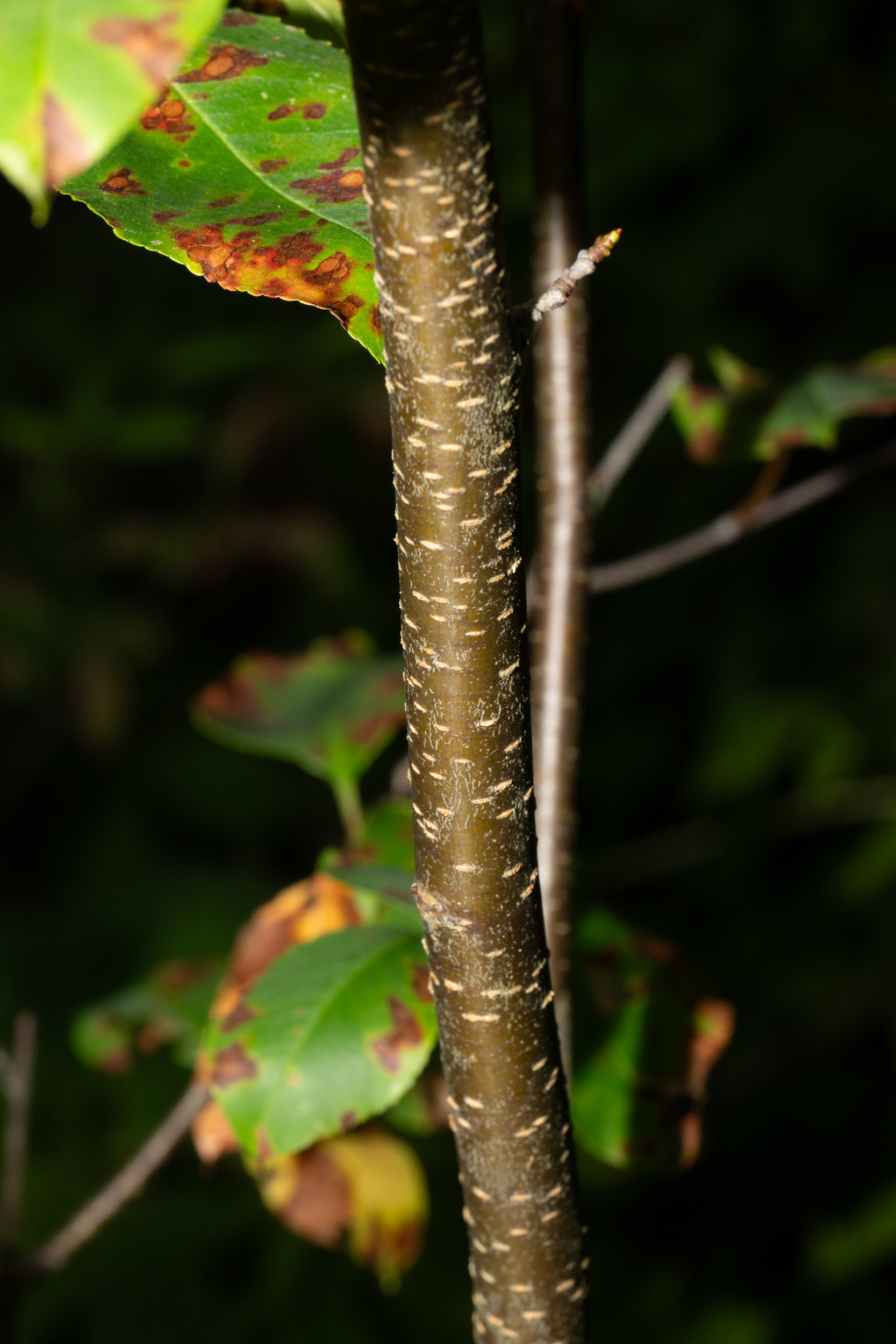
8/4/2025 · Tarbox Preserve, Topsham, Maine · ≈ 4½ × 7″ (11 × 17 cm) 

Red galls are caused by the black cherry gall mite, Eriophyes cerasicrumena. · 5/20/2012 · J. Harry Rich State Forest, Groton, Massachusetts · ≈ 5 × 3½″ (13 × 9.2 cm) 
| Kingdom | Plantae | Plants, but not fungi, lichens, or algae (from Stearn's Botanical Latin) |
| Subkingdom | Tracheobionta | Vascular plants—plants with a “circulatory system” for delivering water and nutrients |
| Division | Magnoliophyta | Flowering plants, also known as angiosperms |
| Class | Magnoliopsida | Dicotyledons—plants with two initial seed leaves |
| Subclass | Rosidae | Roses, legumes, proteas, dogwoods, hydrangeas, mistletoes, euphorbias, grapes, many more |
| Order | Rosales | Rose family and eight others |
| Family | Rosaceae | Includes apples, apricots, plums, cherries, peaches, pears, raspberries, strawberries, almonds, roses, meadowsweets, photinias, firethorns, rowans, and hawthorns; many others |
| Genus | Prunus | Includes plums, cherries, peaches, apricots, and almonds |
| Species | serotina |

Prunus serotina description by Thomas H. Kent, not updated.

© FloraFinder.org. All rights reserved.