Pyrola elliptica Nutt.
Pyrola, shinleaf, common shinleaf, waxflower shinleaf
Shinleaf is native to temperate regions of North America.
Plants: Leaf clusters are low-lying, only 1½–3″ (4–8 cm) tall, while flower stalks reach 4–10″ (10–25 cm). Usually there is a single flower stalk; occasionally there are two.
Leaves: Leaves emerge in a basal rosette. They are dull, oval, 1–3″ (2.5–7.6 cm) long and ½–2″ (1.5–5 cm) wide. Leaf edges are very slightly scalloped. The leaves are so low that they are often overtopped by leaves from surrounding plants. Leaf stalks (petioles) are shorter than the leaf blades.
Flowers: On flower spikes (racemes) with 3 to 21 hanging flowers. Each flower is white or greenish-white, ¼–½″ (8.3–12 mm) around, with five rounded petals. Petals sometimes have green veins. There are a cluster of orange-tipped stamens, and a green pistil which extends well beyond the flower. At the base of each flower are five sepals, forming a green star. Flowers appear from June to August.
Fruits: A flattened round dry capsule ¼″ (6.3 mm) around.
Habitats: Shaded woods and stream banks, especially under hardwoods.
Medical: Leaves of plants in this genus contain an aspirin-like compound that has been used to make a poultice to treat bruises and wounds. The poultice, called shinplaster, is the source of the common name “shinleaf.”
 |
Similar species. |
Online References:
References:
Clemants, Steven; Gracie, Carol, Wildflowers in the Field and Forest, Oxford University Press, 2006, p. 364
Pyrola compacta Jennings
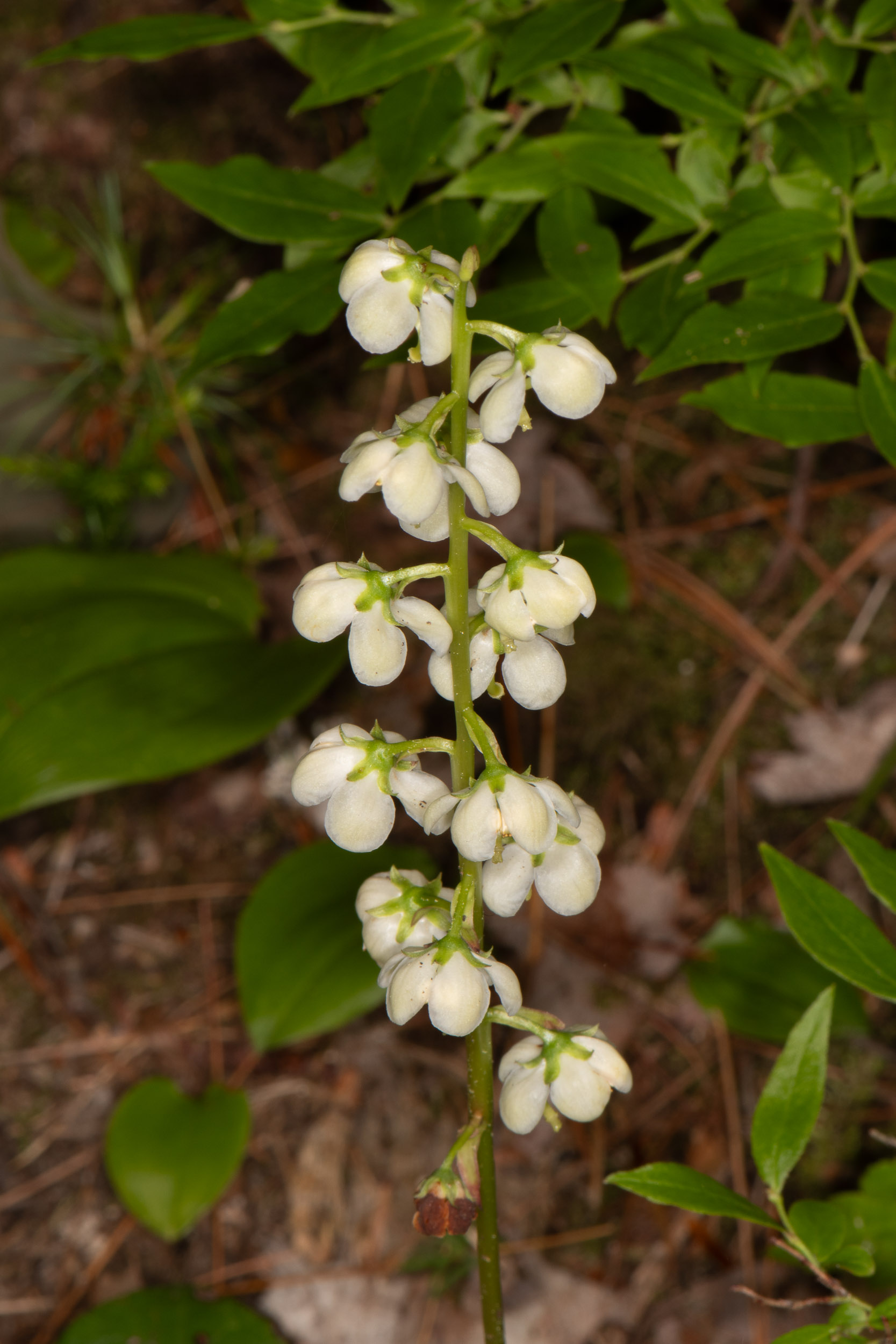
6/27/2021 · Maquoit Bay Preserve, Brunswick, Maine · ≈ 4½ × 7″ (11 × 16 cm) 

6/30/2015 · Beaver Brook Conservation Area, Hollis, New Hampshire · ≈ 7 × 8″ (18 × 21 cm) 
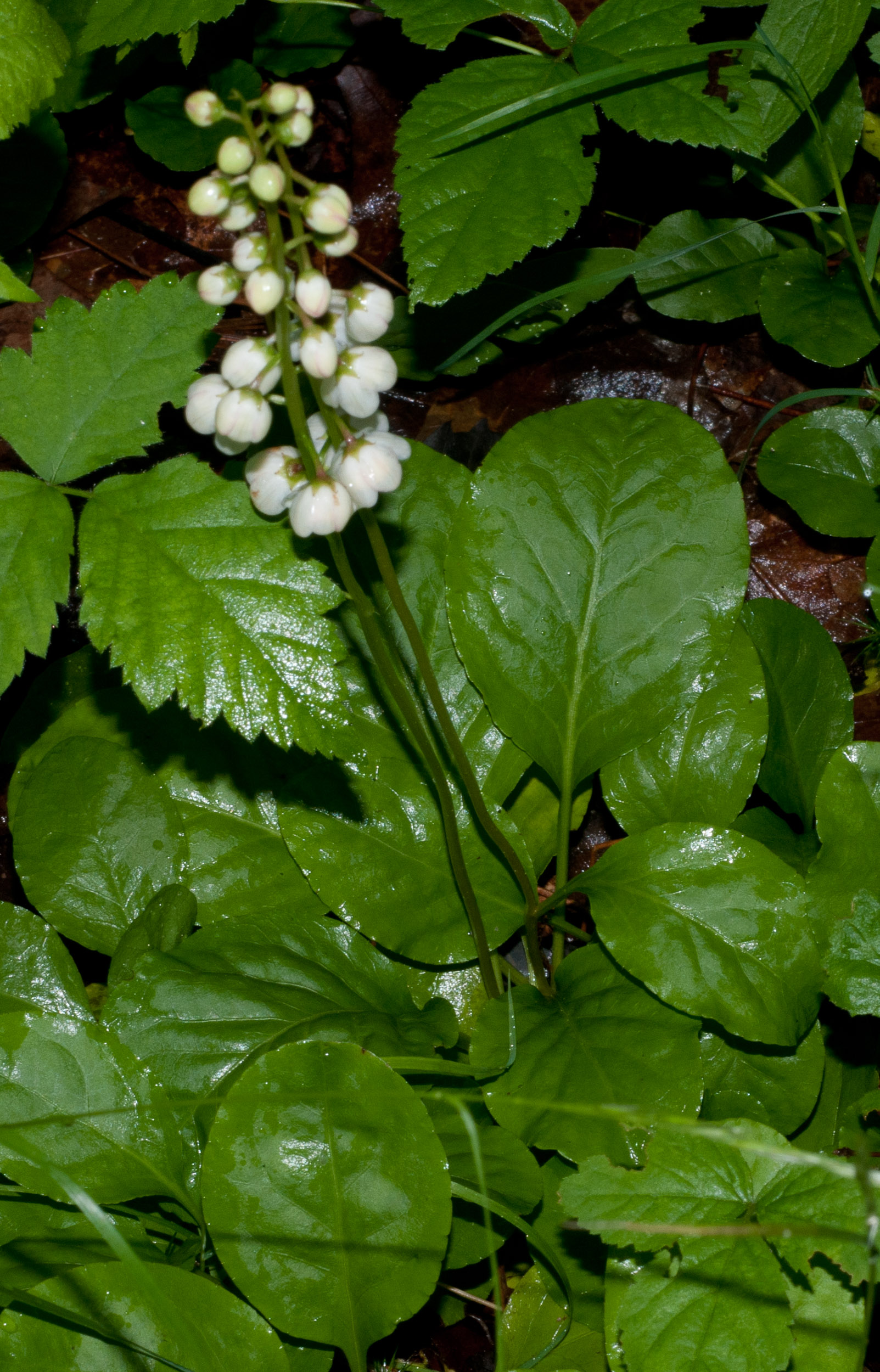
6/14/2010 · Nashua River Rail Trail, Groton, Massachusetts · ≈ 6 × 10″ (16 × 25 cm) 
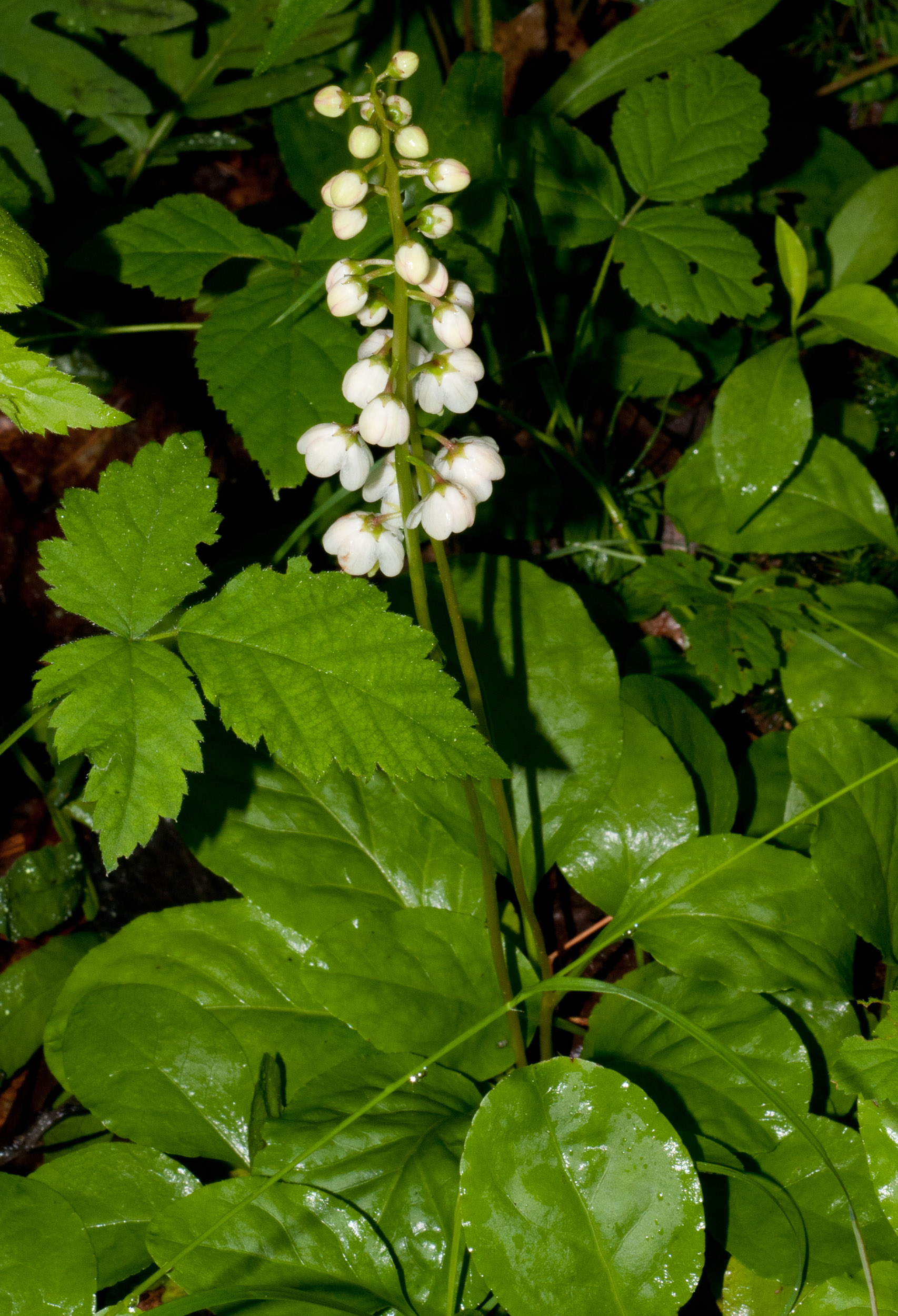
6/14/2010 · Nashua River Rail Trail, Groton, Massachusetts · ≈ 6 × 9″ (15 × 22 cm) 
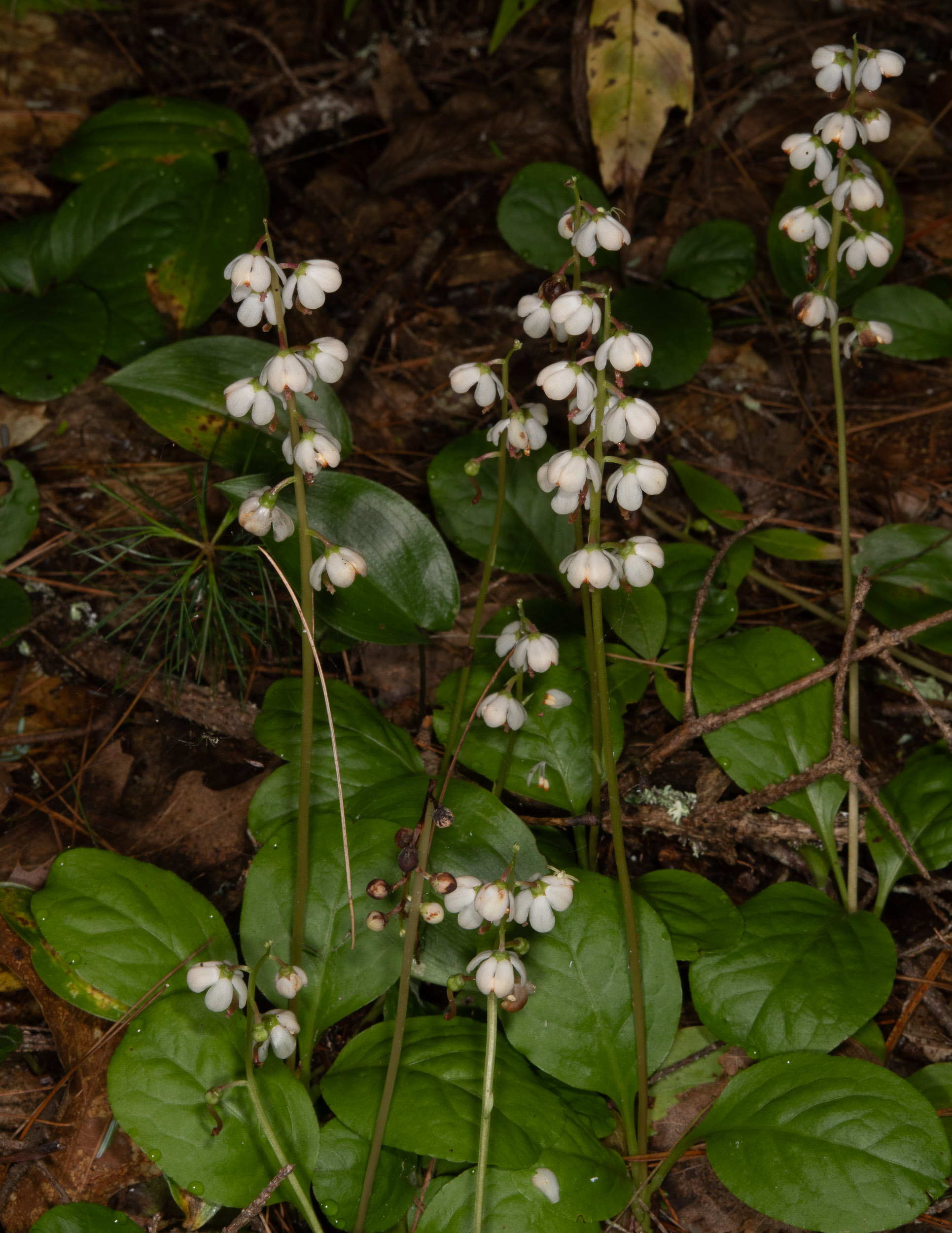
7/12/2020 · Harraseeket Trail, Wolfe’s Neck Woods State Park, Freeport, Maine · ≈ 8 × 11″ (20 × 26 cm) 

7/15/2012 · Fort Point State Park, Stockton Springs, Maine · ≈ 7 × 5″ (17 × 13 cm)  ID is uncertain
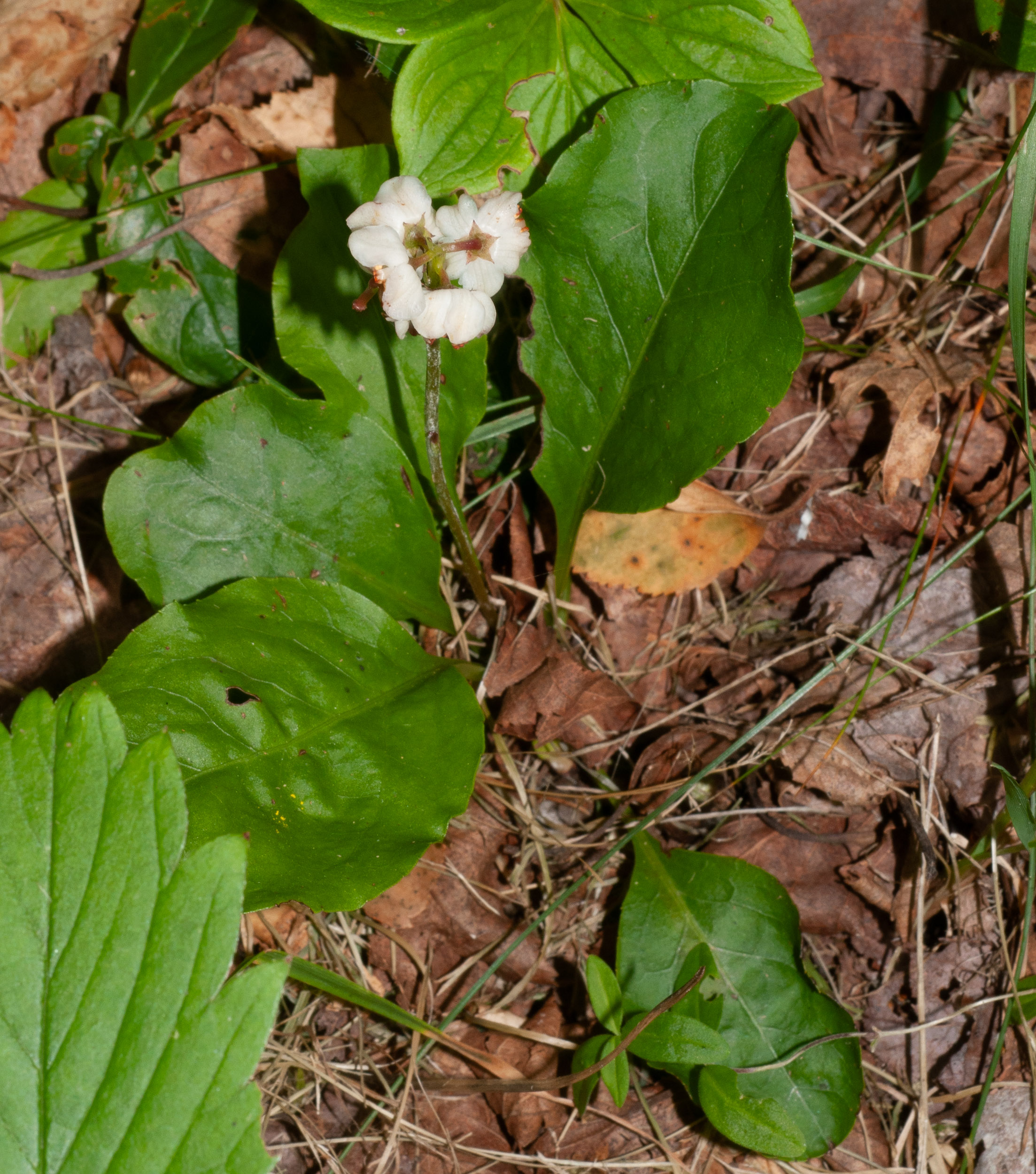
7/15/2012 · Fort Point State Park, Stockton Springs, Maine · ≈ 6 × 5″ (14 × 13 cm) ID is uncertain 
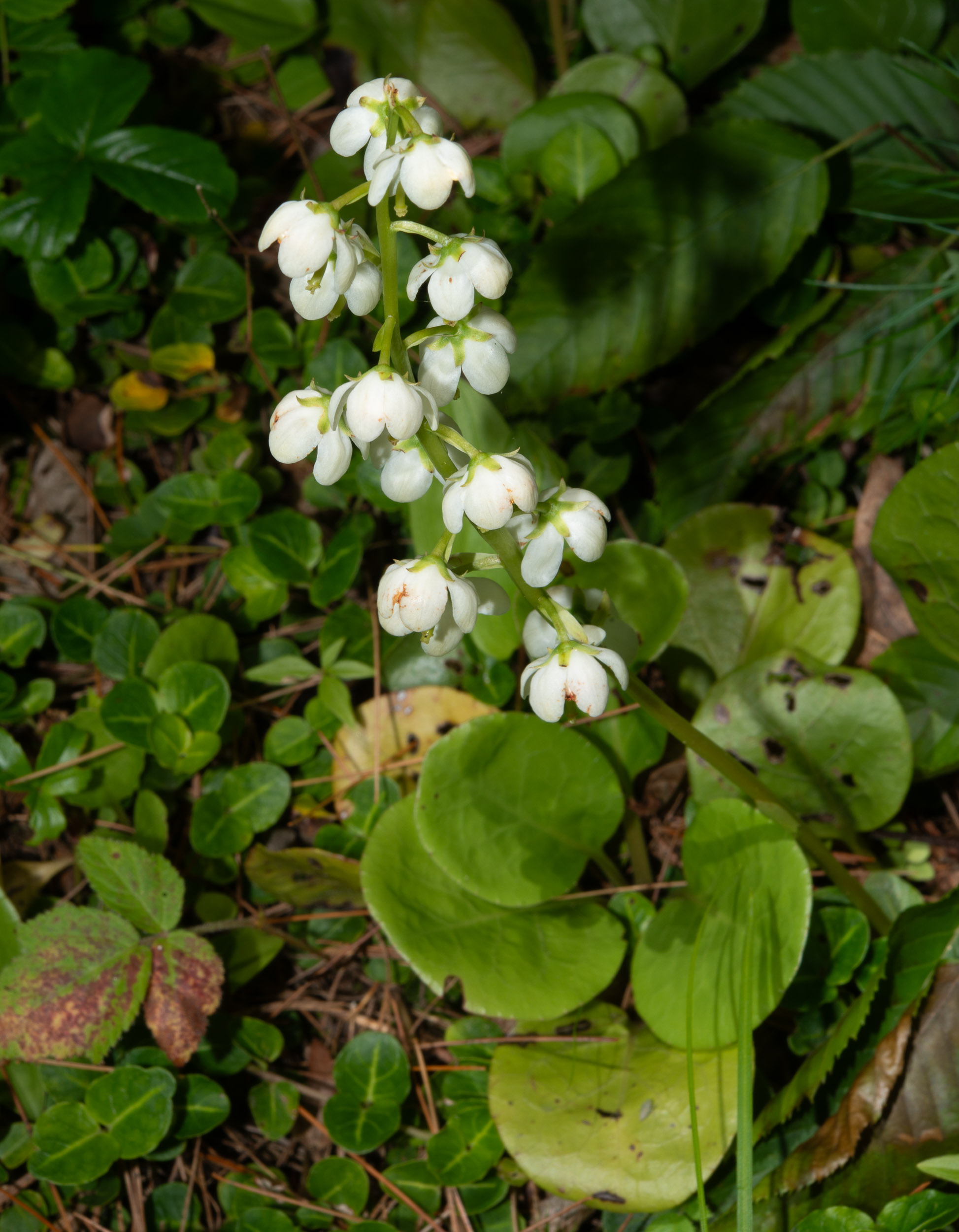
6/30/2015 · Beaver Brook Conservation Area, Hollis, New Hampshire · ≈ 6 × 7″ (14 × 18 cm) 

6/27/2021 · Maquoit Bay Preserve, Brunswick, Maine · ≈ 5 × 5″ (12 × 13 cm) 

6/20/2021 · Maquoit Bay Preserve, Brunswick, Maine · ≈ 4 × 5″ (10 × 12 cm) 

7/12/2020 · Harraseeket Trail, Wolfe’s Neck Woods State Park, Freeport, Maine · ≈ 5 × 8″ (13 × 20 cm) 

7/6/2025 · Cross River Preserve, Boothbay, Maine · ≈ 9 × 11″ (23 × 28 cm) 

6/30/2015 · Beaver Brook Conservation Area, Hollis, New Hampshire · ≈ 6 × 6″ (15 × 15 cm) 

6/14/2010 · Nashua River Rail Trail, Groton, Massachusetts · ≈ 9 × 10″ (23 × 26 cm) 

6/20/2021 · Maquoit Bay Preserve, Brunswick, Maine · ≈ 4½ × 4½″ (11 × 11 cm) 

7/1/2026 · Widgeon Cove, Harpswell, Maine · ≈ 4 × 6″ (10 × 16 cm) 
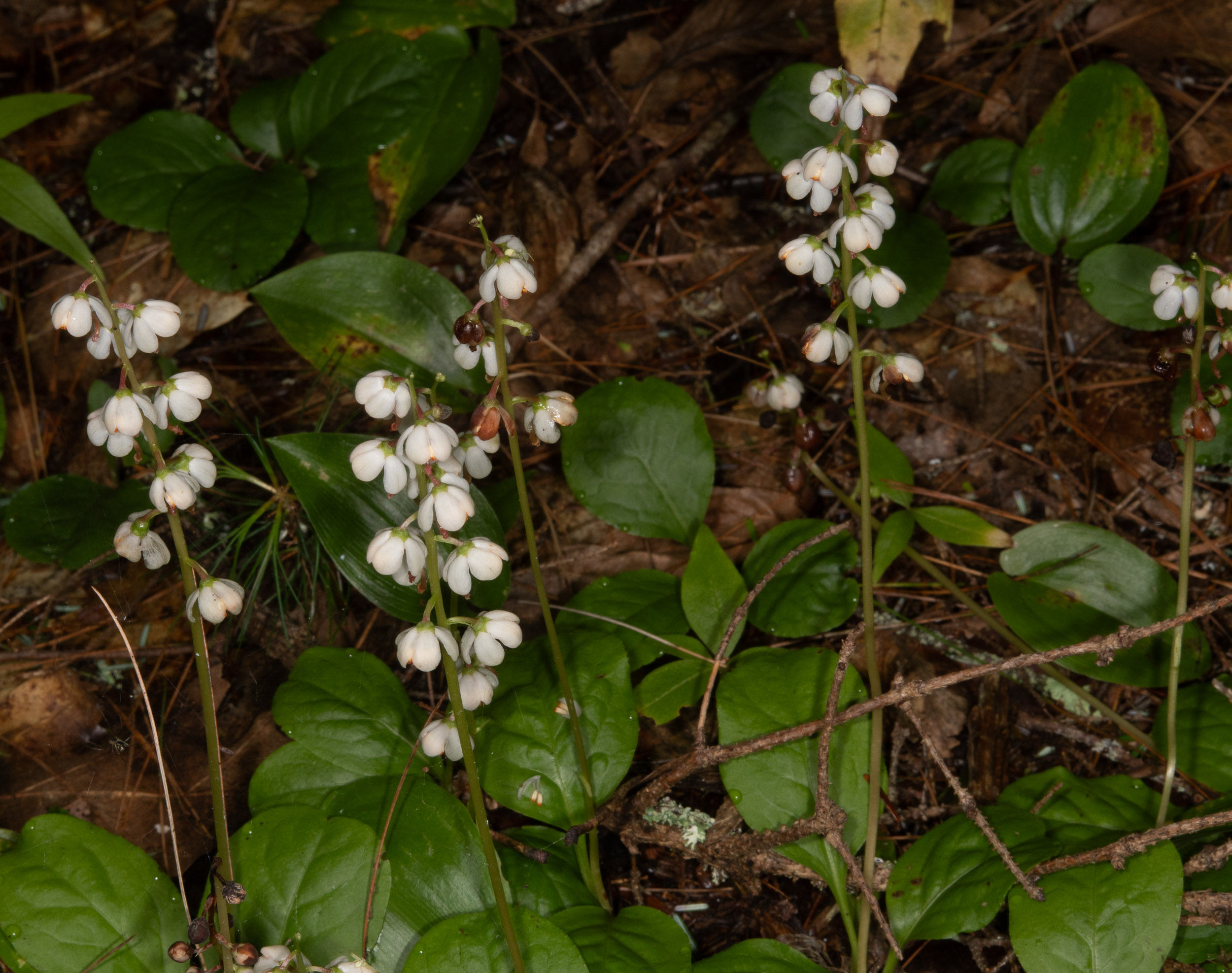
7/12/2020 · Harraseeket Trail, Wolfe’s Neck Woods State Park, Freeport, Maine · ≈ 10 × 8″ (26 × 20 cm) 
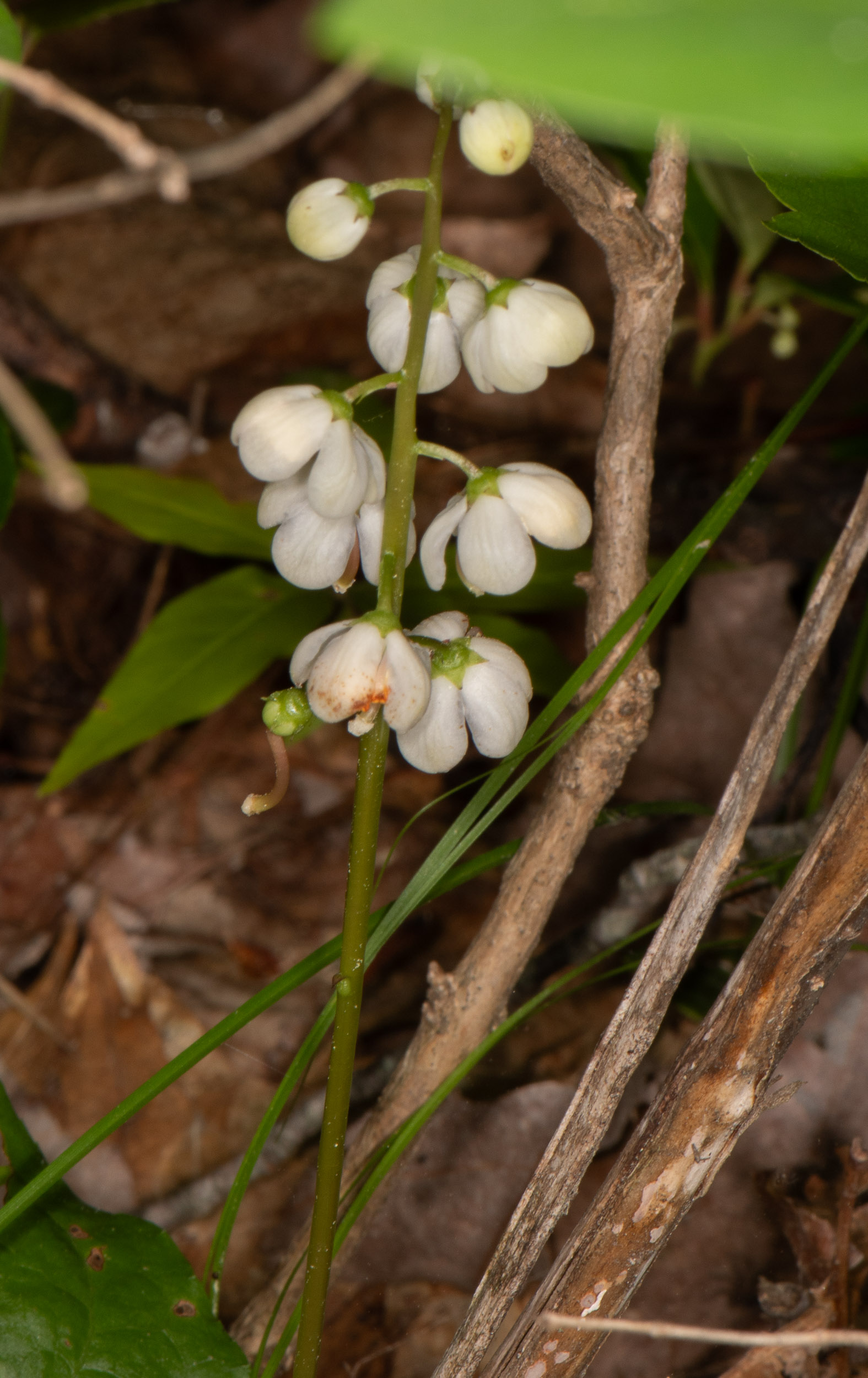
6/27/2021 · Maquoit Bay Preserve, Brunswick, Maine · ≈ 3½ × 5″ (9.1 × 13 cm) 
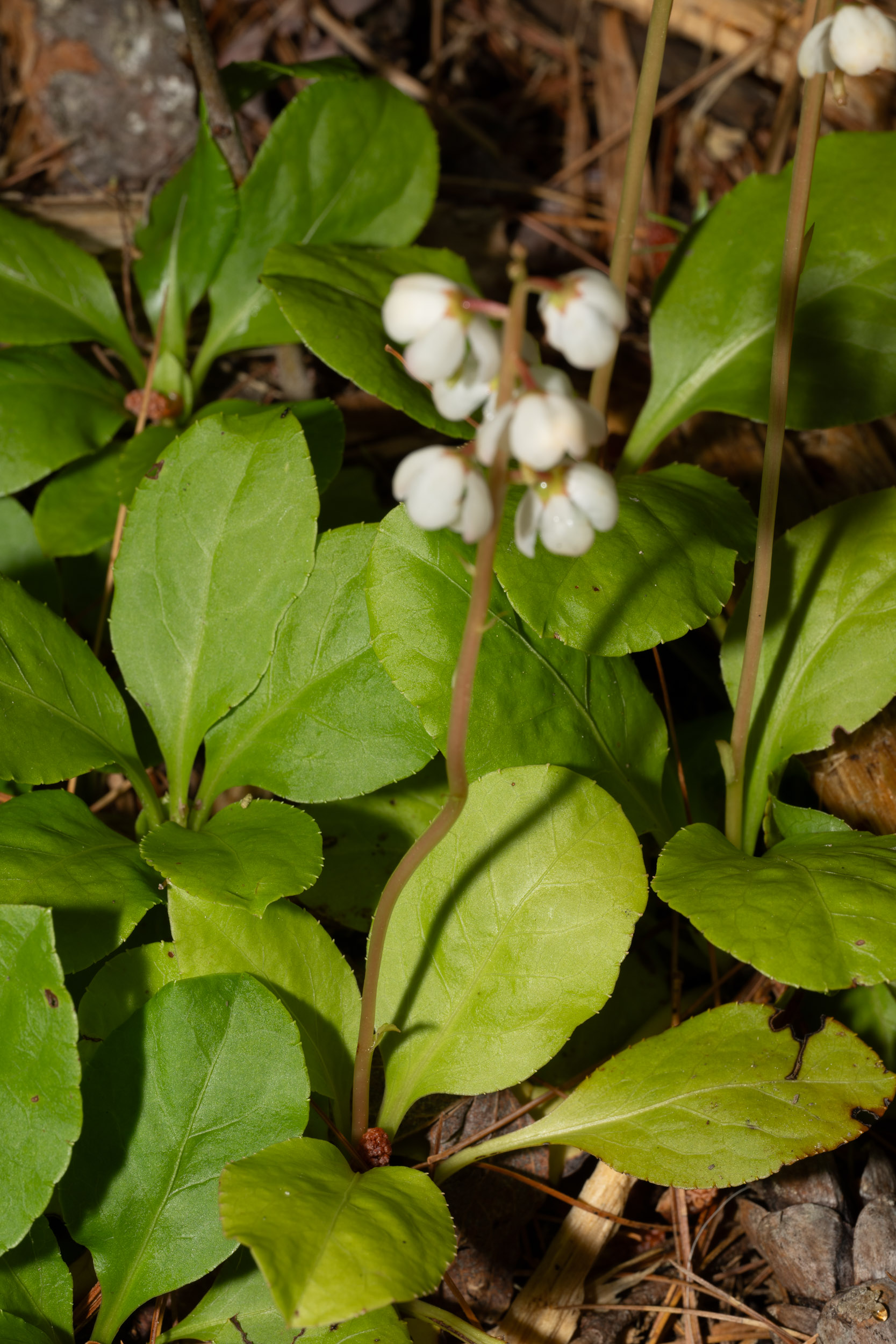
7/1/2026 · Widgeon Cove, Harpswell, Maine · ≈ 4½ × 7″ (12 × 18 cm) 
| Kingdom | Plantae | Plants, but not fungi, lichens, or algae (from Stearn's Botanical Latin) |
| Subkingdom | Tracheobionta | Vascular plants—plants with a “circulatory system” for delivering water and nutrients |
| Division | Magnoliophyta | Flowering plants, also known as angiosperms |
| Class | Magnoliopsida | Dicotyledons—plants with two initial seed leaves |
| Subclass | Asteridae | A large class that encompasses asters |
| Order | Ericales | Tea, persimmon, blueberry, Brazil nut, azalea, many others |
| Family | Pyrolaceae | Includes at least Chimaphila, Moneses, Orthilia, and Pyrola, and sometimes several genera usually placed in the family Monotropaceae |
| Genus | Pyrola | Pear-like, from the Latin diminutive of Pyrus, meaning “pear,” for the pear-like leaf shape, and a genus commonly called shinleaf or wintergreen |
| Species | elliptica | Elliptical, about twice as long as wide |
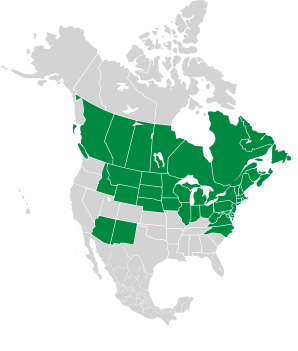
Pyrola elliptica description by Thomas H. Kent, not updated.

© FloraFinder.org. All rights reserved.