Quercus robur L.
Pedunculate oak, English oak
Pedunculate oak is native to Europe and western Asia, but widely planted in compatible North America climates.
Plants: These deciduous trees are up to 131′ (40 m) tall, with a trunk up to 36′ (11 m) in diameter. Bark is gray-brown and finely fissured, with vertical plates.
Leaves: 1¾–8 ⨉ ¾–4″ (5–20 ⨉ 2–10 cm), on short stalks, with 3-7 blunt lobes. They are dark green above, and pale or blue green below.
Flowers: Inconspicuous male (staminate) and female (pistillate) catkins are yellowish-green. Both appear on the same tree.
Fruits: Acorns are 1″ (2.5 cm), on stalks 1–3″ (2.5–7.6 cm) long. Acorn caps cover about ⅓ of the fruits. Trees are typically 25-30 years old before they begin bearing acorns.
Habitats: Anthropogenic habitats, forest edges, forests.
Online References:
Quercus robur L. f. fastigiata (Lam.) O. Schwarz

6/12/2023 · Viles Arboretum, Augusta, Maine 

9/17/2014 · Beaver Brook Conservation Area, Hollis, New Hampshire · ≈ 3 × 3″ (7.4 × 7.7 cm) 

6/12/2023 · Viles Arboretum, Augusta, Maine 

6/12/2023 · Viles Arboretum, Augusta, Maine 

6/12/2023 · Viles Arboretum, Augusta, Maine 
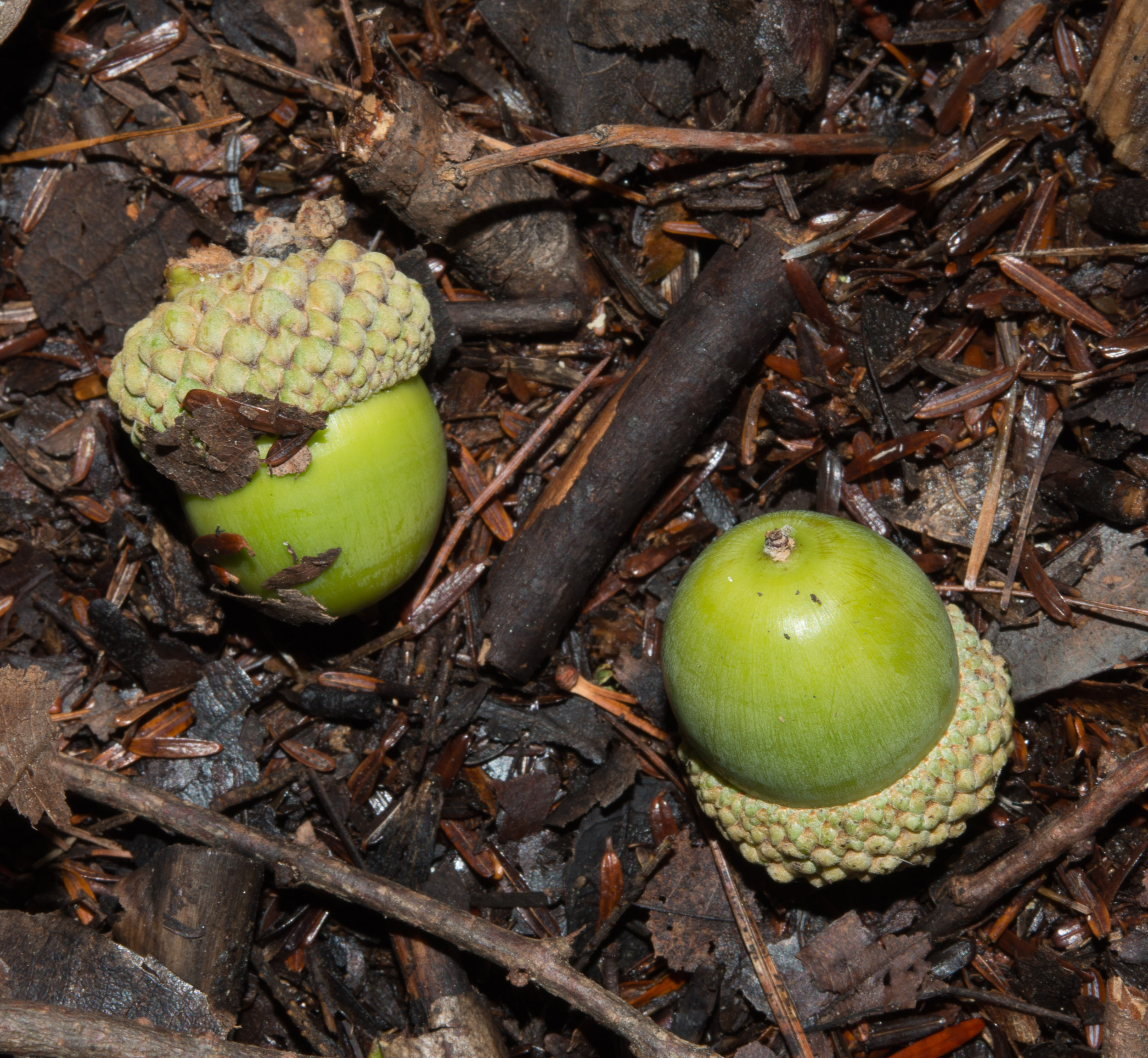
9/17/2014 · Beaver Brook Conservation Area, Hollis, New Hampshire · ≈ 3½ × 4″ (9.7 × 10 cm) 
| Kingdom | Plantae | Plants, but not fungi, lichens, or algae (from Stearn's Botanical Latin) |
| Subkingdom | Tracheobionta | Vascular plants—plants with a “circulatory system” for delivering water and nutrients |
| Division | Magnoliophyta | Flowering plants, also known as angiosperms |
| Class | Magnoliopsida | Dicotyledons—plants with two initial seed leaves |
| Subclass | Rosidae | Roses, legumes, proteas, dogwoods, hydrangeas, mistletoes, euphorbias, grapes, many more |
| Order | Fagales | Birch, she-oak, beech, walnut, bayberry, others |
| Family | Fagaceae | Beech familhy |
| Genus | Quercus | Latin for “oak” |
| Species | robur | Apparently a reference to reddish wood |

Quercus robur description by Thomas H. Kent, not updated.

© FloraFinder.org. All rights reserved.