Quercus velutina Lam.
Eastern black oak, black oak, yellow oak
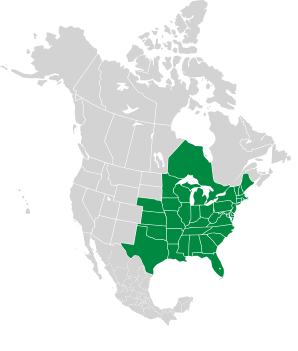
Eastern black oak is a native of eastern North America.
Plants: This tree is 65–80′ (19–24 m) tall, with bark that is almost black. Inner bark is yellow to orange. See the Quercus comparison table.
Leaves: Alternate, 4–10″ (10–25 cm) long, each with 5-7 lobes. Sun-facing leaves have deeper lobes than shade leaves. Mature leaves are dark green, and shiny; reddish-brown in the fall. Leaf undersides are yellowish-brown.
Flowers: The staminate (male) flowers develop from leaf axils of the previous year and the catkins emerge in April or May. Pistillate (female) flowers are borne in the axils of the current year’s leaves and may be solitary or occur in two- to many-flowered spikes. Both flowers are yellowish-green, and insignificant.
Fruits: Acorns are ½–¾″ (1.3–1.9 cm) long, with caps that cover ⅓ to ½ of the nut. They occur in clusters of 1-5.
Habitats: Sandy, silty clay, or loam soils in cool moist settings, at elevations below 3937′ (1.2 km).
Online References:
References:
Quercus velutina Lam. var. missouriensis Sarg.
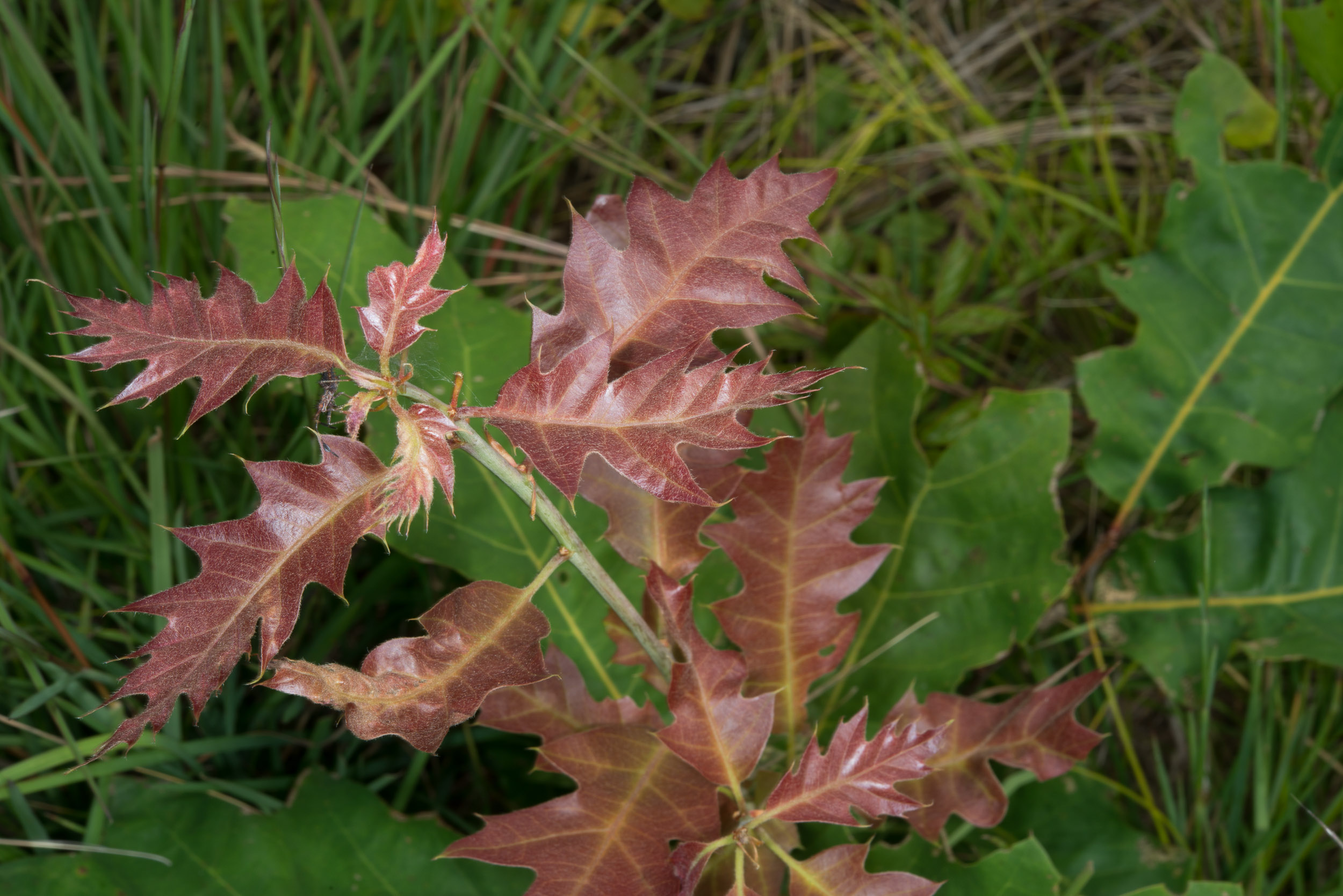
8/12/2014 · Andres Institute of Art, Big Bear Mountain, Brookline, New Hampshire · ≈ 10 × 7″ (25 × 16 cm) 
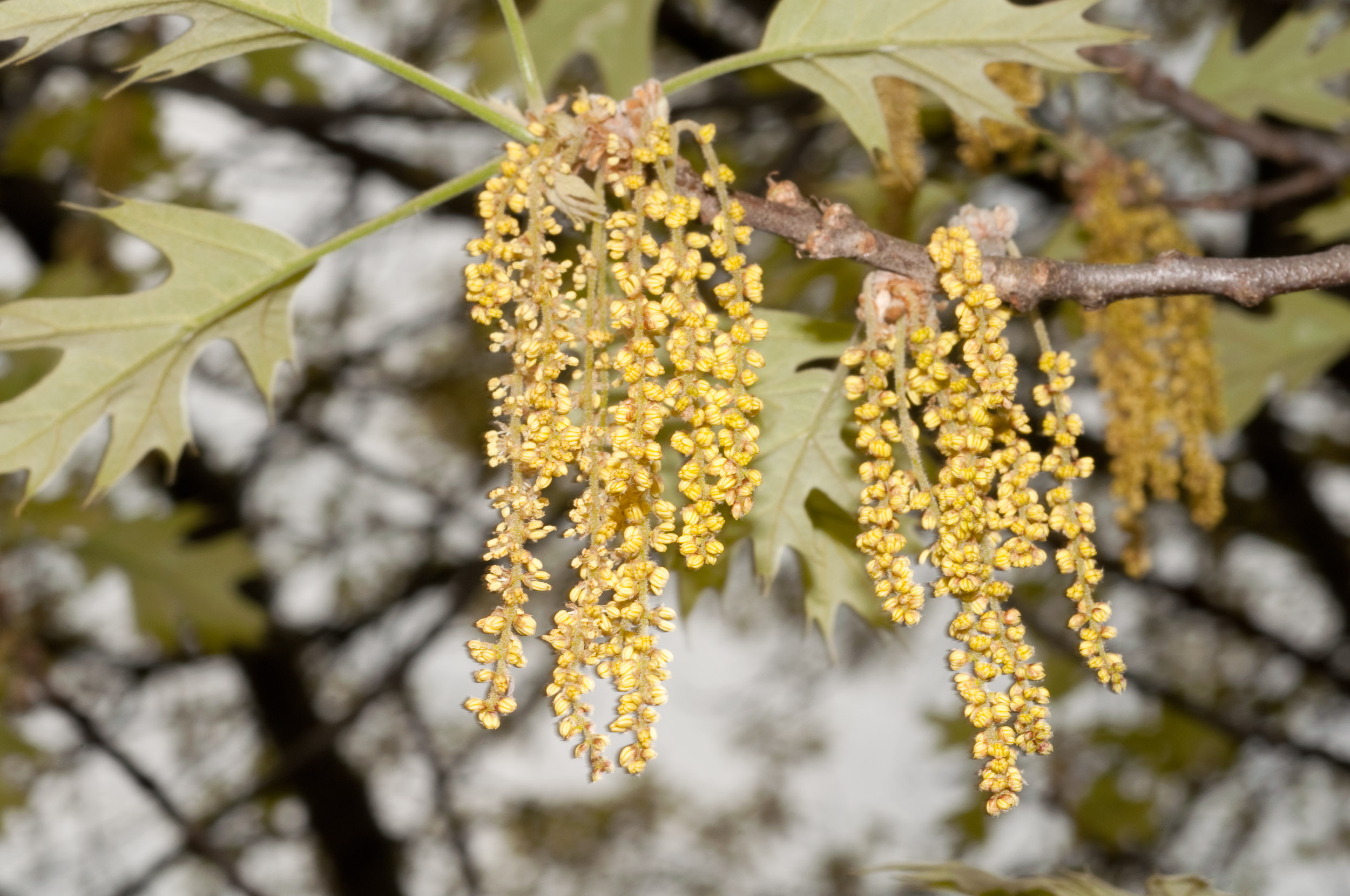
5/2/2010 · Nashua River Rail Trail, Groton Center, Groton, Massachusetts · ≈ 7 × 4½″ (17 × 11 cm)  ID is uncertain
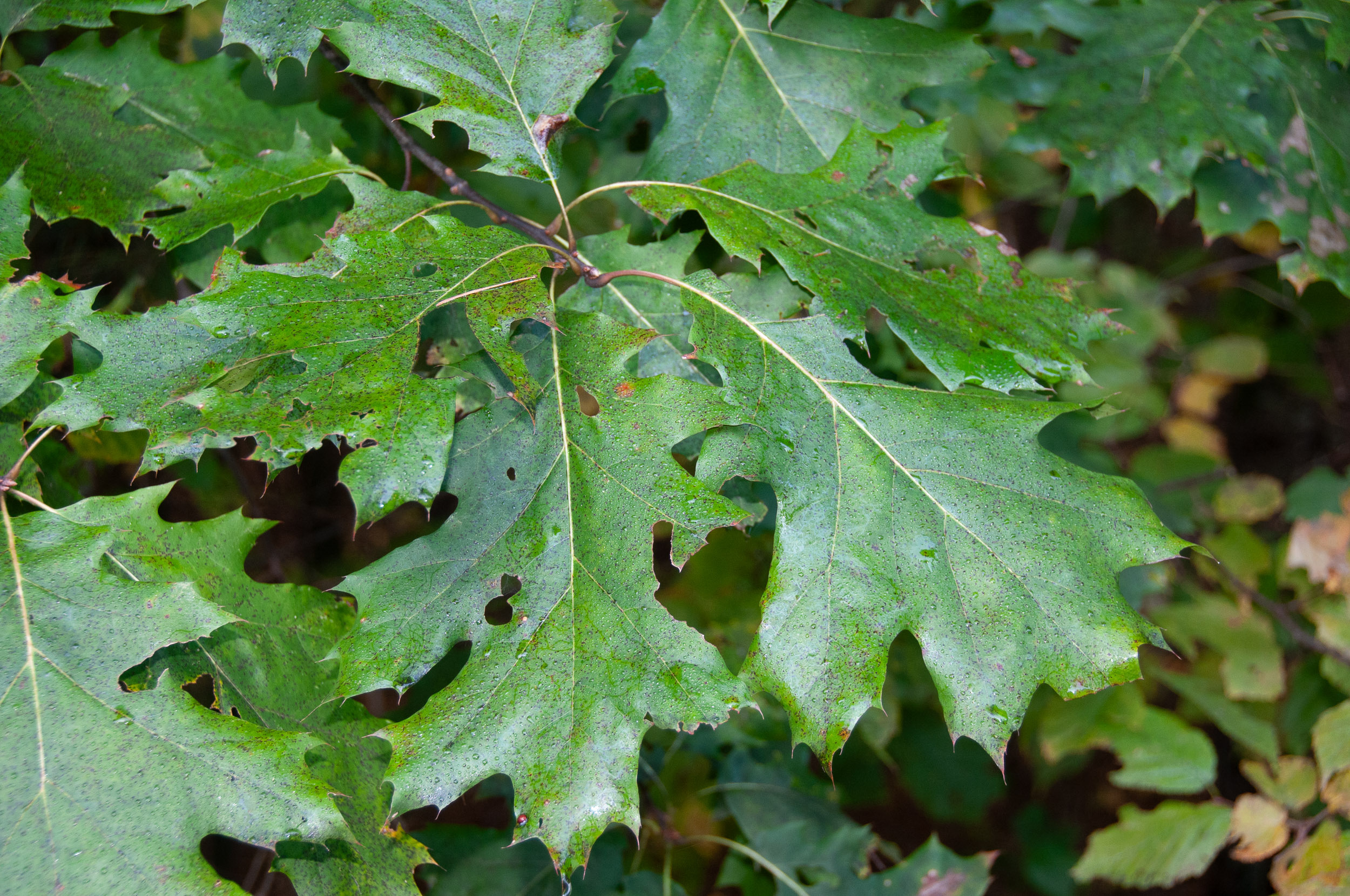
10/5/2009 · Nashua River Rail Trail, Groton, Massachusetts · ≈ 1½ × 1′ (49 × 32 cm) ID is uncertain 

5/29/2010 · Nashua River Rail Trail, Pepperell, Massachusetts · ≈ 17 × 12″ (44 × 29 cm) ID is uncertain 

5/2/2010 · Nashua River Rail Trail, Groton Center, Groton, Massachusetts · ≈ 9 × 6″ (23 × 15 cm) ID is uncertain 
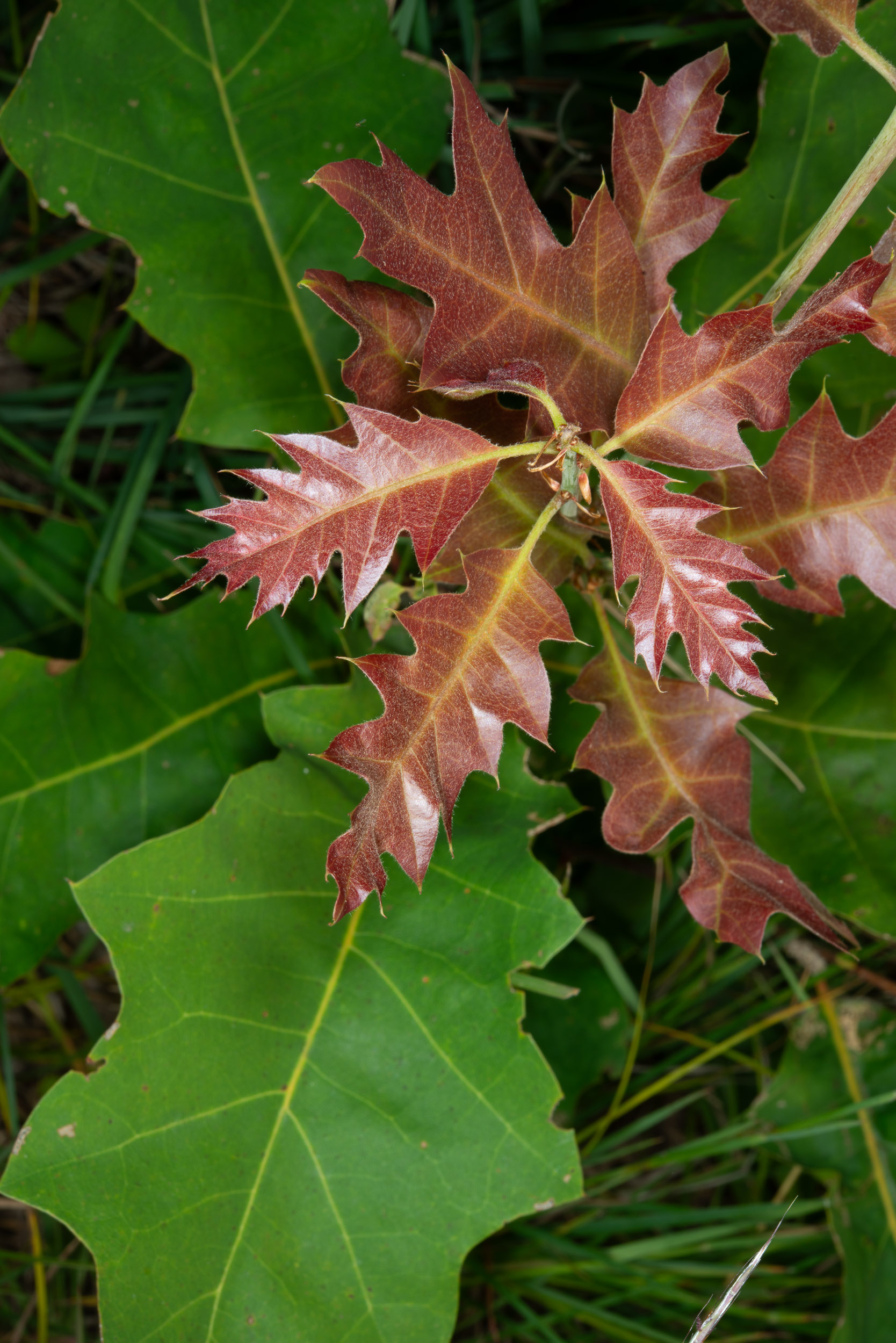
8/12/2014 · Andres Institute of Art, Big Bear Mountain, Brookline, New Hampshire · ≈ 6 × 9″ (16 × 23 cm) 

9/18/2010 · Nashua River Rail Trail, Groton Center, Groton, Massachusetts · ≈ 8 × 5″ (19 × 13 cm) 
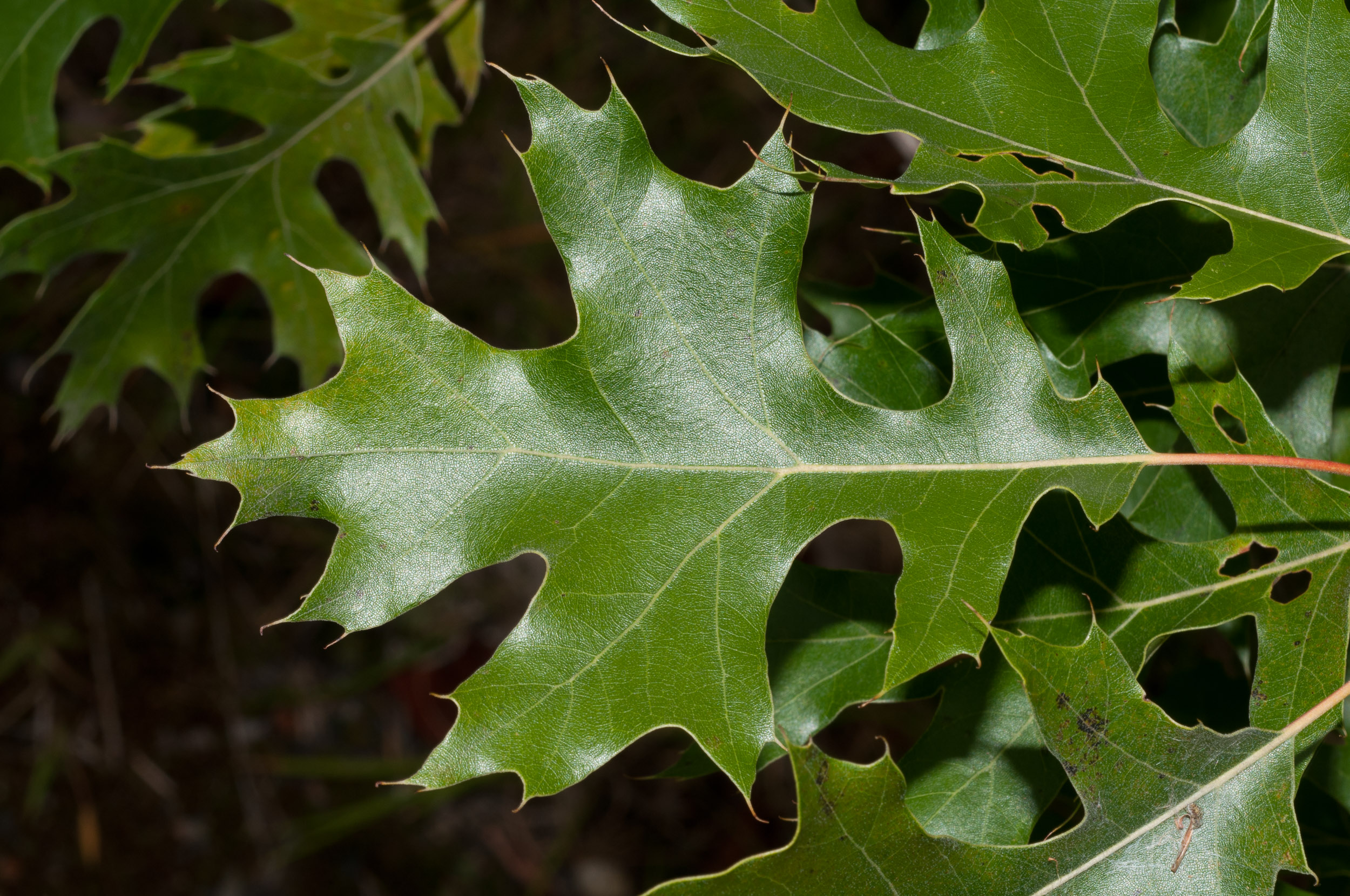
9/18/2010 · Nashua River Rail Trail, Groton Center, Groton, Massachusetts · ≈ 8 × 5″ (19 × 13 cm) 
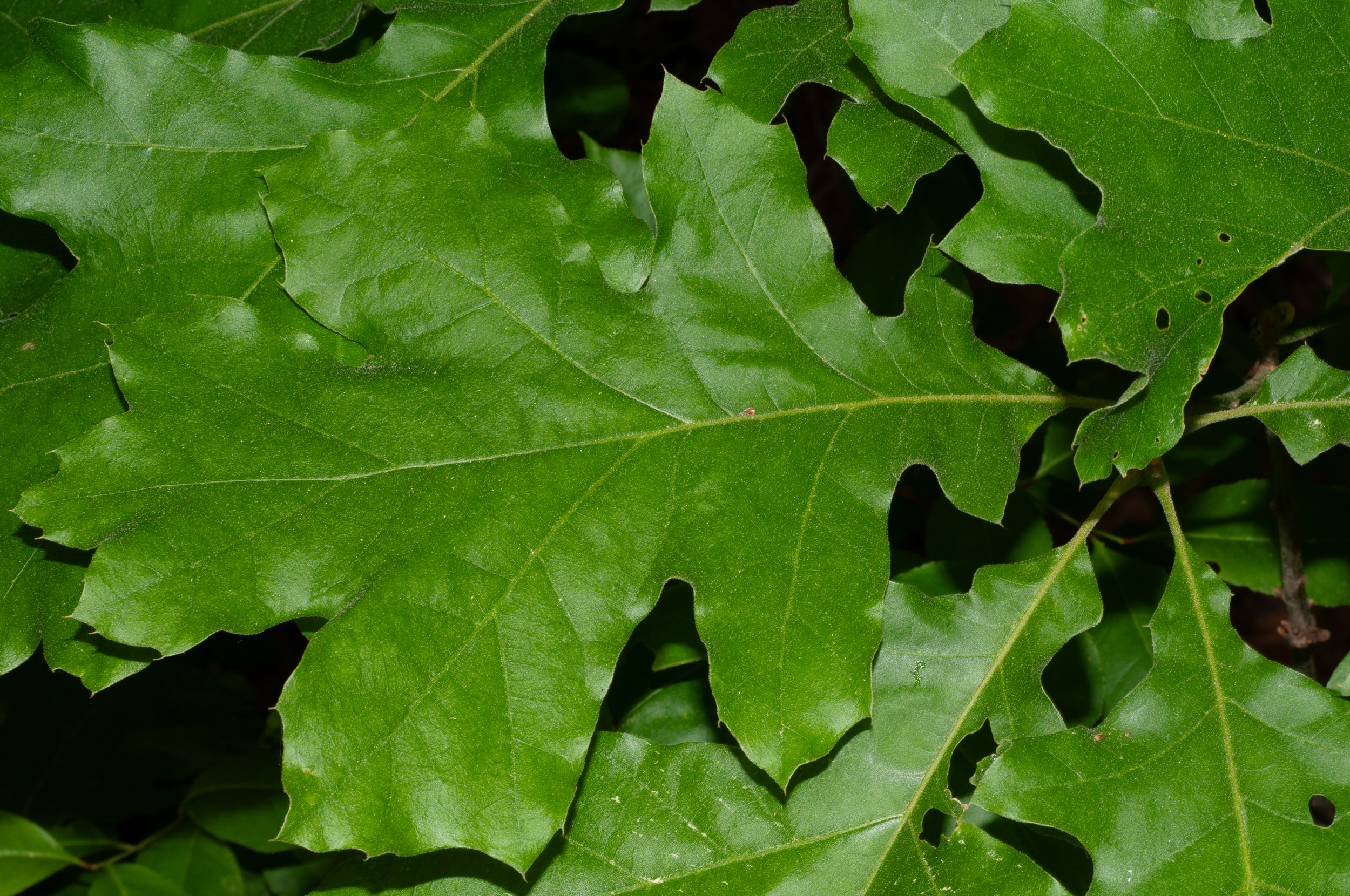
5/29/2010 · Nashua River Rail Trail, Pepperell, Massachusetts · ≈ 12 × 8″ (31 × 20 cm) 
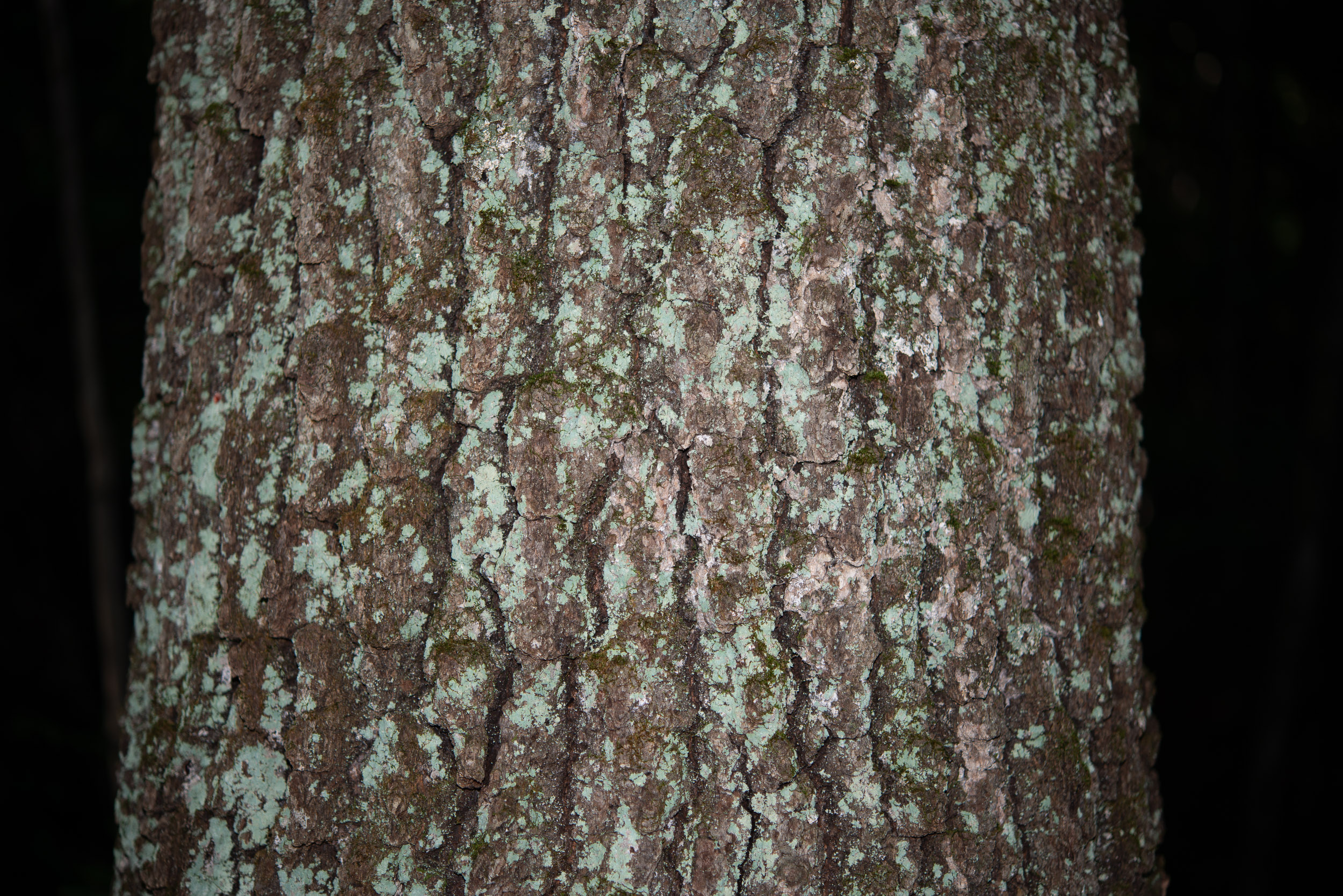
8/14/2013 · Beaver Brook Conservation Area, Hollis, New Hampshire · ≈ 2½ × 1½′ (79 × 53 cm) 
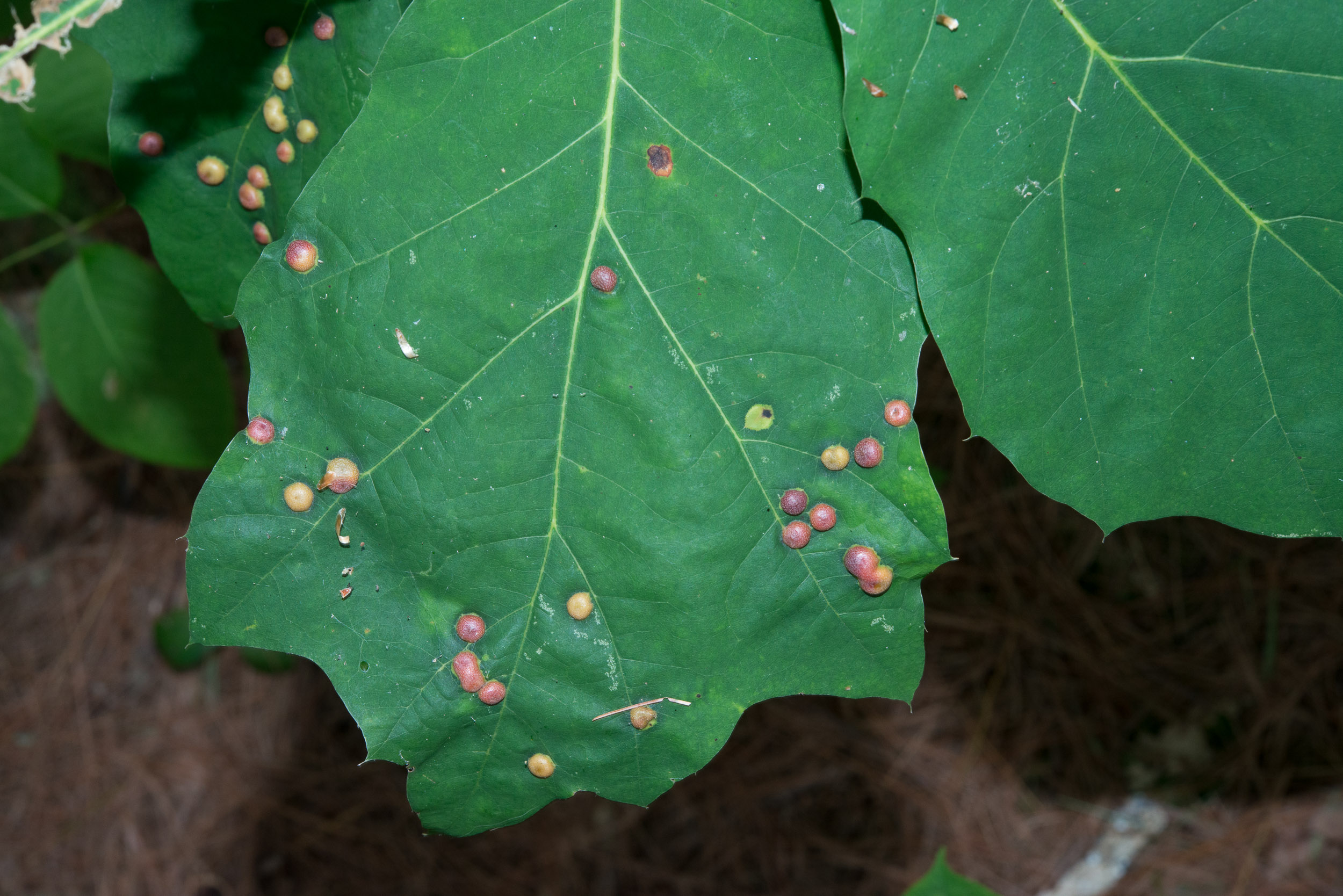
The little domes are created by Polystepha pilulae, the oak leaf gall midge · 8/9/2015 · Beaver Brook Conservation Area · ≈ 11 × 7″ (28 × 18 cm) ID is uncertain 

8/12/2014 · Andres Institute of Art, Big Bear Mountain, Brookline, New Hampshire · ≈ 8 × 7″ (20 × 16 cm) 

10/5/2009 · Nashua River Rail Trail, Groton, Massachusetts · ≈ 13 × 9″ (32 × 23 cm) ID is uncertain 
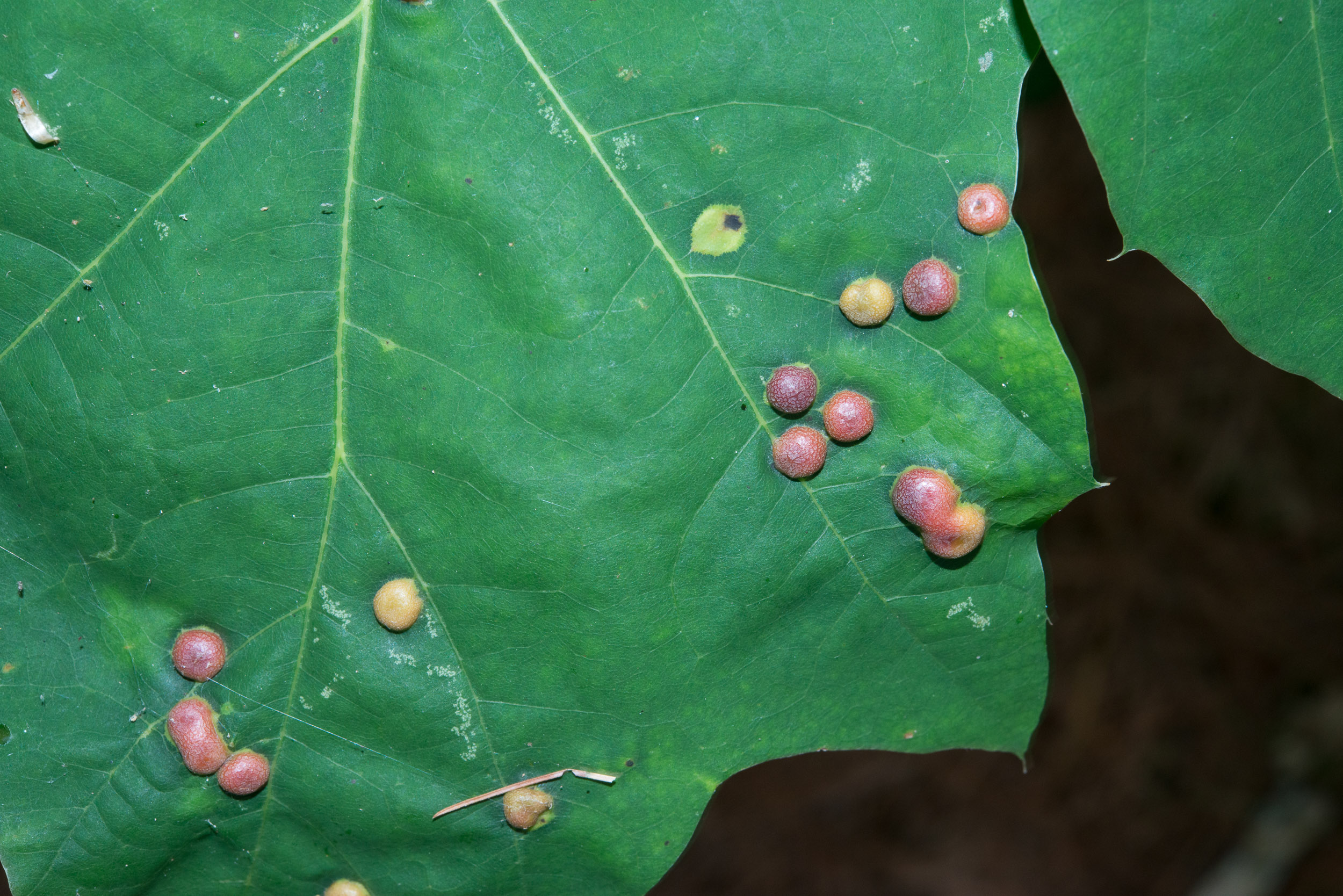
The little domes are created by Polystepha pilulae, the oak leaf gall midge · 8/9/2015 · Beaver Brook Conservation Area · ≈ 7 × 4½″ (18 × 12 cm) ID is uncertain 
| Kingdom | Plantae | Plants, but not fungi, lichens, or algae (from Stearn's Botanical Latin) |
| Subkingdom | Tracheobionta | Vascular plants—plants with a “circulatory system” for delivering water and nutrients |
| Division | Magnoliophyta | Flowering plants, also known as angiosperms |
| Class | Magnoliopsida | Dicotyledons—plants with two initial seed leaves |
| Subclass | Rosidae | Roses, legumes, proteas, dogwoods, hydrangeas, mistletoes, euphorbias, grapes, many more |
| Order | Fagales | Birch, she-oak, beech, walnut, bayberry, others |
| Family | Fagaceae | Beech familhy |
| Genus | Quercus | Latin for “oak” |
| Species | velutina | “Velvety” |
Quercus velutina description by Thomas H. Kent, not updated.

© FloraFinder.org. All rights reserved.