Sedum roseum (L.) Scop., orth. var.
Sedum rosea (L.) Scop.
Sedum rosea (L.) Scop. var. roanense (Britton) A. Berger
Sedum roseum (L.) Scop. var. roanense (Britton) A. Berger, orth. var.
Rhodiola rosea L.
Roseroot, golden root, Aaron’s rod, Arctic root, roseroot stonecrop
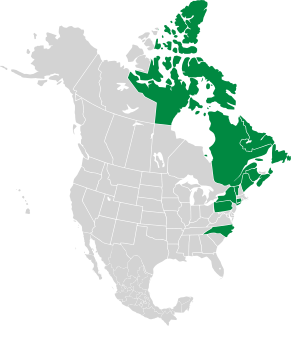
Golden root is native to wild Arctic regions of Europe, Asia, and North America.
Plants: 4–28″ (10–70 cm) tall, with several stems and a short scaly root. The root has a roselike fragrance when cut.
Leaves: The leaves of this species are succulent: somewhat thick and waxy, to reduce evaporation. They are bluish in color, alternate and sessile, with blunt teeth and sharp tips.
Flowers: Yellow or greenish yellow, sometimes tipped with red. Plants are typically dioecious (that is, separate male and female plants); both have four petals and four sepals. Petals are about ⅛″ (3.5 mm) long on staminate (male) plants and 1/16″ (2.5 mm) long on pistillate (female) plants. The small flowers are clustered into dense hemispherical cymes. They appear from July to August.
Habitats: Dry, sandy ground and ocean coastlines.
Edibility: Leaves and shoots are edible raw, though bitter. Cooked like spinach, the bitterness is reduced.
Medical: Golden root is heavily promoted as a folk remedy for reducing fatigue and increasing cognitive performance. The PDR for Herbal Medicines lists several small scale studies that support this idea. But the tsunami of marketing hype makes the facts difficult to uncover. As Wikipedia summarizes:
Through 2019, human studies evaluating R. rosea did not have sufficient quality to determine whether it has properties affecting fatigue or any other condition. The U.S. Food and Drug Administration (FDA) has issued warning letters to manufacturers of R. rosea dietary supplement products unapproved as new drugs, adulterated, misbranded and in federal violation for not having proof of safety or efficacy for the advertised conditions of alleviating Raynaud syndrome, altitude sickness, depression or cancer.
A 2012 study, Rhodiola rosea for physical and mental fatigue: a systematic review found that only 11 of 206 studies of this species’ purported health benefits met the inclusion criteria for review. The analysis of those studies concludes:
The current evidence for efficacy of R. rosea is contradictory and inconclusive. Methodologically rigorous RCTs [randomized controlled trials] must be designed to overcome these serious threats to internal validity. Such studies will help inform policy-makers, health care providers, and the public about the efficacy R. rosea supplementation for physical and mental performance.
Online References:
Wikimedia Commons Photos
Pmc.ncbi.nlm.nih.gov A detailed assessment of research
References:

7/12/1988 · Campobello Island, Maine  ID is uncertain
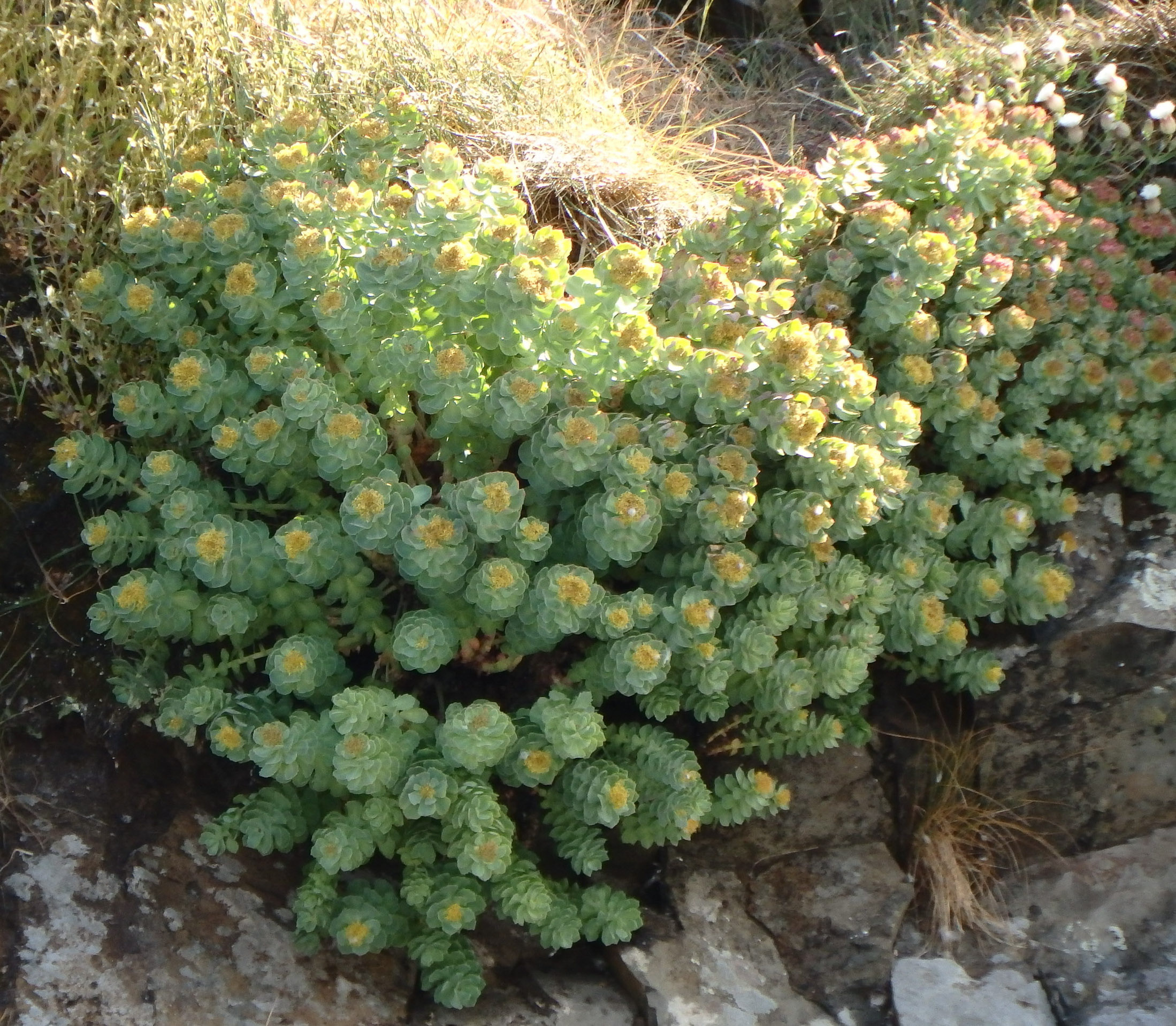
6/22/2019 · Kiðey Island, Iceland · By John W. Kent 
| Kingdom | Plantae | Plants, but not fungi, lichens, or algae (from Stearn's Botanical Latin) |
| Subkingdom | Tracheobionta | Vascular plants—plants with a “circulatory system” for delivering water and nutrients |
| Division | Magnoliophyta | Flowering plants, also known as angiosperms |
| Class | Magnoliopsida | Dicotyledons—plants with two initial seed leaves |
| Subclass | Rosidae | Roses, legumes, proteas, dogwoods, hydrangeas, mistletoes, euphorbias, grapes, many more |
| Order | Rosales | Rose family and eight others |
| Family | Crassulaceae | Succulents that store water in leaves |
| Genus | Rhodiola | From the Greek rhodon, “rose,” referring to the rose-scented roots of some members of this species |
| Species | rosea | Rosy-colored |
Rhodiola rosea description by Thomas H. Kent, not updated.

© FloraFinder.org. All rights reserved.