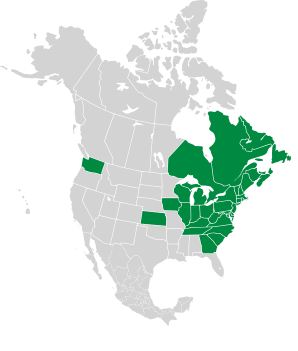
Rubus hispidus L. var. obovalis (Michx.) Fernald
Rubus sempervirens Bigelow
Rubus hispidus L.
Swamp dewberry, bristly blackberry, bristly dewberry
This diminutive semi-evergreen is technically sort of a micro-shrub. Although it can reach 8″ (20 cm) in height, it is usually close to the ground. It produces berries similar in appearance to those produced by its much larger sibling shrubs, such as blackberries and raspberries. Dewberry is native to eastern North America.
Plants: Swamp dewberry is actually a vine (liana), sometimes up to 8″ (20 cm) high, spreading along the ground via stolons, sometimes as far as 8′ (2.4 m). Stems are light green or red, with bristly hairs and some small prickles.
Leaves: Leaves are alternate, in clusters of three, obovate or ovate, and crenate or doubly crenate. Leaf clusters are on petioles (stems) up to 4″ (10 cm) long. Leaflets are 1–3″ (2.5–7.6 cm) long and less than 1″ (2.5 cm) wide.
Flowers: Flowers occur in groups of 3-6, each ½–¾″ (1.3–1.9 cm) in diameter, with five white wrinkly petals and five much smaller light green sepals. Flowers appear in early to mid summer.
Fruits: Fruits—drupes—resemble miniature blackberries, less than ½″ (1.3 cm) in diameter. Green or white at first, they become red, then dark purple or black.
Habitats: Disturbed soils, meadows, fields, and wetland and forest edges, preferring wet habitats, partial sunlight, and acid soils.
Edibility: Fruits are important nutritive sources for birds, but are sour tasting to people. They are edible.
Online References:

8/17/2020 · Otter Brrok Preserve, Harpswell Heritage Land Trust, Harpswell, Maine · ≈ 4½ × 5″ (12 × 13 cm) 

7/11/2009 · Nashua River Rail Trail, near NH Line, Dunstable, Massachusetts · ≈ 12 × 8″ (31 × 21 cm) 
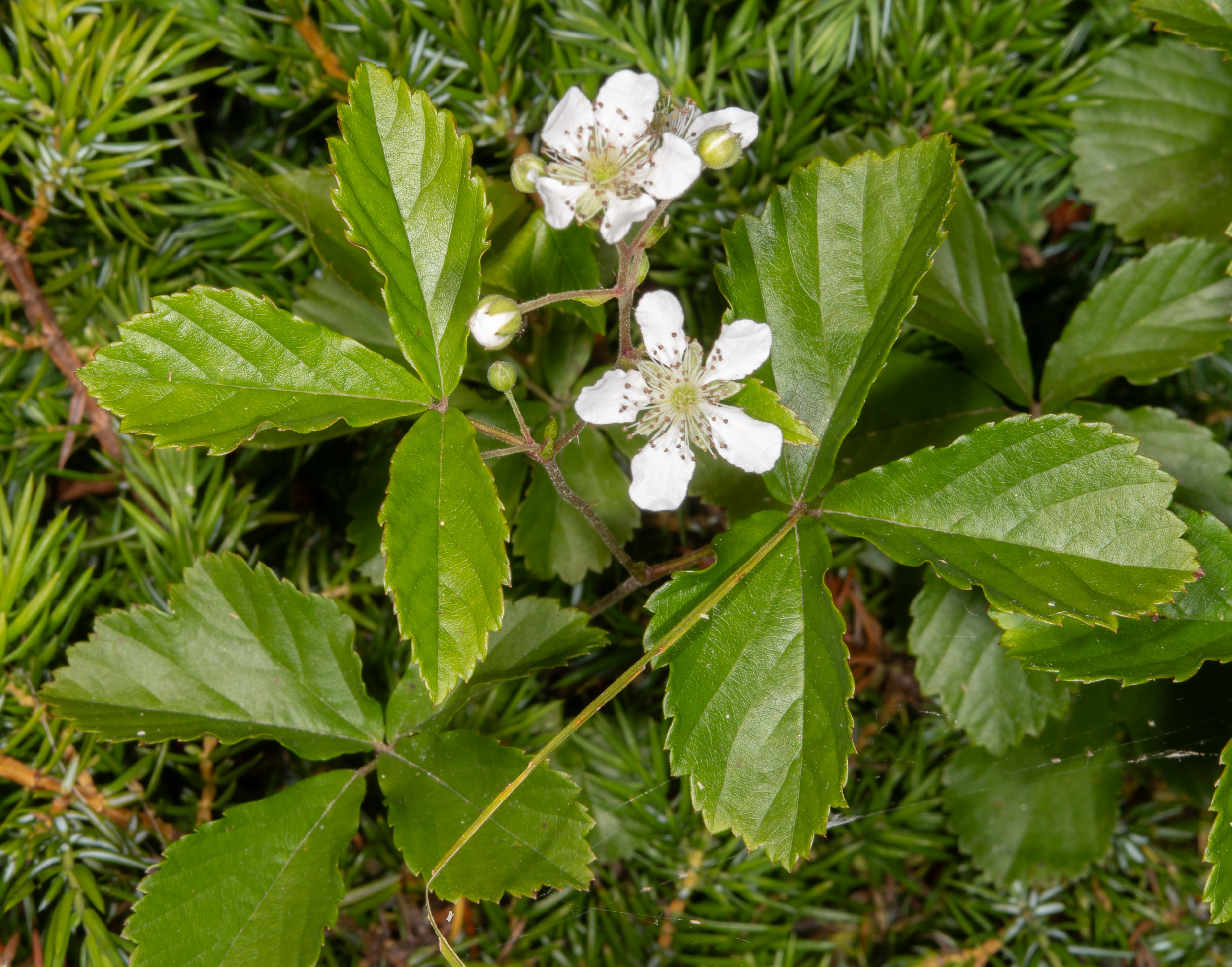
6/26/2024 · Morse Mountain, Phippsburg, Maine · ≈ 5 × 4″ (12 × 10 cm) 

6/14/2016 · Andres Institute of Art, Big Bear Mountain, Brookline, New Hampshire 

8/14/2022 · Otter Brrok Preserve, Harpswell Heritage Land Trust, Harpswell, Maine 

8/28/2021 · Otter Brrok Preserve, Harpswell Heritage Land Trust, Harpswell, Maine · ≈ 4½ × 6″ (11 × 14 cm) 

6/4/2021 · Robert P. Tristram Coffin Wild Flower Reservation, Woolwich, Maine · ≈ 6 × 4″ (15 × 10 cm) 

8/17/2020 · Otter Brrok Preserve, Harpswell Heritage Land Trust, Harpswell, Maine · ≈ 10 × 6″ (24 × 16 cm) 
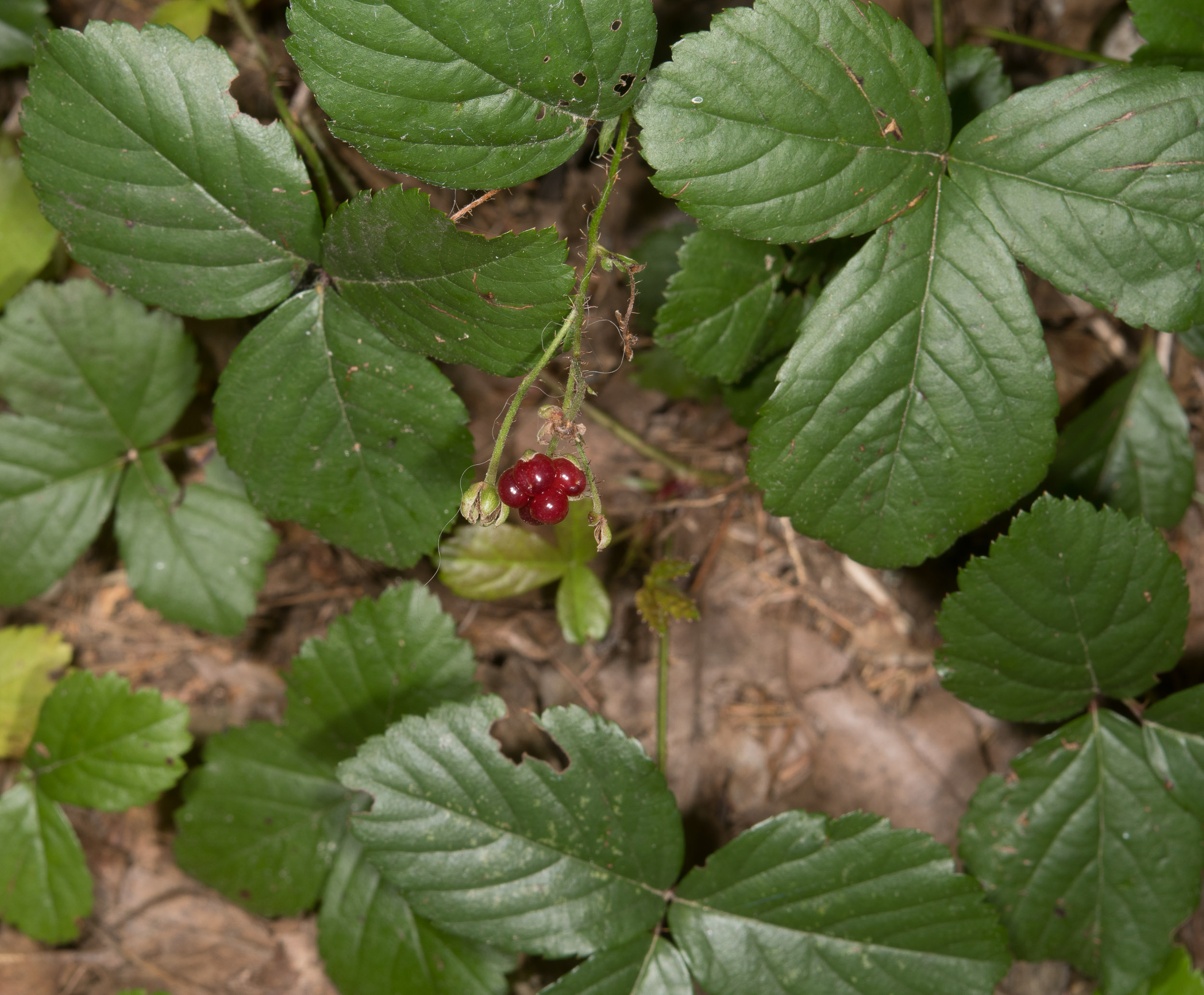
8/13/2017 · Burges Pond, Westford, Massachusetts · ≈ 6 × 4½″ (14 × 12 cm) 

6/26/2024 · Morse Mountain, Phippsburg, Maine 

6/14/2016 · Andres Institute of Art, Big Bear Mountain, Brookline, New Hampshire 
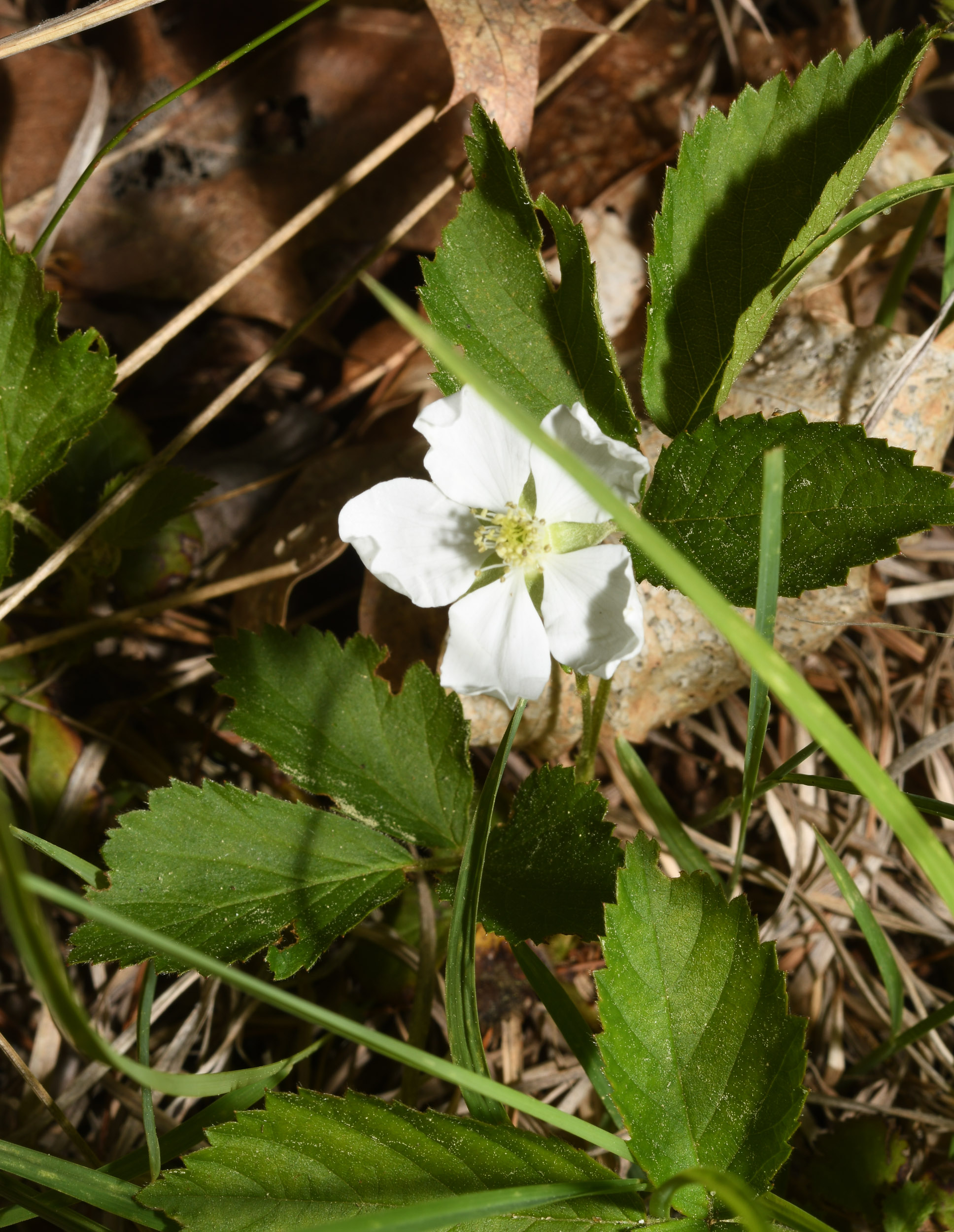
6/14/2016 · Andres Institute of Art, Big Bear Mountain, Brookline, New Hampshire 
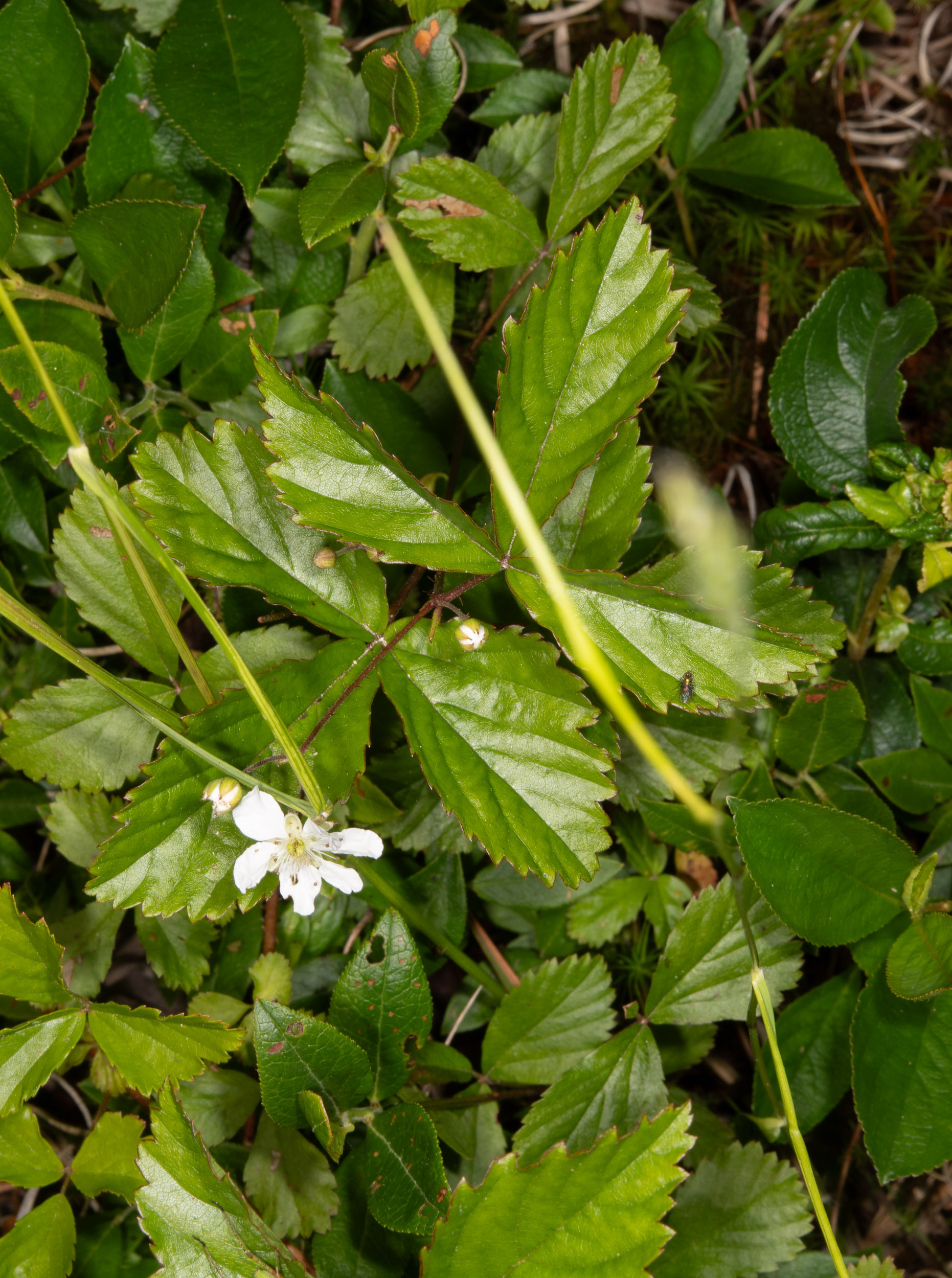
6/26/2024 · Morse Mountain, Phippsburg, Maine · ≈ 5 × 7″ (13 × 18 cm) 
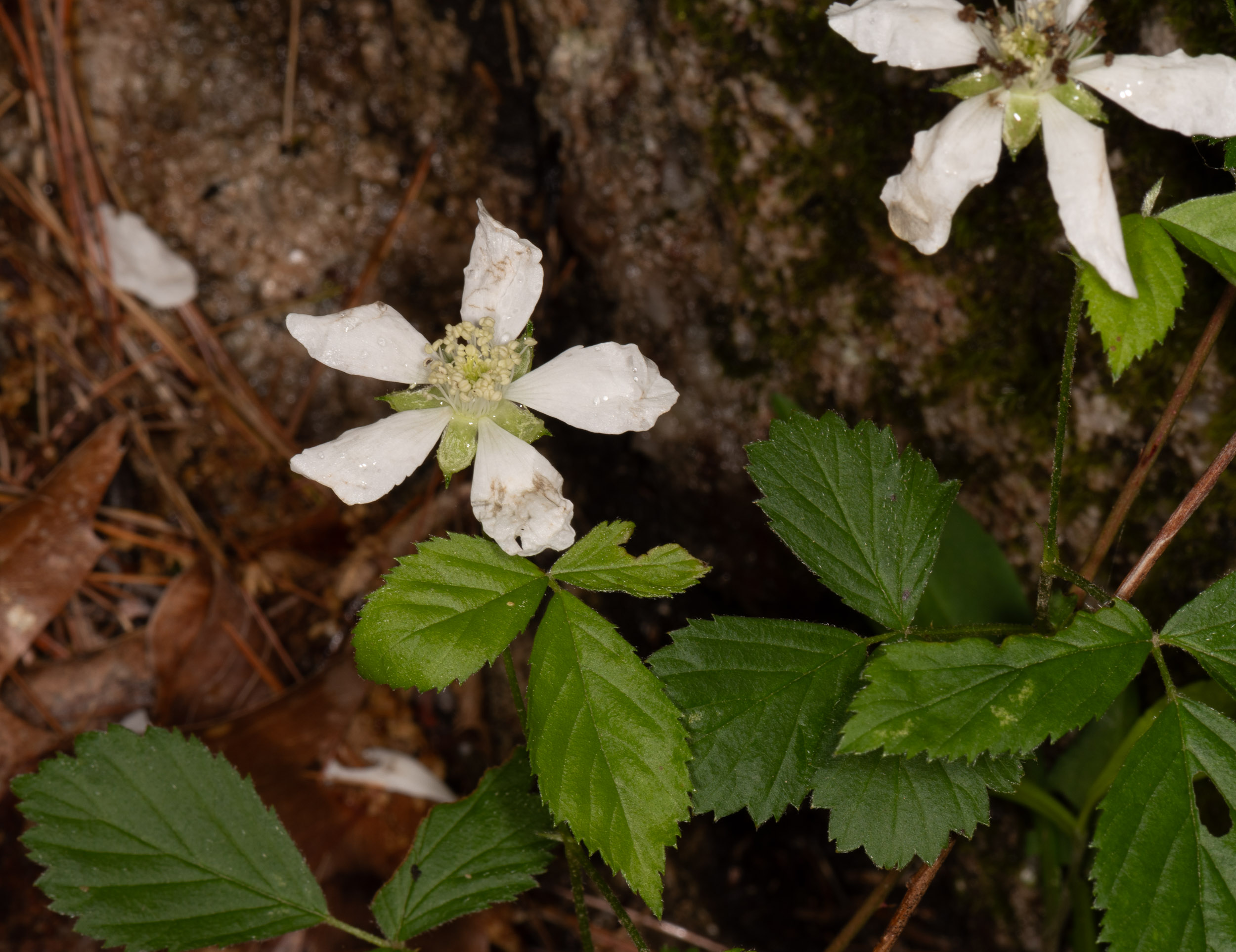
6/4/2021 · Robert P. Tristram Coffin Wild Flower Reservation, Woolwich, Maine · ≈ 6 × 4½″ (15 × 11 cm) 

6/4/2021 · Robert P. Tristram Coffin Wild Flower Reservation, Woolwich, Maine · ≈ 7 × 5″ (18 × 13 cm) 

6/26/2024 · Morse Mountain, Phippsburg, Maine · ≈ 8 × 5″ (20 × 13 cm) 
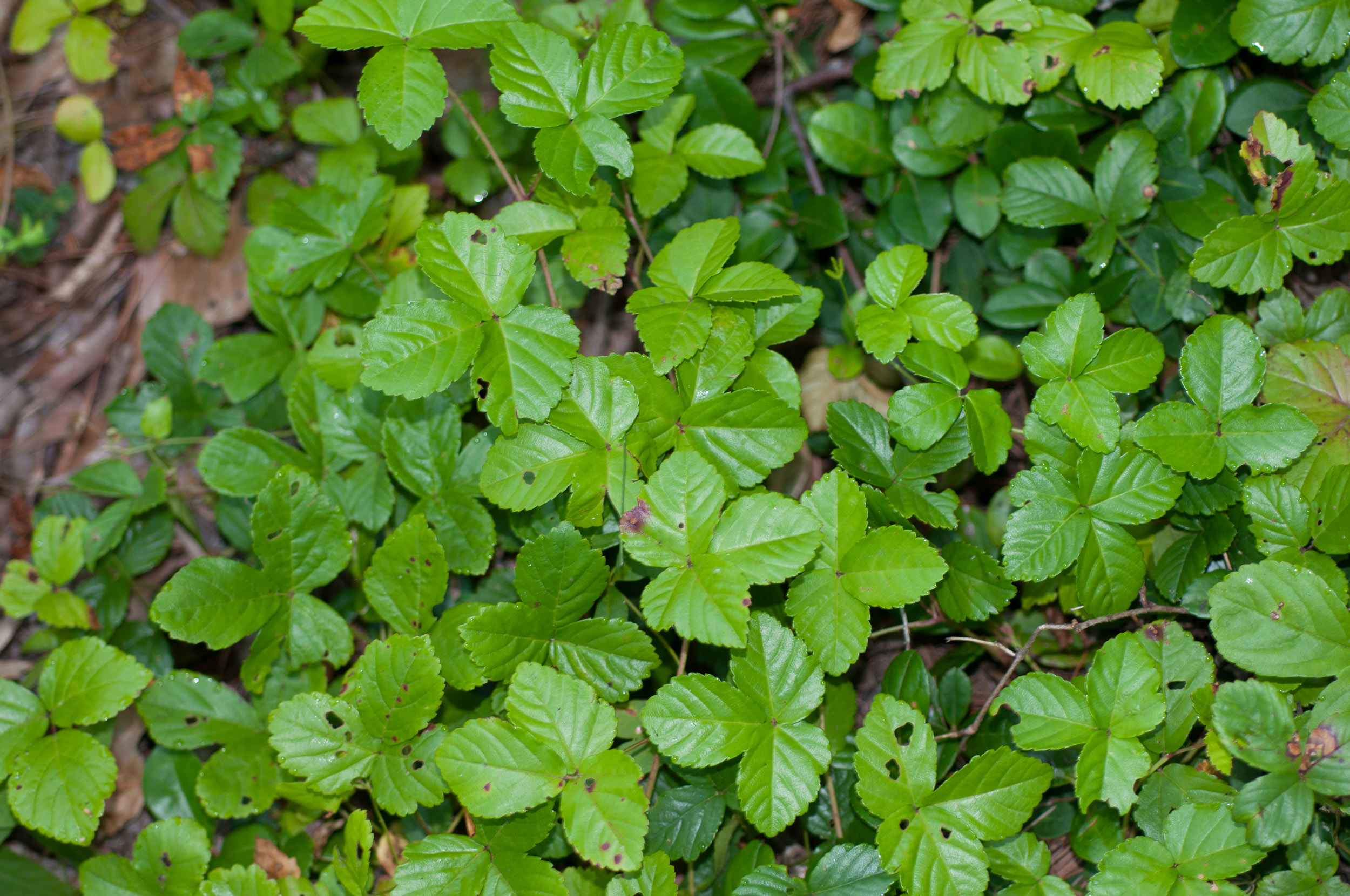
8/2/2010 · Beaver Brook Conservation Area, Rte. 130, Hollis, New Hampshire · ≈ 15 × 10″ (39 × 26 cm)  ID is uncertain
| Kingdom | Plantae | Plants, but not fungi, lichens, or algae (from Stearn's Botanical Latin) |
| Subkingdom | Tracheobionta | Vascular plants—plants with a “circulatory system” for delivering water and nutrients |
| Division | Magnoliophyta | Flowering plants, also known as angiosperms |
| Class | Magnoliopsida | Dicotyledons—plants with two initial seed leaves |
| Subclass | Rosidae | Roses, legumes, proteas, dogwoods, hydrangeas, mistletoes, euphorbias, grapes, many more |
| Order | Rosales | Rose family and eight others |
| Family | Rosaceae | Includes apples, apricots, plums, cherries, peaches, pears, raspberries, strawberries, almonds, roses, meadowsweets, photinias, firethorns, rowans, and hawthorns; many others |
| Genus | Rubus | Latin for “bramble” or “blackberry” |
| Species | hispidus | From Latin hispida, “rough, with bristly hairs” |
Rubus hispidus description by Thomas H. Kent, not updated.

© FloraFinder.org. All rights reserved.