Rumex obtusifolius L.
Bitter dock, broad-leaved dock
Similar species
Rumex crispus
Rumex obtusifolius


|
Rumex obtusifolius L. Bitter dock, broad-leaved dock Similar species | ||
Rumex crispus |
You are here Rumex obtusifolius |
|
|---|---|---|
| Common Name | |
|
| Plant | 12–55″ (30–140 cm) in height, erect but with a few branches. | 1–4′ (30–121 cm), on stout stems that don’t branch except just below the flowerheads. |
| Leaves | A large basal rosette about 1′ (30 cm) around consists of smooth-edged, distinctively wavy (“crisped”) alternate leaves. Each leaf is up to 6″ (15 cm) × 1″ (2.5 cm), oblong-lanceolate in shape, and hairless. | Basal leaves are not arranged in a rosette, and are oval, oblong, or heart-shaped, usually red-veined.. Upper leaves are lanceolate. All leaves have wavy edges, but less so than with curly dock. |
| Flowers | A panicle of racemes of whorls of flowers appears at the upper 6–18″ (15–45 cm). (In other words, there are a whole pile of tiny, greenish, weird-looking flowers.) Each yellowish or reddish green flower is about ⅛″ (3.2 mm) long. If you look closely, it consists of 3 inner sepals, 3 outer sepals, 3 styles, and an ovary. | On spike-like racemes, greenish, pinkish, or reddish. They appear from June to October. |
| Fruit | Each flower becomes a heart-shaped, toothless fruit 1/16–⅛″ (2–4 mm) that contains a single white seed that matures to dark brown. | ~1/16″ (2–2.7 mm), comprised of triangular “valves" (wings), each with 2-4 spiny teeth on margins. One of the three wings has a seed. |
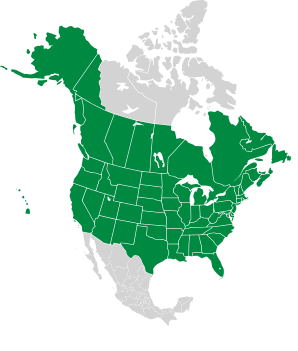
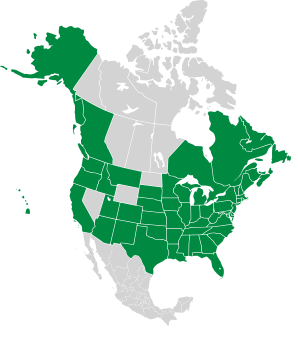
| Range/ Zones |
|
|
| Habitats | Disturbed habitats, railroad beds, fallow fields, ocean beaches, and other wetland margins. | Ditches, roadsides, wetlands, meadows, riparian areas, alfalfa and pasture fields (especially with poor drainage), orchards and other disturbed moist areas. |
Rumex obtusifolius description by Thomas H. Kent, not updated.
© FloraFinder.org. All rights reserved.