Salicornia europaea L. var. pachystachya (W.D.J. Koch) Fernald
Salicornia europaea L. var. simplex (Pursh) Fernald
Salicornia maritima auct. non Wolff & Jefferies
Salicornia virginica L.
Salicornia depressa Standl.
Slender glasswort, samphire, chicken-claws, common glasswort, Virginia glasswort
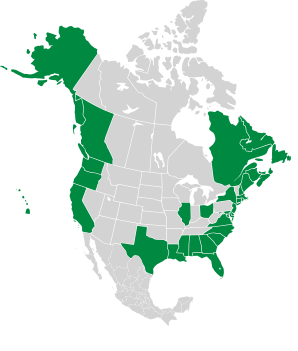
Common glasswort is native to the east and west coasts of North America. The term “glasswort” originated in 16th century England, where the salt-loving plants were burned to obtain soda ash (sodium carbonate). The soda ash was used for making some kinds of glass.
Plants: Annual plants are 4–28″ (10–70 cm) tall, erect or sprawling. These are seriously weirld-looking plants, halophytes, specialists at seashore living. Stems resemble segmented worms or sausages, and may be blunt or sharp-tipped.
Leaves: Opposite leaves are tiny, looking more like scales.
Flowers: Inflorescences are ¾–3 ⨉ 1/16–⅛″ (2–8 cm ⨉ 2.5–5 mm), with 5-25 fertile segments. Flowers produce tiny white anthers 11.8–19.7 mils (0.3–0.5 mm) in size. They appear from July to September.
Fruits: Hooked, curved seeds are 1/32–1/16″ (1–2 mm) in size.
Habitats: Brackish or salt marshes and flats, coastal ocean beaches, intertidal and subtidal zones.
Edibility: Stems and seeds are technically edible raw or cooked, but in small amounts, due to their high salt content.
Online References:
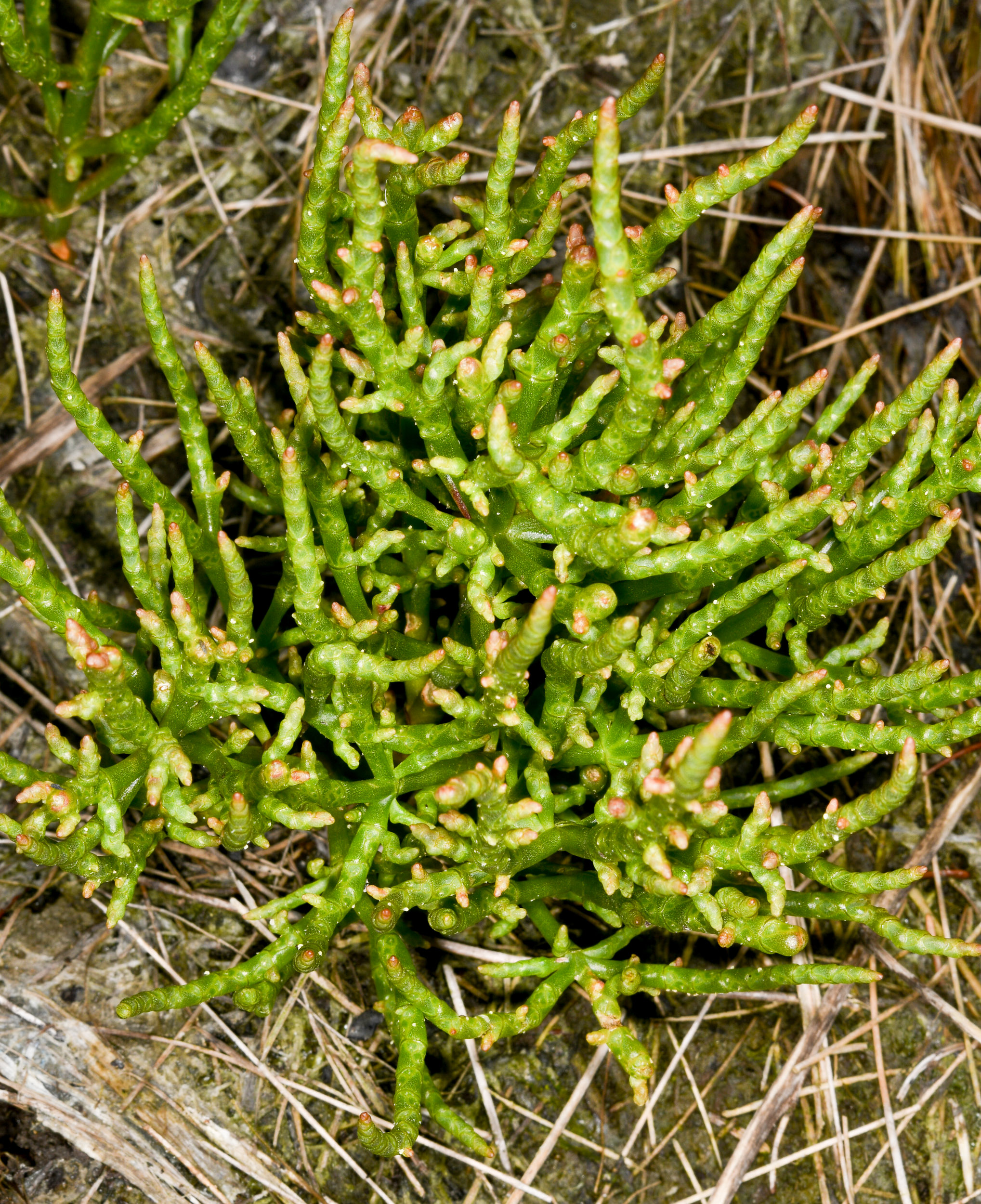
9/18/2016 · Deer Isle, at Water’s Edge 
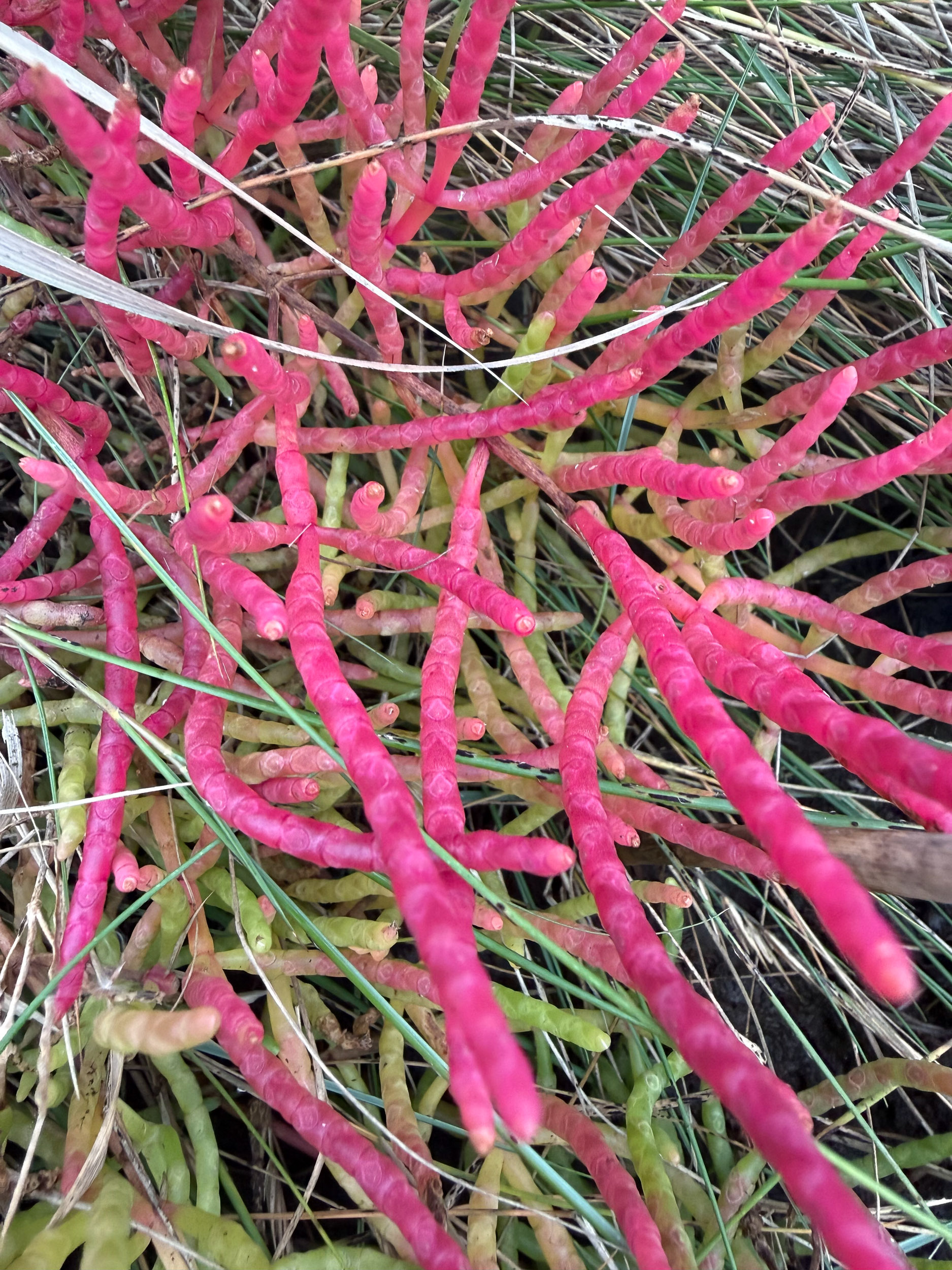
10/12/2025 · Scituate Dog Park, Scituate, Massachusetts · By Heather A. Kent 
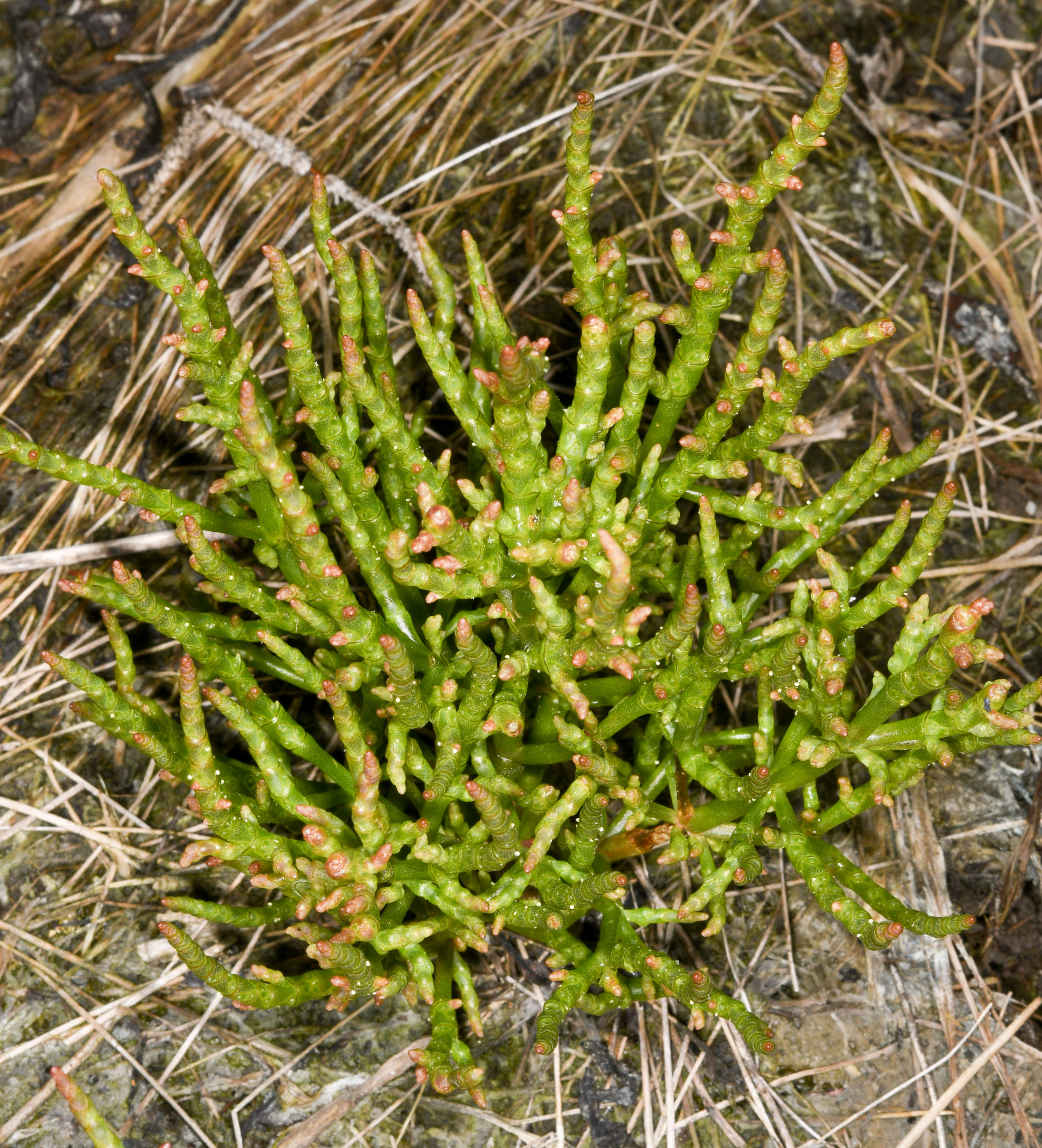
9/18/2016 · Deer Isle, at Water’s Edge 

10/26/2025 · Scituate Dog Park, Scituate, Massachusetts · By Heather A. Kent 
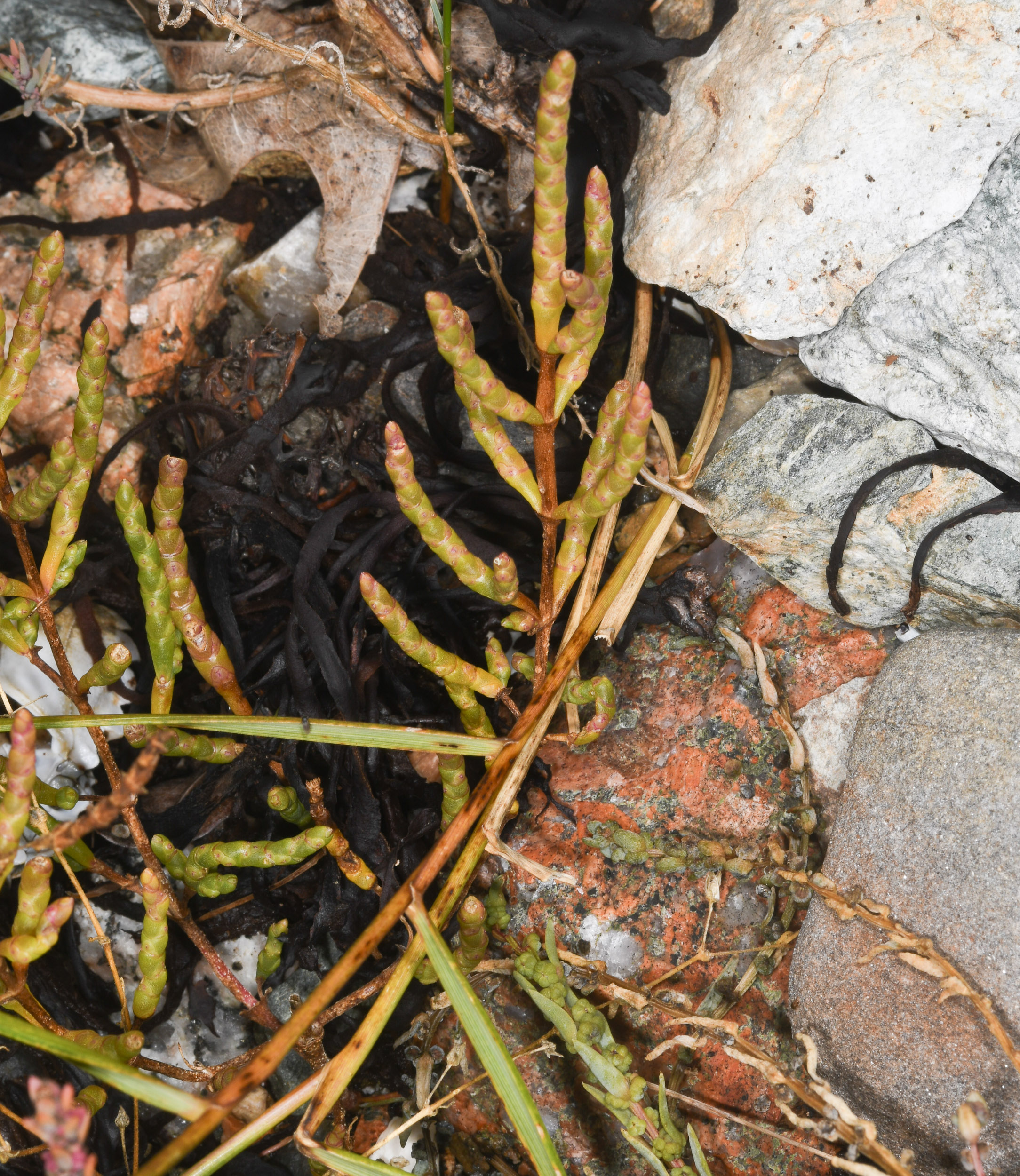
9/18/2016 · Edgar M. Tennis Preserve, Deer I, Maine 

10/26/2025 · Scituate Dog Park, Scituate, Massachusetts · By Heather A. Kent 
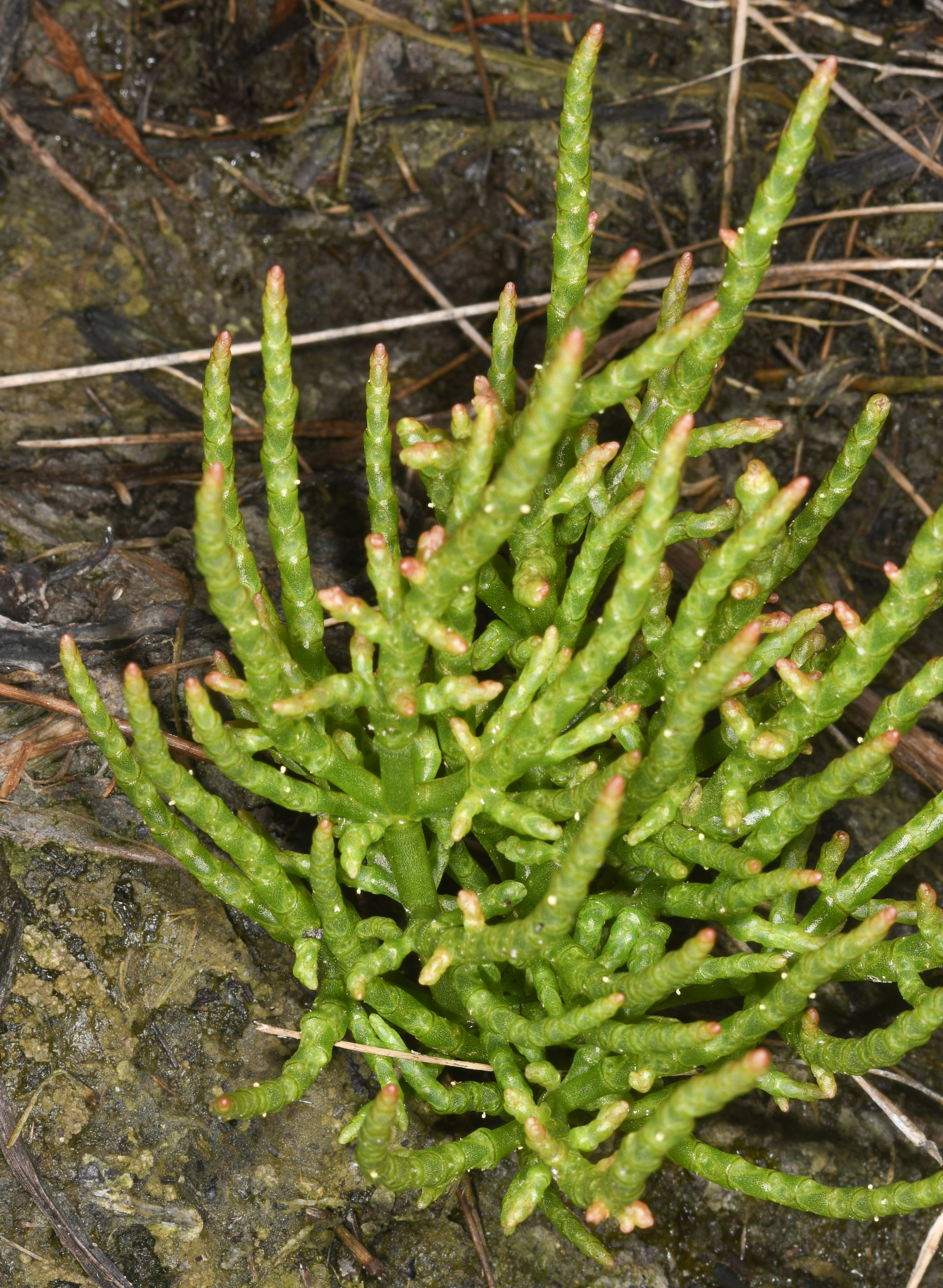
9/18/2016 · Deer Isle, at Water’s Edge 
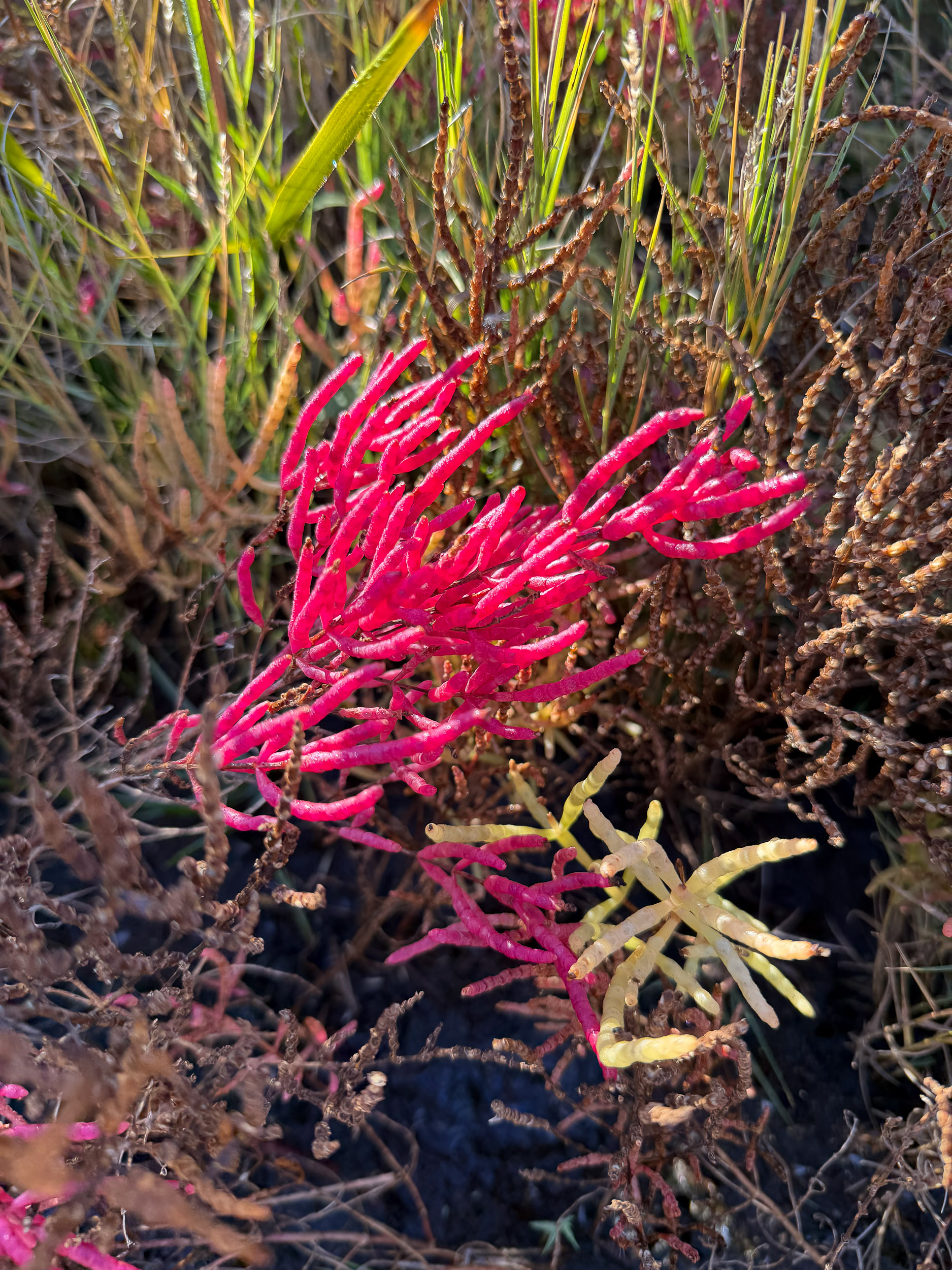
10/26/2025 · Scituate Dog Park, Scituate, Massachusetts · By Heather A. Kent 
| Kingdom | Plantae | Plants, but not fungi, lichens, or algae (from Stearn's Botanical Latin) |
| Subkingdom | Tracheobionta | Vascular plants—plants with a “circulatory system” for delivering water and nutrients |
| Division | Magnoliophyta | Flowering plants, also known as angiosperms |
| Class | Magnoliopsida | Dicotyledons—plants with two initial seed leaves |
| Subclass | Caryophyllidae | Cacti, many other succulents, carnivorous plants, and leadworts |
| Order | Caryophyllales | Includes cacti, carnations, amaranths, ice plants, and many carnivorous plants |
| Family | Amaranthaceae | Amaranth family |
| Genus | Salicornia | From the Greek sal, “salt,” and cornus, ”a horn,” because these are saline plants with hornlike branches |
| Species | depressa | Appearing to be pressed down flat |
Salicornia depressa description by Thomas H. Kent, not updated.

© FloraFinder.org. All rights reserved.