FloraFinder uses cookies only for correct operation. More info. Okay
Salix discolor Muhl.
Pussy willow, American willow
Pussy willows are North American native plants.
Plants: Pussy willows are highly variable in appearance,
in part because they hybridize naturally with related plants. Typically shrubs, they may reach 30′ (9.1 m)
in height, making them small trees. Young stems are yellowish- to light-green, becoming red or brown when they
get larger, and finally gray and furrowed. Their “trunks” may be single or multiply branched.
Leaves: Alternate, roughly elliptical in shape, with a prominent
central vein, 1–5″ (3–13 cm) long,
2 to 5 times longer
than they are wide.
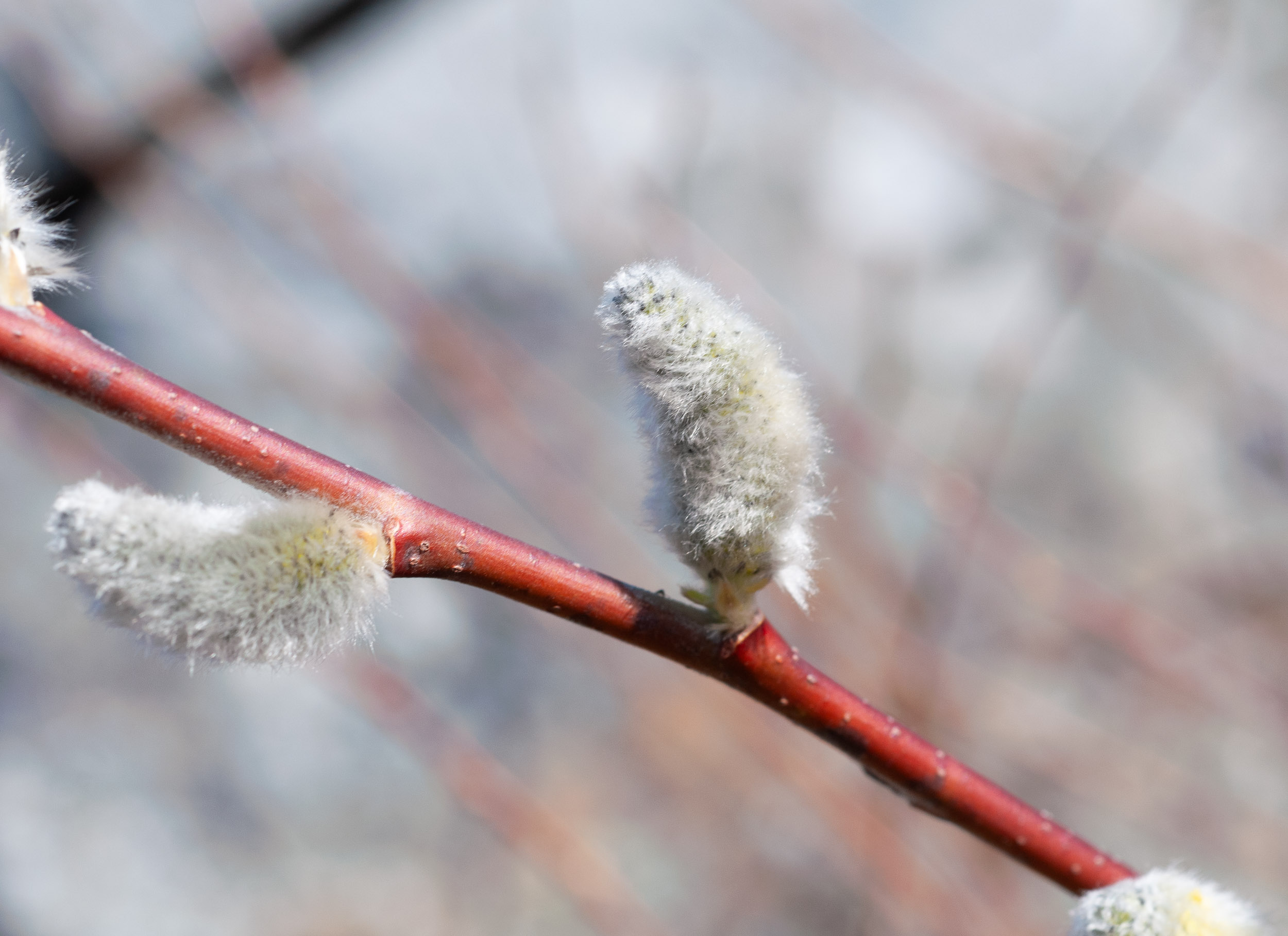
Flowers: Beautiful soft silvery-gray ovoids, actually types of catkins, typically about
1″ (2.5 cm) long, but up to 4½″ (12 cm).
The male catkins produce, well, zillions of teeny yellow stamens
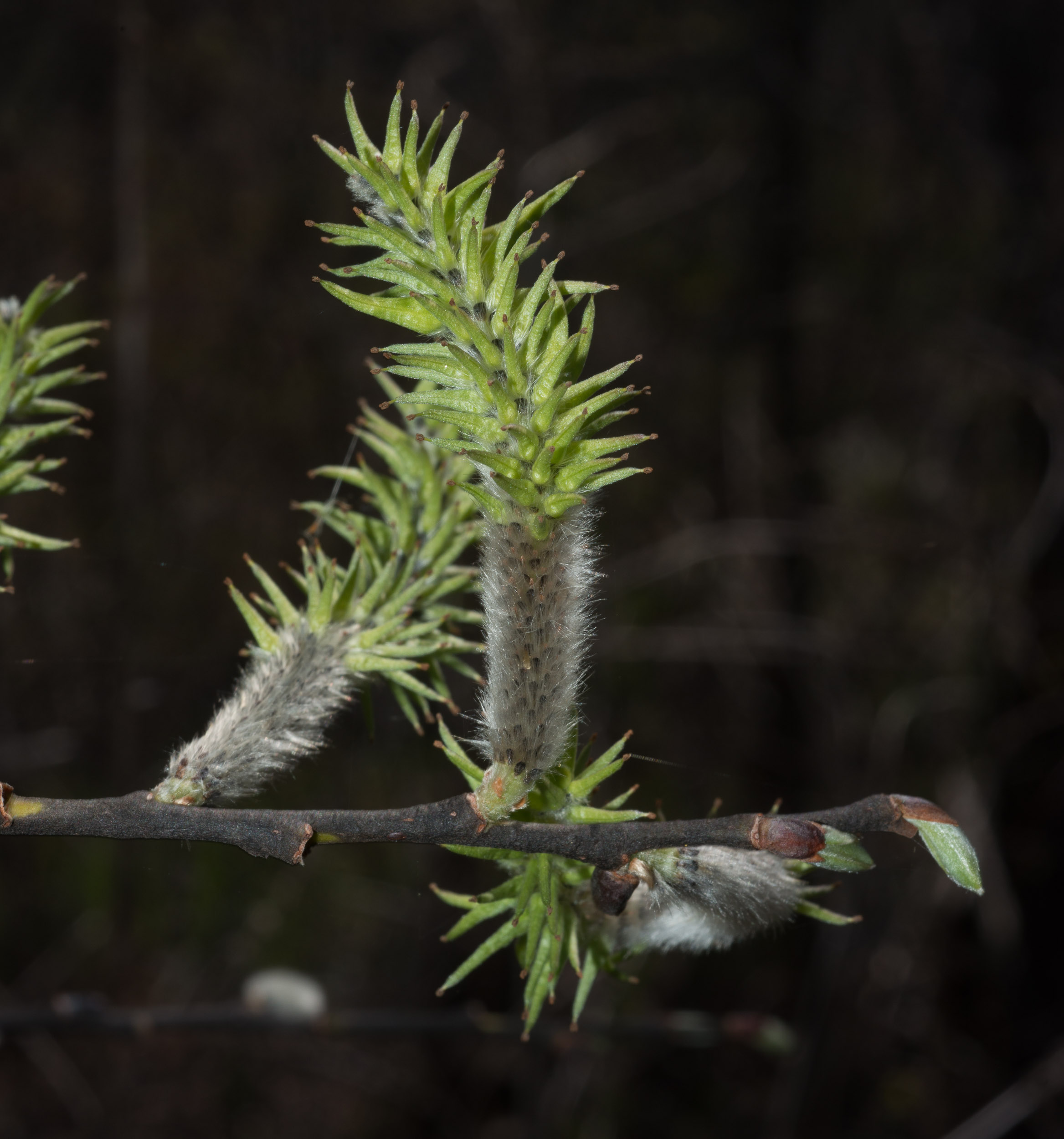
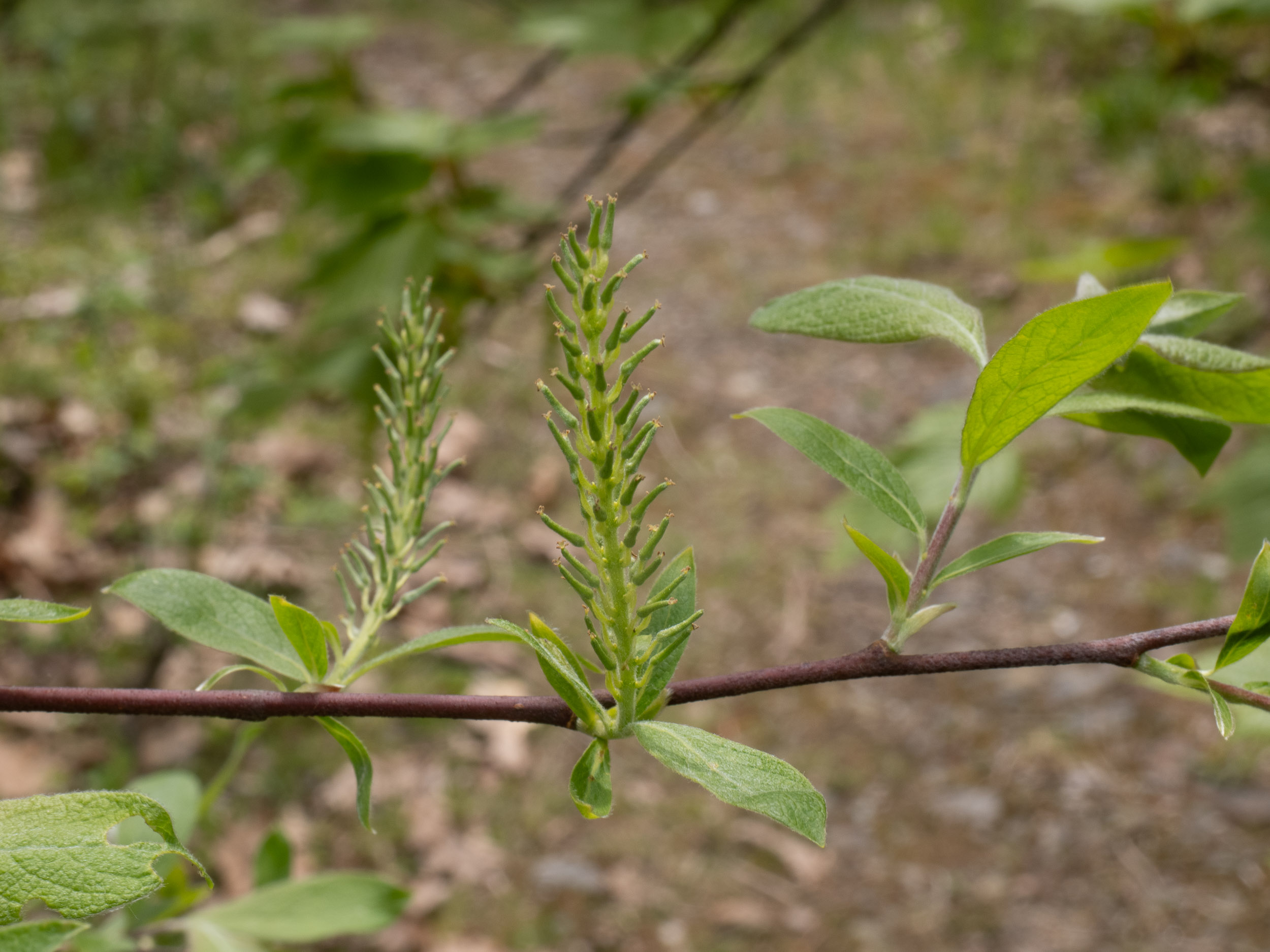
with yellow tips; female catkins are greenish.
Fruits: Small brown capsules, ¼–⅜″ (7–12 mm) long, vaguely banana-shaped,
that look like buds
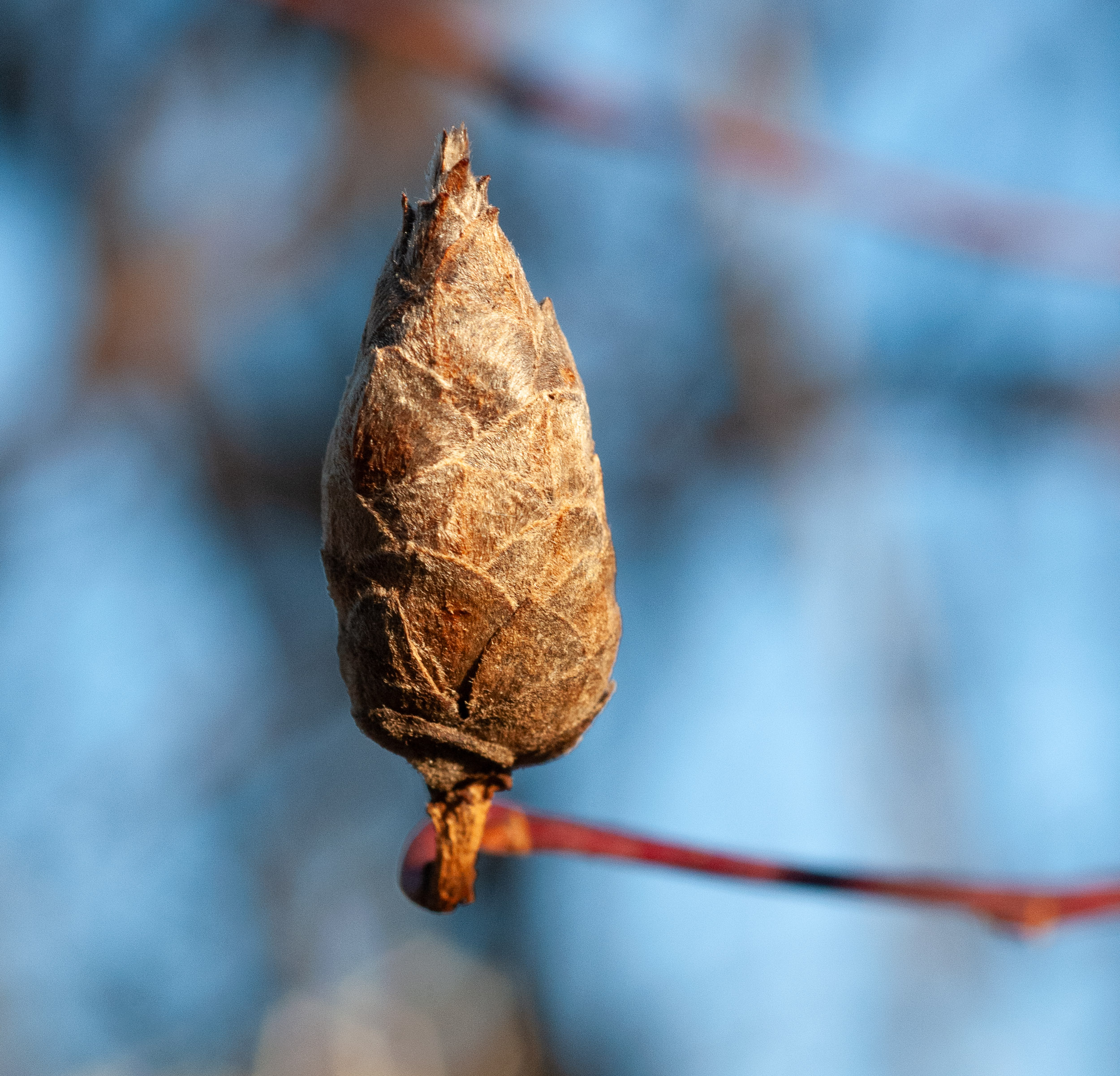
The cone-like structure on the tip is a gall created by an insect, Rhabdophaga strobiloides · 11/17/2009 · Nashua River Rail Trail, Groton Center, Groton, Massachusetts · ≈ 2½ × 2½″ (7.3 × 7 cm) ID is uncertain
5/16/2024 · Ridge Trail, Freeport, Maine
The cone-like structure on the tip is a gall created by an insect, Rhabdophaga strobiloides · 7/9/2010 · Nashua River Rail Trail, Groton Center, Groton, Massachusetts · ≈ 6 × 4½″ (16 × 11 cm) ID is uncertain
1/5/2026 · Ecology Center, Topsham, Maine
5/7/2010 · Nashua River Rail Trail, Groton Center, Groton, Massachusetts · ≈ 7 × 11″ (18 × 27 cm) ID is uncertain
Male catkins. · 4/7/2010 · Nashua River Rail Trail, Groton, Massachusetts · ≈ 5 × 3½″ (13 × 9.2 cm) ID is uncertain
4/3/2010 · Mt. Battie (Elev. 780'), Camden, Maine · ≈ 5 × 3″ (12 × 7.5 cm) ID is uncertain
Male (staminate) flowers. · 4/3/2010 · Mt. Battie, Camden, Maine · ≈ 5 × 3½″ (13 × 9.2 cm) ID is uncertain
5/4/2013 · Nashua River Rail Trail, Groton Center, Groton, Massachusetts · ≈ 6 × 6″ (14 × 15 cm) ID is uncertain
The cone-like structure on the tip is a gall created by an insect, Rhabdophaga strobiloides · 11/17/2009 · Nashua River Rail Trail, Groton Center, Groton, Massachusetts · ≈ 4½ × 4″ (11 × 10 cm) ID is uncertain
3/23/2012 · Nashua River Rail Trail, Groton Center, Groton, Massachusetts · ≈ 5 × 3½″ (13 × 9.2 cm)
4/3/2010 · Mt. Battie, Camden, Maine · ≈ 6 × 4″ (14 × 10 cm) ID is uncertain
The cone-like structure on the tip is a gall created by an insect, Rhabdophaga strobiloides · 11/15/2011 · Nashua River Rail Trail, Groton Center, Groton, Massachusetts · ≈ 3½ × 3″ (8.9 × 7.9 cm)
Male catkins. · 4/7/2010 · Nashua River Rail Trail, Groton, Massachusetts · ≈ 7 × 5″ (17 × 13 cm) ID is uncertain
4/24/2012 · Nashua River Rail Trail, Groton Center, Groton, Massachusetts · ≈ 2½ × 2½″ (6.6 × 7.1 cm) ID is uncertain


 ID is uncertain