FloraFinder uses cookies only for correct operation. More info. Okay
Sambucus nigra L. ssp. canadensis (L.) R. Bolli
Elderberry, American elderberry, common elderberry, black elderberry, American black elderberry
Common elderberry is a North American native shrub. The genus Sambucus derives from
the Greek sambuce, the soft styrofoam-like pith in the center the of the stems, which is
removed to make musical instruments (or, for that matter, blowguns). This is somewhat ironic, given that elderberry contains
enough cyanide, as well as an alkaloid called sambucine, to be poisonous in some cases.
Not necessarily the best plant to put in your mouth.
Never underestimate an elderberry. A shrub in our yard was undermined by a woodchuck, lying rootless on its side.
We stuck it back into the ground temporarily, meaning to get rid of it. Next spring, it exploded into activity,
soon reaching 8 feet in diameter. A couple of years later it was threatening to take over the entire front yard.
My wife panicked and declared war on it. Now a dogwood is in the same spot, showing a similar degree of
joie de vivre.
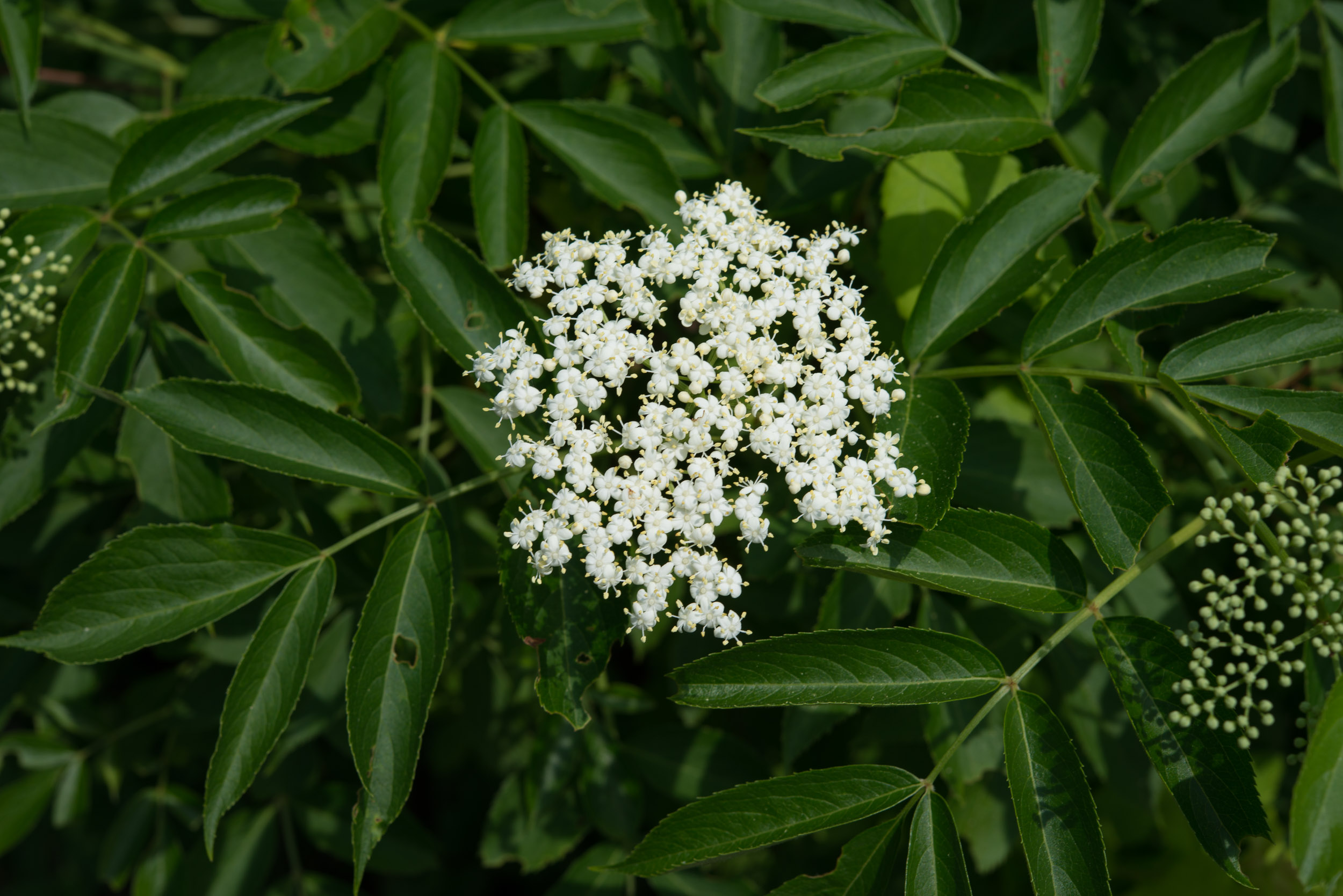
Plants: Forms a rounded shrub up to 15′ (4.6 m) in diameter,
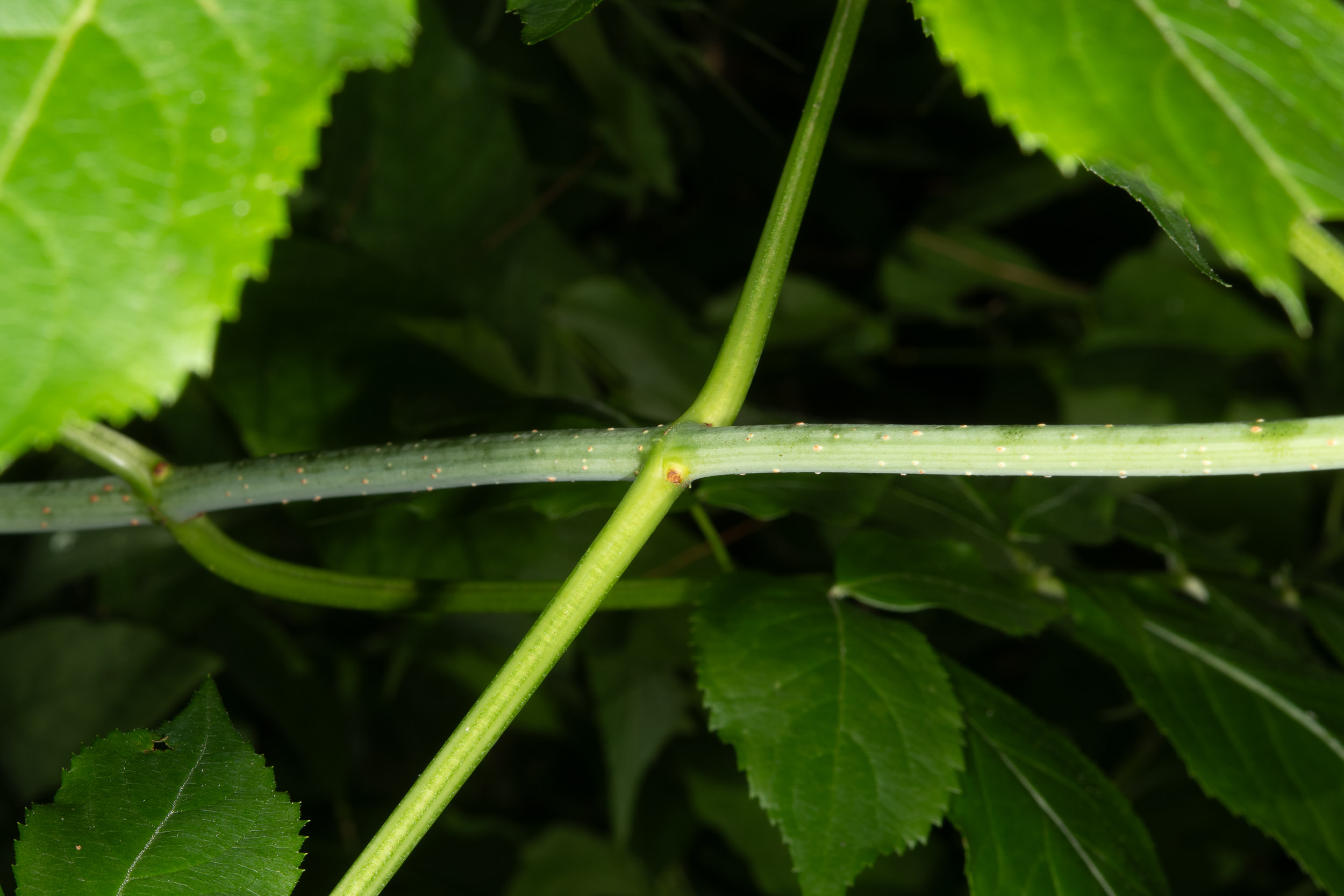
consisting of many stems emerging from a central point. Upright stems, composed of soft pithy wood,
eventually bend into arches.
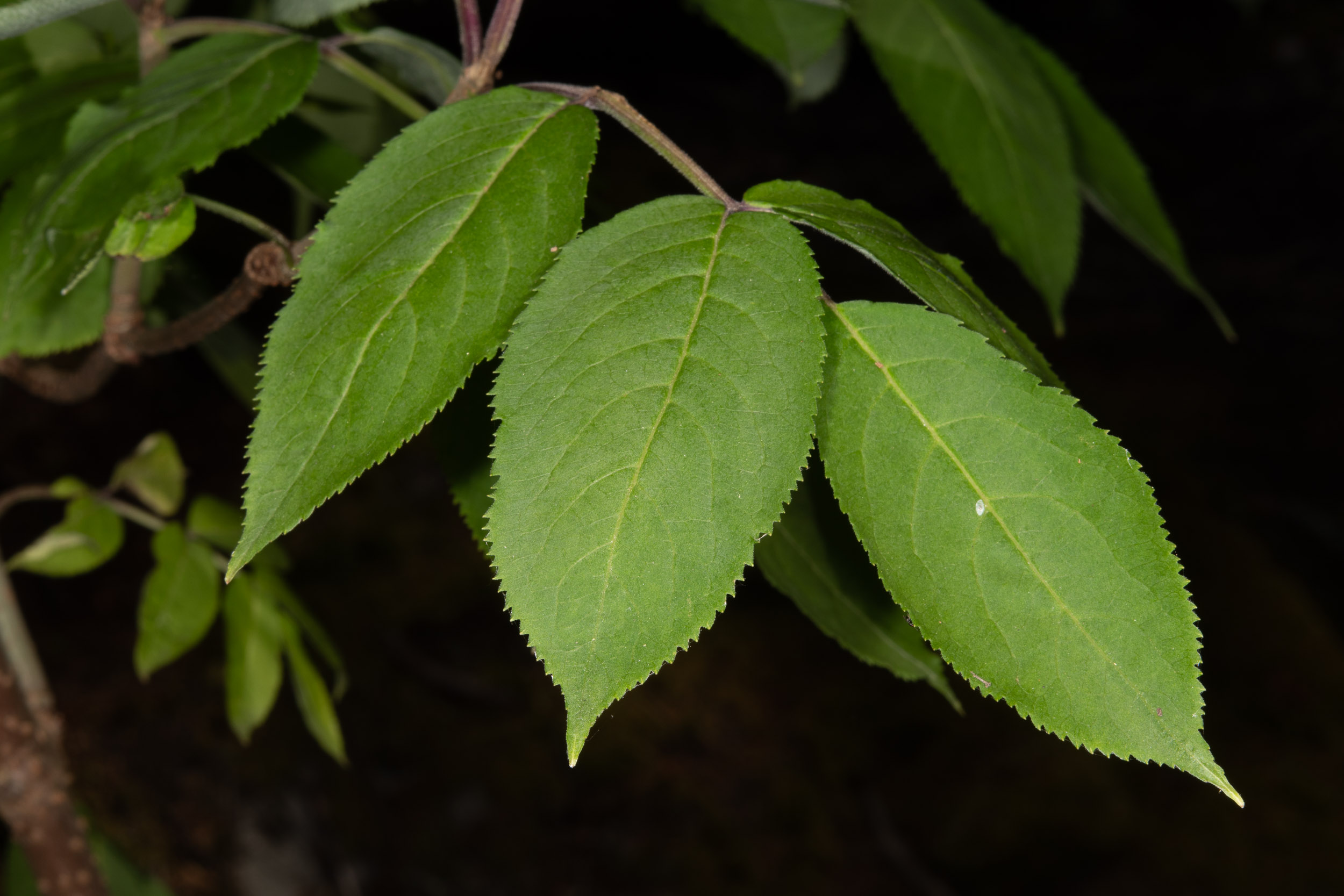
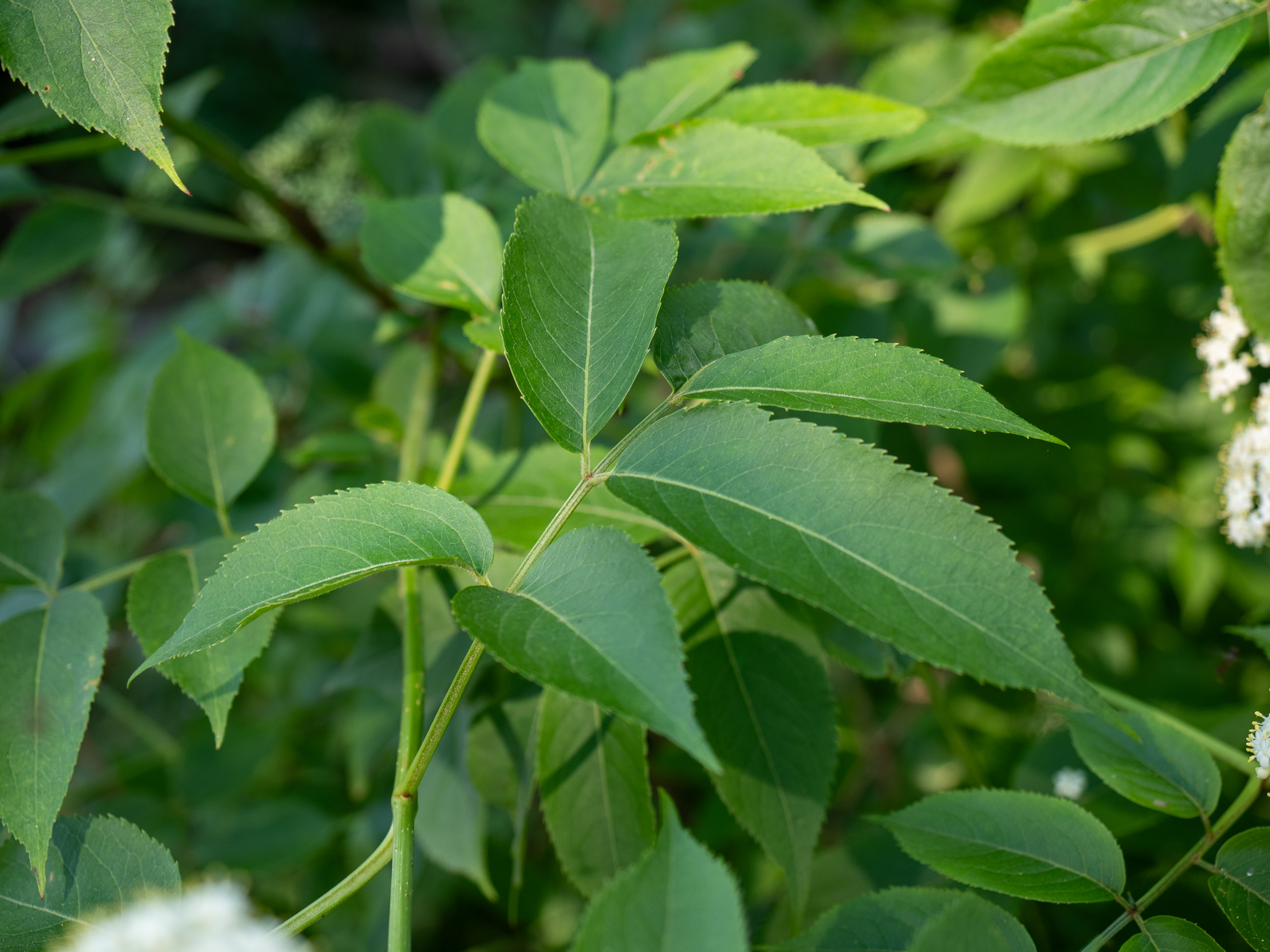
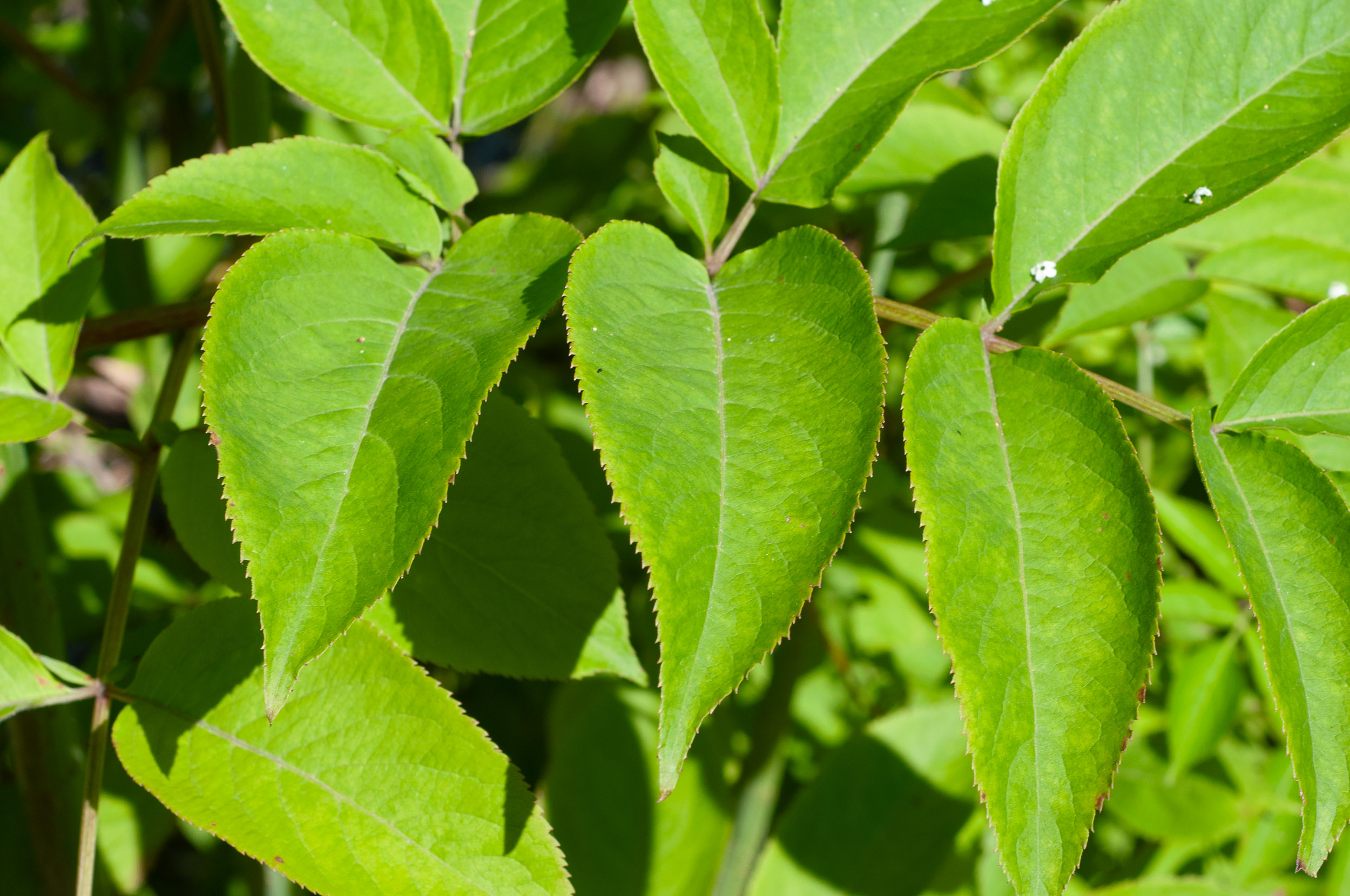
Leaves: Opposite, in pinnate groups, each 1¾–6″ (5–15 cm) long and about ¾–2″ (2–6 cm) wide,
with sharply serrated edges.
The leaves, flowers and branches have a disagreeable odor when crushed, smelling like “a cross between skunk cabbage and Ailanthus.”
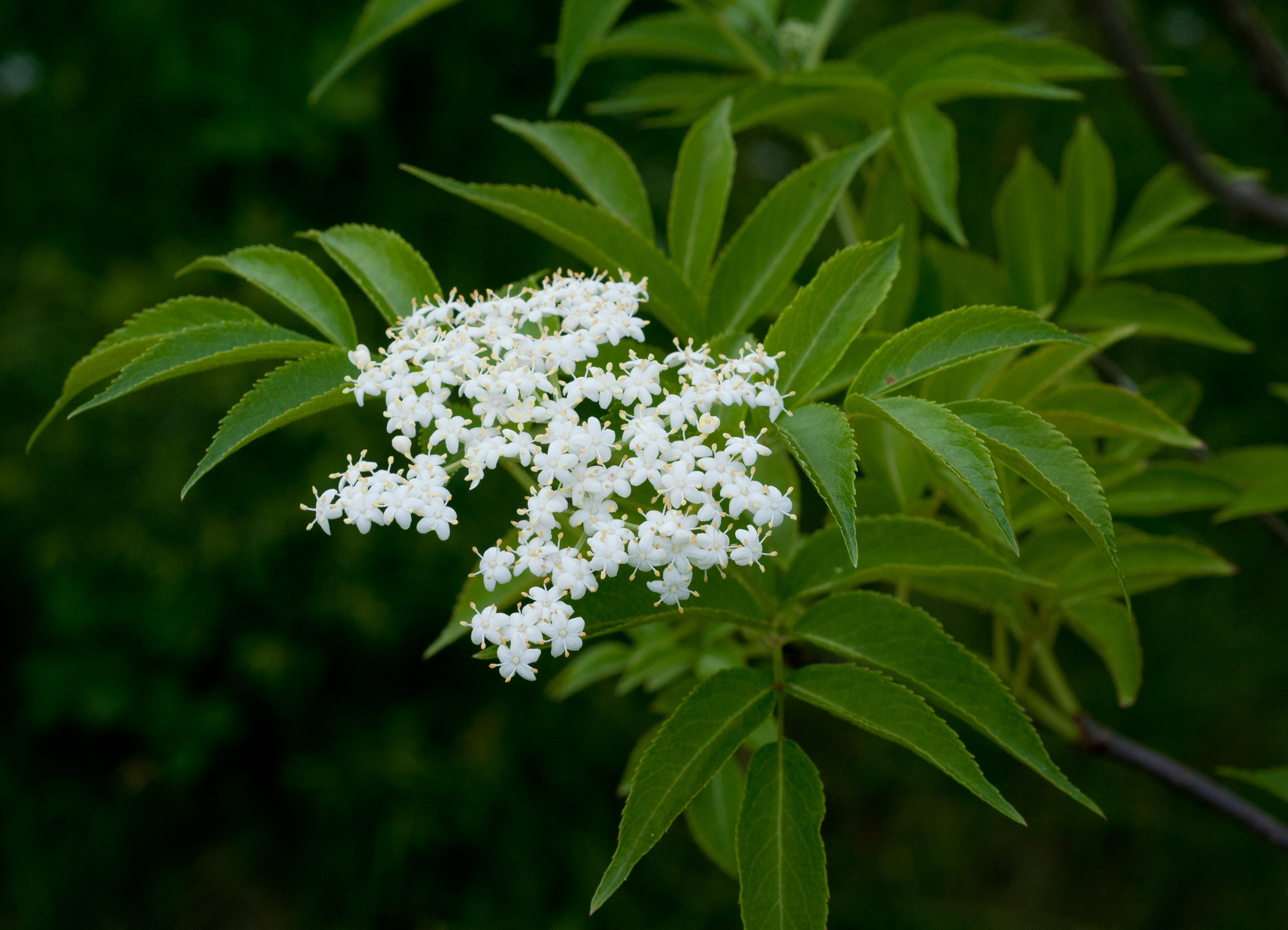
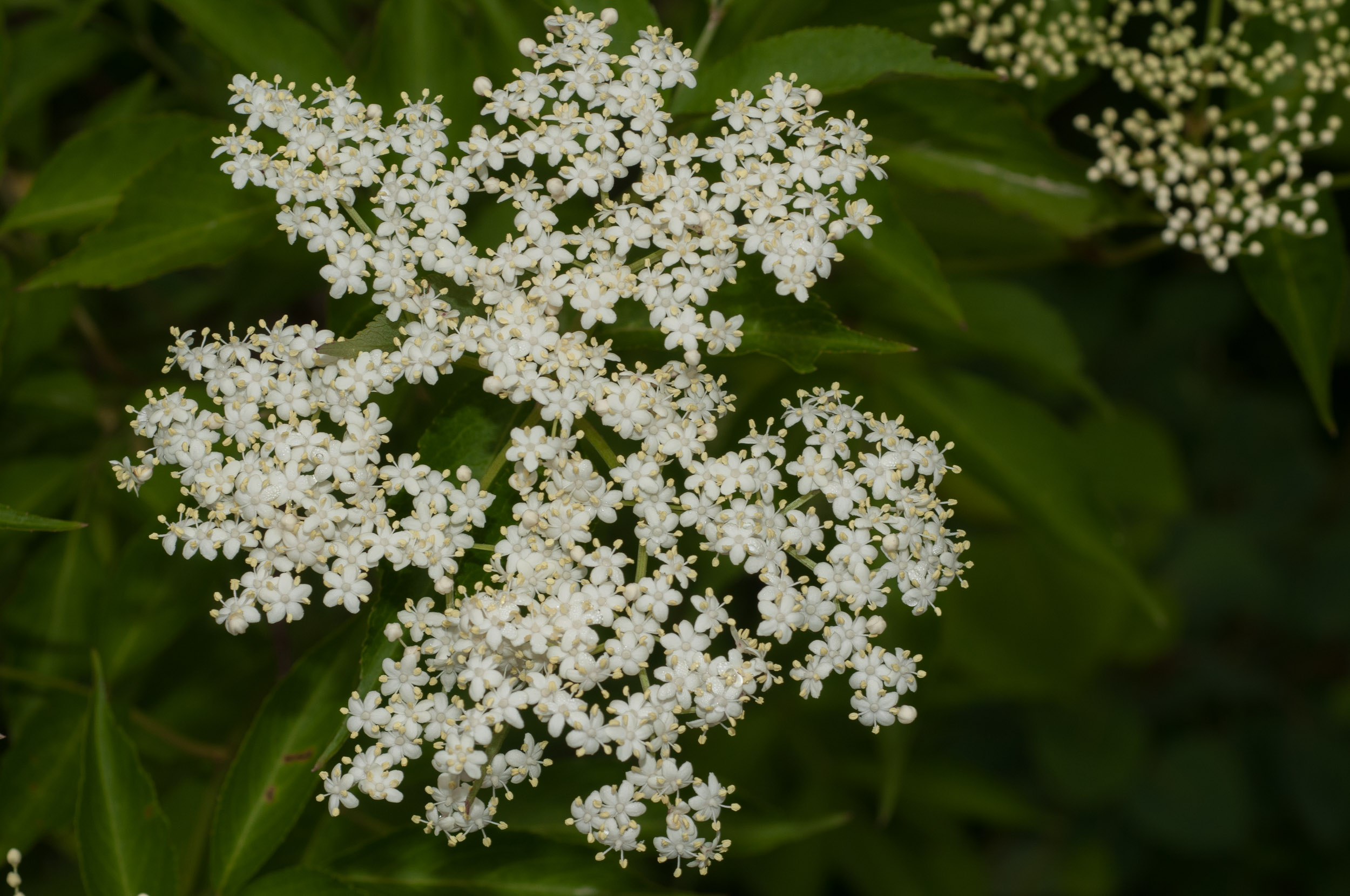
Flowers: Tight umbrella-shaped clusters, white or cream-colored, about 3–6″ (7.6–15 cm) around. Berries
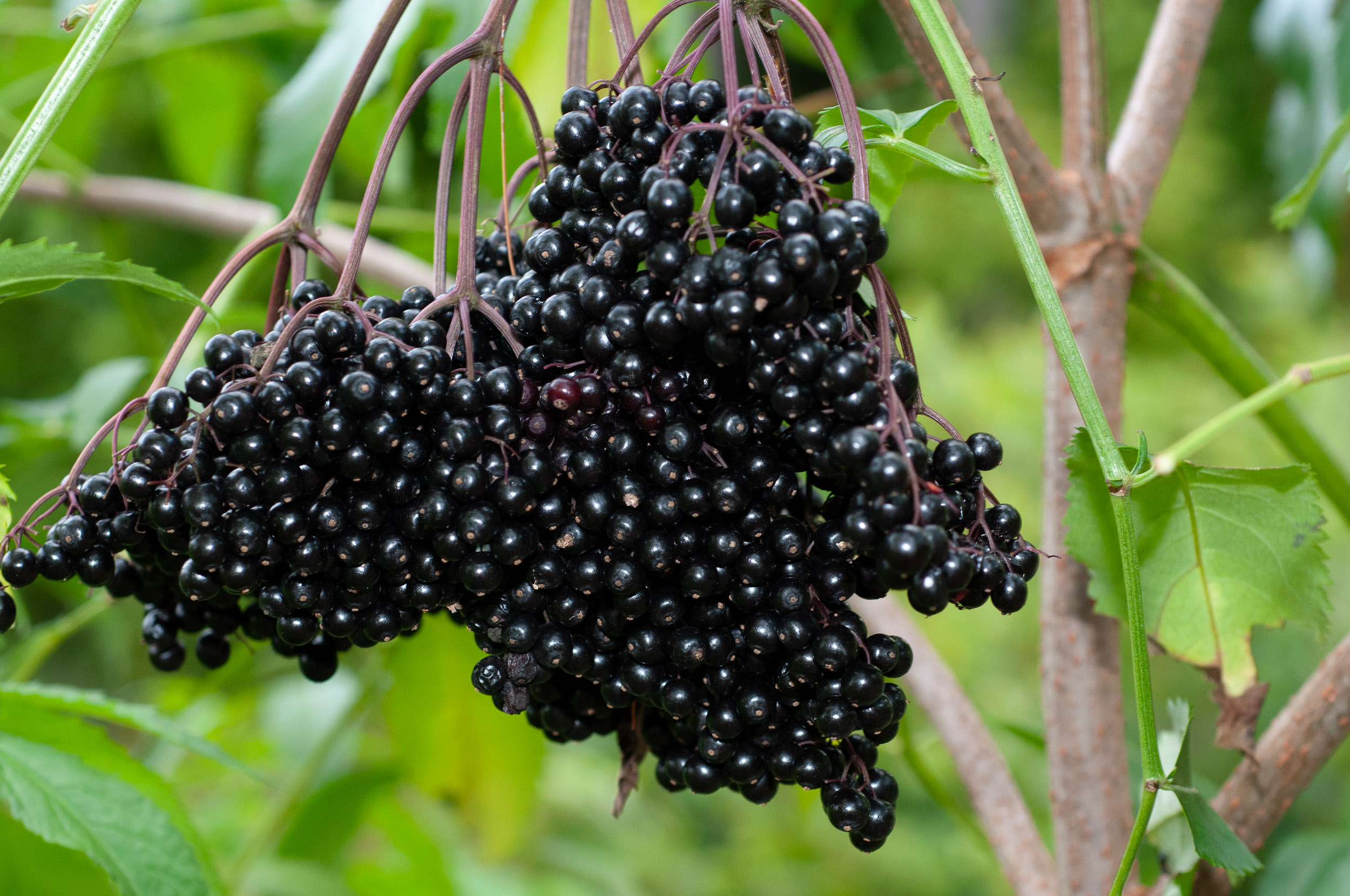
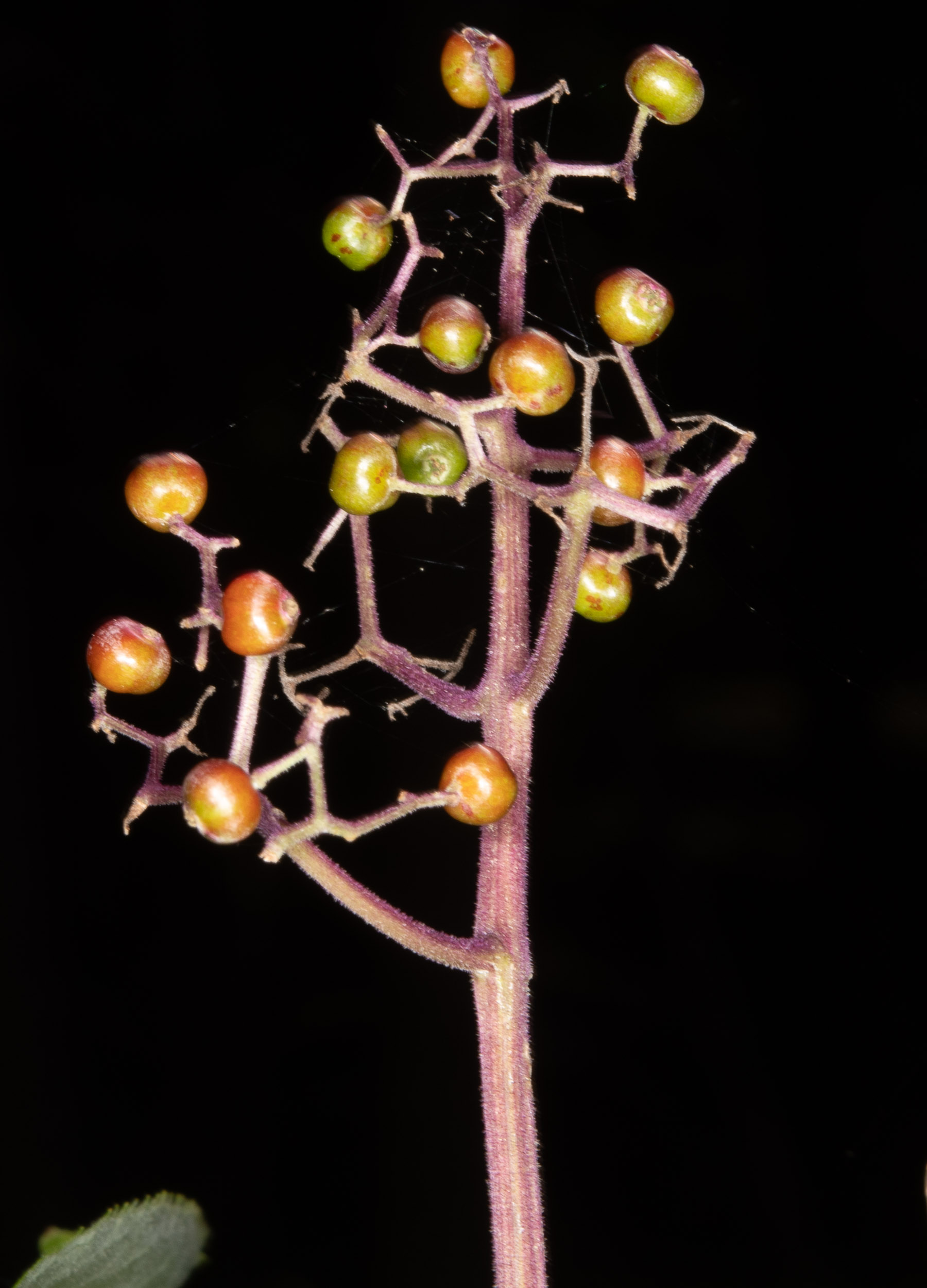
are shiny and black, in dense, heavy clusters, each up to ¼″ (6.3 mm) in diameter.
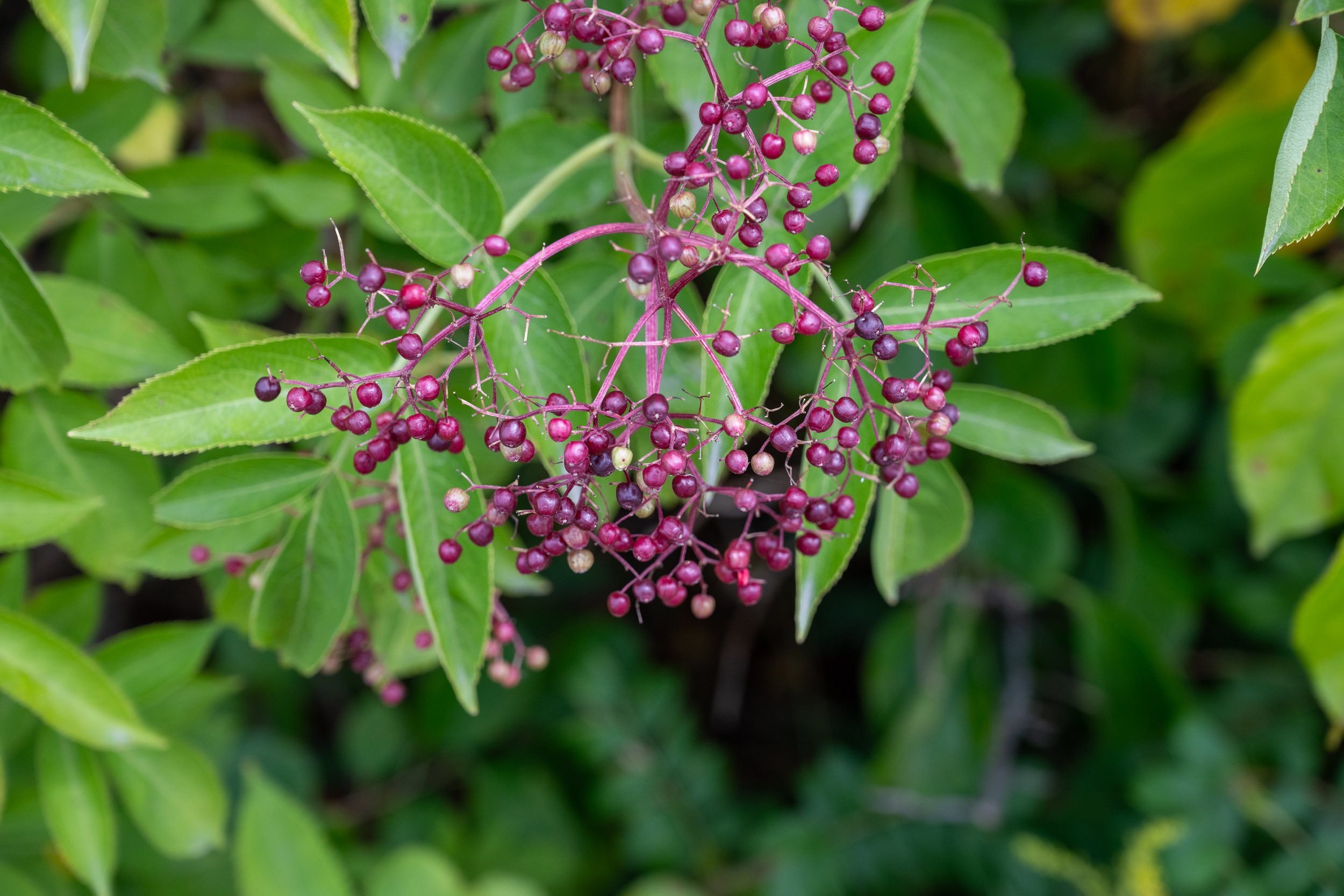
Fruits: A dark purple to black berry 1/16–3/16″ (3–5 mm) diameter, produced in copious drooping clusters in the fall.
Habitats: Streams, marshes, moist forests, and disturbed areas.
Edibility: Poisonous All parts of the plant, except for
the berries, are poisonous, due to the presence of hydrocyanic acid (cyanide!), and sambucine.
But the berries are prized, dried by indigenous peoples, made into jams, or pies, or eaten raw when
ripe. Or into elderberry wine.
Sambucus canadensis L. Sambucus canadensis L. var. laciniata A. Gray Sambucus caerulea Raf. var. mexicana (C. Presl ex DC.) L.D. Benson, orth. var. Sambucus canadensis L. var. submollis Rehder Sambucus cerulea Raf. var. mexicana (C. Presl ex DC.) L.D. Benson Sambucus mexicana C. Presl ex DC. Sambucus orbiculata Greene Sambucus simpsonii Rehder ex Sarg.
8/20/2025 · Peaks Island, Maine · ≈ 11 × 8″ (28 × 19 cm)
 All parts of the plant, except for
the berries, are poisonous, due to the presence of hydrocyanic acid (cyanide!), and sambucine.
But the berries are prized, dried by indigenous peoples, made into jams, or pies, or eaten raw when
ripe. Or into
All parts of the plant, except for
the berries, are poisonous, due to the presence of hydrocyanic acid (cyanide!), and sambucine.
But the berries are prized, dried by indigenous peoples, made into jams, or pies, or eaten raw when
ripe. Or into 







 ID is uncertain