Sambucus racemosa L. var. racemosa
Red elderberry, redberry elder, red-berried elder
Some elderberries
Sambucus nigra ssp. cerulea
Sambucus racemosa var. racemosa



|
Sambucus racemosa L. var. racemosa Red elderberry, redberry elder, red-berried elder Some elderberries | ||
Sambucus nigra ssp. cerulea |
You are here Sambucus racemosa var. racemosa |
|
|---|---|---|
| Common Name | |
|
| Plant | This woody shrub reaches heights of 20′ (6.1 m), with main branches up to 1½″ (3.8 cm) in diameter. Upright branches, composed of soft pithy wood, eventually bend into arches. | Forms a rounded shrub up to 20′ (6.1 m) in diameter, consisting of many stems emerging from a central point. Upright branches, composed of soft pithy wood, eventually bend into arches. |
| Leaves | Opposite, in clusters of 3-9, up to 8″ (20 cm) long, and oval to lance-shaped. | Opposite, in pinnate groups, each 1¾–6″ (5–15 cm) long and about ¾–2″ (2–6 cm) wide, with sharply serrated edges. The leaves, flowers and branches have a disagreeable odor when crushed, smelling like “a cross between skunk cabbage and Ailanthus,” according to Will Cook. |
| Flowers | White or cream-colored, in flat-topped clusters up to 6″ (15 cm) around. | Tight umbrella-shaped clusters, white with a pink tinge, about 3–5″ (7.6–12 cm) around. |
| Fruit | Spherical, blue-black in color, with a white powdery surface that makes them look lighter. | Red elderberry berries are ... well ... red (or, just to keep you guessing, rarely yellow or white). They are up to ¼″ (6.3 mm) in diameter, in dense clusters. |
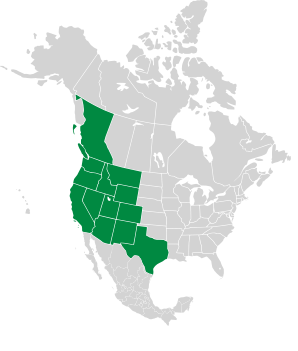
| Range/ Zones |
|
|
| Habitats | Mixed conifer forests, forest-steppe transitions, open talus slopes, at high elevations, in full sunlight. | Streambanks, ravines, swamps, moist forest clearings and higher ground near wetlands from sea level to 1.8 mi (2.9 km) in elevation. |
Sambucus racemosa var. racemosa description by Thomas H. Kent, not updated.
© FloraFinder.org. All rights reserved.