Sanvitalia abertii A. Gray
Abert’s creeping zinnia, Abert’s sanvitalia
[An article has not been written yet.]
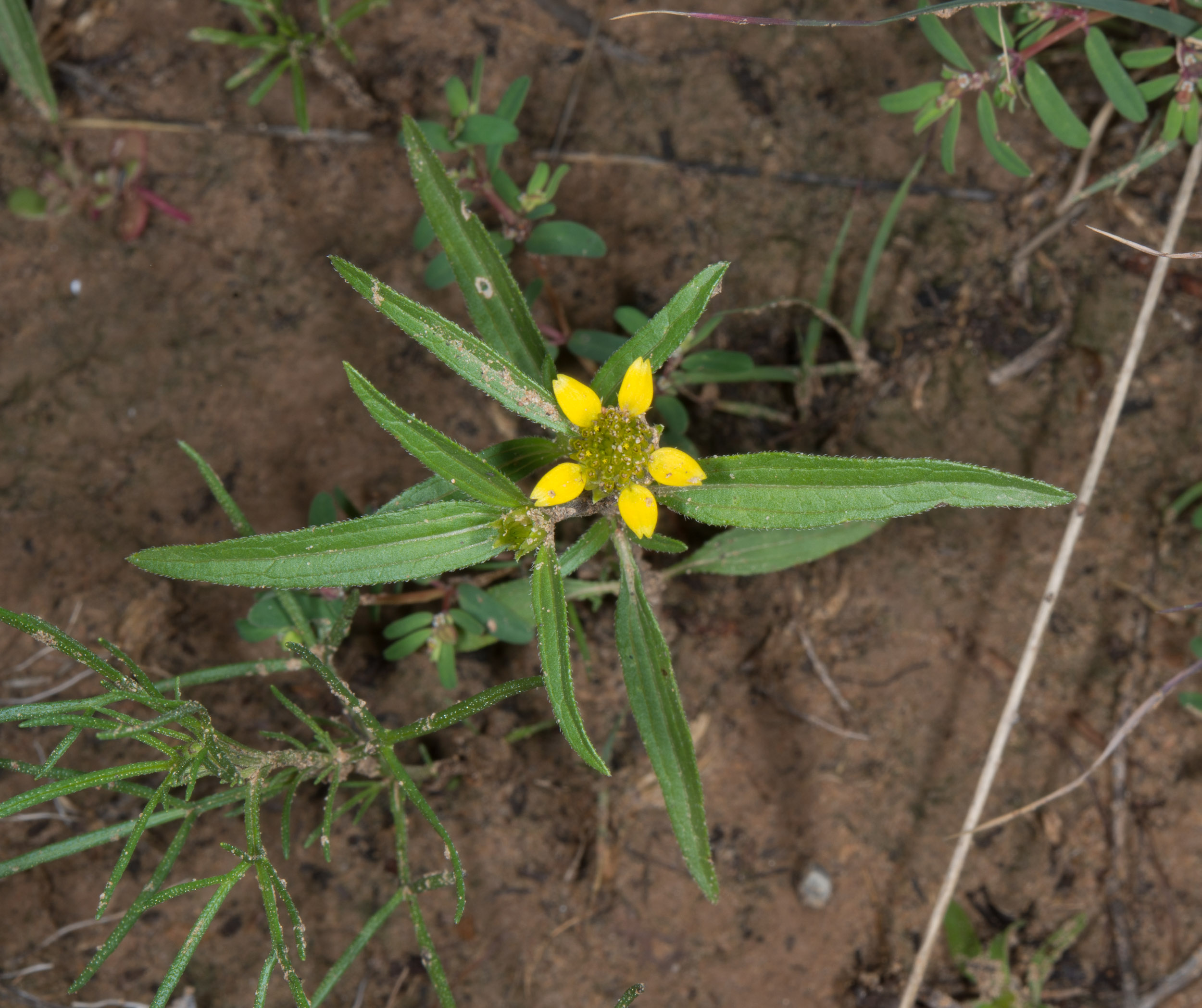
8/26/2014 · Rte 117, El Malpais National Monument, New Mexico · ≈ 4½ × 3½″ (11 × 9.7 cm) 
| Kingdom | Plantae | Plants, but not fungi, lichens, or algae (from Stearn's Botanical Latin) |
| Subkingdom | Tracheobionta | Vascular plants—plants with a “circulatory system” for delivering water and nutrients |
| Division | Magnoliophyta | Flowering plants, also known as angiosperms |
| Class | Magnoliopsida | Dicotyledons—plants with two initial seed leaves |
| Subclass | Asteridae | A large class that encompasses asters |
| Order | Asterales | Flowering plants with a central disk flower and surrounding petals, like daisies |
| Family | Asteraceae | The aster family, which also includes daisies and sunflowers; from the Greek ἀστήρ, “star,” for the star-shaped flowers |
| Genus | Sanvitalia | Either for Federico Sanvitali (1704-1761, alternatively spelled Sanvitale), a professor at Brescia, Italy, and author of Elementi di Architettura Civile, or Federico Sanvitali (1770-1819), a grand-nephew of the former; or the latter‘s older brother, Count Stefano Sanvitali (1764-1838) |
| Species | abertii | After James William Abert (1820-1897), army officer and explorer, born November 18, 1820, in Mount Holly, New Jersey, the son of Maj. John James Abert, an officer in the Corps of Topographical Engineers |
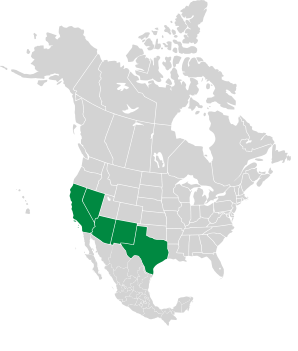
Sanvitalia abertii description by Thomas H. Kent, not updated.

© FloraFinder.org. All rights reserved.