Sarracenia flava L.
Yellow pitcher plant, yellow trumpet
Yellow pitcher plants are native to the American southeast.
Like its relatives, the yellow pitcher plant is carniverous. It captures and eats bugs without moving a muscle, which makes perfect sense because it doesn’t have any muscles. Yellow pitcher plants produce thin hollow tubes—actually a rolled leaf—up to 3′ (1 m) tall. Each tube is topped with a flared opening. Above that is an upward-facing funnel-like cover that directs rainwater away from the tube. That’s because the tube contains digestive juices that would be diluted by rainwater. When an unsuspecting bug alights on the tube opening, in search of nectar secreted on its lip, smooth, waxy secretions and downward-pointing hairs on the lip often result in a fall to the base of the tube. The hapless insect is trapped by the hairs or wetting agents, and slowly digested by the plant. As yet another clever adaptation, the nectar is spiked with poisonous coniine, which is believed to intoxicate or paralyze the prey.
Plants: Colonies of tubular stalks up to 3′ (1 m) high, though more typically 1½′ (50 cm). Each tube is shaped like a narrow upward-pointing horn, with a flared lip (the operculum), and a rain-diverting cap.
Leaves: The tubes are modified leaves.
Flowers: Flowers hang down like a bell from a stem (scape) up to 1½′ (50 cm) in height. They emit an unpleasant odor similar to that of cat urine. Flowers have five sections and yellow petals. They appear from April to May.
Fruits: Five lobes that mature over five months, then split to scatter 300-600 seeds, each 1/32–1/16″ (1.5–2 mm) long. Seeds are waterproof, so they can float to new locations.
Habitats: Acidic mucky bogs.
Online References:
Www.carnivorousplantresource.com (great photos)

9/14/2010 · Garden in the Woods, Framingham, Massachusetts · ≈ 9 × 6″ (23 × 15 cm) 

5/22/2010 · Garden in the Woods, Framingham, Massachusetts · ≈ 2½ × 4′ (87 × 131 cm) 

5/15/2010 · Garden in the Woods, Framingham, Massachusetts · ≈ 14 × 9″ (35 × 23 cm) 
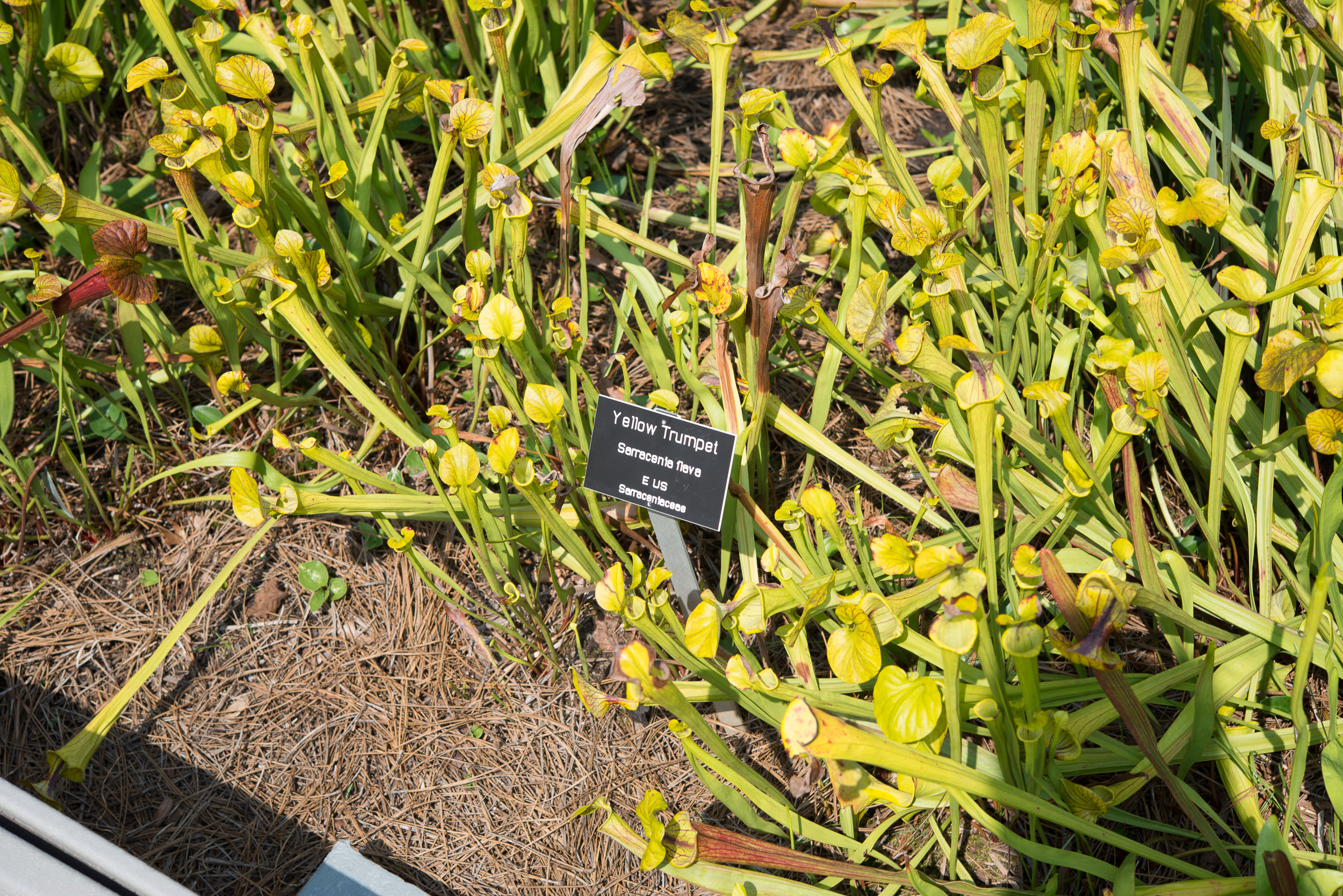
8/31/2013 · Lewis Ginter Botanical Garden, Richmond, Virginia 

9/14/2010 · Garden in the Woods, Framingham, Massachusetts · ≈ 7 × 5″ (17 × 12 cm) 
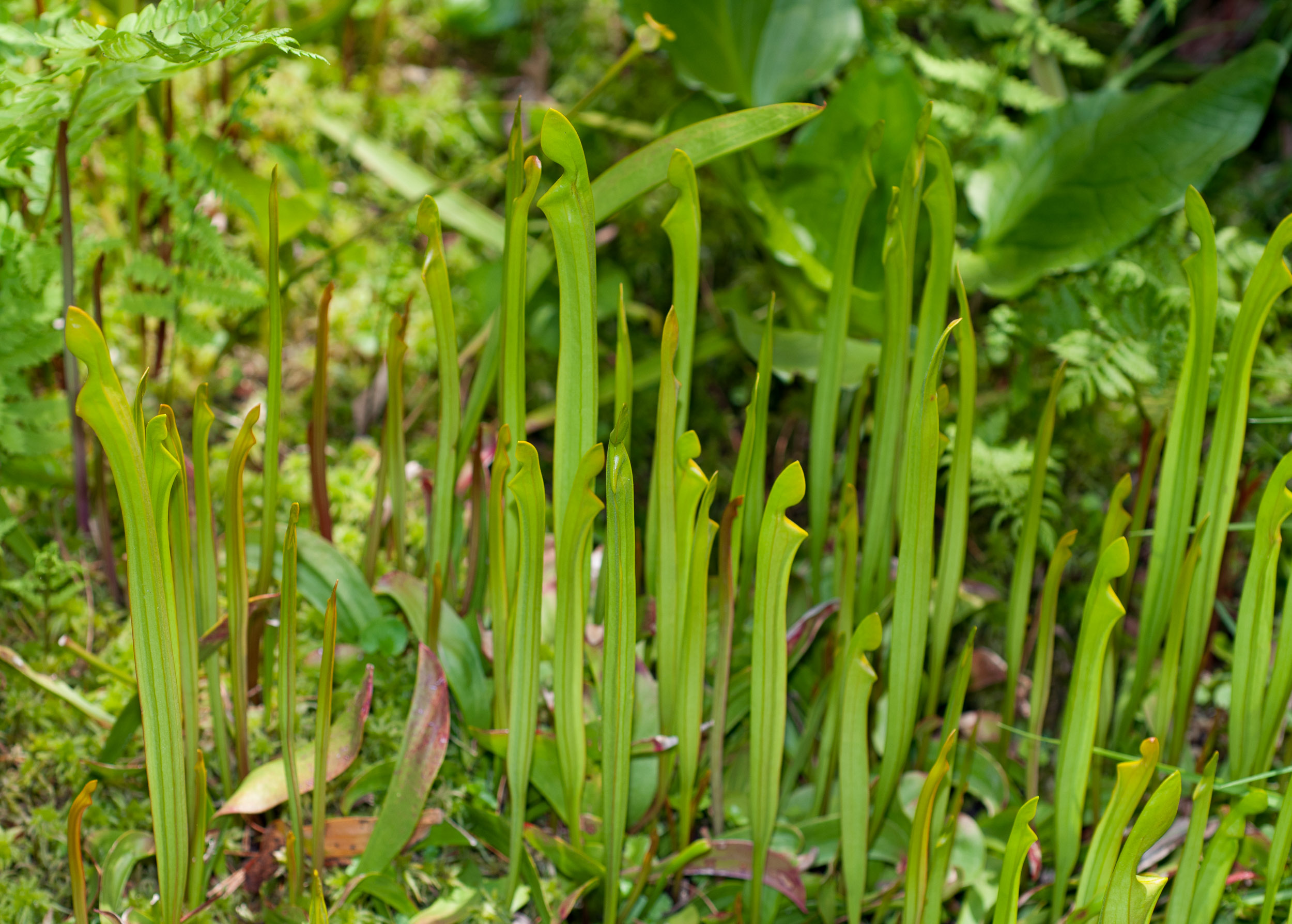
5/22/2010 · Garden in the Woods, Framingham, Massachusetts · ≈ 15 × 12″ (39 × 29 cm) 

5/15/2010 · Garden in the Woods, Framingham, Massachusetts · ≈ 5 × 4½″ (12 × 11 cm) 
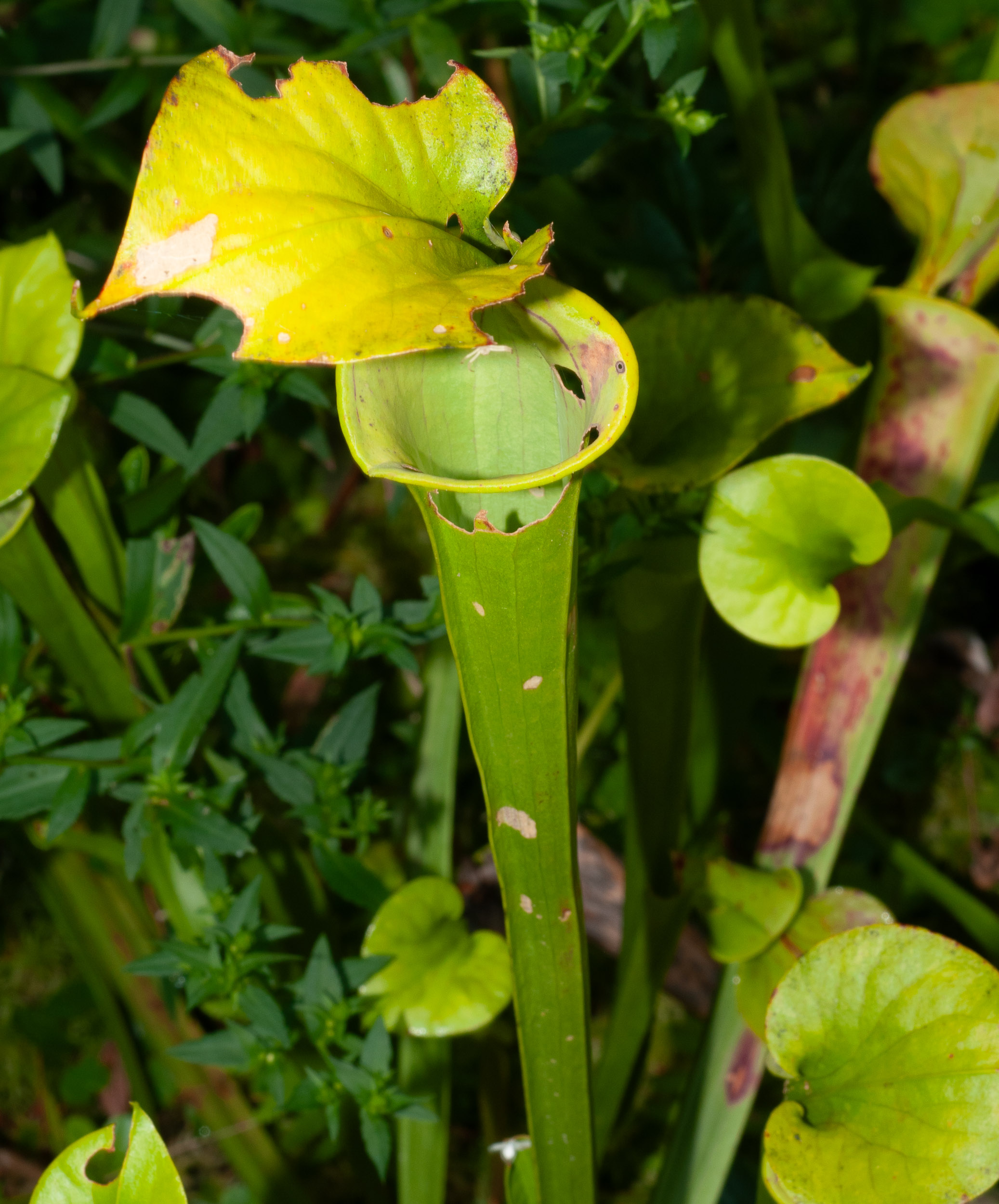
9/14/2010 · Garden in the Woods, Framingham, Massachusetts · ≈ 7 × 6″ (18 × 15 cm) 

5/22/2010 · Garden in the Woods, Framingham, Massachusetts · ≈ 17 × 12″ (44 × 29 cm) 

5/22/2010 · Garden in the Woods, Framingham, Massachusetts · ≈ 10 × 11″ (26 × 27 cm) 

6/27/2026 · Coastal Maine Botanical Gardens, Boothbay, Maine 

8/31/2013 · Lewis Ginter Botanical Garden, Richmond, Virginia · ≈ 2½ × 1½′ (79 × 53 cm) 
| Kingdom | Plantae | Plants, but not fungi, lichens, or algae (from Stearn's Botanical Latin) |
| Subkingdom | Tracheobionta | Vascular plants—plants with a “circulatory system” for delivering water and nutrients |
| Division | Magnoliophyta | Flowering plants, also known as angiosperms |
| Class | Magnoliopsida | Dicotyledons—plants with two initial seed leaves |
| Subclass | Caryophyllidae | Cacti, many other succulents, carnivorous plants, and leadworts |
| Order | Nepenthales | Carniverous (or more precisely insectiverous) plants |
| Family | Sarraceniaceae | Pitcher plant (bug-eating plants) family |
| Genus | Sarracenia | For early 18th century physician Dr. Michel Sarrasin |
| Species | flava | From the Latin flavus, “pure yellow” |

Sarracenia flava description by Thomas H. Kent, not updated.

© FloraFinder.org. All rights reserved.