Silene latifolia Poir.
White campion, bladder campion, evening lychnis, wide-leaved bladder catchfly
White campion is native to Europe, western Asia, and north Africa. It is now common in North America.
Plants: 1–3′ (30–91 cm) high, with hairy stems.
Leaves: In young plants, oval or narrow leaves 1½–4″ (4–10 cm) long form a rosette at the base. In older plants, a forked stem has opposite pairs of leaves. Leaves are hairy.
Flowers: Racemes or open branched clusters of flowers. Each is ⅞–1″ (2.5–3 cm) in diameter, white, with five notched petals. The calyx at the base of each flower is hairy and bulbous, like a little balloon, called the bladder. The calyx has 10-20 prominent green or maroon veins, 10 on male flowers and 20 on females.
Fruits: An urn-shaped capsule with an opening ringed by 10 spreading teeth. The capsule is filled with a very large number of black seeds, each about 1/32″ (1 mm) long.
Habitats: Most open temperate climate habitats, especially wastelands and fields, on neutral to alkaline soils.

1. Part of inflorescence. 2. male flower. 3. female flower. 4. fruit. 5. seed. From Strasburger, Noll, Schenck, Schimper: Lehrbuch der Botanik für Hochschulen. 4. Auflage, Gustav Fischer, Jena 1900. 
Online References:

8/4/2009 · Near Nashoba Hospital, Ayer, Massachusetts · ≈ 2½ × 2½″ (7 × 6.7 cm) 
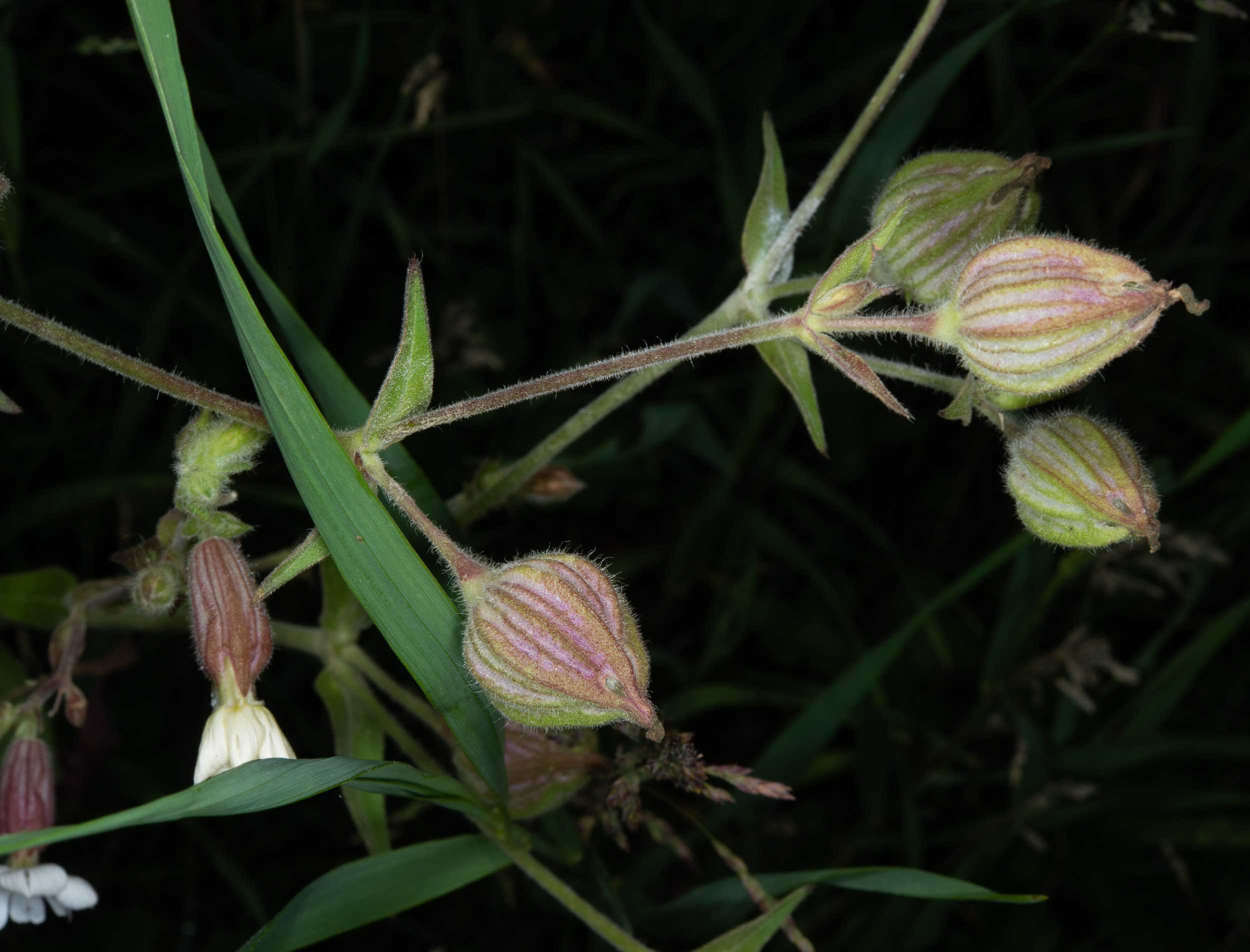
6/18/2015 · Beaver Brook Conservation Area, Hollis, New Hampshire · ≈ 7 × 5″ (17 × 13 cm) 
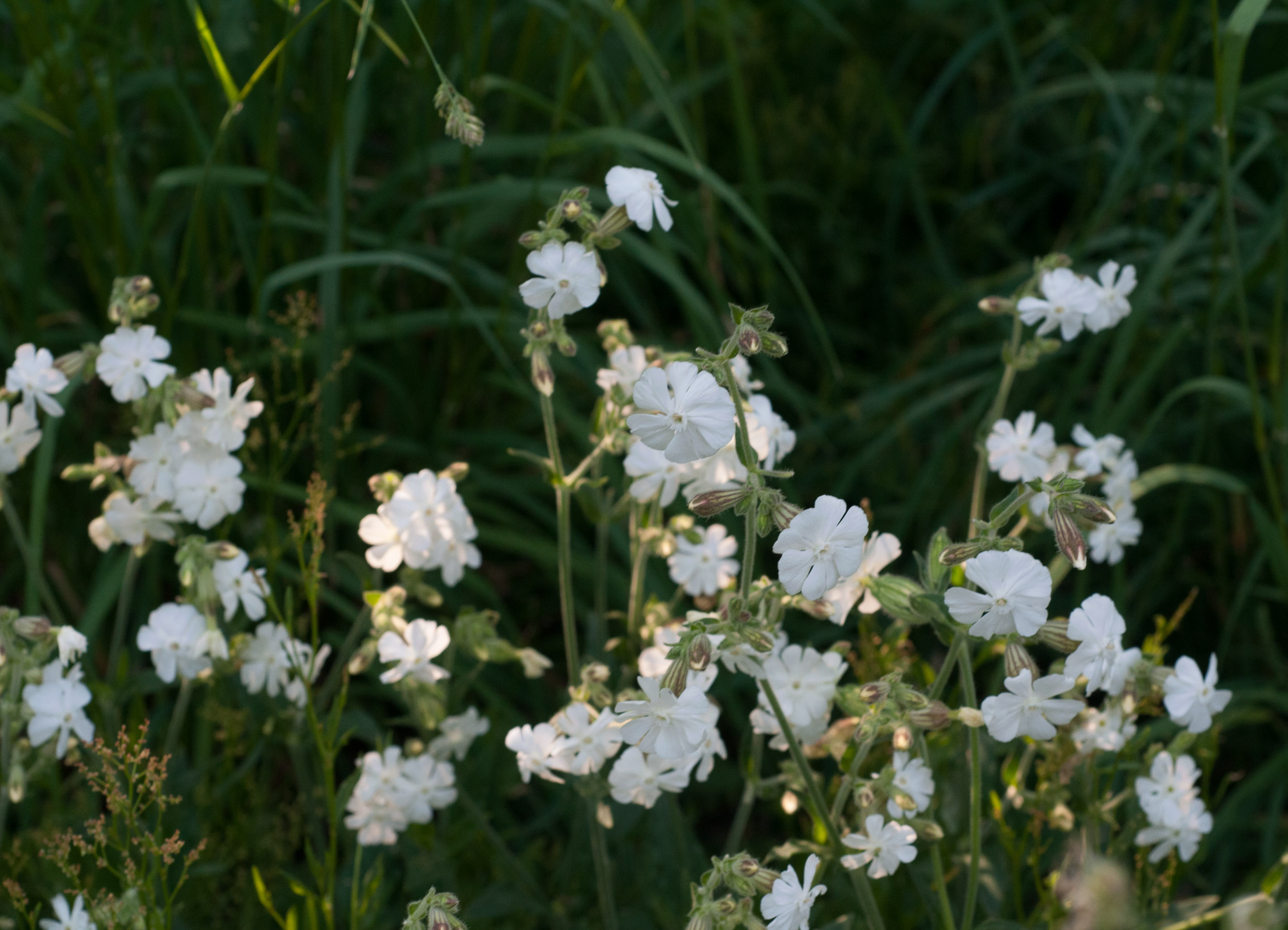
5/31/2010 · Mt. Lebanon St., Pepperell, Massachusetts · ≈ 14 × 10″ (36 × 26 cm) 

8/14/2009 · Nashua River Rail Trail, East Pepperell, Massachusetts · ≈ 5 × 4″ (13 × 10 cm)  ID is uncertain
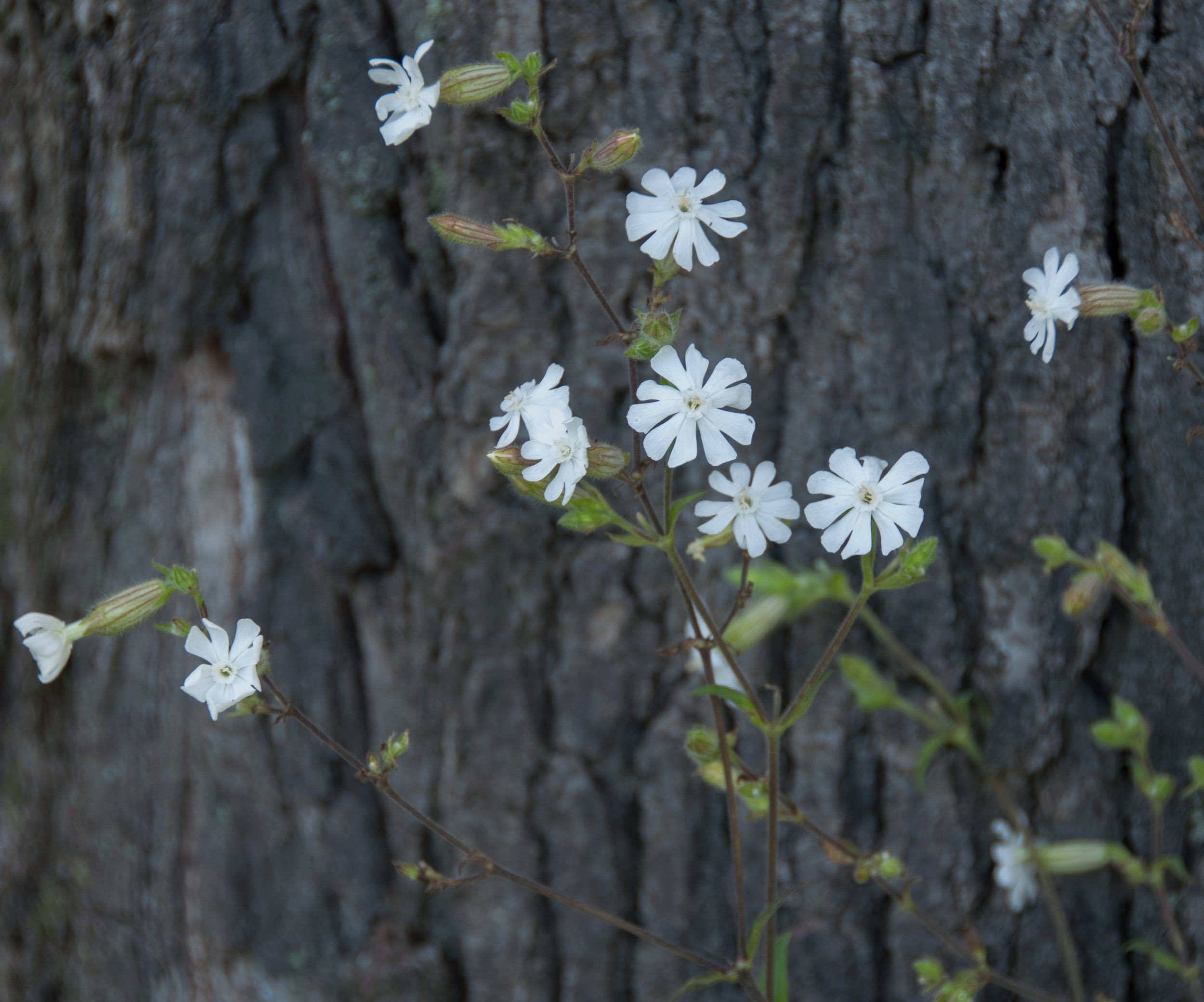
8/3/2009 · 111 Near 119, Pepperell, Massachusetts · ≈ 9 × 7″ (21 × 18 cm) 

5/31/2010 · Mt. Lebanon St., Pepperell, Massachusetts · ≈ 6 × 7″ (14 × 18 cm) 
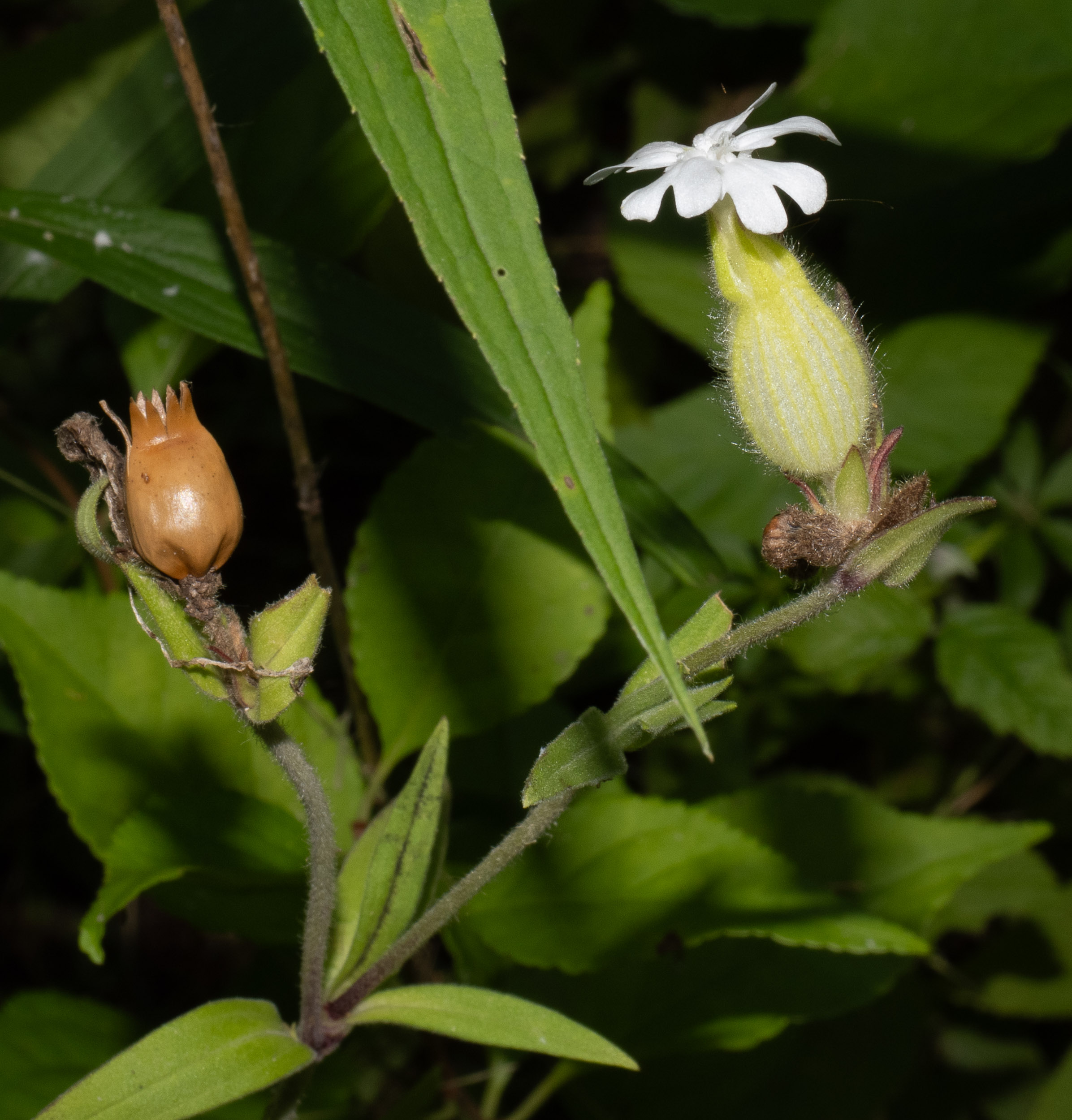
7/14/2024 · Moh-He-Con-Nuck Nature Preserve, Selkirk, New York 

7/6/2017 · Mt. Watatic, access road, Ashby, Massachusetts · ≈ 6 × 4″ (15 × 11 cm) 

7/6/2017 · Mt. Watatic, access road, Ashby, Massachusetts · ≈ 3½ × 3½″ (9.4 × 8.7 cm) 
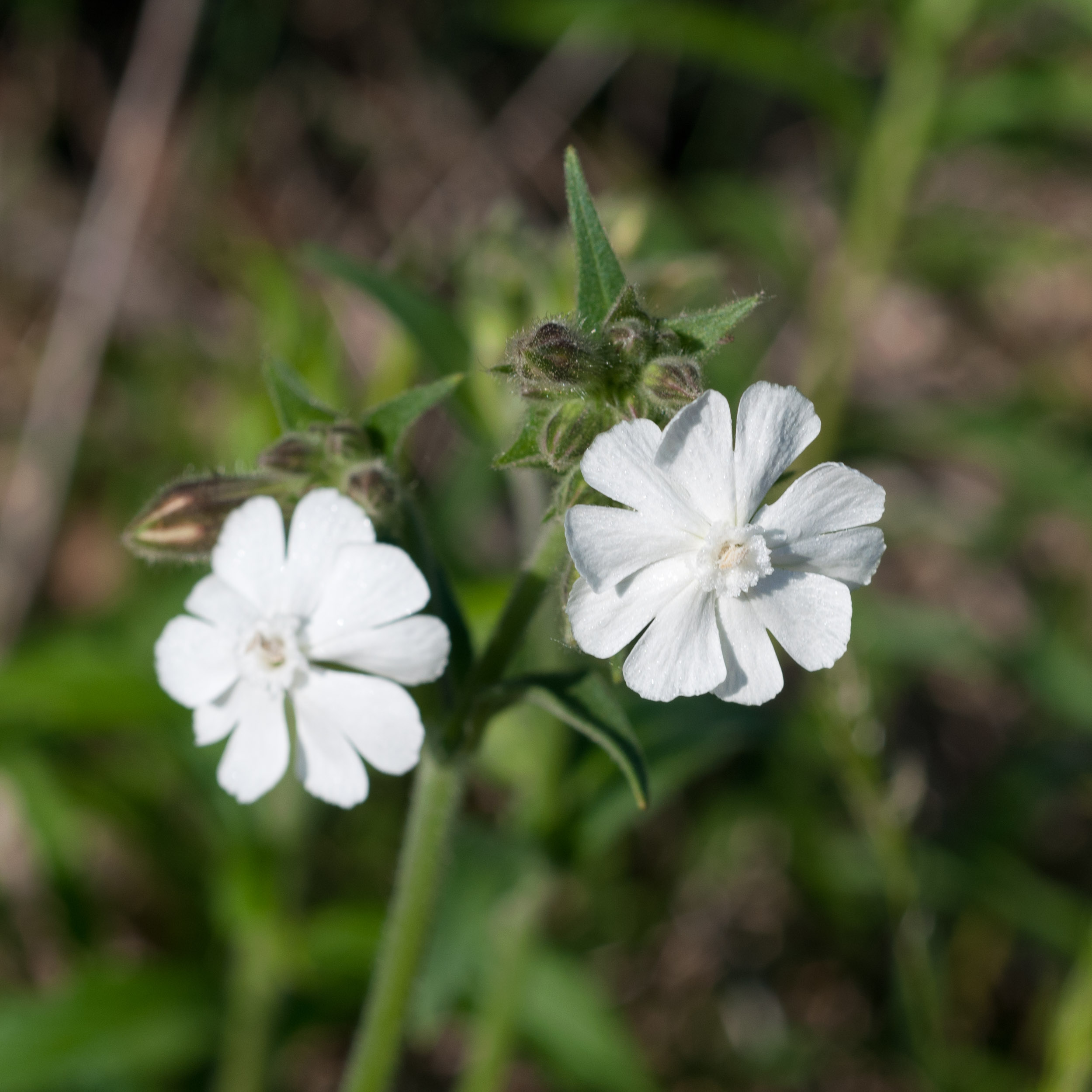
Male flowers. · 5/25/2010 · Nashua River Rail Trail, Ayer, Massachusetts · ≈ 4½ × 4½″ (11 × 11 cm) 

7/6/2017 · Mt. Watatic, access road, Ashby, Massachusetts · ≈ 6 × 4″ (14 × 11 cm) 
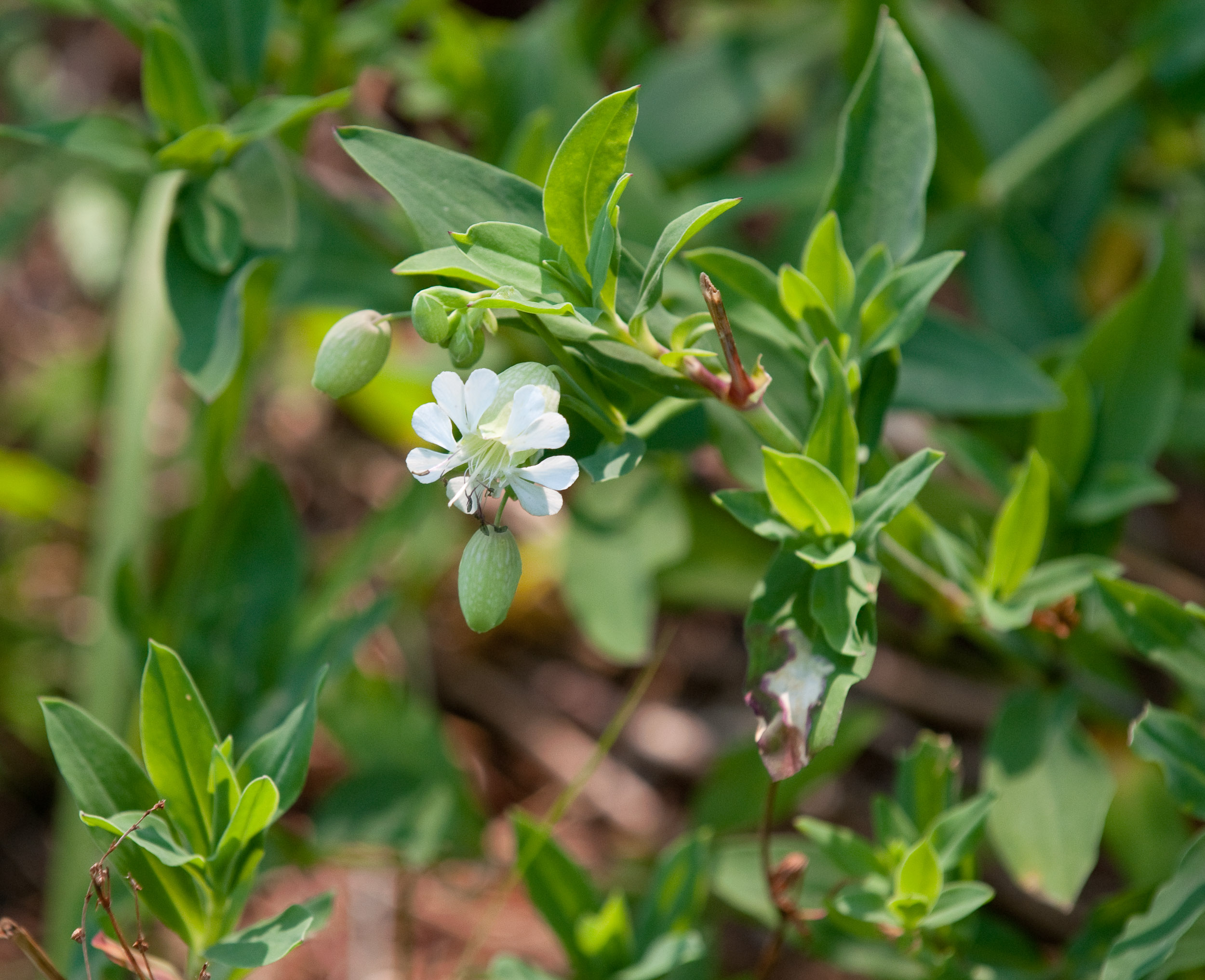
7/11/2009 · Nashua River Rail Trail, near NH Line, Dunstable, Massachusetts · ≈ 6 × 5″ (16 × 13 cm) 

8/28/2016 · Groton Hills Conservation Area and Sawtell Conservation Area, Groton, Massachusetts 
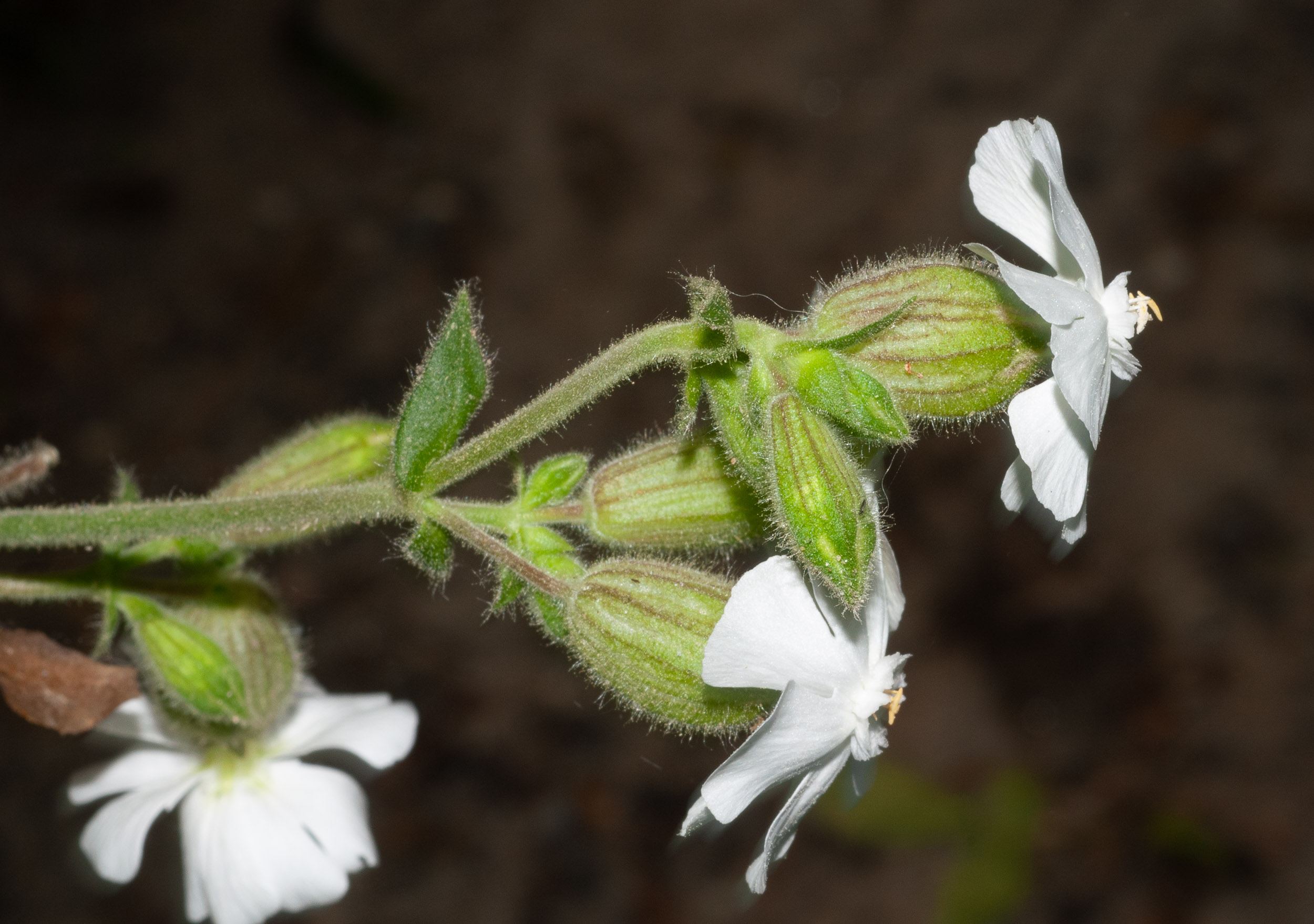
5/31/2010 · Mt. Lebanon St., Pepperell, Massachusetts · ≈ 4½ × 3″ (11 × 8.3 cm) 
| Kingdom | Plantae | Plants, but not fungi, lichens, or algae (from Stearn's Botanical Latin) |
| Subkingdom | Tracheobionta | Vascular plants—plants with a “circulatory system” for delivering water and nutrients |
| Division | Magnoliophyta | Flowering plants, also known as angiosperms |
| Class | Magnoliopsida | Dicotyledons—plants with two initial seed leaves |
| Subclass | Caryophyllidae | Cacti, many other succulents, carnivorous plants, and leadworts |
| Order | Caryophyllales | Includes cacti, carnations, amaranths, ice plants, and many carnivorous plants |
| Family | Caryophyllaceae | Pink or carnation family |
| Genus | Silene | Probably from Greek sialon, “saliva,” from a gummy exudation on the stems; or named for Silenus, intoxicated foster father of Bacchus (god of wine) who was covered with foam similar to the glandular secretions of many species of Silene |
| Species | latifolia | Having wide leaves |

Silene latifolia description by Thomas H. Kent, not updated.

© FloraFinder.org. All rights reserved.