Solidago flexicaulis L.
Zigzag goldenrod, broad-leaved goldenrod
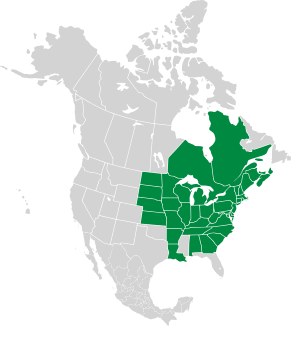
These goldenrods are native to eastern North America. Most goldenrods need a lot of sun, but these tolerate partial sun or shade. For a comparison chart of some of the varieties of goldenrods, see Solidago.
Plants: 2–4′ (60–121 cm) tall, usually unbranched. Stems tend to be mildly zig-zagged in shape, light green, and mostly smooth.
Leaves: Alternate, oval, with coarse teeth, 2–5 ⨉ 1–4″ (5–12 ⨉ 2.5–10 cm). Leaf petioles (stems) are ¼–1½″ (6.3–38 mm) long. The leaves narrow quickly at the base, leaving little “wings” on the petiole.
Flowers: In addition to a flowerhead at the tip of the stem, which is up to 5″ (12 cm) long, there are smaller racemes along the upper portion of the stem. Each composite flower is about ¼″ (6.3 mm) around. It has 1-5 ray florets and 4-8 disc florets. Blooms from July to October.
Fruits: Flowers become small spherical arrangements of seeds on “parachutes,” called cypselae, like dandilions gone to seed. The cypselae are 1/32–1/16″ (1–2 mm) in diameter.
Habitats: Most goldenrods need a lot of sun, but these tolerate partial sun or shade.
Online References:
References:
Clemants, Steven; Gracie, Carol, Wildflowers in the Field and Forest, Oxford University Press, 2006, p. 154
Solidago latifolia L.
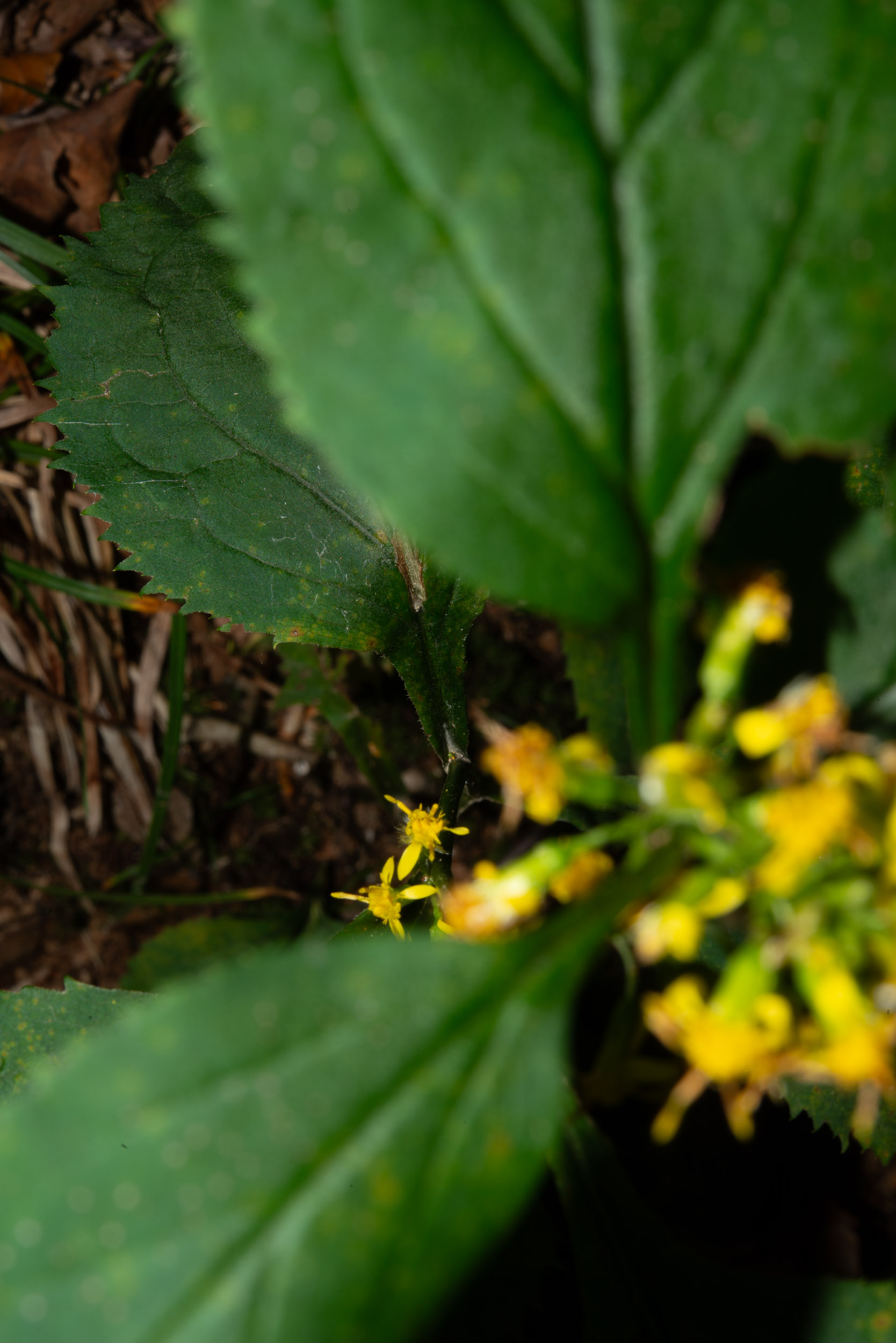
9/29/2013 · South Bubble Hike, Acadia National Park, Bar Harbor, Maine · ≈ 5 × 8″ (13 × 19 cm)  ID is uncertain

9/29/2013 · South Bubble Hike, Acadia National Park, Bar Harbor, Maine · ≈ 9 × 6″ (21 × 16 cm) ID is uncertain 
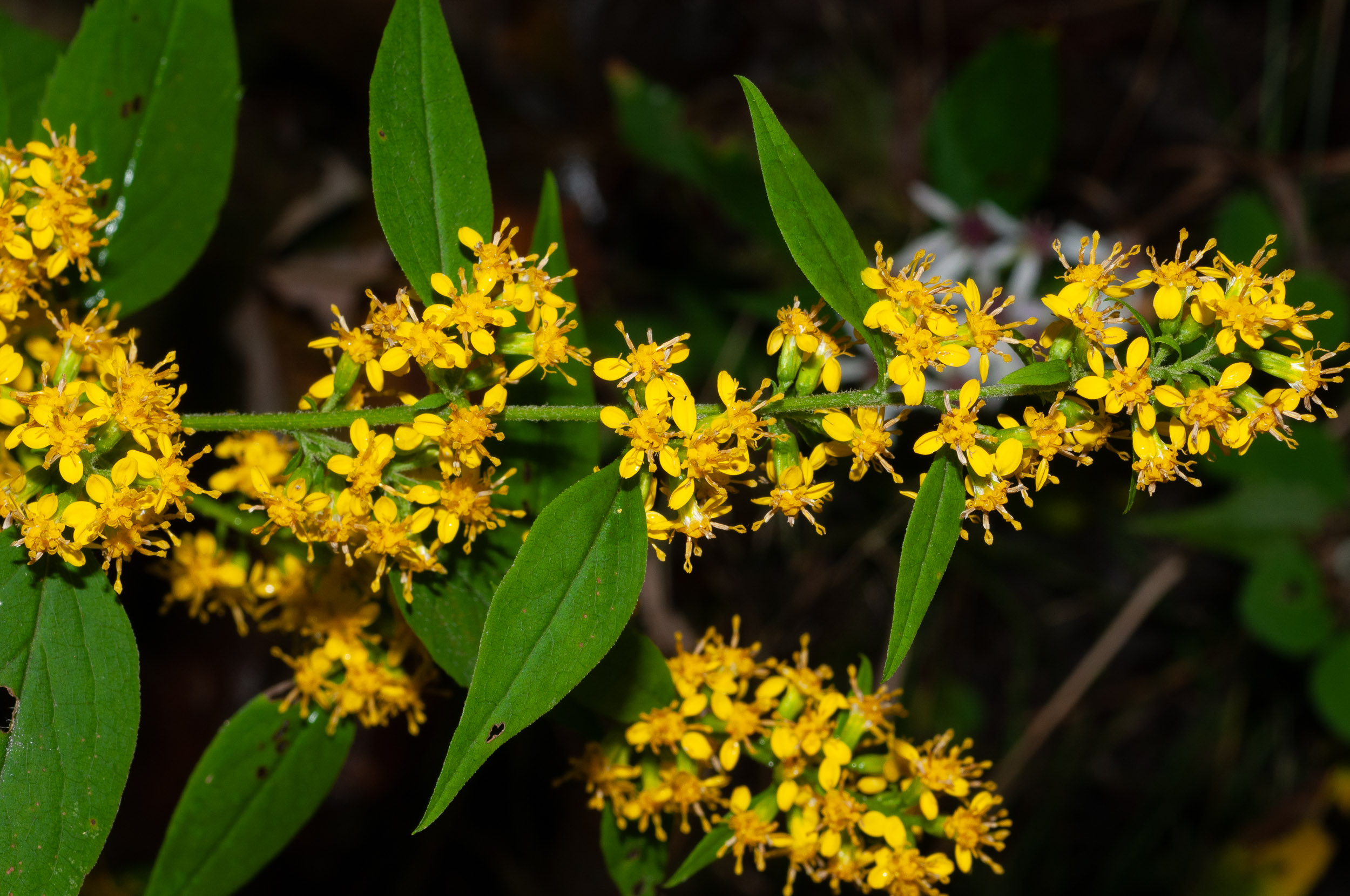
9/15/2012 · Mt. Wachusett, Princeton, Massachusetts · ≈ 7 × 4½″ (17 × 11 cm) 

9/15/2012 · Mt. Wachusett, Princeton, Massachusetts · ≈ 11 × 8″ (27 × 20 cm) 

9/15/2012 · Mt. Wachusett, Princeton, Massachusetts · ≈ 9 × 6″ (23 × 15 cm) 
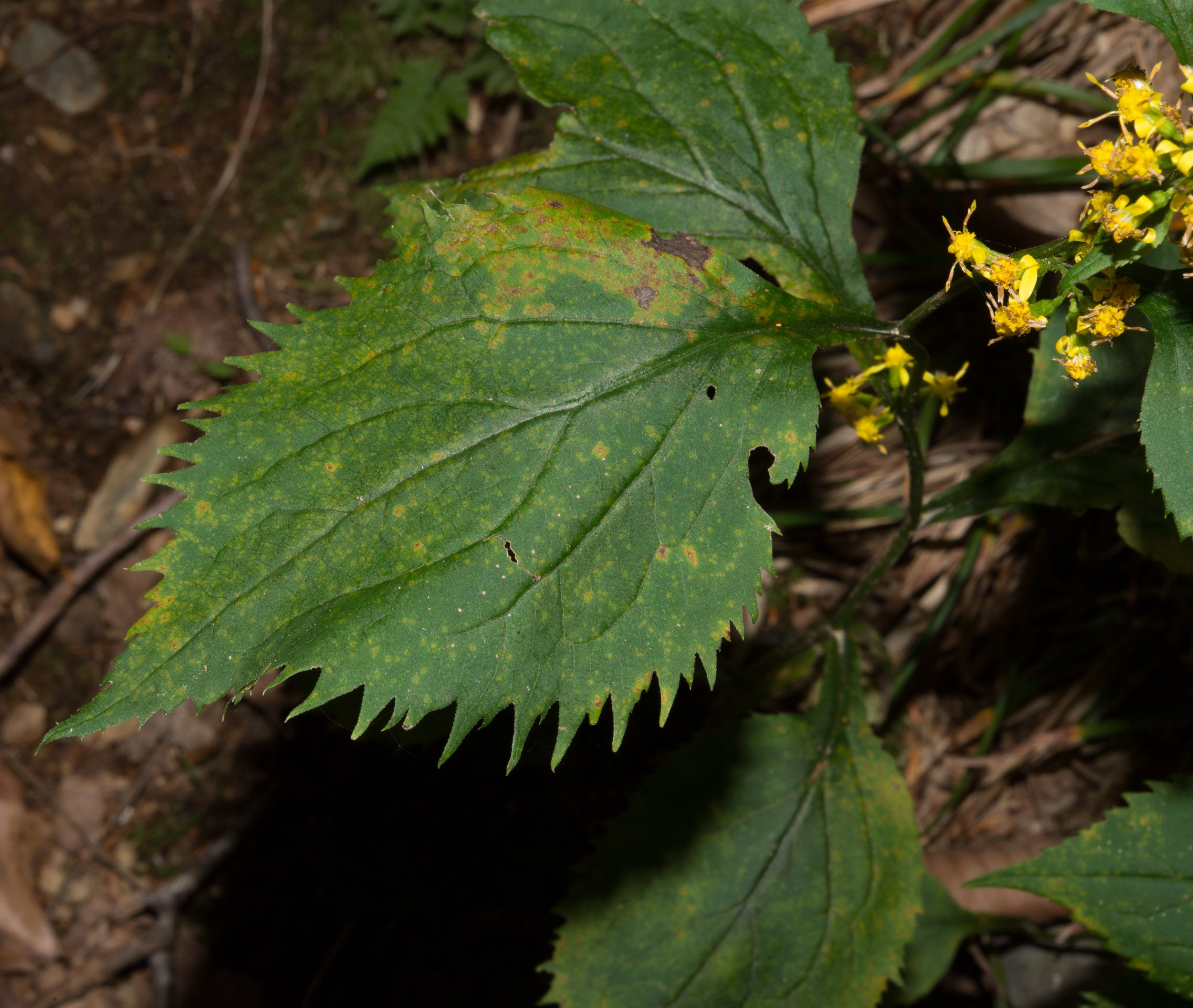
9/29/2013 · South Bubble Hike, Acadia National Park, Bar Harbor, Maine · ≈ 7 × 6″ (18 × 15 cm) ID is uncertain 

9/15/2012 · Mt. Wachusett, Princeton, Massachusetts · ≈ 9 × 6″ (22 × 14 cm) 
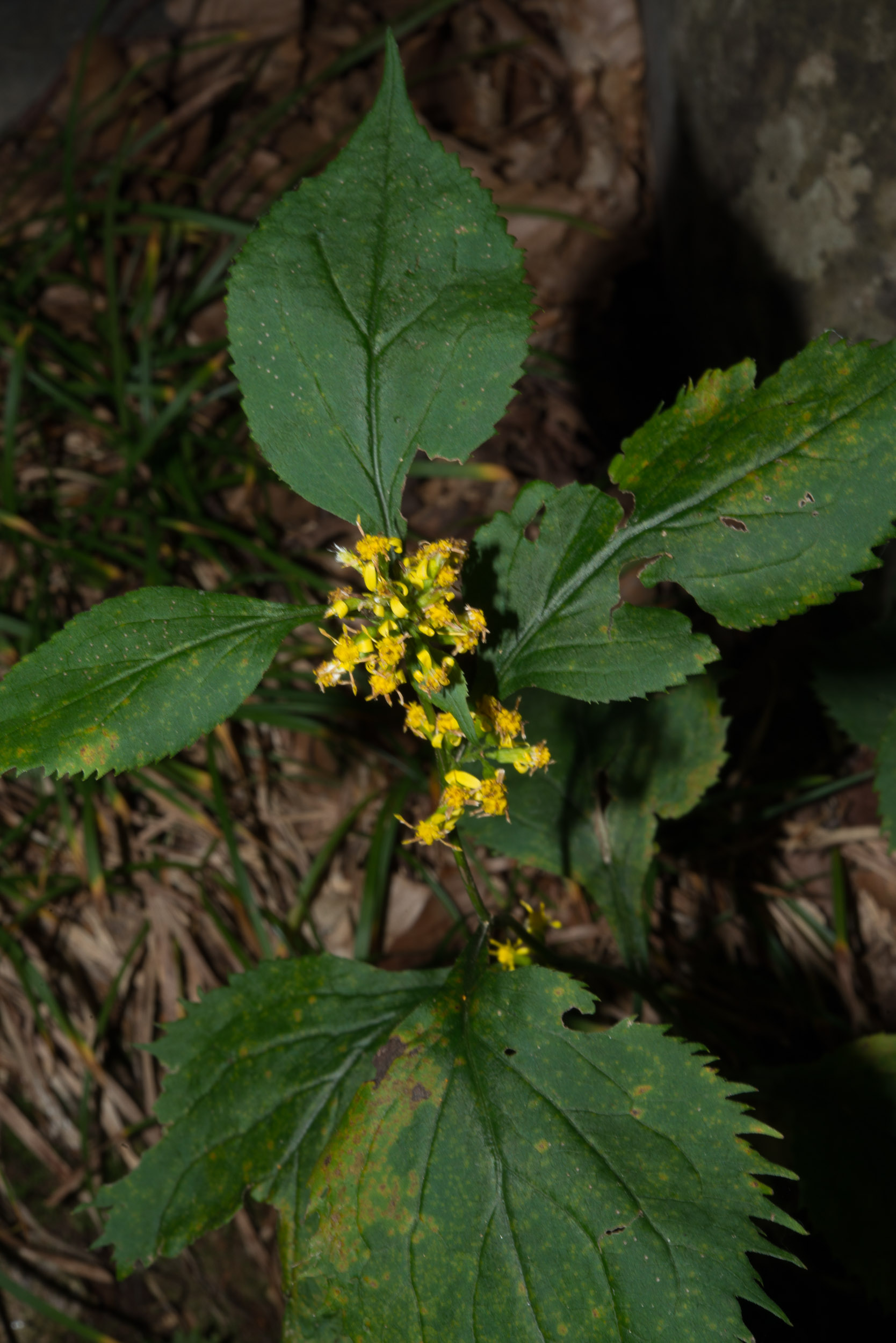
9/29/2013 · South Bubble Hike, Acadia National Park, Bar Harbor, Maine · ≈ 6 × 9″ (15 × 22 cm) ID is uncertain 

9/15/2012 · Mt. Wachusett, Princeton, Massachusetts · ≈ 9 × 6″ (23 × 15 cm) 
| Kingdom | Plantae | Plants, but not fungi, lichens, or algae (from Stearn's Botanical Latin) |
| Subkingdom | Tracheobionta | Vascular plants—plants with a “circulatory system” for delivering water and nutrients |
| Division | Magnoliophyta | Flowering plants, also known as angiosperms |
| Class | Magnoliopsida | Dicotyledons—plants with two initial seed leaves |
| Subclass | Asteridae | A large class that encompasses asters |
| Order | Asterales | Flowering plants with a central disk flower and surrounding petals, like daisies |
| Family | Asteraceae | The aster family, which also includes daisies and sunflowers; from the Greek ἀστήρ, “star,” for the star-shaped flowers |
| Genus | Solidago | From Latin solido, “to make whole or heal,” because it was believed these species had healing properties |
| Species | flexicaulis | “Flexible” |
Solidago flexicaulis description by Thomas H. Kent, not updated.

© FloraFinder.org. All rights reserved.