Pyrus microcarpa (Pursh) Spreng.
Sorbus americana Marshall
Mountain ash, American mountain ash
The American mountain-ash is a native of eastern North America. American mountain-ash is so named because it is often found in mountain locations—all these photos are from the mountains. They are also quite popular as landscape trees. Curiously, though, they aren’t ashes—they’re members of the rose family.
Plants: These deciduous trees reach 10–30′ (3–9.1 m) in height and trunks are about 4–10″ (10–25 cm) in diameter. Bark is light gray with a reddish tint and smooth, almost metallic, with horizontal lenticels.
Leaves: Alternate, compound, in groups 1–1½′ (33–43 cm) long. Individual leaflets are about 2–3″ (5–7.6 cm) long and ⅝–1″ (1.6–2.5 cm) wide. Leaf undersides are hairless.
Flowers: Dense flattened corymbs are 3–6″ (7.6–15 cm) across. They are comprised of small flowers, each ⅛″ (3.2 mm) around. Each flower is cream-colored, has five petals and 20-30 stamens.
Fruits: Flowers become thick clusters of bright orange-red berry-like pomes, ⅛–¼″ (3.2–6.3 mm) around.
Habitats: Common on mountains, in moist, rich, acidic, well-drained soils in full sun.
Edibility: Raw mountain ash berries aren’t good for you, but they can be cooked into a beautiful jelly that is traditionally served with lamb, venison, or pork. The recipe is described in Backyard Foraging.
 |
Two mountain ashes. |
Online References:
References:
Zachos, Ellen, Backyard Foraging: 65 Familiar Plants You Didn't Know You Could Eat, Storey Publishing, 2013, p. 104, 213
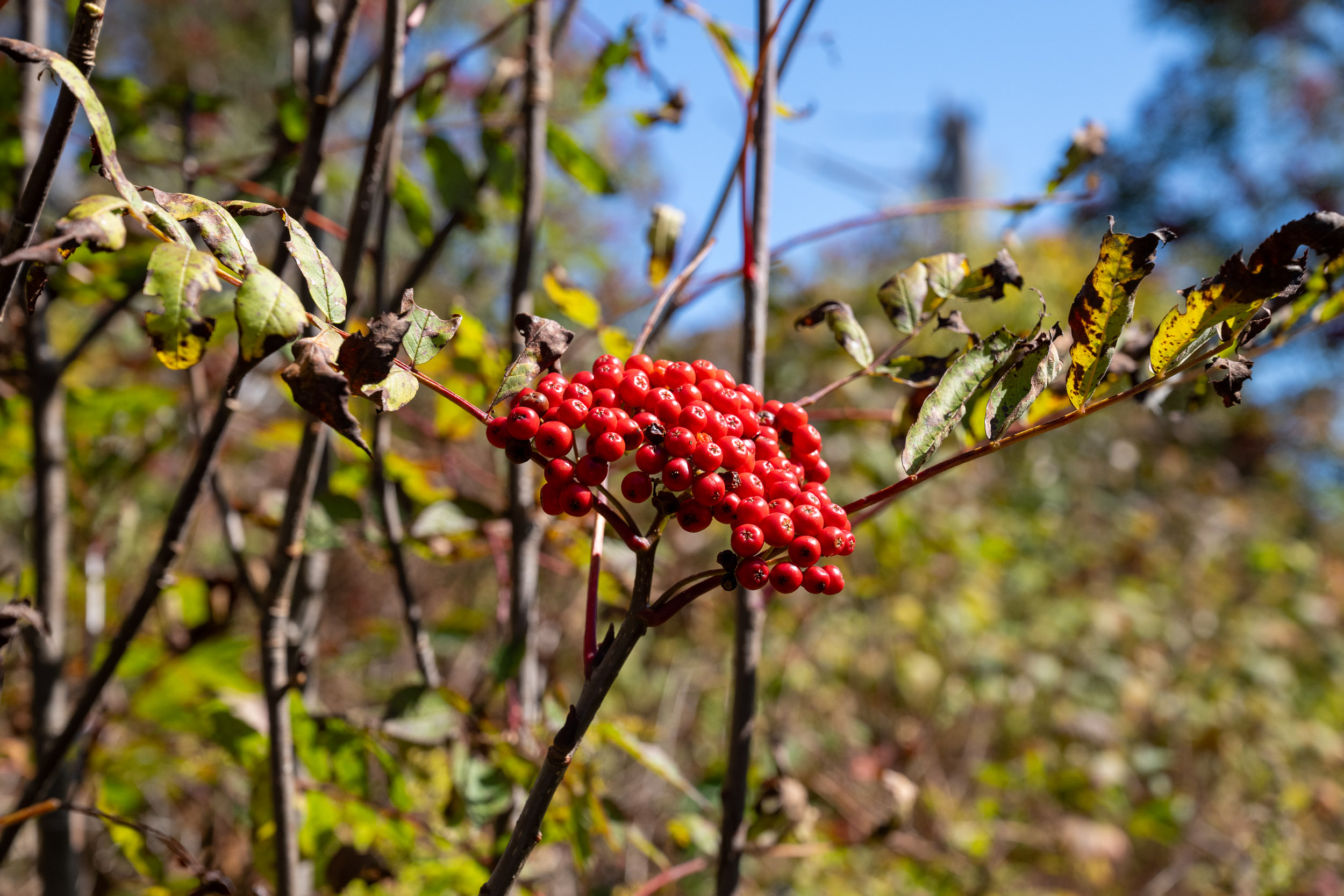
9/27/2025 · Monhegan Island, Maine · ≈ 16 × 11″ (40 × 27 cm) 

8/8/2015 · Mt. Wachusett · ≈ 9 × 6″ (23 × 16 cm) 
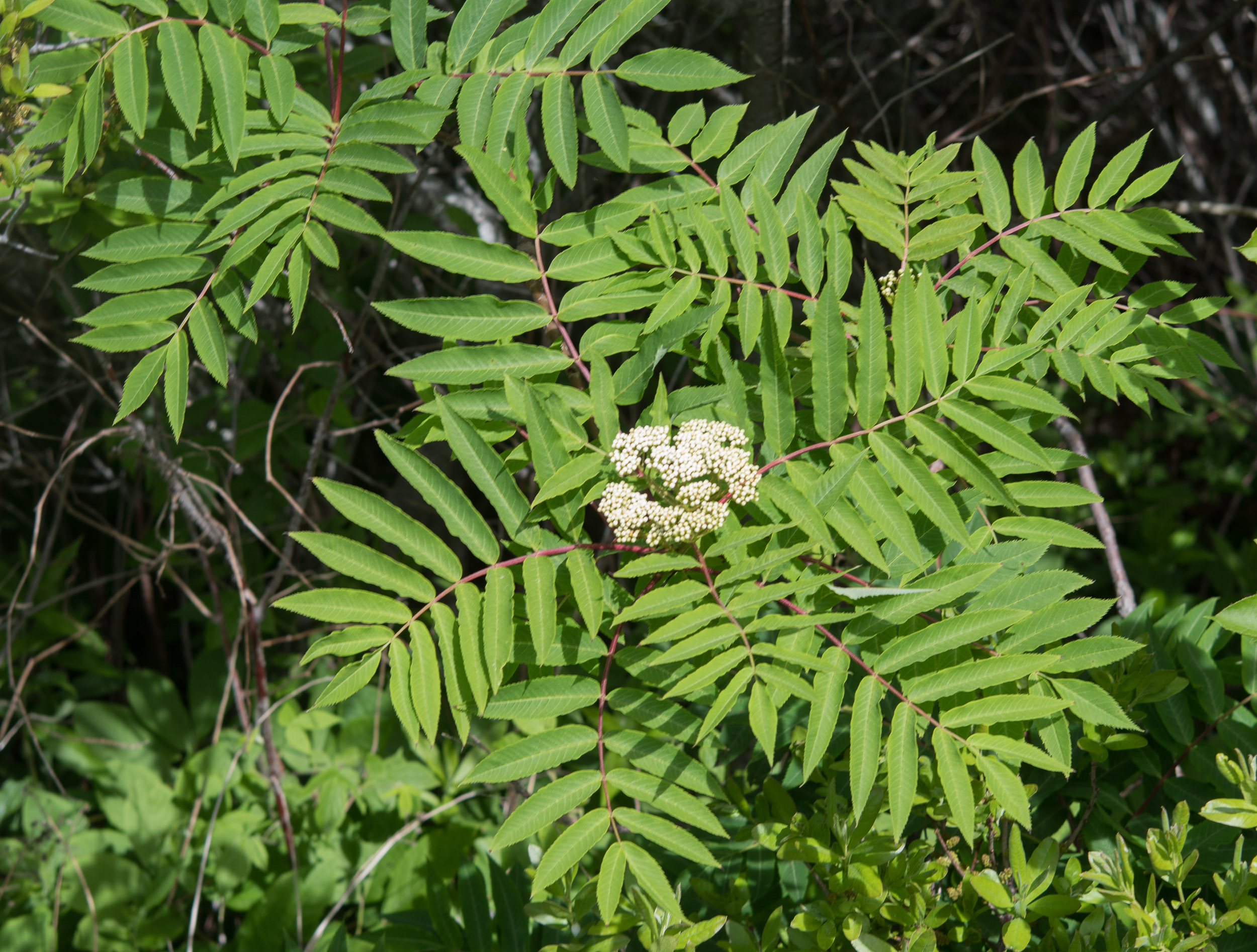
6/10/2016 · Monhegan Island, Maine 

9/27/2025 · Monhegan Island, Maine · ≈ 11 × 8″ (28 × 19 cm) 
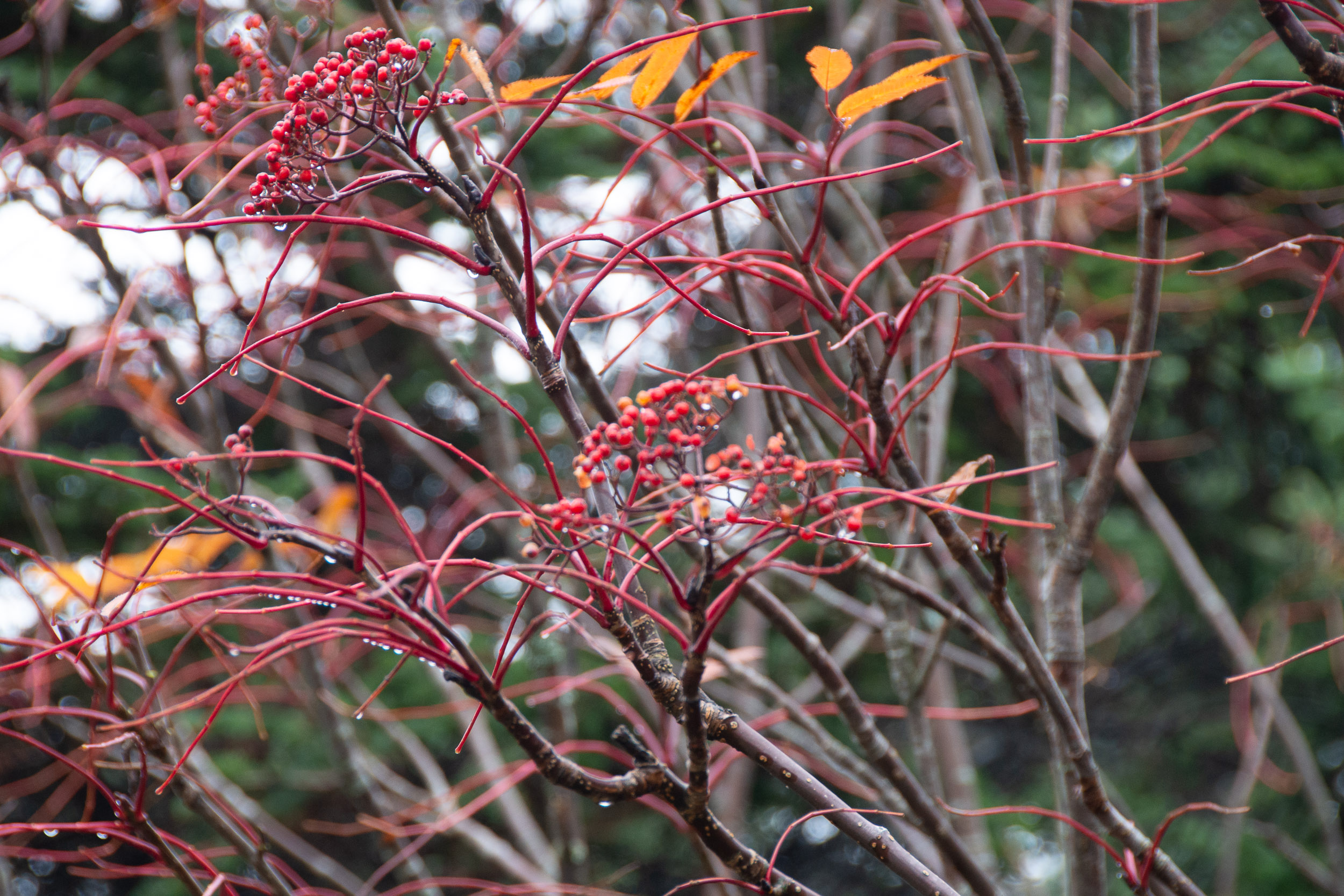
10/5/2014 · Mt. Killington, Killington, Vermont 

8/8/2015 · Mt. Wachusett · ≈ 1½ × 1′ (56 × 39 cm) 

9/28/2013 · Cadillac Mountain, Acadia National Park, Bar Harbor, Maine · ≈ 7 × 4½″ (16 × 11 cm) 
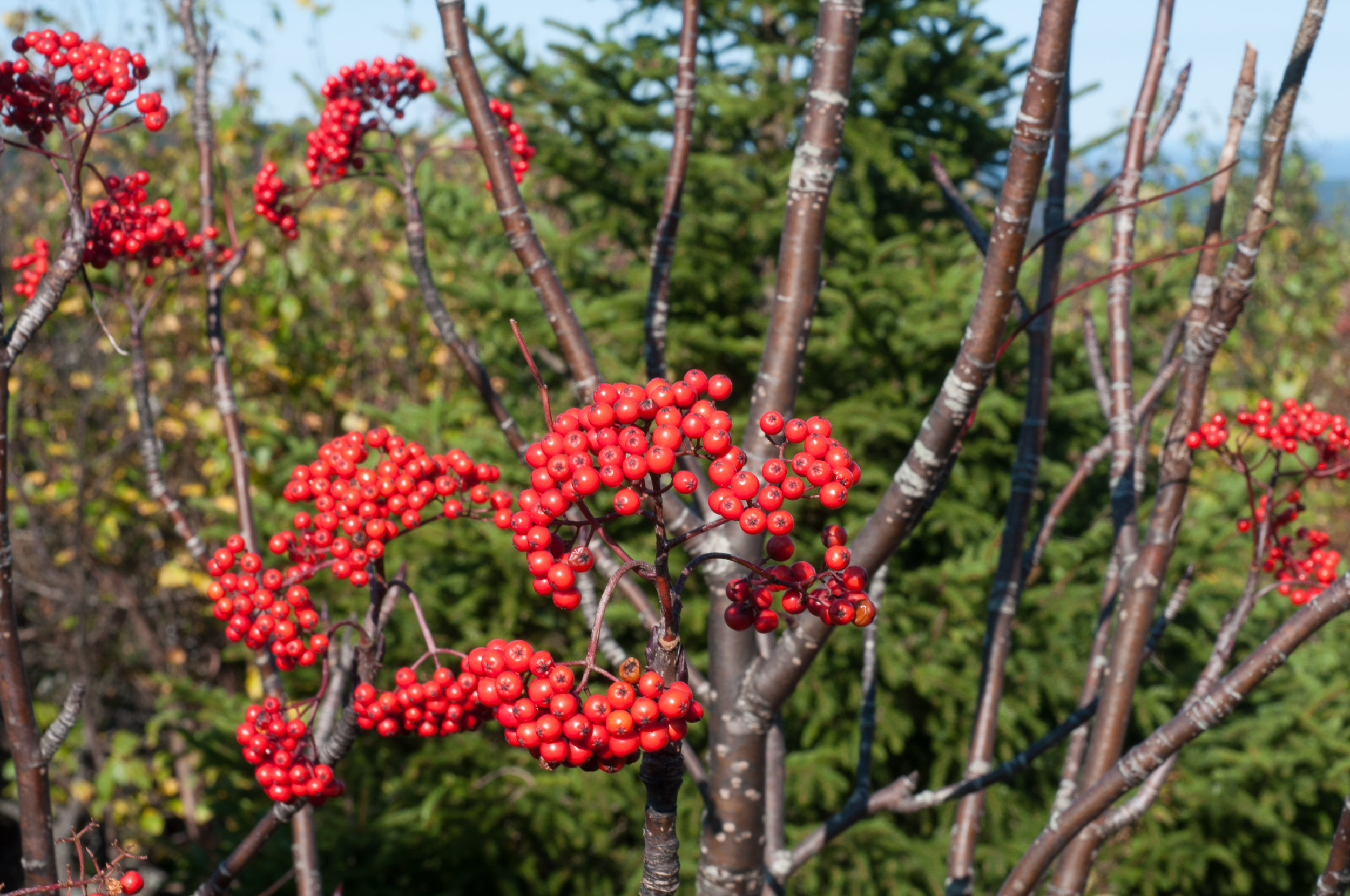
10/6/2011 · Pack Monadnock, 2200', Peterborough, New Hampshire · ≈ 15 × 10″ (39 × 26 cm) 
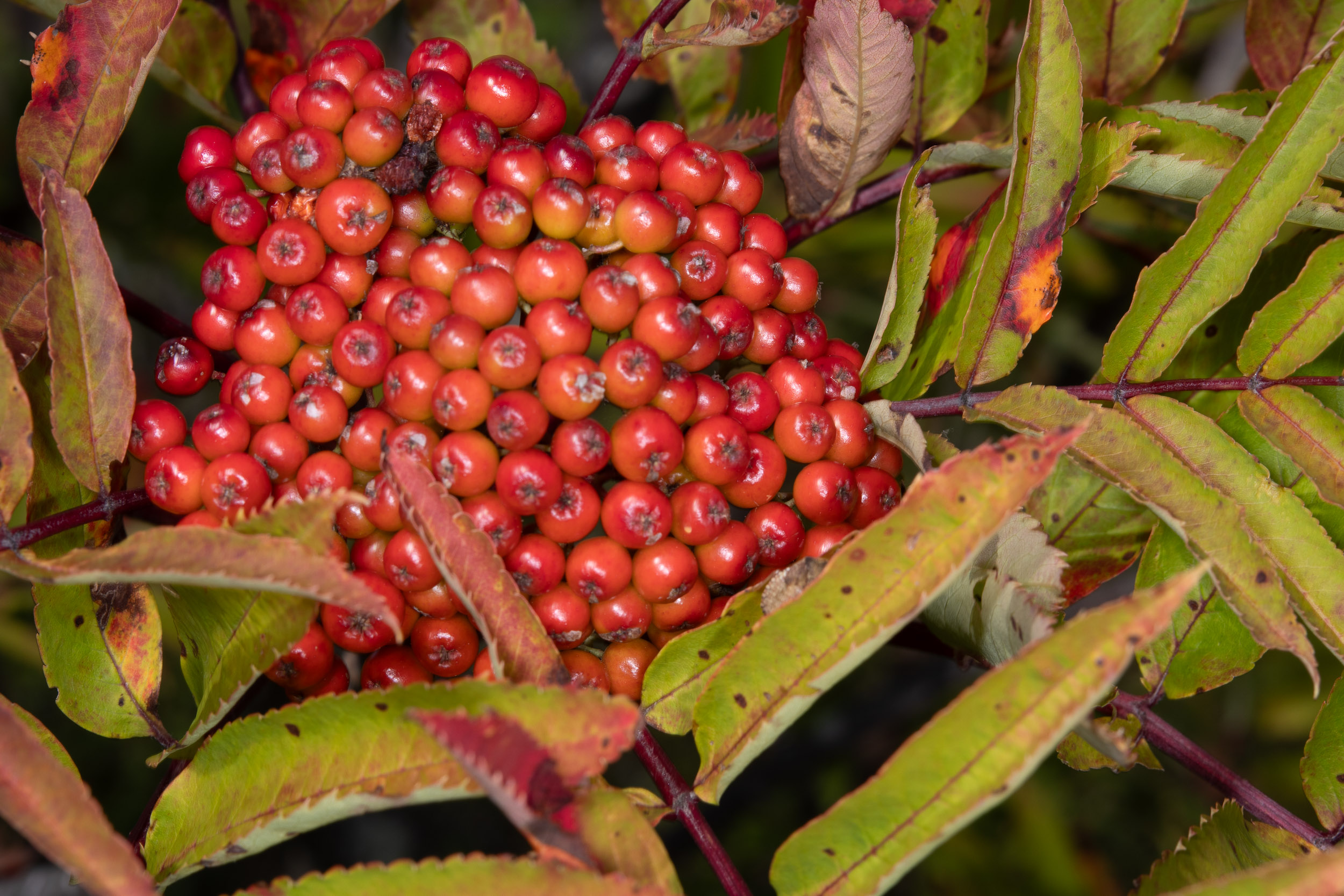
8/25/2017 · Pack Monadnock, near summit, Peterborough, New Hampshire · ≈ 6 × 4″ (16 × 11 cm) 

10/5/2023 · Quill Hill, Rangeley, Maine 

9/5/2000 · Cadillac Mountain, Bar Harbor, Maine 

9/27/2025 · Monhegan Island, Maine 

9/7/2013 · Beech Hill, Dublin, New Hampshire · ≈ 9 × 6″ (23 × 16 cm) 
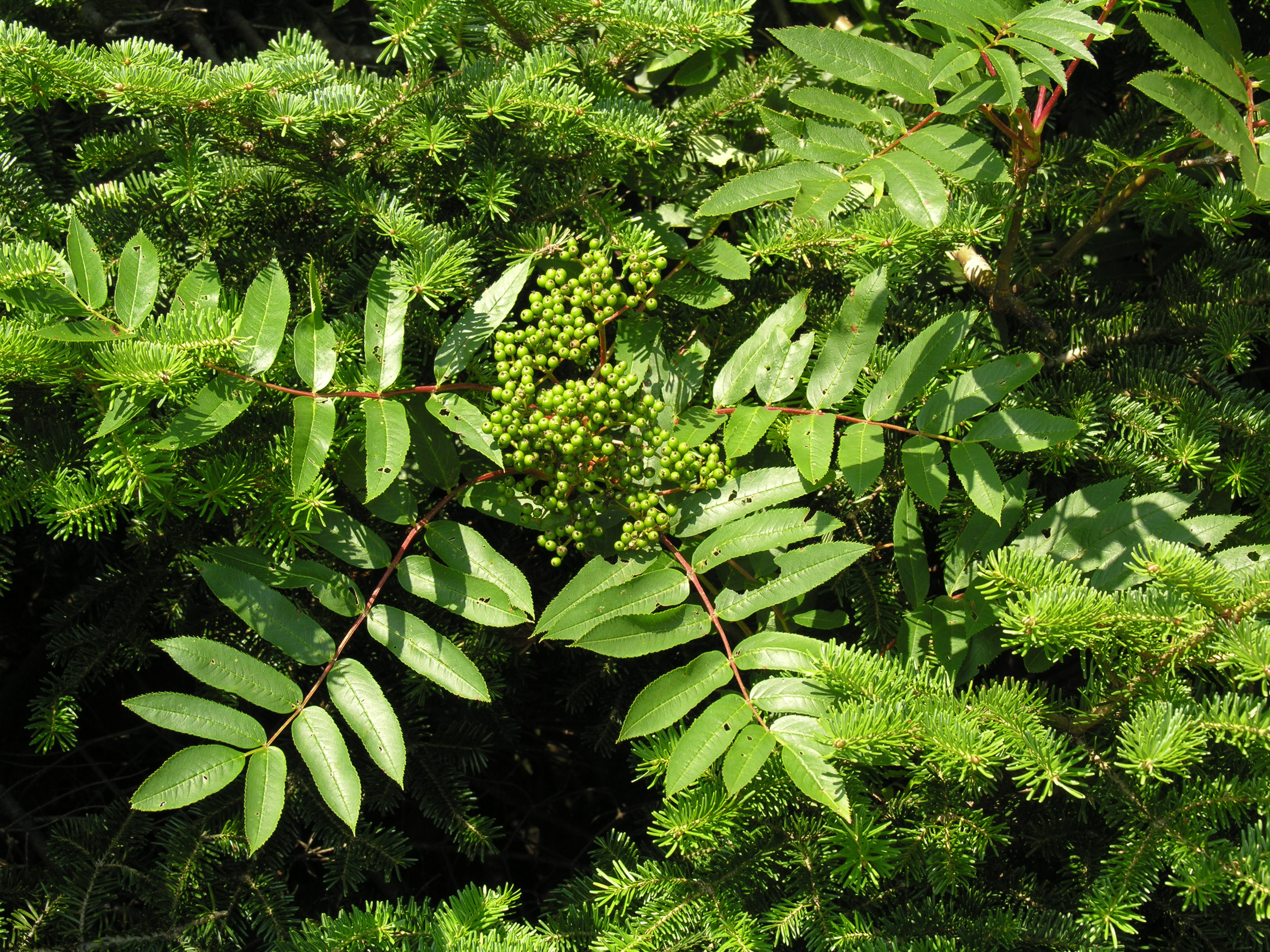
8/4/2006 · Mt. Mansfield, Stowe, Vermont  ID is uncertain

9/7/2013 · Beech Hill, Dublin, New Hampshire · ≈ 9 × 6″ (23 × 16 cm) 

9/29/2012 · Franconia Falls Trail, Franconia Notch, New Hampshire · ≈ 5 × 3½″ (13 × 9.2 cm) 

9/29/2012 · Franconia Falls Trail, Franconia Notch, New Hampshire · ≈ 8 × 5″ (19 × 13 cm) 

9/28/2013 · Cadillac Mountain, Acadia National Park, Bar Harbor, Maine · ≈ 4½ × 7″ (11 × 16 cm) 

10/5/2023 · Quill Hill, Rangeley, Maine 
| Kingdom | Plantae | Plants, but not fungi, lichens, or algae (from Stearn's Botanical Latin) |
| Subkingdom | Tracheobionta | Vascular plants—plants with a “circulatory system” for delivering water and nutrients |
| Division | Magnoliophyta | Flowering plants, also known as angiosperms |
| Class | Magnoliopsida | Dicotyledons—plants with two initial seed leaves |
| Subclass | Rosidae | Roses, legumes, proteas, dogwoods, hydrangeas, mistletoes, euphorbias, grapes, many more |
| Order | Rosales | Rose family and eight others |
| Family | Rosaceae | Includes apples, apricots, plums, cherries, peaches, pears, raspberries, strawberries, almonds, roses, meadowsweets, photinias, firethorns, rowans, and hawthorns; many others |
| Genus | Sorbus | Ancient Latin name for this genus |
| Species | americana | “Of of from America” |
Sorbus americana description by Thomas H. Kent, not updated.

© FloraFinder.org. All rights reserved.
