Stanleya pinnata (Pursh) Britton
Prince’s plume, desert princesplume
Prince’s plume is a hardy, drought-tolerant North American native plant. They like soils rich in selenium, which they accumulate to some degree. This imparts an unpleasant odor to crushed leaves or stems of plants growing in such soils.
Plants: Up to 5′ (1.5 m) in height.
Leaves: Mostly basal, grayish- or bluish-green in color, often with a white, waxy coating. They are pinnate, and lanceolate. Basal leaves are 2–6″ (5–15 cm) long; upper leaves are smaller and may not be divided.
Flowers: Yellow, on long racemes that bloom from the bottom up, over many weeks or months. The stalks remain for a long period after blooming. Flowers are ¼–¾″ (8.4–19 mm) in size, appearing from July to September.
Fruits: Seedpods are 1–3″ (2.5–7.6 cm) long.
Habitats: Dry, sandy sagebrush; creosote bush scrub; from 1000-7500’; prefers selenium-rich soils.
Online References:
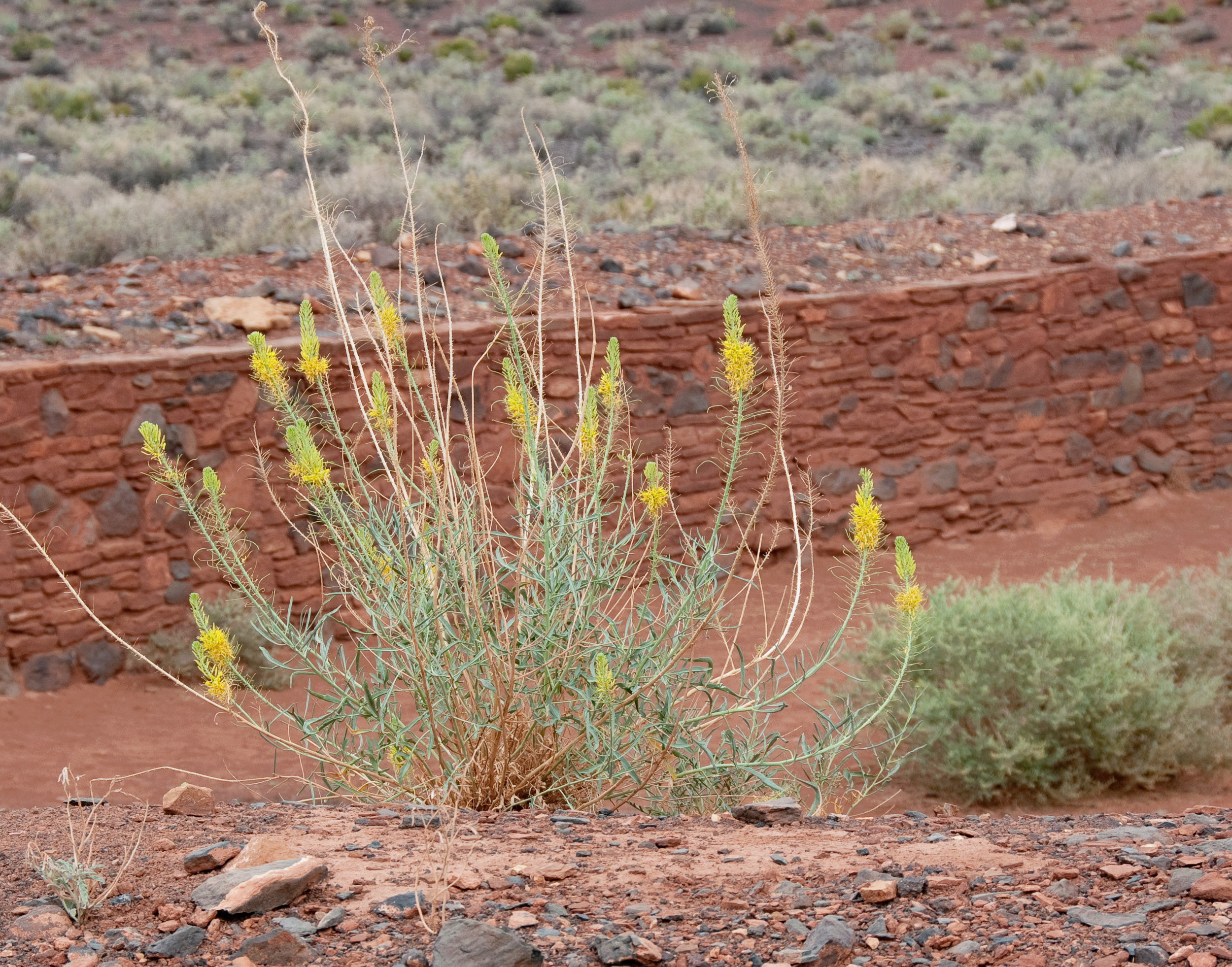
5/22/2009 · Wupatki National Monument, Arizona 
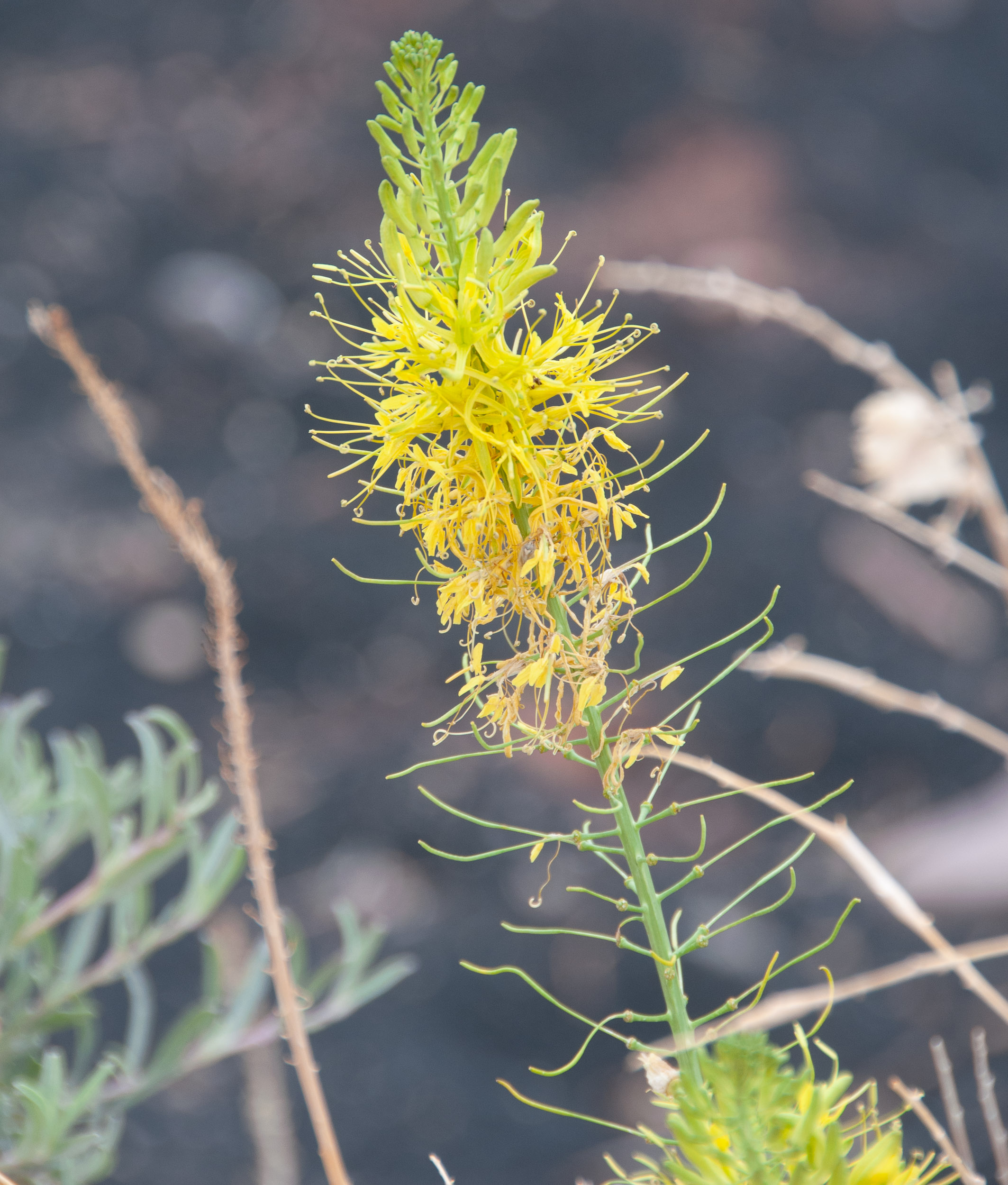
5/22/2009 · Wupatki National Monument, Arizona · ≈ 3½ × 4″ (8.8 × 10 cm) 
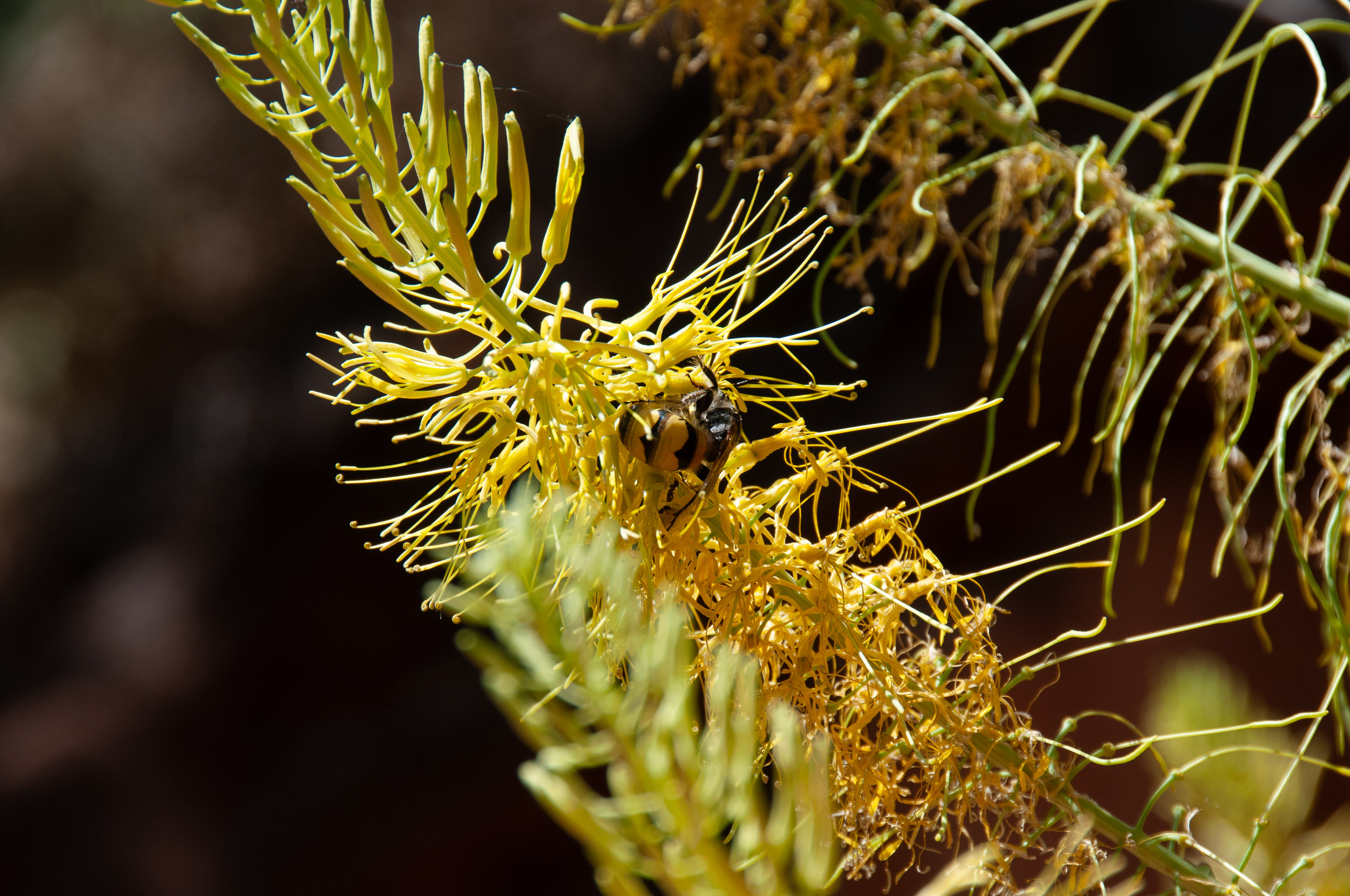
6/2/2009 · Zion National Park, Utah · ≈ 4 × 2½″ (10 × 7 cm) 
| Kingdom | Plantae | Plants, but not fungi, lichens, or algae (from Stearn's Botanical Latin) |
| Subkingdom | Tracheobionta | Vascular plants—plants with a “circulatory system” for delivering water and nutrients |
| Division | Magnoliophyta | Flowering plants, also known as angiosperms |
| Class | Magnoliopsida | Dicotyledons—plants with two initial seed leaves |
| Subclass | Rosidae | Roses, legumes, proteas, dogwoods, hydrangeas, mistletoes, euphorbias, grapes, many more |
| Order | Brassicales | Mustard, cabbage, caper, papaya, nasturtiums, many others; most produce mustard oil |
| Family | Brassicaceae | Mustards, cabbages |
| Genus | Stanleya | For British naturalist Lord Stanley, 13th Earl of Derby |
| Species | pinnata | Pinnate—feathered |

Stanleya pinnata description by Thomas H. Kent, not updated.

© FloraFinder.org. All rights reserved.