Thalictrum revolutum DC.
Waxy-leaf meadow-rue, purple meadowrue, skunk meadowrue, waxy meadowrue
Waxy-leaved meadow-rue is native to eastern North American.
Plants: 3–7′ (91–213 cm) tall. A stout central stem is green or reddish purple, and smooth or with fine hairs. Plants smell pungent (one common name is skunk meadowrue), especially after a rain.
Leaves: Alternate, and ternately compound: each “leaf” is split into three smaller leaves, and each of those is further divided into three leaflets. Leaflets are 1–2 ⨉ ½–1″ (2.5–5 ⨉ 1.3–2.5 cm), usually leathery, with rounded bases and 1-3 rounded lobes, usually a larger lobe and two smaller side lobes. Leaf tips are more pointed in unlobed leaflets. Leaf undersides and stems are coated with fine glandular hairs that makes them look waxy and very light-colored, almost white. Leaves smell bad when crushed.
Flowers: White, in multiple racemes or panicles up to 2 ⨉ 1′ (60 ⨉ 30 cm). Each plant typically produces either male or female flowers. Male flowers, each about ¼″ (8.5 mm) long, have 4-5 sepals that spread outwards, and white stamens with yellow or brown anthers in the center. Female flowers have burlike green stamens, a bit like a 3D asterisk, and multiple small white pistils. Flowers appear from late spring to early summer, for about three weeks.
Fruits: Female pistils become small ribbed achenes that are pointed at both ends.
Habitats: Moist to mesic, rocky forests, woodlands, ridges, disturbed soils, and fields.
 |
Similar species. |
Online References:
Thalictrum revolutum DC. var. glandulosior B. Boivin
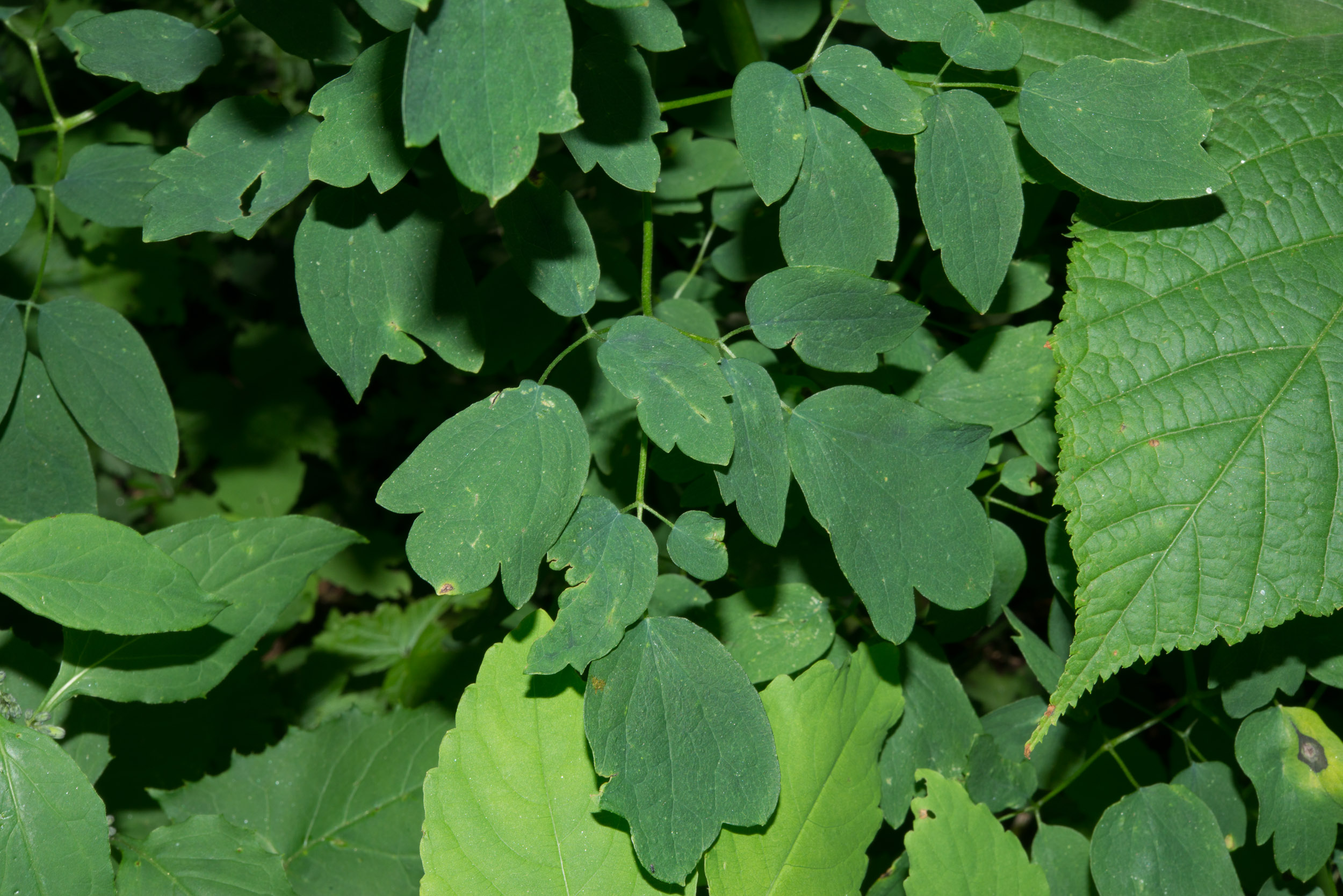
7/12/2015 · Smuggler’s Notch, Cambridge, Vermont · ≈ 10 × 7″ (25 × 16 cm) 
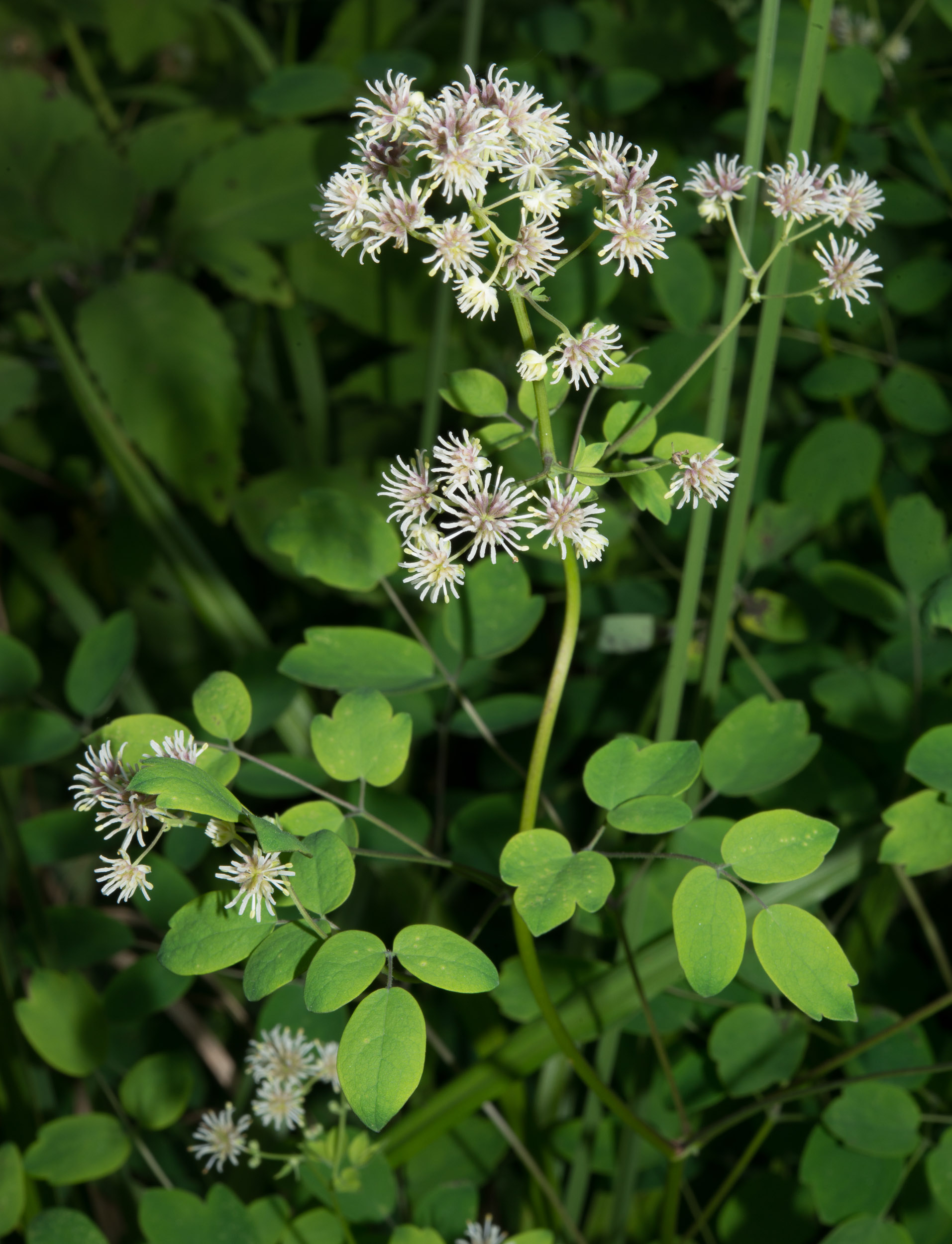
Staminate (male) flowers. · 7/12/2015 · Smuggler’s Notch, Cambridge, Vermont · ≈ 6 × 8″ (15 × 19 cm) 

7/12/2015 · Smuggler’s Notch, Cambridge, Vermont · ≈ 7 × 6″ (18 × 15 cm) 
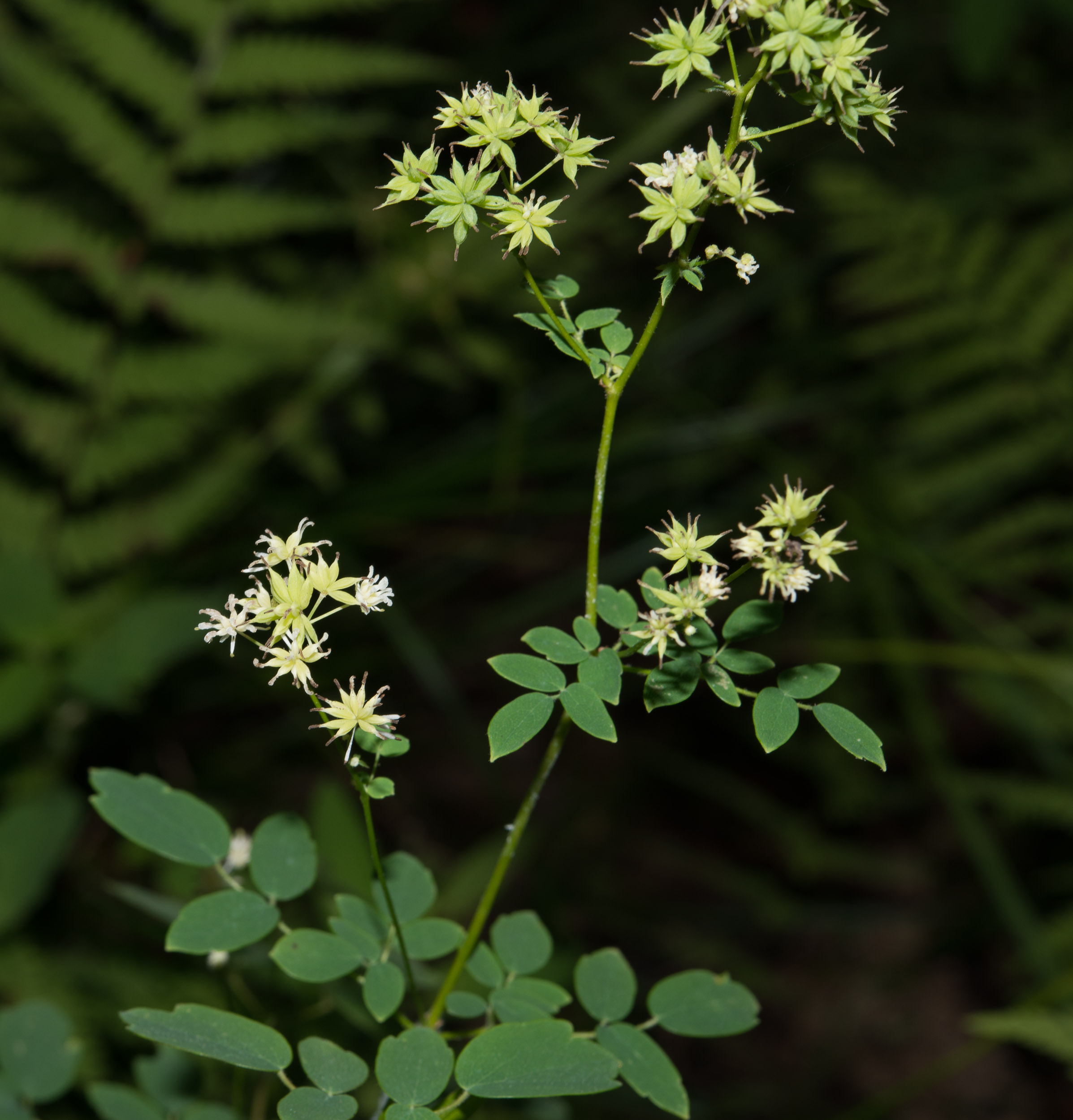
Achenes and pistillate (female) flowers. · 7/25/2013 · Beaver Brook Conservation Area, Hollis, New Hampshire · ≈ 6 × 6″ (14 × 15 cm)  ID is uncertain

Staminate (male) flowers. · 7/12/2015 · Smuggler’s Notch, Cambridge, Vermont · ≈ 9 × 6″ (22 × 15 cm) 
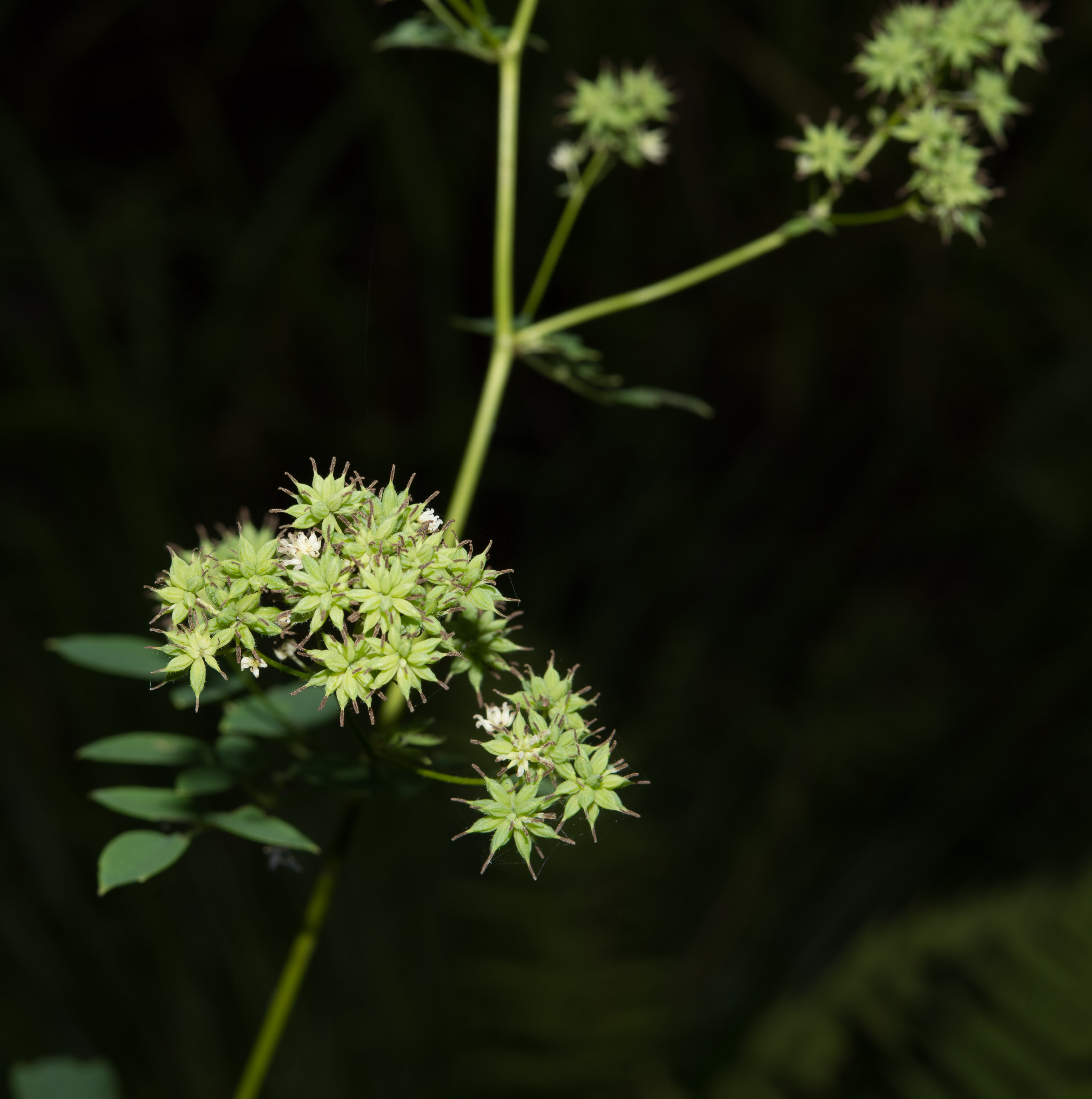
Achenes and pistillate (female) flowers. · 7/25/2013 · Beaver Brook Conservation Area, Hollis, New Hampshire · ≈ 5 × 6″ (13 × 14 cm) ID is uncertain 

7/25/2013 · Beaver Brook Conservation Area, Hollis, New Hampshire · ≈ 6 × 6″ (16 × 15 cm) ID is uncertain 

Staminate (male) flowers. · 7/12/2015 · Smuggler’s Notch, Cambridge, Vermont · ≈ 5 × 6″ (12 × 15 cm) 
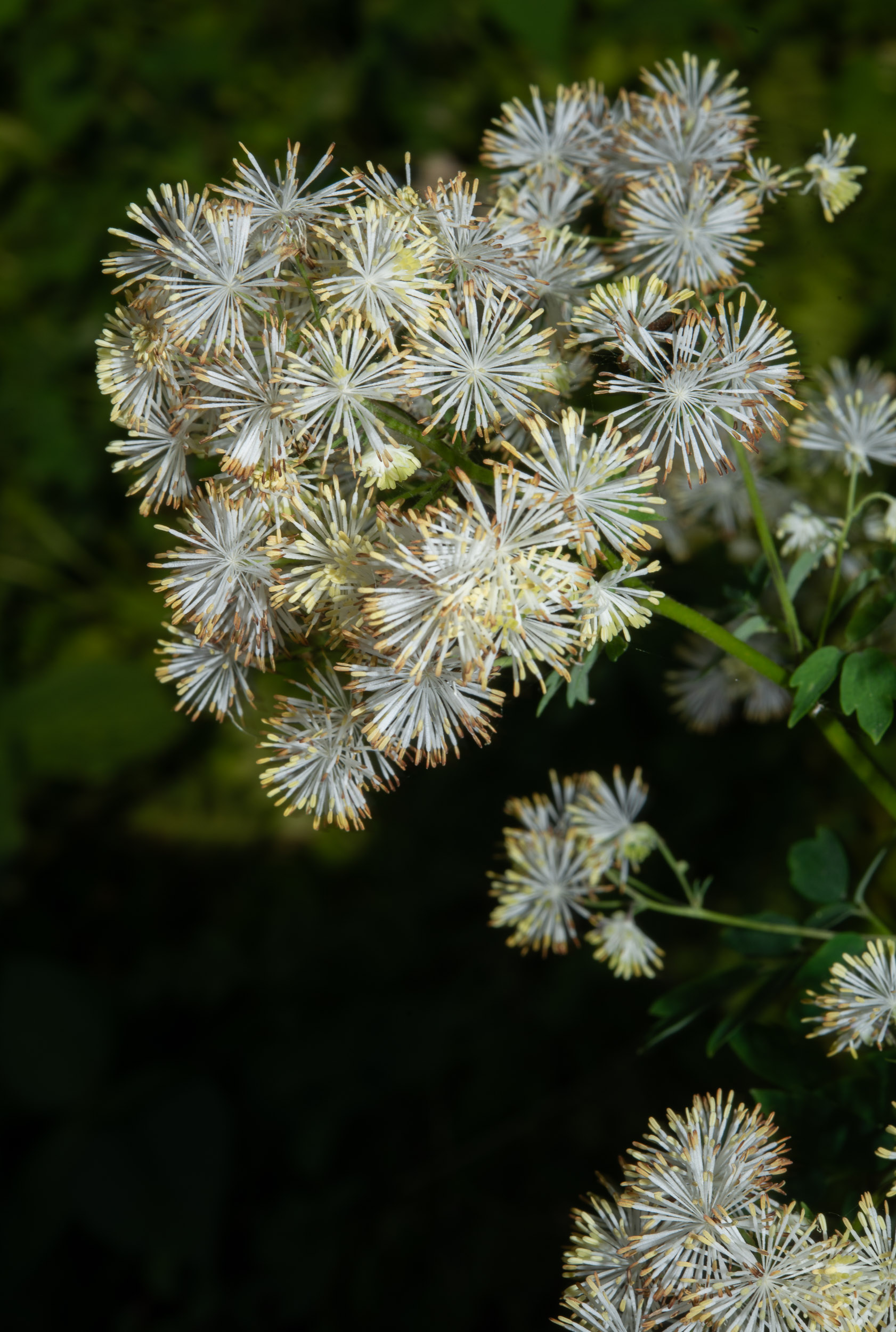
Staminate (male) flowers. · 7/12/2015 · Smuggler’s Notch, Cambridge, Vermont · ≈ 4½ × 7″ (11 × 16 cm) 

6/25/2015 · Far and Near · ≈ 10 × 7″ (25 × 16 cm) 

Achenes and pistillate (female) flowers. · 7/25/2013 · Beaver Brook Conservation Area, Hollis, New Hampshire · ≈ 5 × 4″ (13 × 10 cm) ID is uncertain 
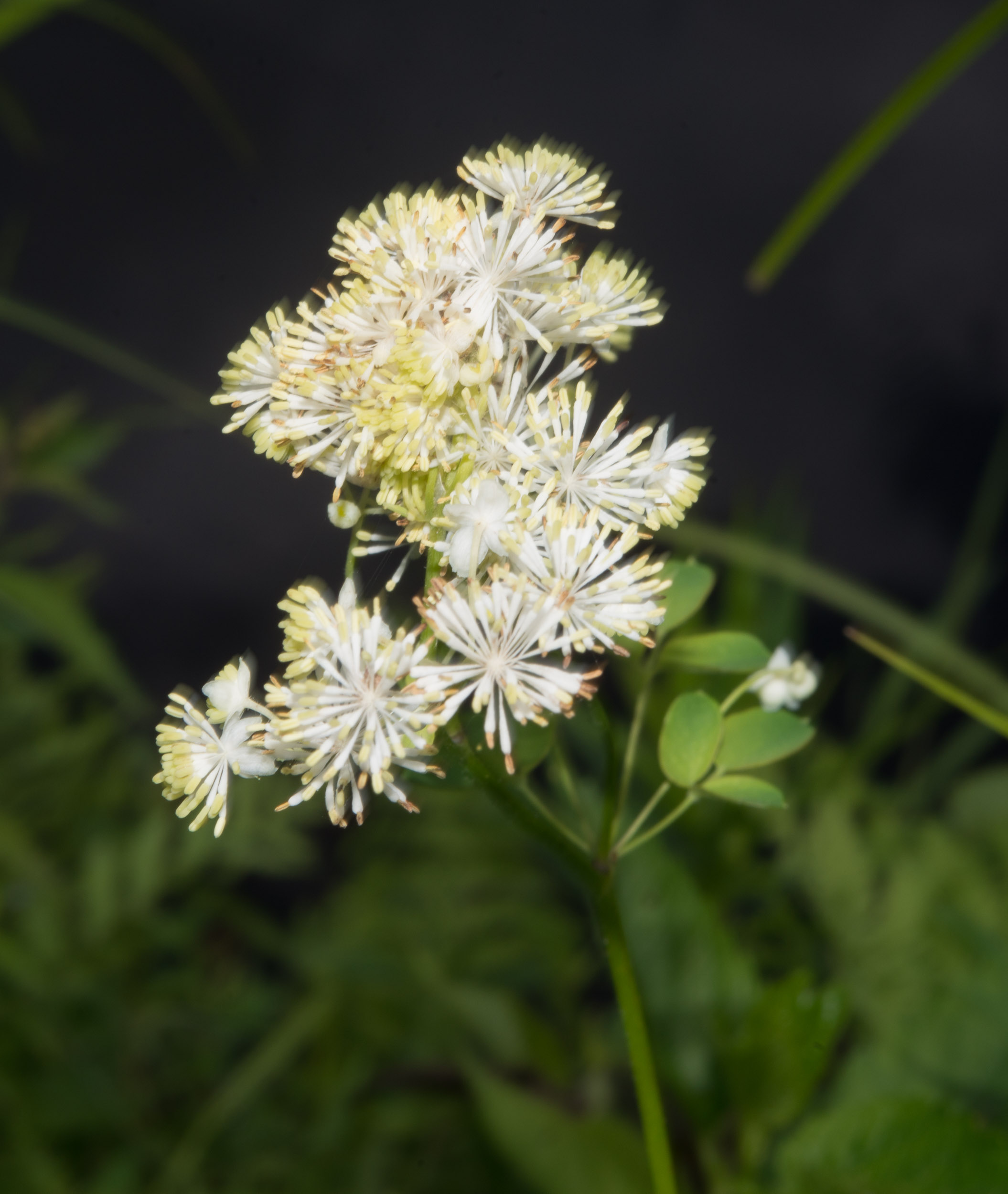
Staminate (male) flowers. · 6/25/2015 · Far and Near · ≈ 3½ × 4″ (9.3 × 11 cm) 
| Kingdom | Plantae | Plants, but not fungi, lichens, or algae (from Stearn's Botanical Latin) |
| Subkingdom | Tracheobionta | Vascular plants—plants with a “circulatory system” for delivering water and nutrients |
| Division | Magnoliophyta | Flowering plants, also known as angiosperms |
| Class | Magnoliopsida | Dicotyledons—plants with two initial seed leaves |
| Subclass | Magnoliidae | Includes magnolias, nutmeg, bay laurel, cinnamon, avocado, black pepper, and many others |
| Order | Ranunculales | Basal (evolved earlier) eudicots, also called “true dicots” |
| Family | Ranunculaceae | Buttercup family |
| Genus | Thalictrum | From Greek qaliktron (thaliktron), a “plant with divided leaves” |
| Species | revolutum | From the Latin, revolvo, “to roll back; unroll; to revolve” |

Thalictrum revolutum description by Thomas H. Kent, not updated.

© FloraFinder.org. All rights reserved.