Thaspium barbinode (Michx.) Nutt.
Hairy-joint meadow-parsnip, meadow parsnip
Similar species
Thaspium barbinode
Thaspium barbinode
Zizia aptera


|
Thaspium barbinode (Michx.) Nutt. Hairy-joint meadow-parsnip, meadow parsnip Similar species | |||
| You are here Thaspium barbinode |
You are here Thaspium barbinode |
Zizia aptera |
|
|---|---|---|---|
| Common Name | |
|
|
| Plant | Up to 3½′ (1 m) tall, and sparsely branched. Stems are hairless, and light green to reddish purple. | Up to 3½′ (1 m) tall, and sparsely branched. Stems are hairless, and light green to reddish purple. | Up to 1–3′ (30–91 cm) in height, with single or multiple stems. |
| Leaves | Basal leaves are 2–10″ (6–25 cm) long, divided once or twice into lanceolate to ovate leaflets ⅜–4½″ (1–12 cm) long. Stem leaves are alternate, and compound—divided two or three times, resembling Italian parsely. Each leaflet is coarsely toothed, 1–2 ⨉ ½–1″ (2.5–5 ⨉ 1.3–2.5 cm). At the base of uppermost leaf sheaths, where the leaf branches, a purple-tinged leaf sheaf with stiff white hairs is sometimes visible. | Basal leaves are 2–10″ (6–25 cm) long, divided once or twice into lanceolate to ovate leaflets ⅜–4½″ (1–12 cm) long. Stem leaves are alternate, and compound—divided two or three times, resembling Italian parsely. Each leaflet is coarsely toothed, 1–2 ⨉ ½–1″ (2.5–5 ⨉ 1.3–2.5 cm). At the base of uppermost leaf sheaths, where the leaf branches, a purple-tinged leaf sheaf with stiff white hairs is sometimes visible. | Basal leaves are heart-shaped, with rounded or blunt tips and long stalks. Upper leaves are compound, split into three leaflets or nearly unlobed. All leaves are serrated. upper leaves in two. Leaves are up to 4″ (10 cm) long and 3″ (7.6 cm) wide, heart-shaped, with finely toothed edges. |
| Flowers | Umbels of bright yellow flowers, with flattish tops, are 2–3″ (5–7.6 cm) across. The inflorescences extend stalks that support 8-20 groups of umbellets, each with up to 20 flowers. Each diminutive flower, about ⅛″ (3.2 mm) in size, is on its own tiny pedicel. It has 5 infolded yellow petals and five yellow stamens. The folded flowers look like buds. Flowers appear in late spring or early summer. | Umbels of bright yellow flowers, with flattish tops, are 2–3″ (5–7.6 cm) across. The inflorescences extend stalks that support 8-20 groups of umbellets, each with up to 20 flowers. Each diminutive flower, about ⅛″ (3.2 mm) in size, is on its own tiny pedicel. It has 5 infolded yellow petals and five yellow stamens. The folded flowers look like buds. Flowers appear in late spring or early summer. | Flowerheads have the overall shape of a flat or gently curved umbrella about 1½–3″ (3.8–7.6 cm) across, divided into 7-15 (umbellets). The smaller groups contain approximately 25 tiny yellow flowers, each less than ⅛″ (3.2 mm) across, each with five petals that remain nearly closed, and five yellow stamens. |
| Fruit | Schizocarps are ~3/16″ (5–6 mm) long, two-sectioned, oval-elliptic, slightly flattened, ridged with broad wings along most ridges. Seeds are oblong, up to about ¼ inch long, ripen to dark brown. | Schizocarps are ~3/16″ (5–6 mm) long, two-sectioned, oval-elliptic, slightly flattened, ridged with broad wings along most ridges. Seeds are oblong, up to about ¼ inch long, ripen to dark brown. | Slightly flattened ovals, with two ridged sections that split into seeds. The seeds are ⅛″ (3 mm) long, and brown when mature. |
| Range/ Zones |
|
|
|
| Habitats | Mesic black soil prairies, openings in forests and woodland borders, sandy savannas, limestone and sandstone bluffs, and banks of rivers and lakes. | Mesic black soil prairies, openings in forests and woodland borders, sandy savannas, limestone and sandstone bluffs, and banks of rivers and lakes. | Black soil prairies, hillside prairies, rocky upland woodlands, limestone glades, bluffs, abandoned fields, and roadsides |

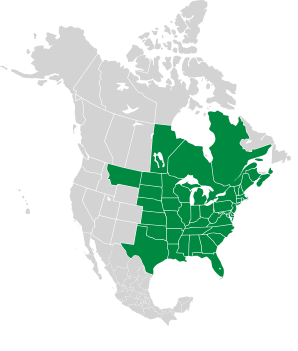
Thaspium barbinode description by Thomas H. Kent, not updated.
© FloraFinder.org. All rights reserved.