Trentepohlia aurea
Orange rock hair
When I first encountered this on a rock face in Massachusetts, I was utterly perplexed. From a distance, I thought “lichen,” like elegant sunburst lichen or other bright orange lichens. (Sometimes it is classified as a lichen.) But up close, it was fuzzy, more like moss. Velvety. But not moss either—mosses are photosynthetic, hence green. A slime mold? Nope, doesn’t fit that modus operandi either. Not wet, not shiny. Soft.
Finally I identified it as algae. Algae? On land? Yup. Orange because it contains carotenoids, the same substances that color carrots.
Plants: Technically this is a filamentous terrestrial green alga. Yeah, not green, due to the carotenoids, but a member of the green algae family. It may be orange or yellow, and dulls if it dries out. The “hairs” are thalli, each up to 1/16″ (2 mm) tall, and branched or unbranched. Because it somestimes participates in the multi-species collaborative agreements known as lichens, it can also be part of a lichen. It colonizes rock faces, including natural rock and concrete, and sometimes colonizes humid, shaded barks, such as oaks and cherries.
Habitats: Prefers humid, shaded, alkaline habitats. It is most common in Europe and North and South America.
Online References:
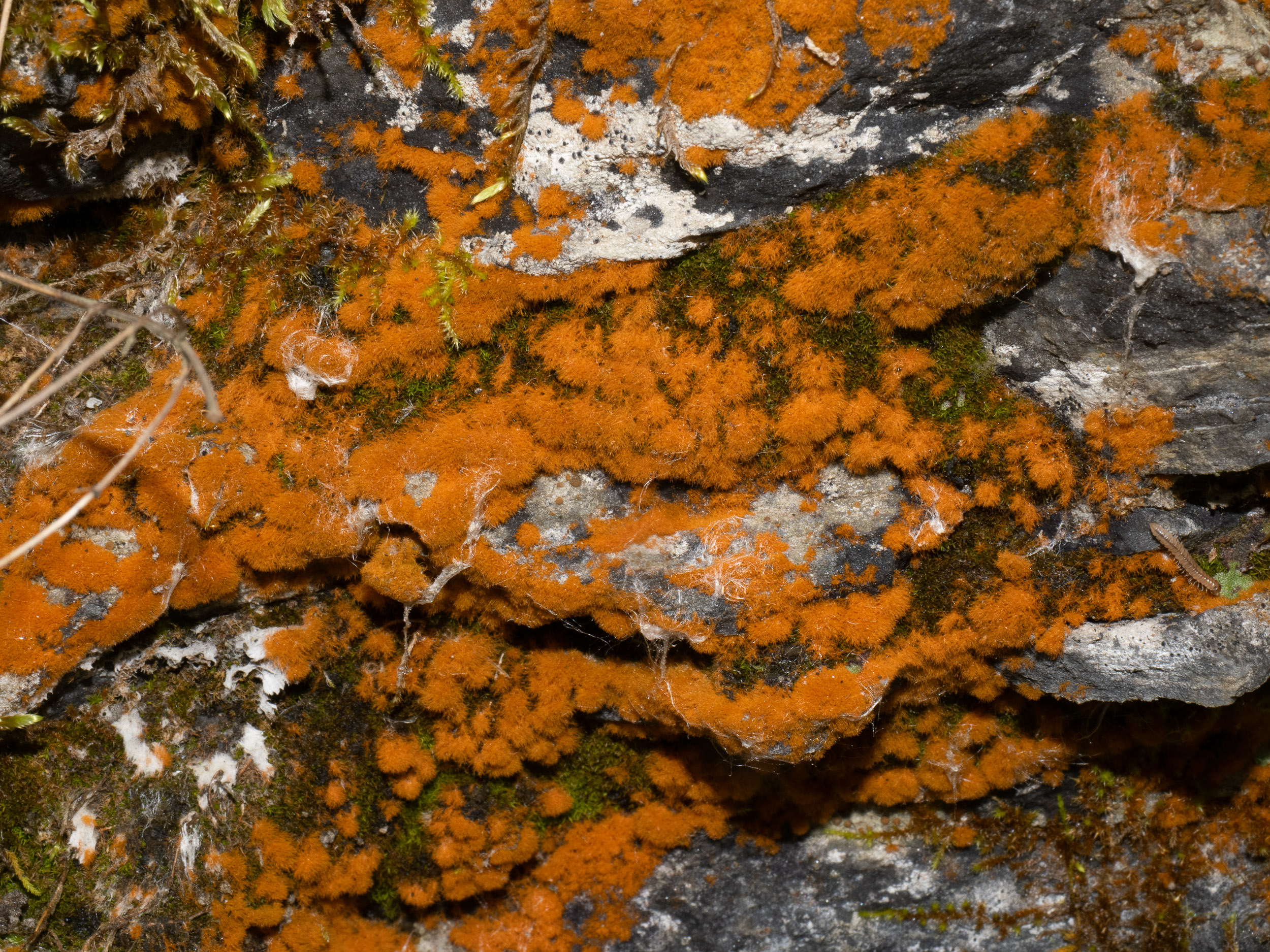
7/13/2024 · Amici's Restaurant, West Stockbridge, Massachusetts 
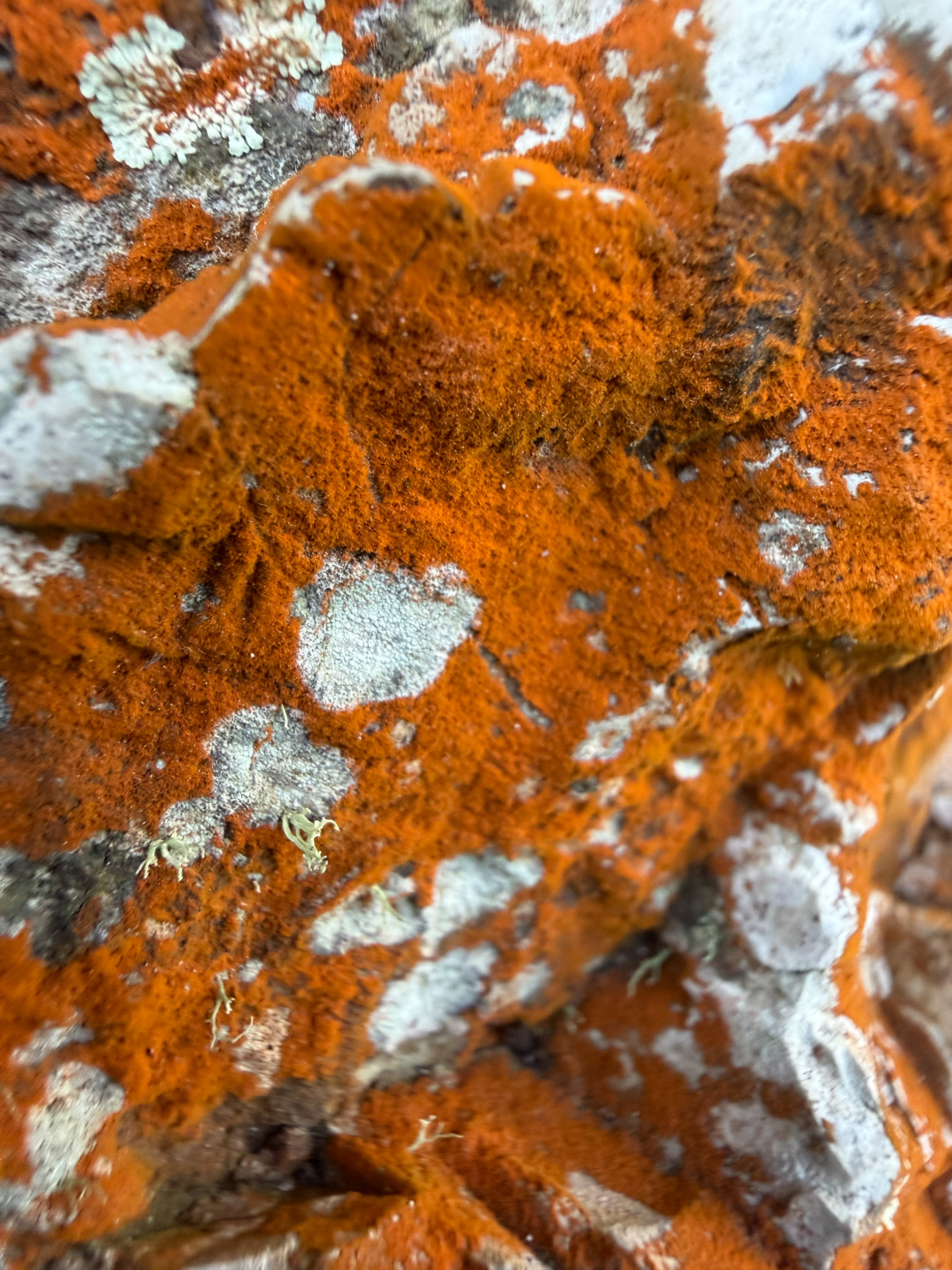
2/23/2026 · Curaçao · By Heather A. Kent 

7/13/2024 · Amici's Restaurant, West Stockbridge, Massachusetts 
| Kingdom | Plantae | Plants, but not fungi, lichens, or algae (from Stearn's Botanical Latin) |
| Division | Chlorophyta | About 7000 species of green algae |
| Class | Chlorophyceae | Most green algae. From chloros, “green;” and phyceae, “algal organisation” |
| Order | Trentepohliales | Green algae that are subaerial (rather than aquatic), growing on humid soil, rocks, buildings, tree bark, leaves, stems, and fruit |
| Family | Trentepohliaceae | Algae with branching filaments without hairs, and both prostrate and upright growth systems |
| Genus | Trentepohlia | Algae that are orange rather than green due to carotenoid pigments that mask the chlorophyll |
| Species | aurea | Latin for “gold” |
Trentepohlia aurea description by Thomas H. Kent, not updated.

© FloraFinder.org. All rights reserved.