Trifolium campestre Schreb.
Low hop clover, hop trefoil, field clover
Low hop clover is native to Eurasia, but it has become naturalized and widespread in North America.
Plants: 4–12″ (10–30 cm) tall, sometimes erect, sometimes growing along the ground. Stems are green or reddish green, finely hairy, and multiply branched.
Leaves: Trifoliate, on a petiole about ½″ (1.3 cm) long. Each leaflet is ½–¾″ (1.3–1.9 cm) long, with small teeth near the leaf tips. The central leaf is on a longer stalk than with other hop clovers, and often notched at the top
Flowers: A single cylindrical or spherical flowerhead on a short pedicel (stalk) contains 20-40 flowers. Each flower is bright yellow, with 10 stamens. Upper petals of the flowers have grooves.
Fruits: The flowers dry and turn brown, enclosing one-seeded pods ⅛″ (3 mm) long.
Habitats: Temperate grasslands, fields, roadsides, wastelands, cultivated fields.
 |
Similar species. |
Online References:
References:
Trifolium procumbens L., nom. utique rej.

7/17/2019 · Oceanview, Falmouth, Maine · ≈ 7 × 4½″ (18 × 12 cm) 

8/1/2009 · Gordon & Kathy’s, Prospect, Maine · ≈ 6 × 4″ (15 × 10 cm)  ID is uncertain
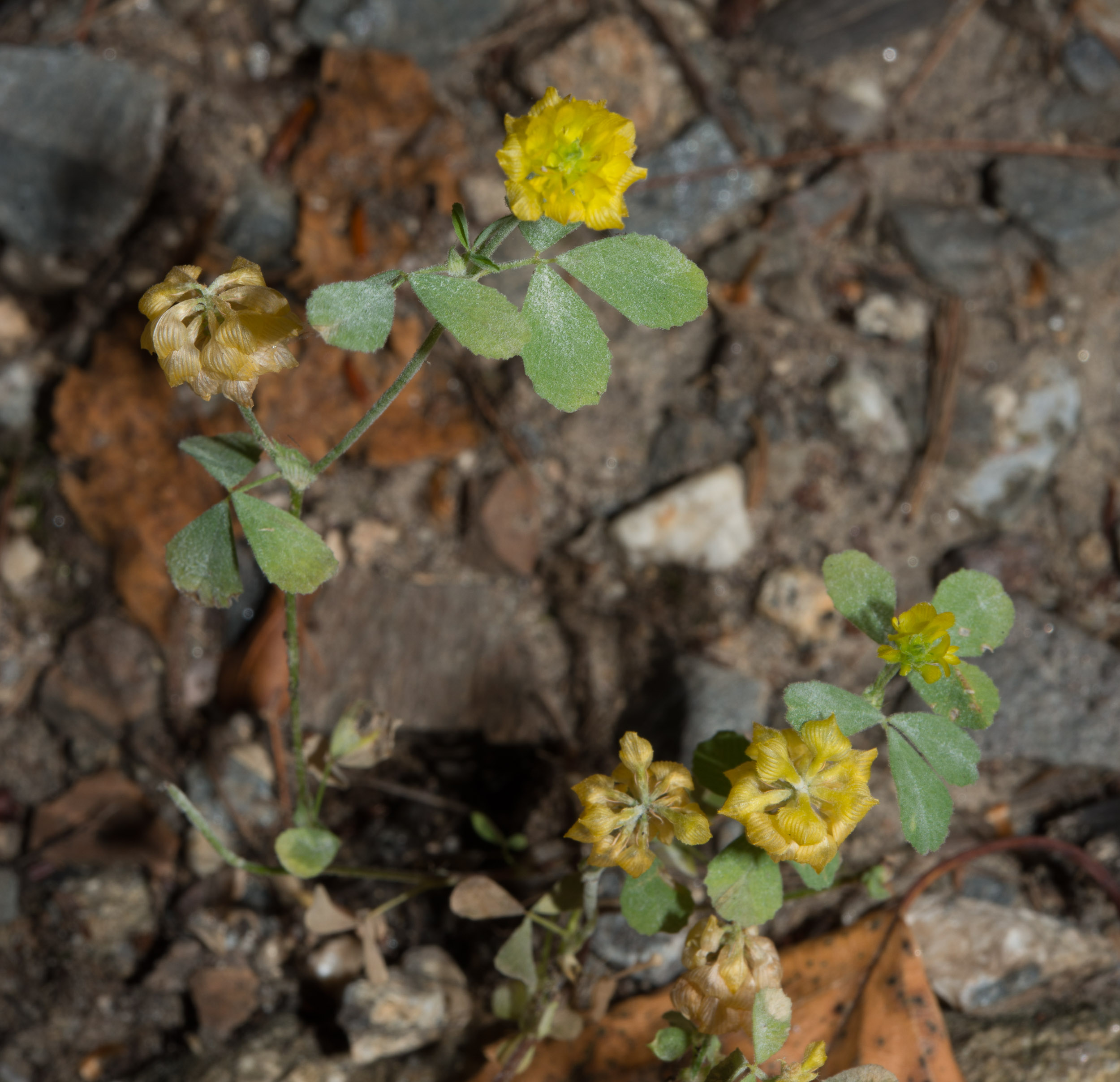
8/23/2013 · Andres Institute of Art, Big Bear Mountain, Brookline, New Hampshire · ≈ 4½ × 4″ (11 × 10 cm) 
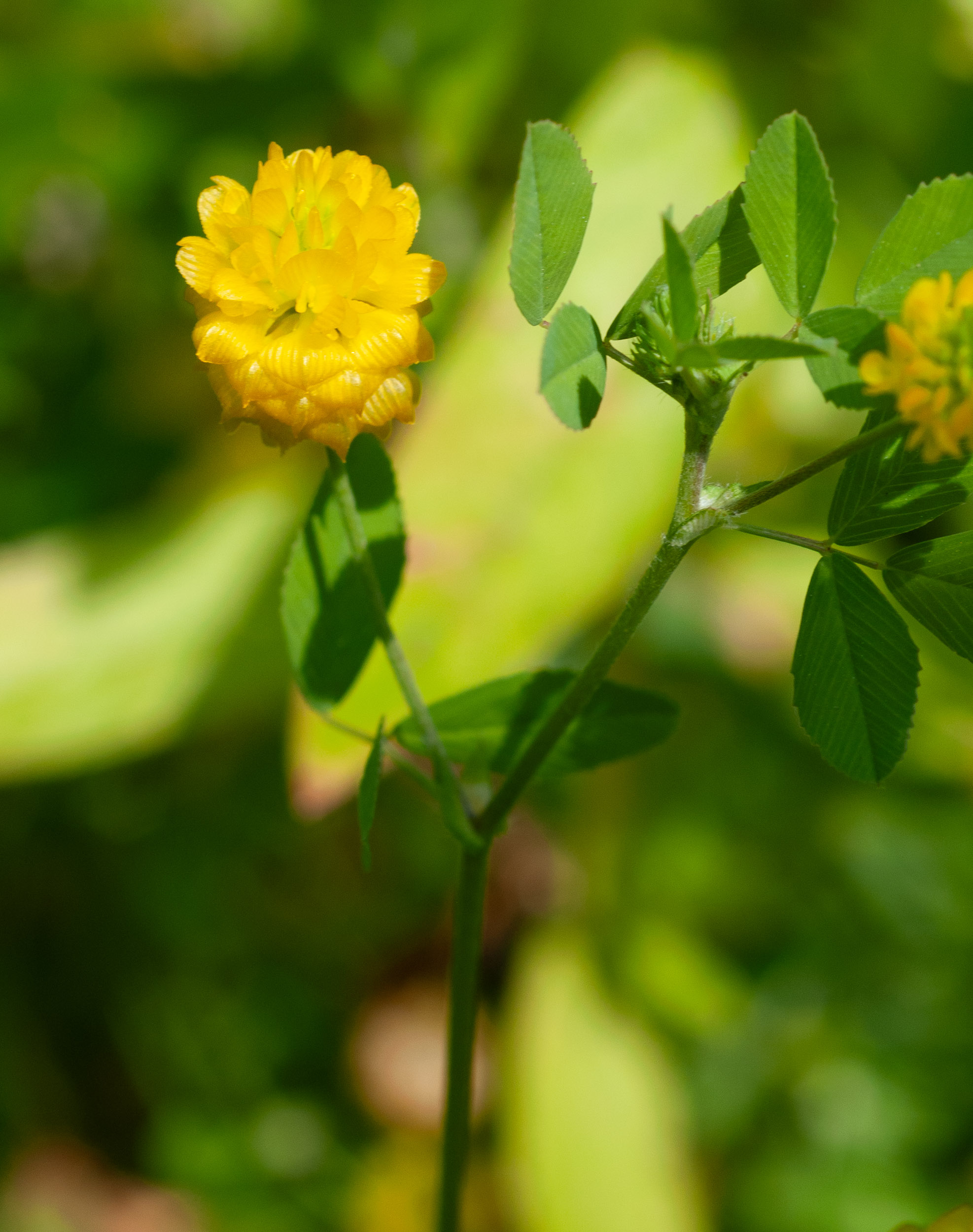
7/15/2012 · Slipway Restaurant, Thomaston, Maine · ≈ 2½ × 3½″ (6.8 × 8.6 cm) 
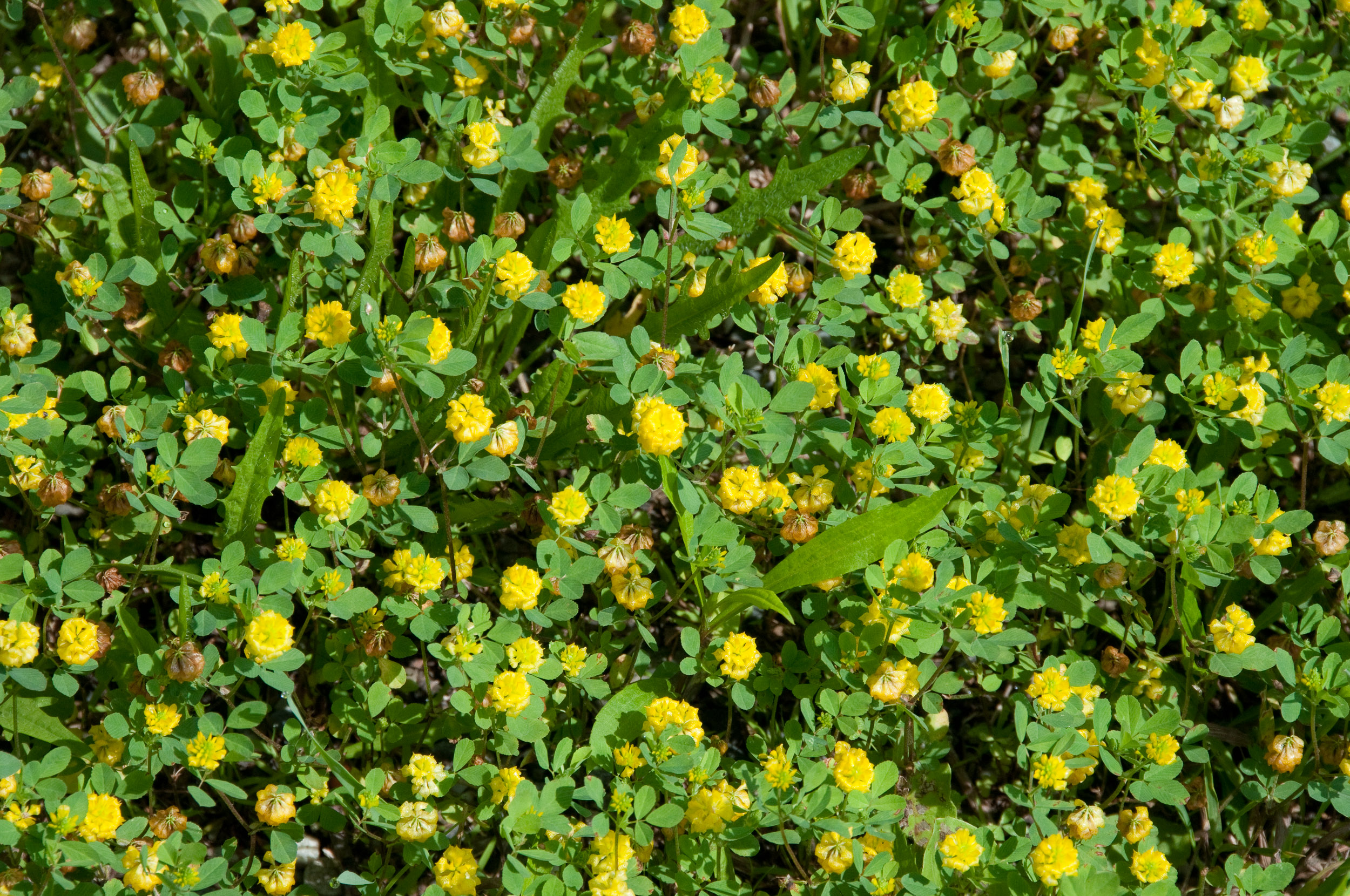
8/2/2009 · Gordon & Kathy’s, Prospect, Maine · ≈ 9 × 6″ (23 × 15 cm) ID is uncertain 
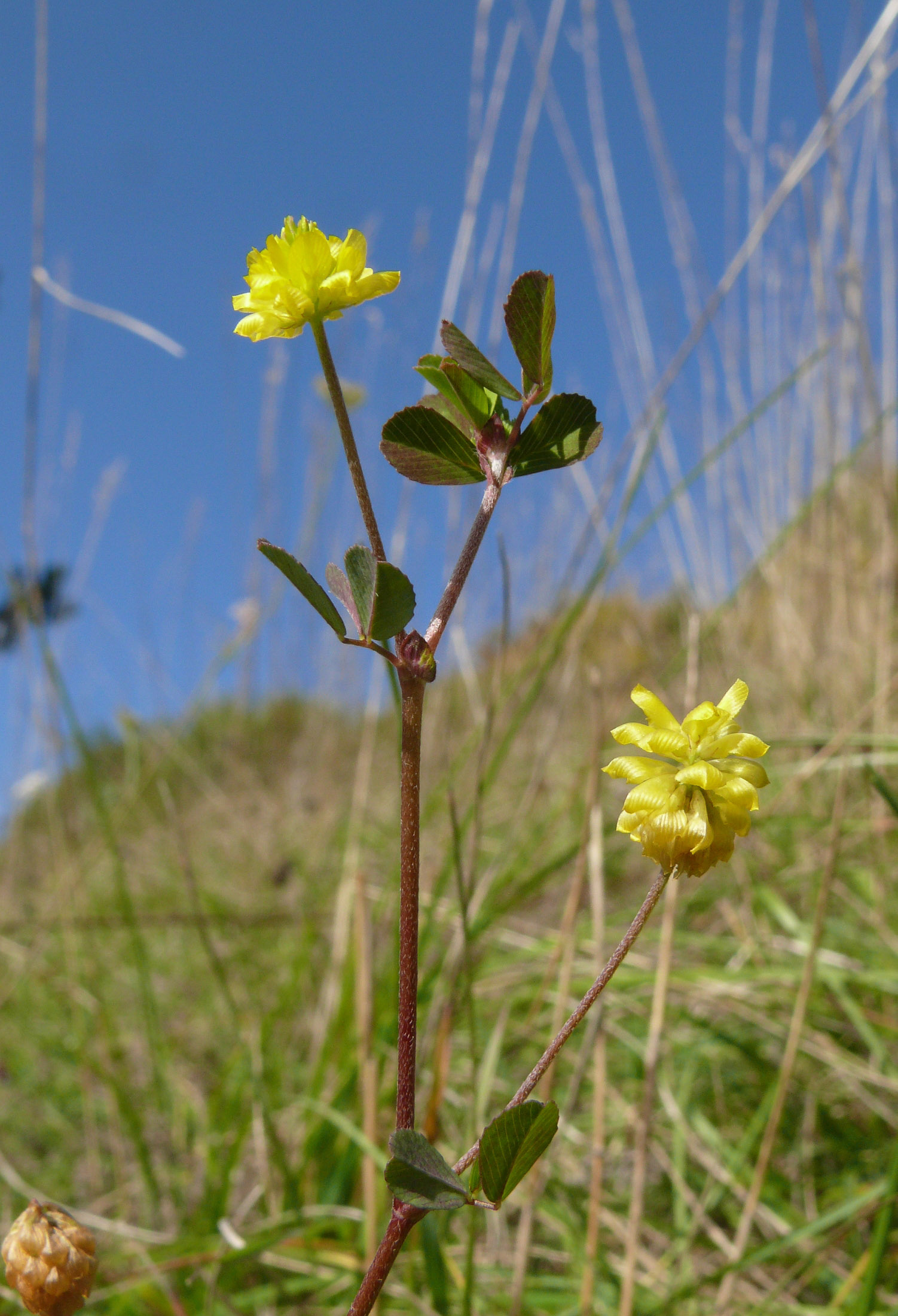
By Bernd Haynold · 9/30/2007 · Härtsfeld, Germany 
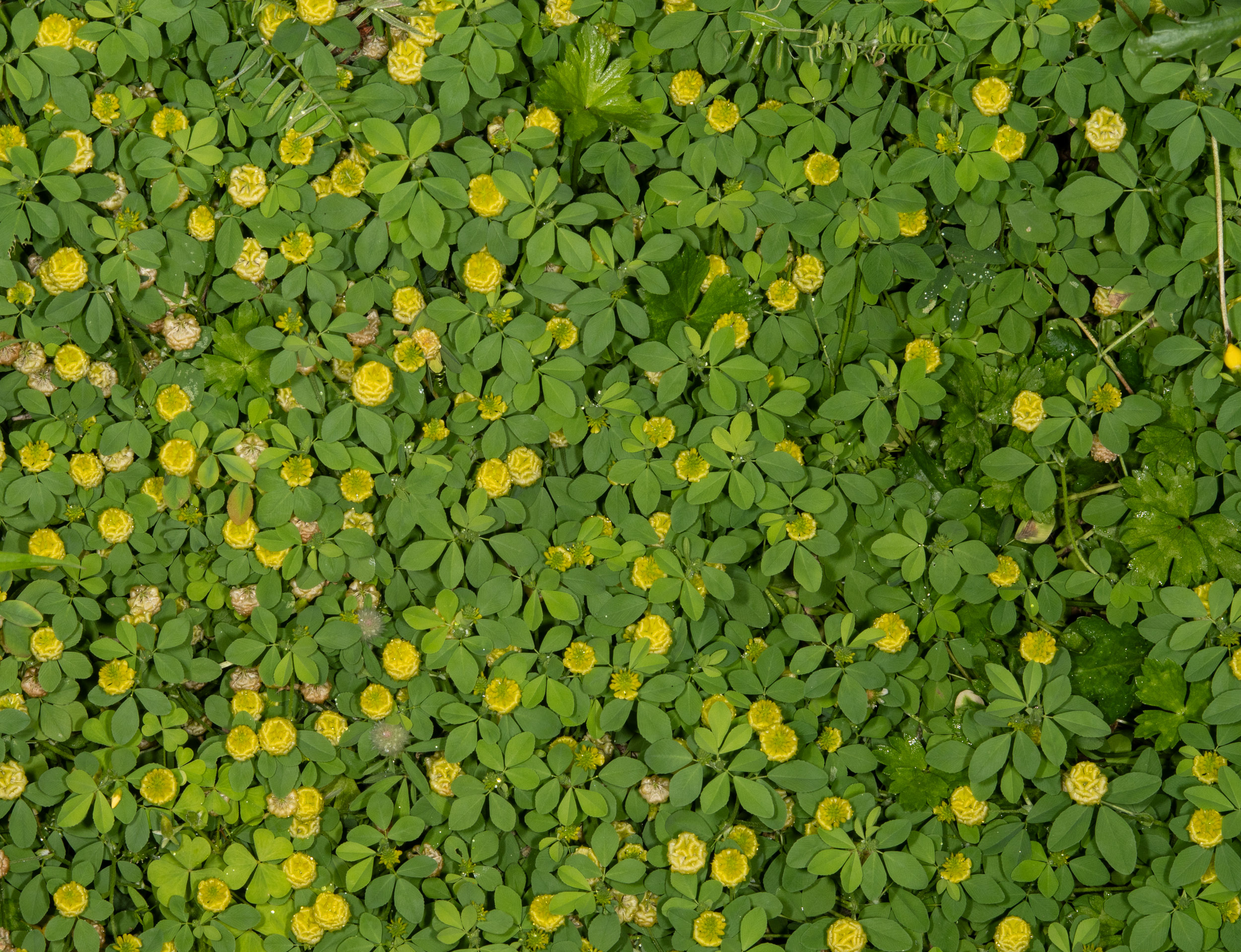
7/17/2019 · Oceanview, Falmouth, Maine · ≈ 1½ × 1′ (45 × 34 cm) 

7/18/2020 · Woodward Point Preserve, Brunswick, Maine · ≈ 5 × 4½″ (13 × 12 cm) 
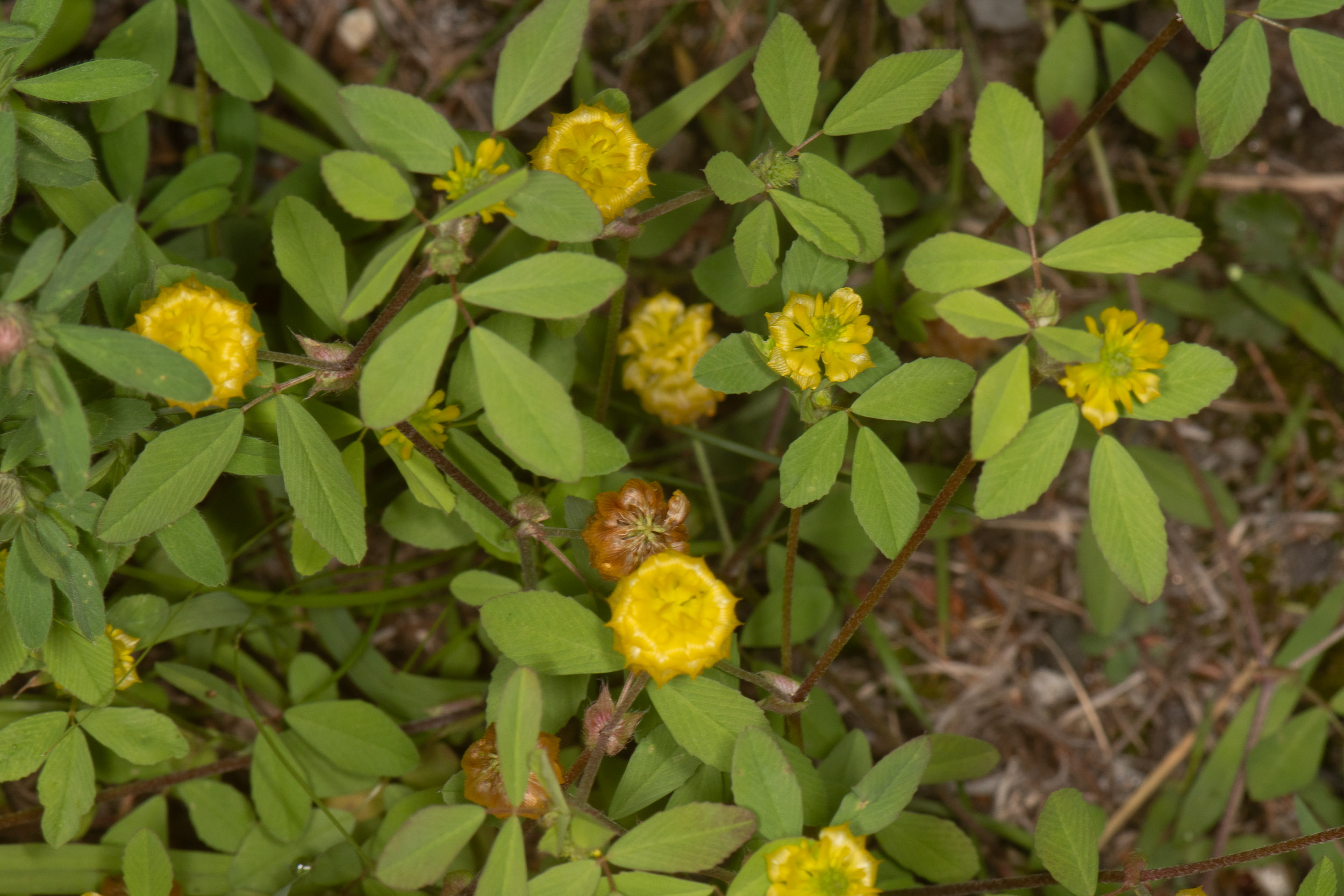
7/16/2021 · Cox Pinnacle, Brunswick, Maine · ≈ 7 × 4½″ (16 × 11 cm) 
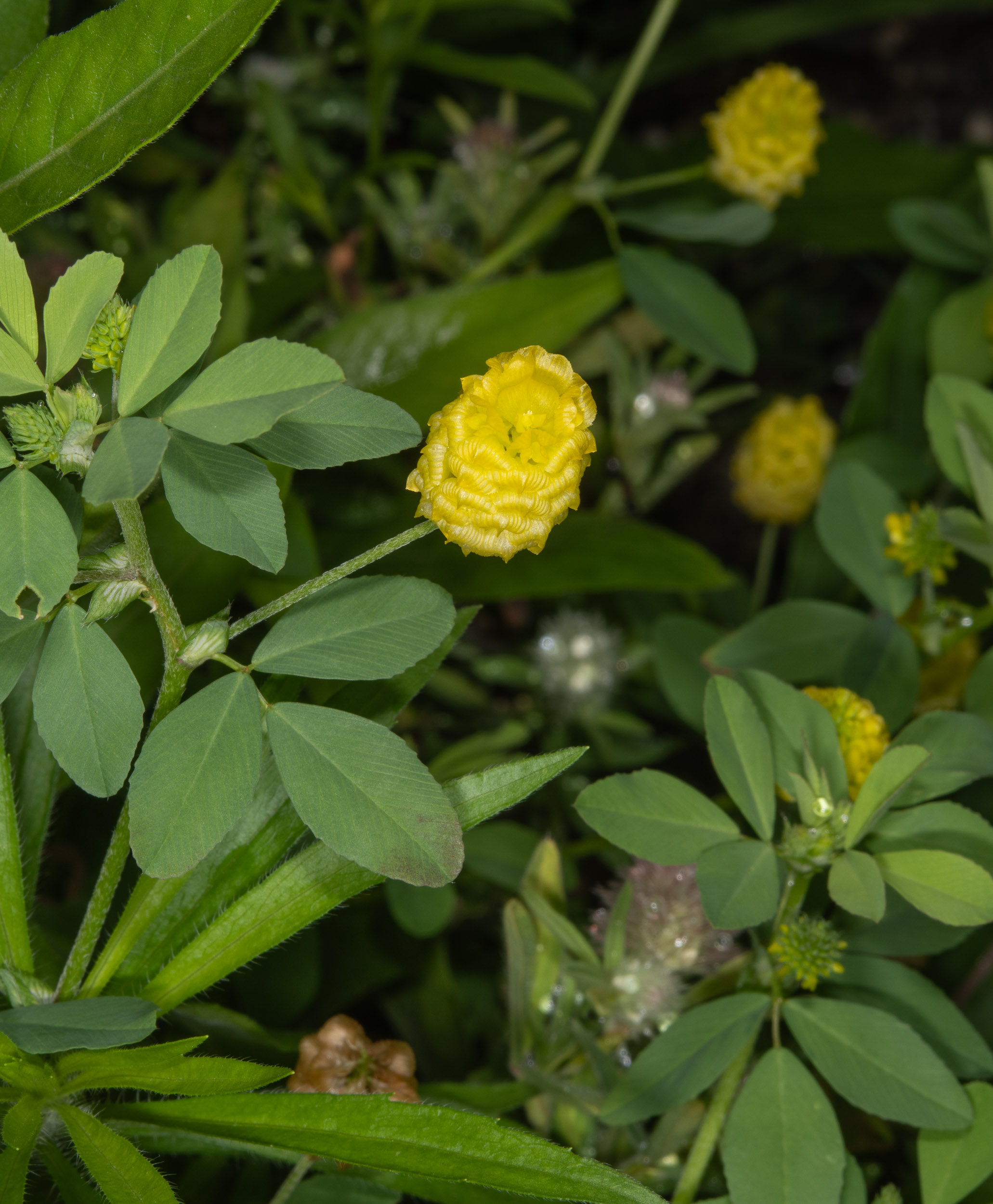
7/17/2019 · Oceanview, Falmouth, Maine · ≈ 3½ × 4″ (9.2 × 11 cm) 
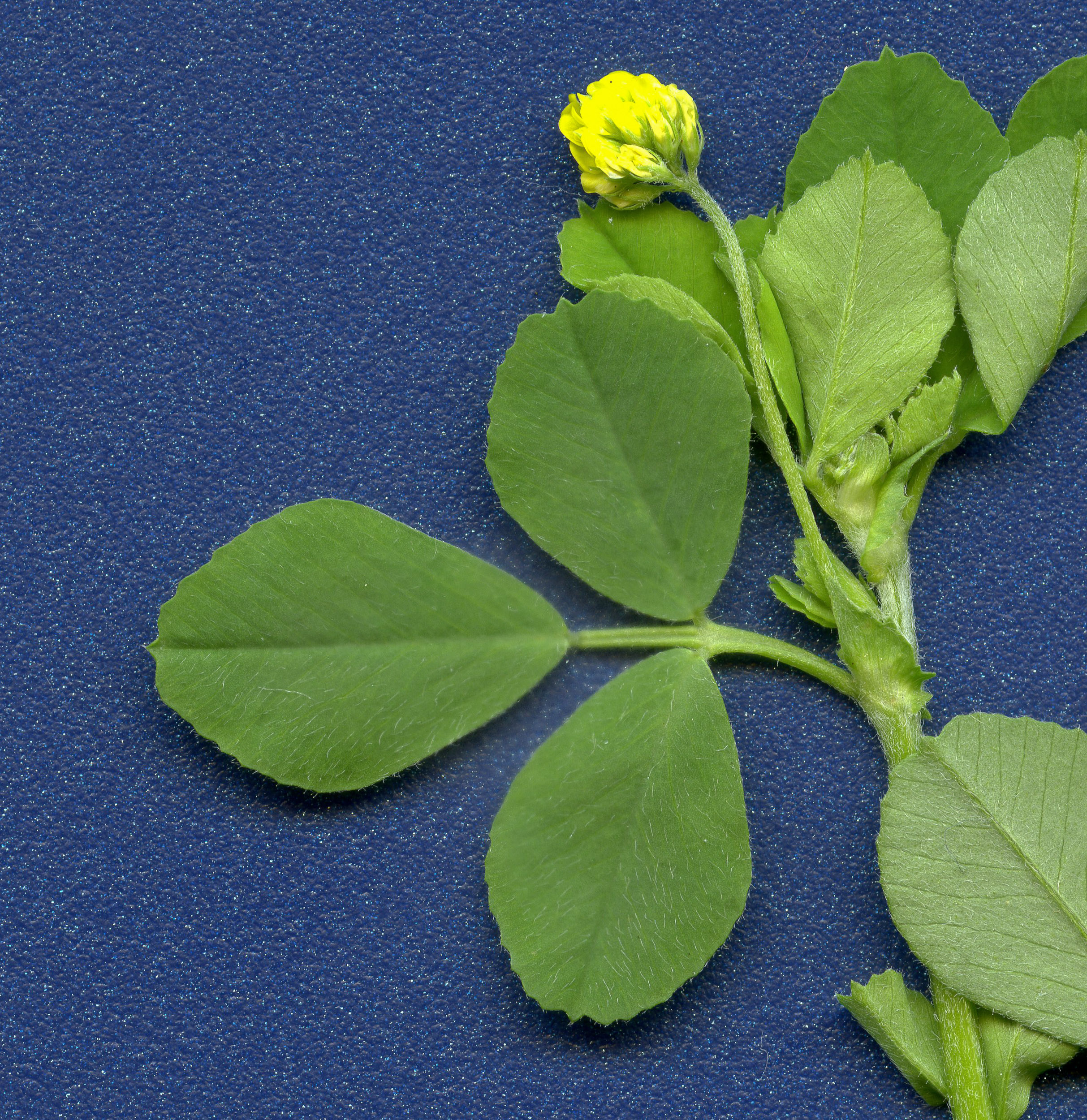
6/14/2010 · Tom and Susan’s, Pepperell, Massachusetts 
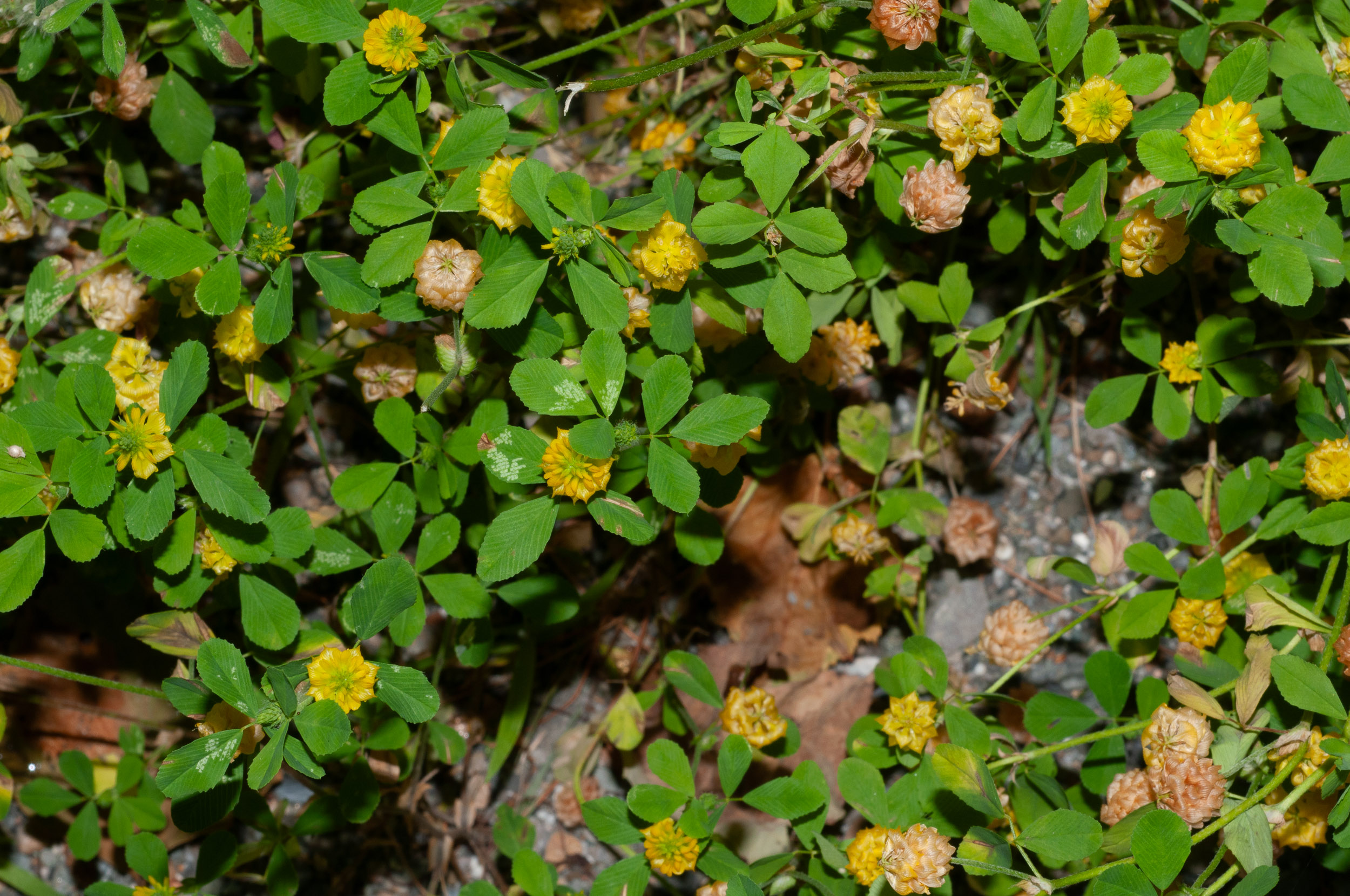
7/15/2012 · Gordon and Kathy’s, Prospect, Maine · ≈ 9 × 6″ (22 × 14 cm) 
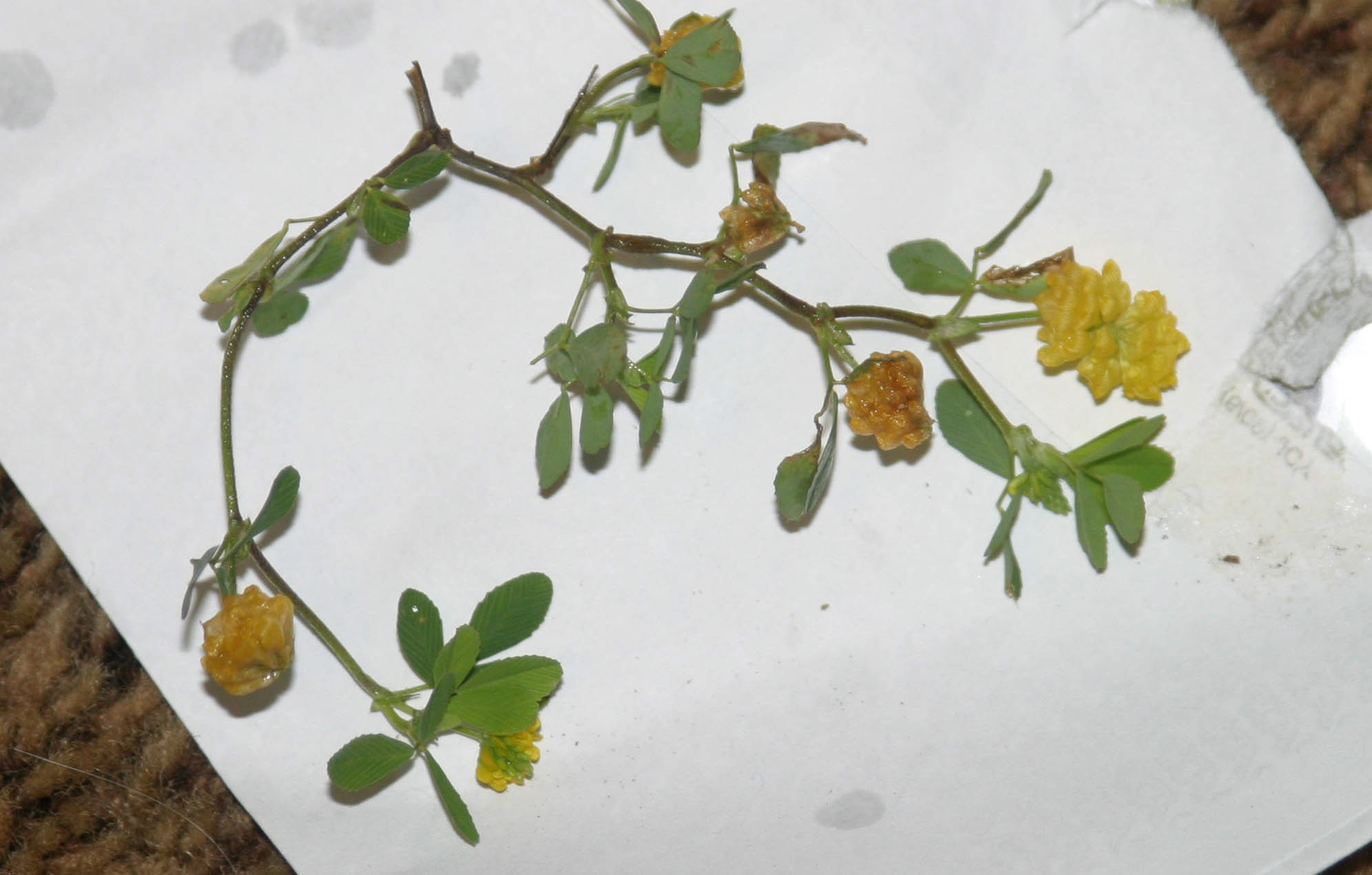
8/3/2009 · By J Gordon Williamson ID is uncertain 
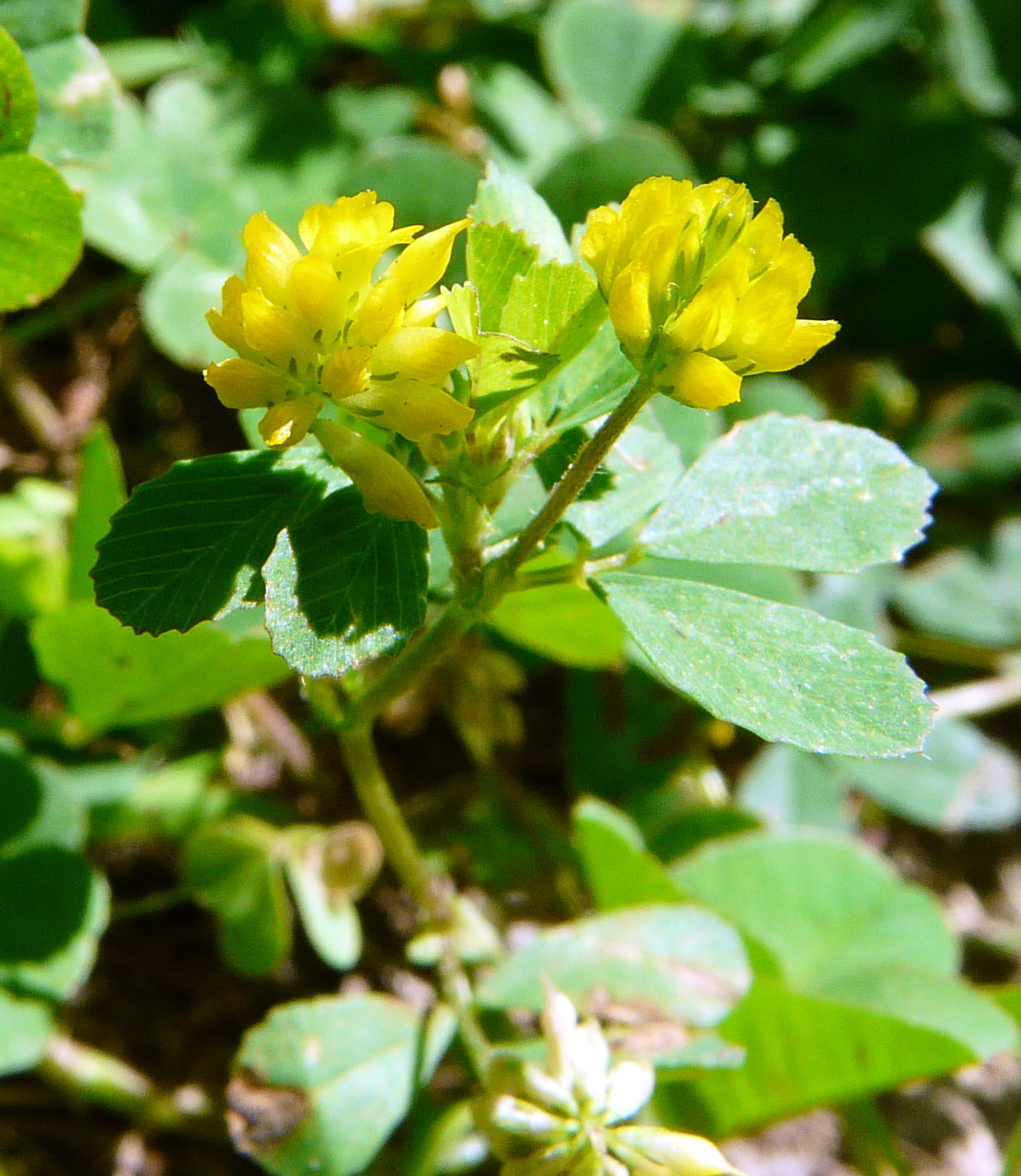
5/23/2008 · Memphis, Tennessee · By Tim Chandler 
| Kingdom | Plantae | Plants, but not fungi, lichens, or algae (from Stearn's Botanical Latin) |
| Subkingdom | Tracheobionta | Vascular plants—plants with a “circulatory system” for delivering water and nutrients |
| Division | Magnoliophyta | Flowering plants, also known as angiosperms |
| Class | Magnoliopsida | Dicotyledons—plants with two initial seed leaves |
| Subclass | Rosidae | Roses, legumes, proteas, dogwoods, hydrangeas, mistletoes, euphorbias, grapes, many more |
| Order | Fabales | Legumes (pea and bean families) |
| Family | Fabaceae | Legume family (peas and beans) |
| Genus | Trifolium | “Three-leaved,” for the 3-leaf clusters |
| Species | campestre | Of the fields or open plains |

Trifolium campestre description by Thomas H. Kent, not updated.

© FloraFinder.org. All rights reserved.