FloraFinder uses cookies only for correct operation. More info. Okay
Urtica dioica L. ssp. gracilis (Aiton) Seland.
Stinging nettle, common nettle, California nettle
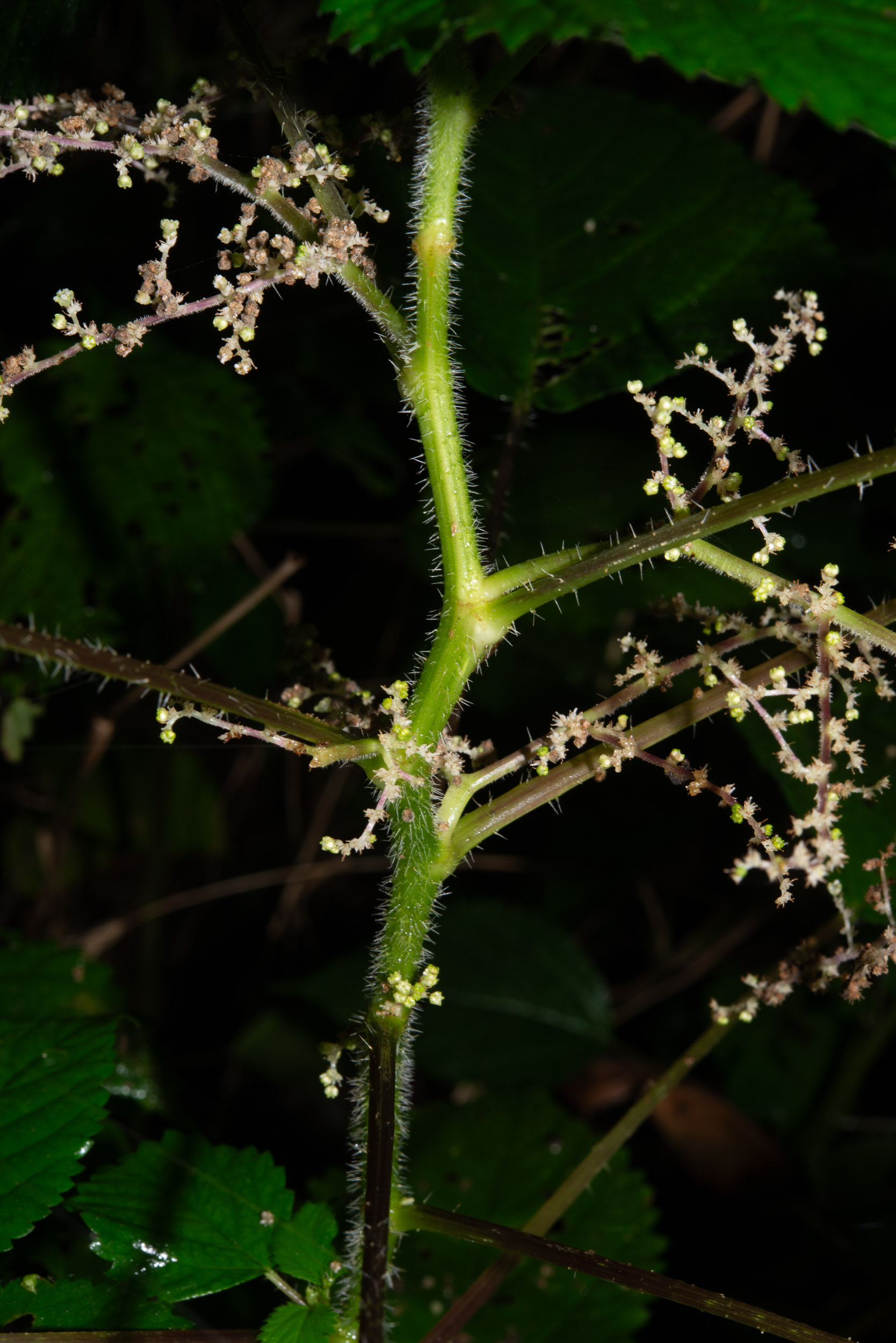
Stinging nettle, so named for spiky hairs that are pretty much tiny hypodermic needles
filled with a witch’s brew of irritating chemicals. You really have to appreciate stinging
nettles. Most irritating plants inject something that causes your body to produce histamine
in defense, which results in itching and burning. Nettles get right to the point: they inject you with
histamine itself, along with serotonin, acetylcholine, formic acid
(the same irritant in some bee stings), and leukotriens. They are specialists in chemical warfare.
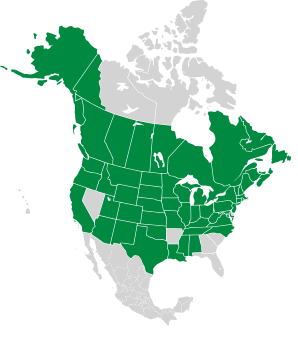
These plants are North American natives. (A close relative, Urtica dioica ssp. dioica, is native to Europe and Asia, though long established in
North America.) Both are found in temperate regions worldwide.
Plants: 2–3′ (60–100 cm) high, rarely up to
twice that. The entire plant
is covered in stinging hairs.
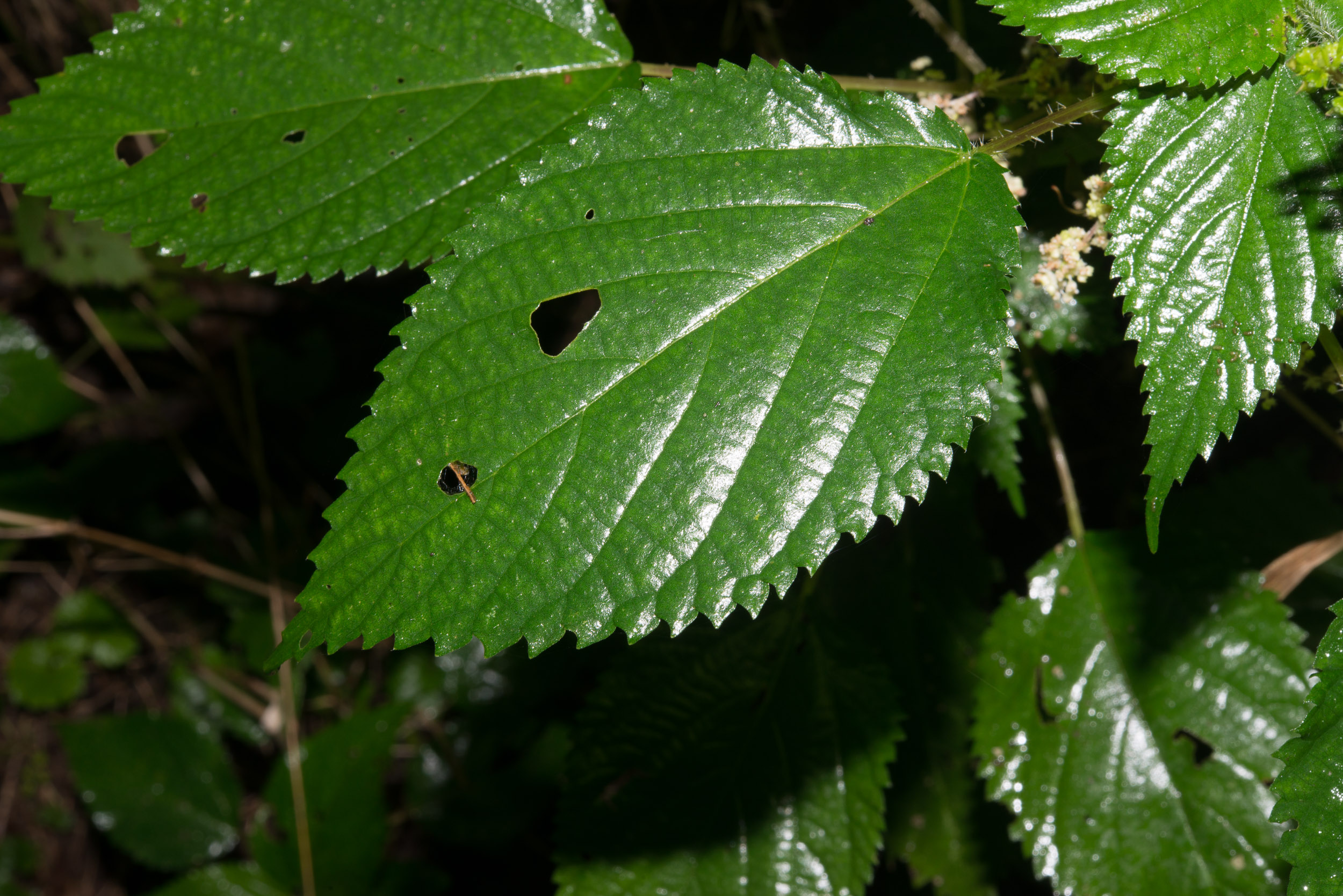
Leaves: Opposite, oblong, cordate,
and serrate (with sawtooth edges). They are 1–6″ (3–15 cm) long.
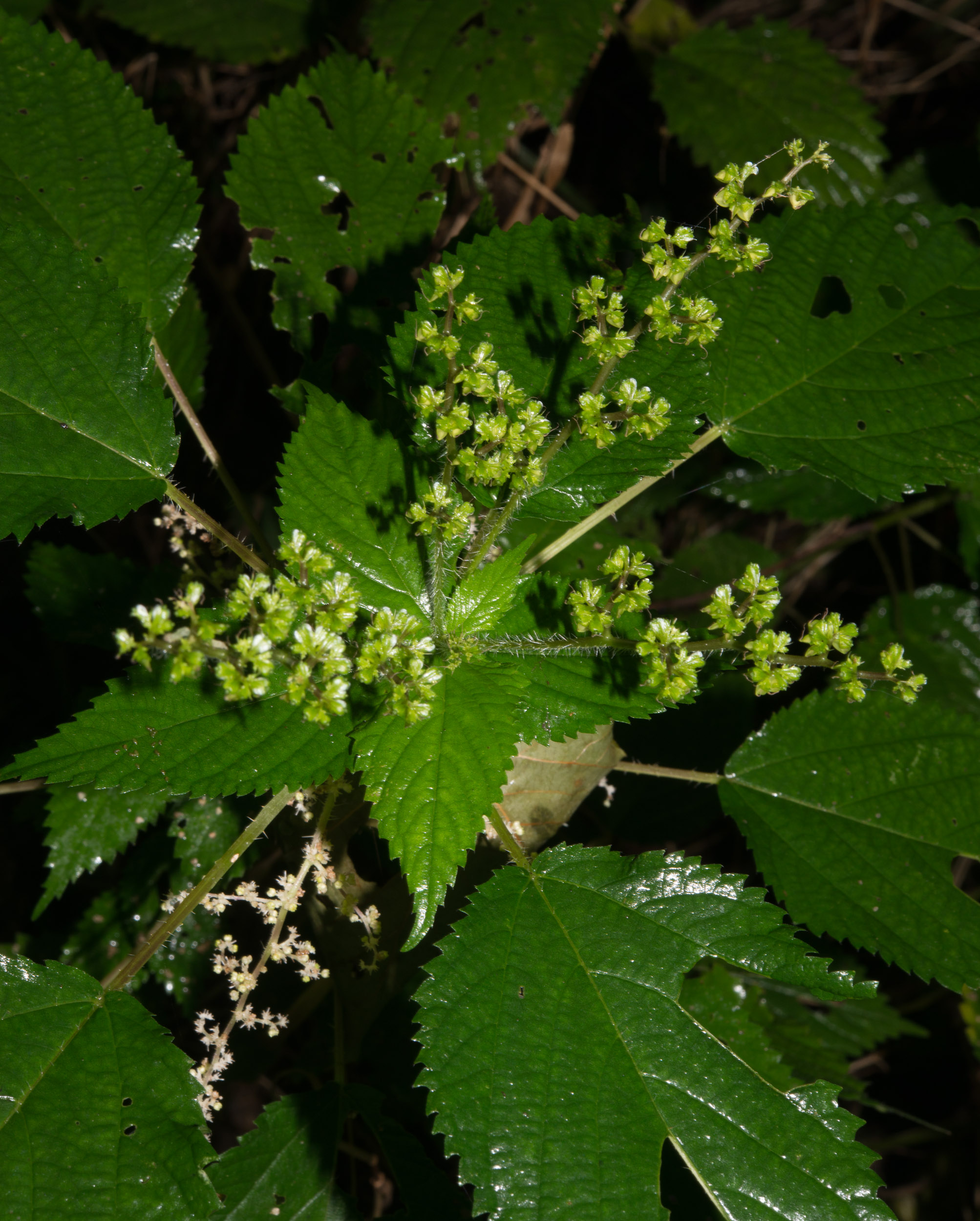
Flowers: Plants are monoecious—male
staminate flowers appear on the same plants as female
pistillate flowers. Male flowers are grayish yellow, with four tepals.
Female flowers have four tepals too, but in different-sized pairs. They are
gray-green and hairy. The flower clusters resemble catkins.
Fruits: Each inner pair of tepals encloses a single
deltoid to ovoid seed.
Habitats: River deltas, floodplains, margins of deciduous woodlands, fencerows, and waste places.
Edibility: Dried or cooked, the young leaves are safely
edible, and taste like spinach. Don’t even think about eating them raw!
Medical: Historically stinging nettle has been
used to treat muscle and joint pain, eczema, arthritis, gout, anemia, and many other ailments. More recent
studies have found that plant extracts aid in treatment of urinary tract infections,
kidney and bladder stones, and rheumatism. Root extracts have been used to treat
prostate complaints and irritable bladder. Stinging nettle extracts should not be used
during pregnancy.
Urtica californica Greene Urtica cardiophylla Rydb. Urtica dioica L. var. angustifolia Schltdl. Urtica dioica L. var. californica (Greene) C.L. Hitchc. Urtica dioica L. var. gracilis (Aiton) C.L. Hitchc. Urtica dioica L. var. lyallii (S. Watson) C.L. Hitchc. Urtica dioica L. var. procera (Muhl. ex Willd.) Weddell Urtica gracilis Aiton Urtica lyallii S. Watson Urtica lyallii S. Watson var. californica (Greene) Jeps. Urtica major H.P. Fuchs Urtica procera Muhl. ex Willd. Urtica serra auct. non Blume Urtica strigosissima Rydb. Urtica viridis Rydb.
9/1/2013 · Trail Near James River, Midlothian, Virginia · ≈ 5 × 8″ (13 × 19 cm)
9/1/2013 · Trail Near James River, Midlothian, Virginia · ≈ 9 × 6″ (22 × 15 cm)
9/1/2013 · Trail Near James River, Midlothian, Virginia · ≈ 7 × 9″ (18 × 23 cm)
9/1/2013 · Trail Near James River, Midlothian, Virginia · ≈ 1¾ × 2″ (4.7 × 5.6 cm)
9/1/2013 · Trail Near James River, Midlothian, Virginia · ≈ 6 × 9″ (16 × 23 cm)