Utricularia vulgaris L. var. americana A. Gray
Utricularia vulgaris L. ssp. macrorhiza (Leconte) R.T. Clausen
Utricularia macrorhiza Leconte
Common bladderwort, bladderwort
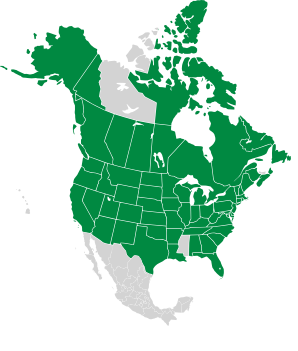
Bladderwort is a native of the Northern Hemisphere, including most of North America and parts of temperate eastern Asia. Except for occasional racemes of yellow flowers, bladderwort remains submersed in lakes, ponds, wet marshes, and rivers and streams up to about 6′ (1.8 m) deep. An underwater rootlike structure contains numerous “bladders”—small pouches that help keep the plant near the surface during flowering, then sink it during dormancy periods. But the bladders have another purpose. Common bladderwort is actually carniverous, and the bladders are spring-loaded traps that suck in water and small organisms, and digest them with enzymes and bacteria. They snap shut in about ⅟460th of a second!
Plants: Plants are not anchored and float freely, close to the surface. Rootlike structures are leaves. Underwater stems sometimes produce turions—overwintering, vegetative buds—up to about 1″ (2.5 cm) around. (In many of the photos, the water surface is covered with numerous green dots. These are duckweed, not bladderwort.)
Leaves: Leaves are alternate, ¾–2″ (1.9–5 cm) long, on a zig-zagged stalk with one or two main divisions from the base, these in turn forked into threadlike sections. They look more like a cloud of algae than a system of leaves. Bladders start out greenish and transparent, becoming dark red or brown to black. They are more than 1/16″ (2 mm) in size.
Flowers: A stalk up to about 10″ (25 cm) in height contains a raceme of 6-20 yellow flowers, each resembling snapdragons and about ½–¾″ (1.3–1.9 cm) in size. They appear from late May to September.
Fruits: Round capsules less than ¼″ (6.3 mm) around.
Habitats: Mostly in ponds and lakes, but also in slow-moving streams and rivers.
Online References:
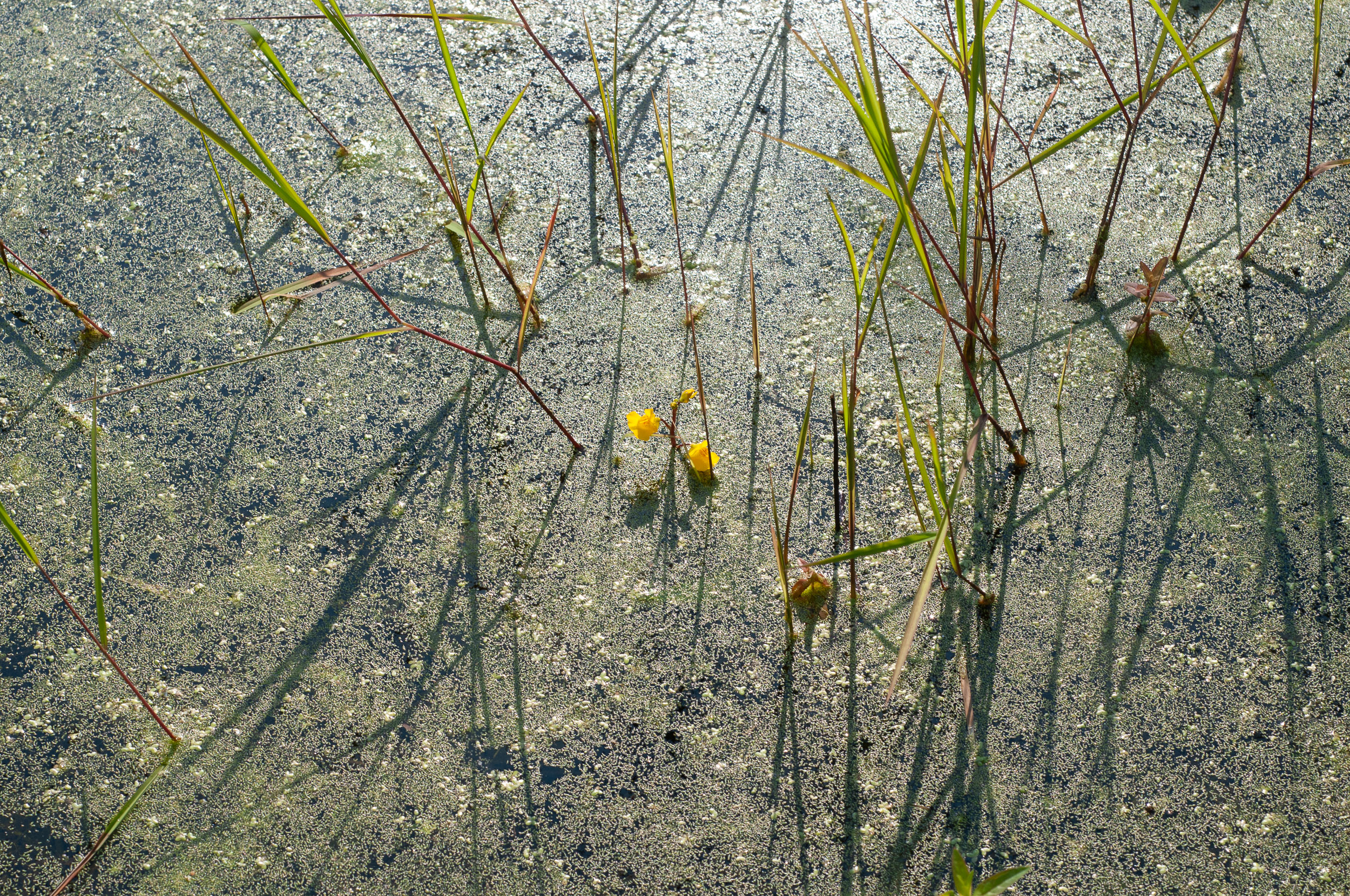
6/20/2012 · Nashua River Rail Trail, Groton Center, Groton, Massachusetts · ≈ 1½ × 1′ (52 × 34 cm) 
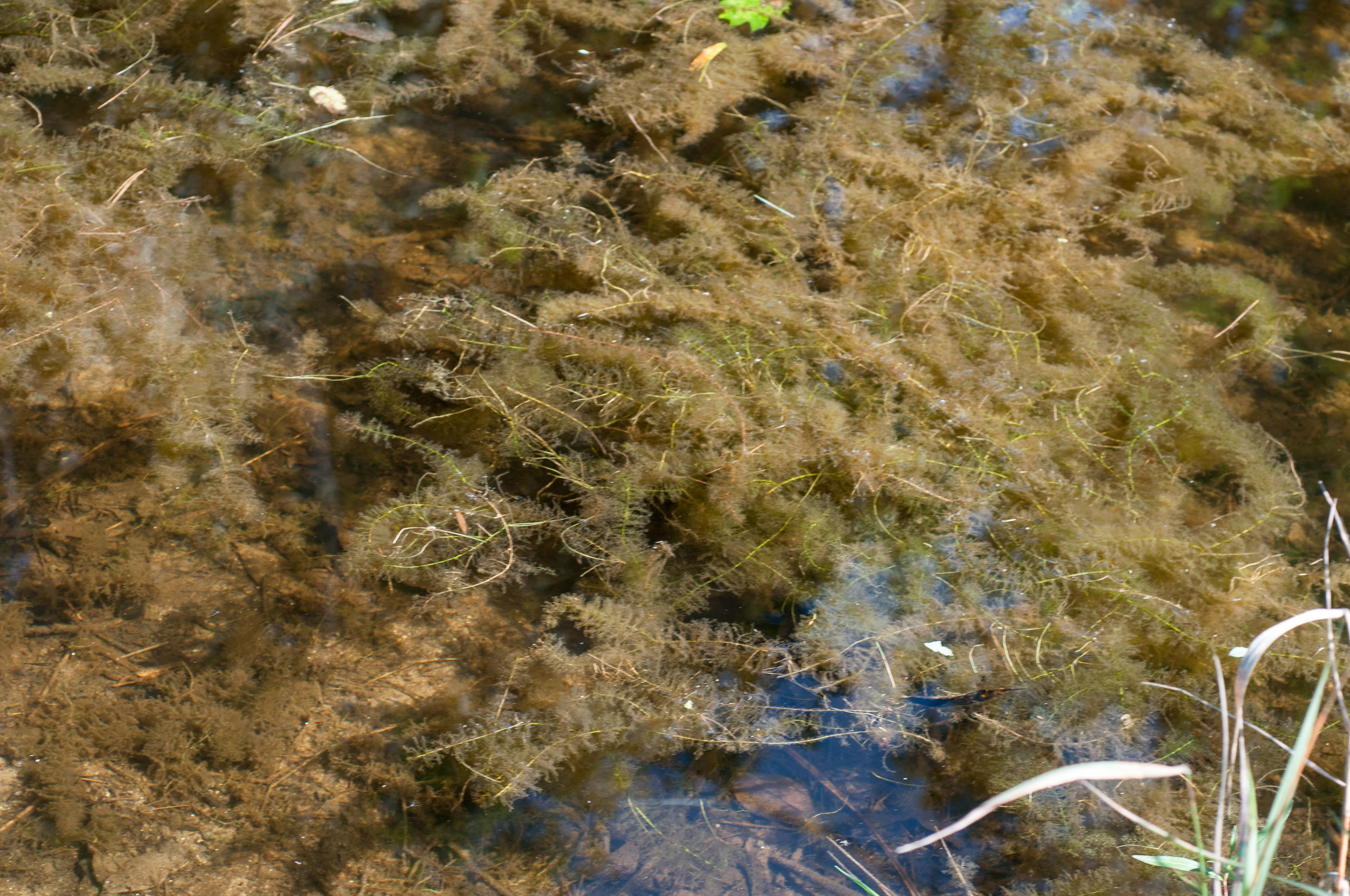
8/22/2012 · Squannacook River Wildlife Area, Townsend, Massachusetts 
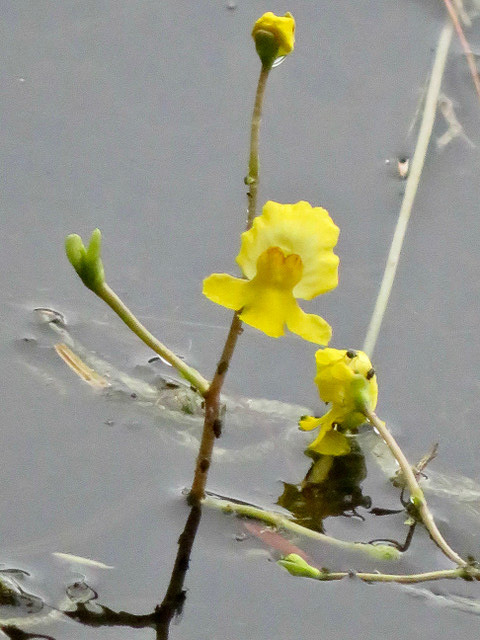
8/28/2021 · Center Pond Preserve, Phippsburg, Maine · By Priscilla Seimer 
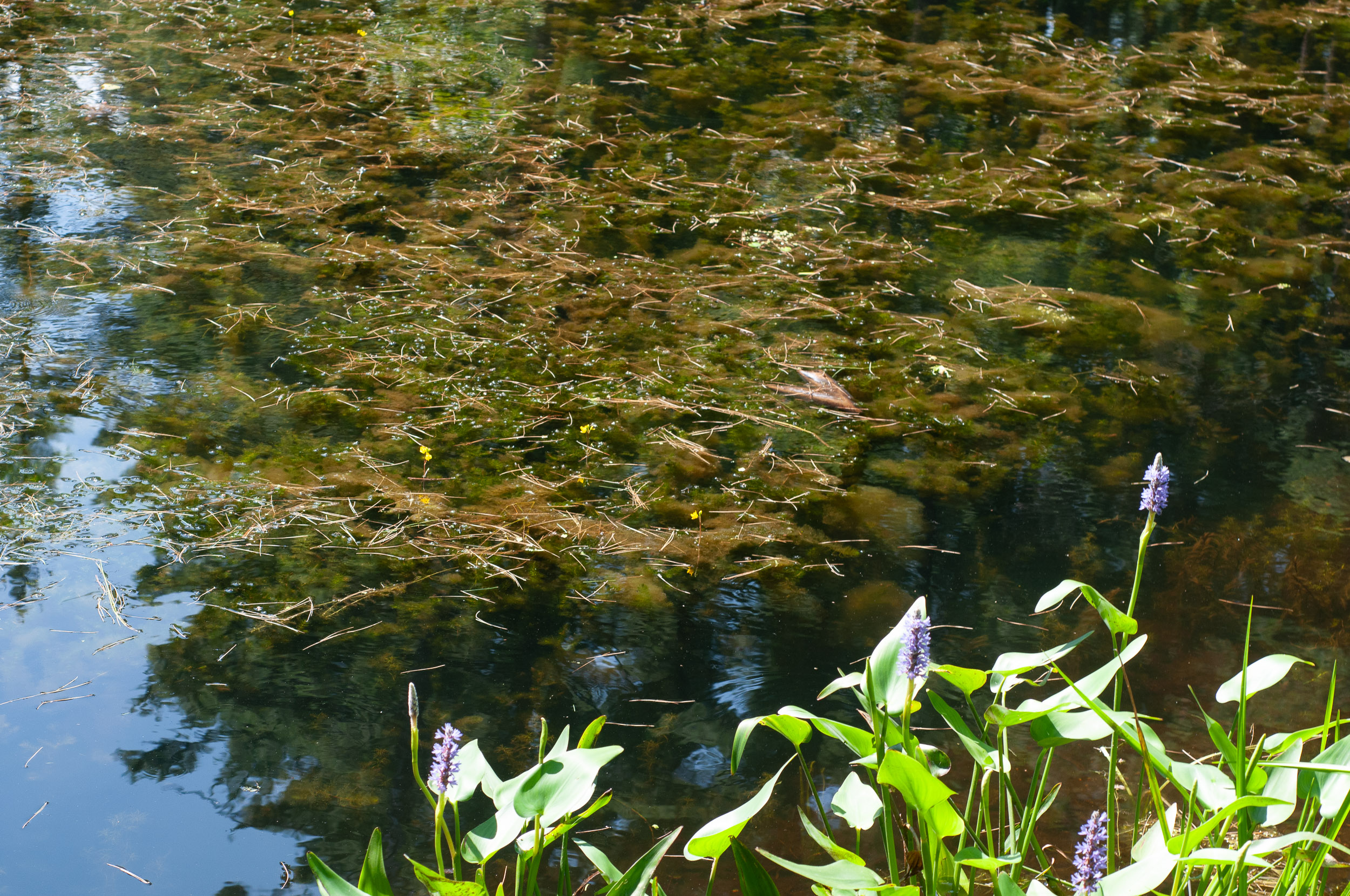
The bladderwort is submersed. The blue flowers are pickerelweed. · 7/5/2012 · Groton Place and Sabine Woods, Groton, Massachusetts 
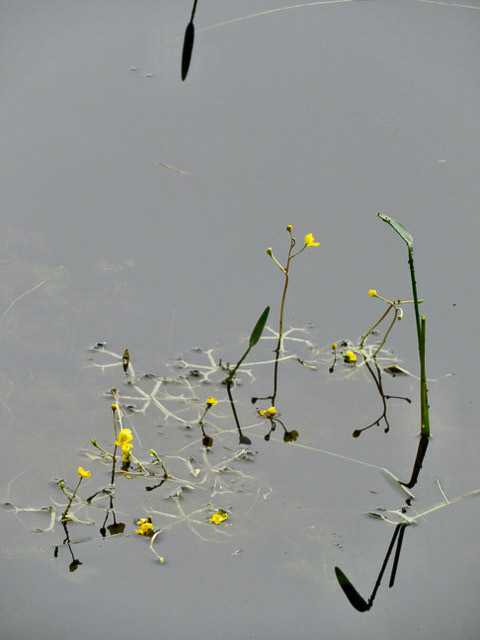
8/28/2021 · Center Pond Preserve, Phippsburg, Maine · By Priscilla Seimer 
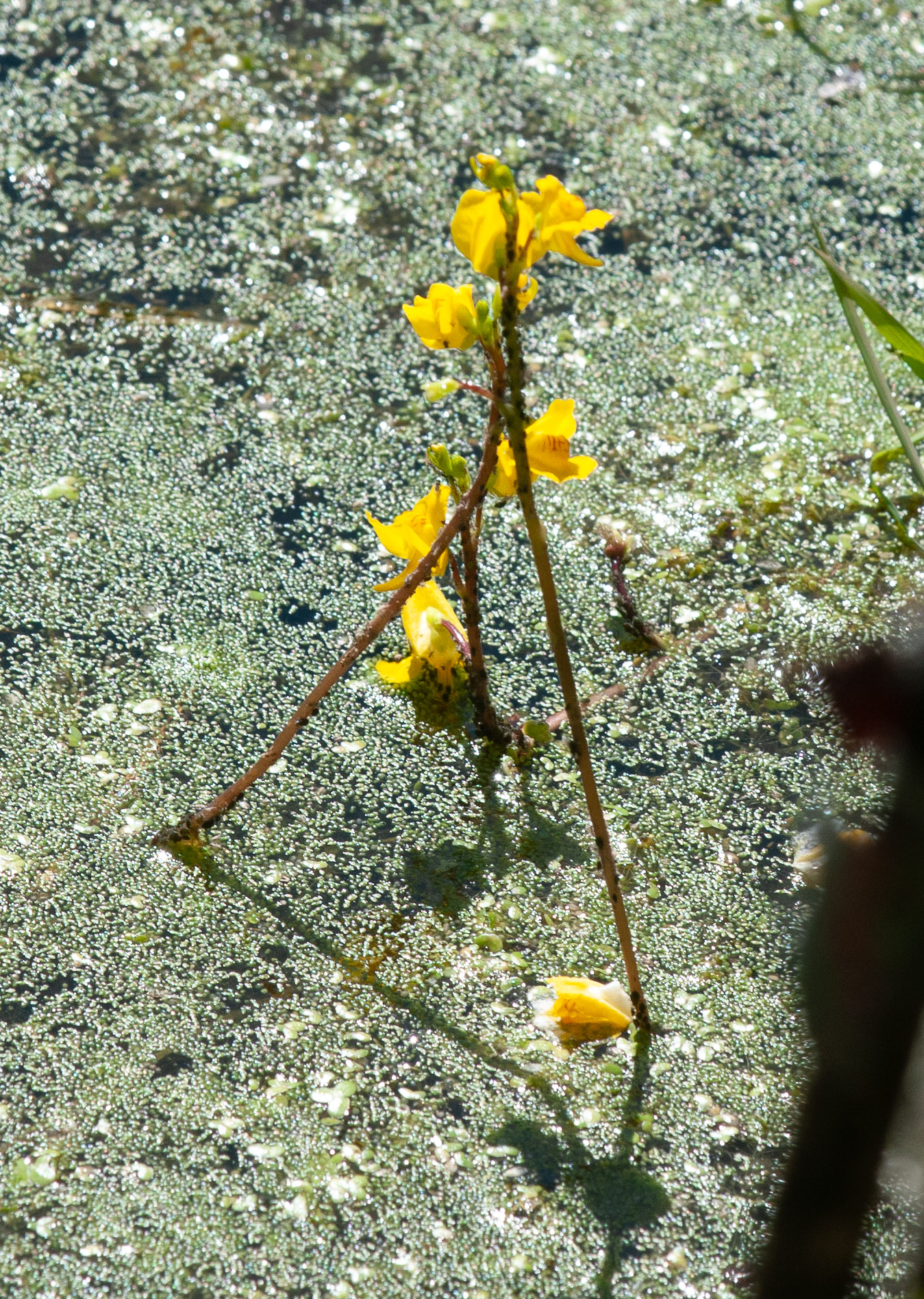
7/9/2012 · Nashua River Rail Trail, Groton Center, Groton, Massachusetts 
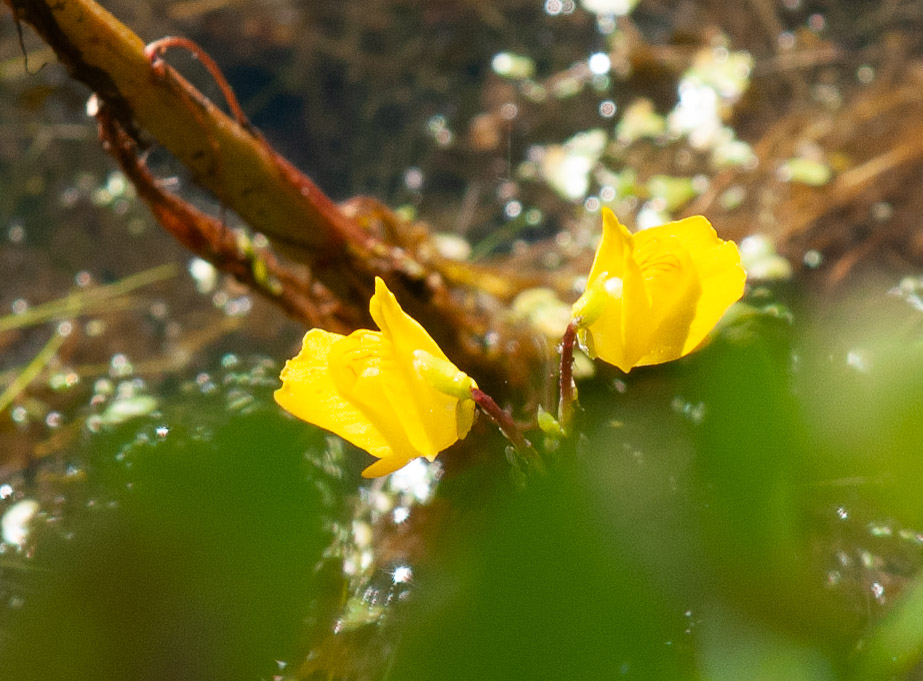
7/9/2012 · Nashua River Rail Trail, Groton Center, Groton, Massachusetts 

7/9/2012 · Nashua River Rail Trail, Groton Center, Groton, Massachusetts 
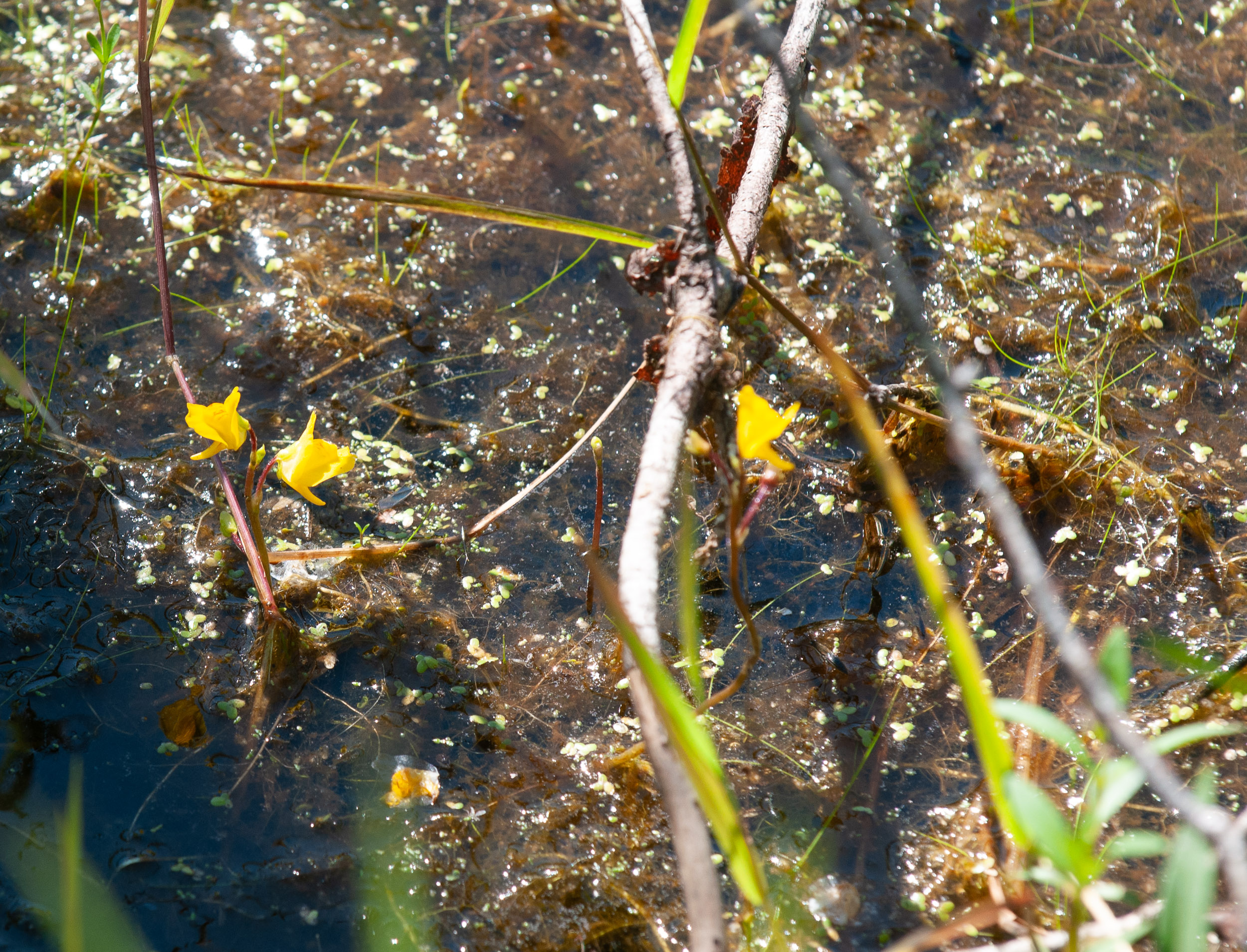
7/9/2012 · Nashua River Rail Trail, Groton Center, Groton, Massachusetts 
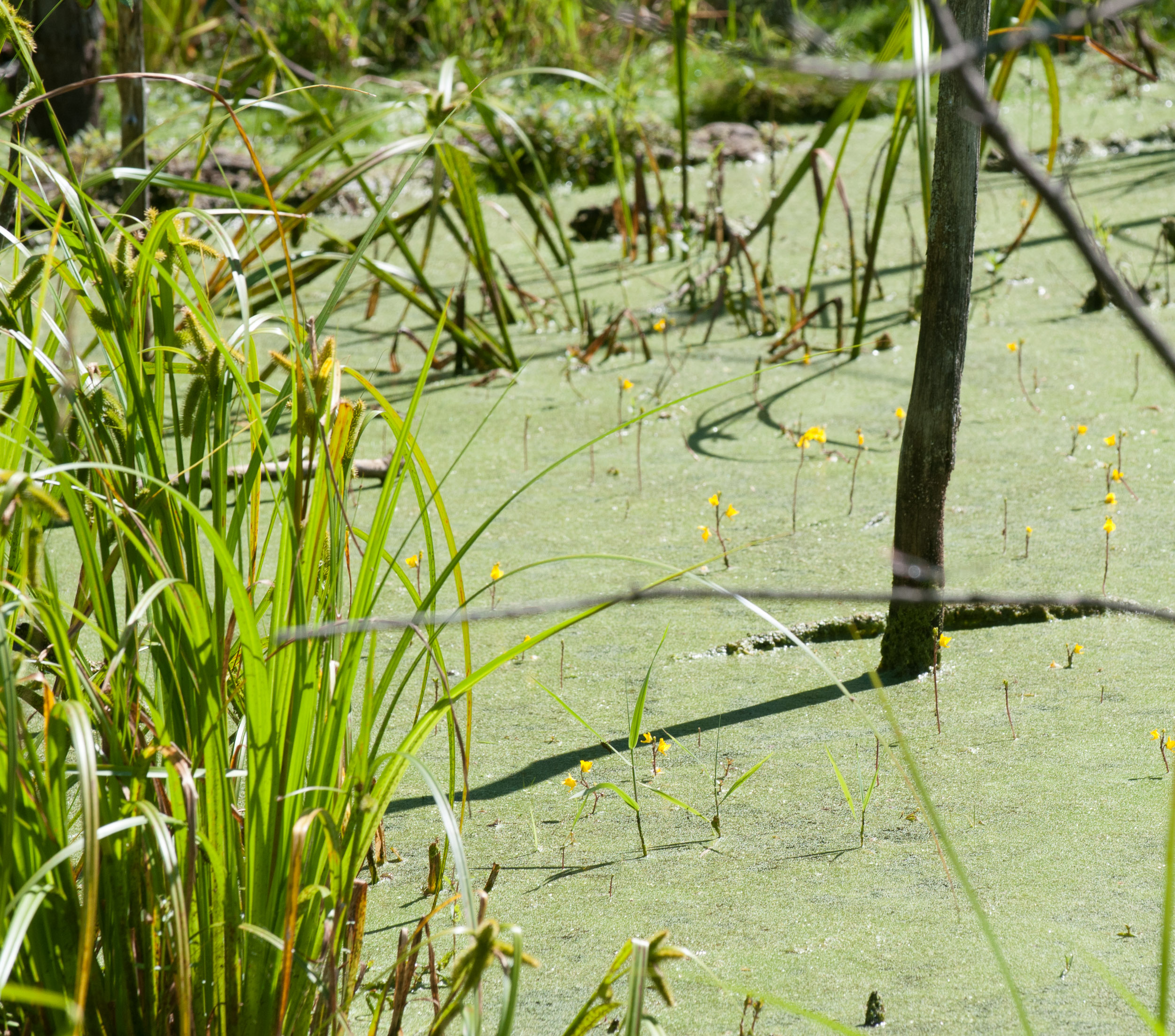
7/9/2012 · Nashua River Rail Trail, Groton Center, Groton, Massachusetts 

8/22/2012 · Squannacook River Wildlife Area, Townsend, Massachusetts 

6/20/2012 · Nashua River Rail Trail, Groton Center, Groton, Massachusetts 

6/20/2012 · Nashua River Rail Trail, Groton Center, Groton, Massachusetts 
| Kingdom | Plantae | Plants, but not fungi, lichens, or algae (from Stearn's Botanical Latin) |
| Subkingdom | Tracheobionta | Vascular plants—plants with a “circulatory system” for delivering water and nutrients |
| Division | Magnoliophyta | Flowering plants, also known as angiosperms |
| Class | Magnoliopsida | Dicotyledons—plants with two initial seed leaves |
| Subclass | Asteridae | A large class that encompasses asters |
| Order | Lamiales | Aromatic herbs and shrubs, including lavender, lilac, olive, jasmine, ash, teak, snapdragon, sesame, psyllium, garden sage, mint, basil, and rosemary |
| Family | Lentibulariaceae | A family of carnivorous plants containing three genera: Genlisea, the corkscrew plants; Pinguicula, the butterworts; and Utricularia, the bladderworts |
| Genus | Utricularia | From the Latin utriculus, “a small bag or bladder,” the common name of which is bladderwort |
| Species | macrorhiza | With large roots or root stocks |
Utricularia macrorhiza description by Thomas H. Kent, not updated.

© FloraFinder.org. All rights reserved.