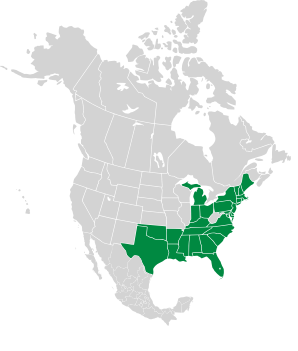
Cyanococcus fuscatus (Aiton) Small
Cyanococcus virgatus sensu Small
Vaccinium arkansanum Ashe
Vaccinium atrococcum (A. Gray) A. Heller
Vaccinium corymbosum L. var. atrococcum A. Gray
Vaccinium fuscatum Aiton
Black highbush blueberry
Black highbush blueberry is native to North America.
Plants: Shrubs are perennials, reaching 11′ (3.5 m), with brown bark.
Leaves: Alternate, sometimes persisting through the winter, 1–1¼ ⨉ ⅝–⅞″ (3–3.5 ⨉ 1.6–2.5 cm) wide, and lanceolate, elliptic, or ovate. Leaves are fairly thick and leathery, hairless above, finely hairy and much lighter in color below.
Flowers: Hermaphroditic, containing both male and female organs, but they do not fertilize themselves. They are urn-shaped and cream-colored, with pink bases and sometimes pink stripes, about ⅛″ (6 mm) in size.
Fruits: Black, and ⅛–⅜″ (6–10 mm) in diameter.
Habitats: Woodlands, medium shade, acid soils, swampy areas.
This Vaccinium comparison chart also includes a couple of similar-appearing species that are not Vaccinium.
Edibility: “Not very tasty,” according to one source.
Online References:
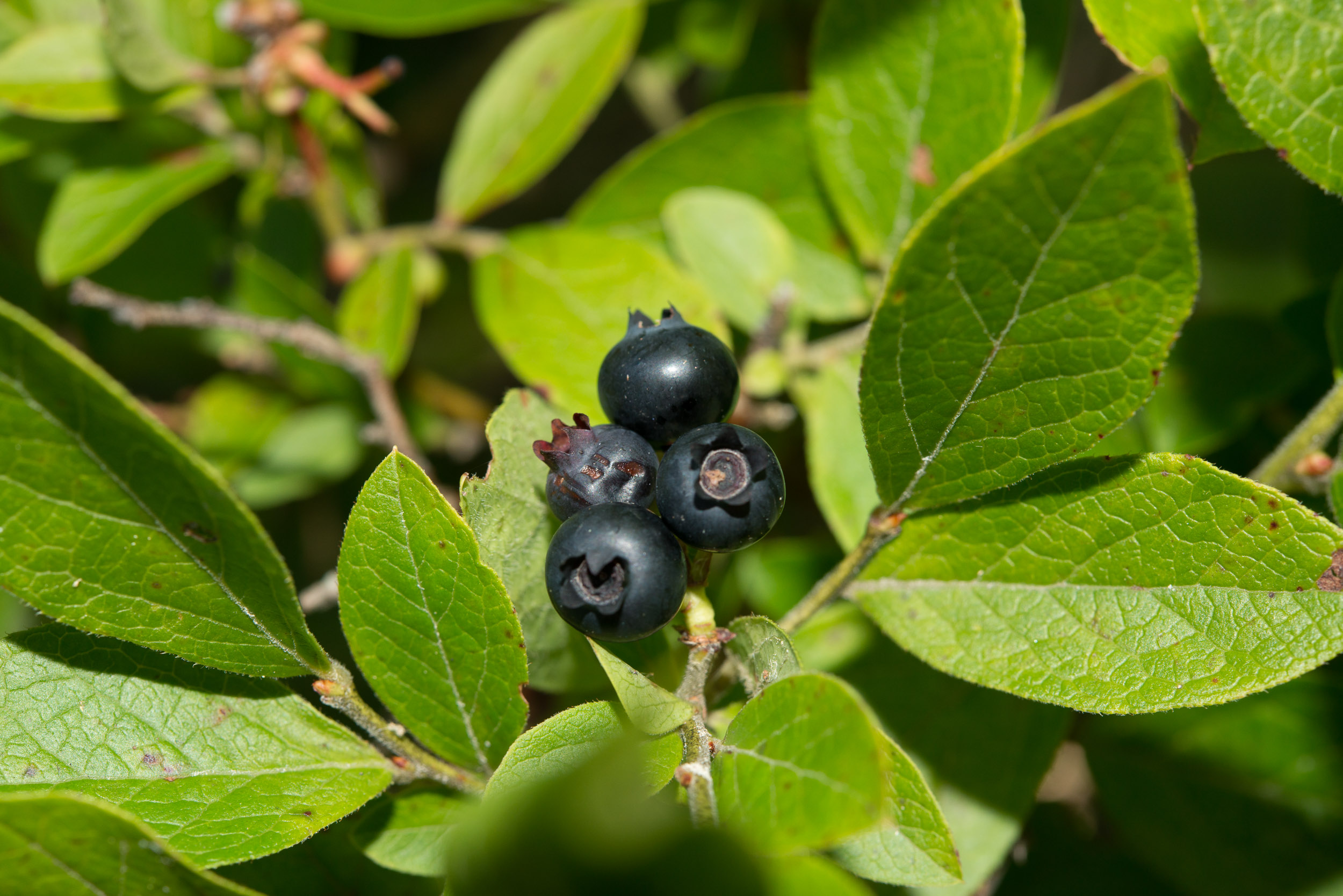
7/16/2013 · Townsend Wildlife Management Area, Townsend, Massachusetts · ≈ 6 × 3½″ (14 × 9.6 cm)  ID is uncertain

6/27/2012 · Townsend Wildlife Management Area, Townsend, Massachusetts · ≈ 4½ × 3″ (11 × 7.9 cm) ID is uncertain 

5/4/2017 · Nashua River Rail Trail, Groton Center, Groton, Massachusetts · ≈ 6 × 4″ (14 × 10 cm) 
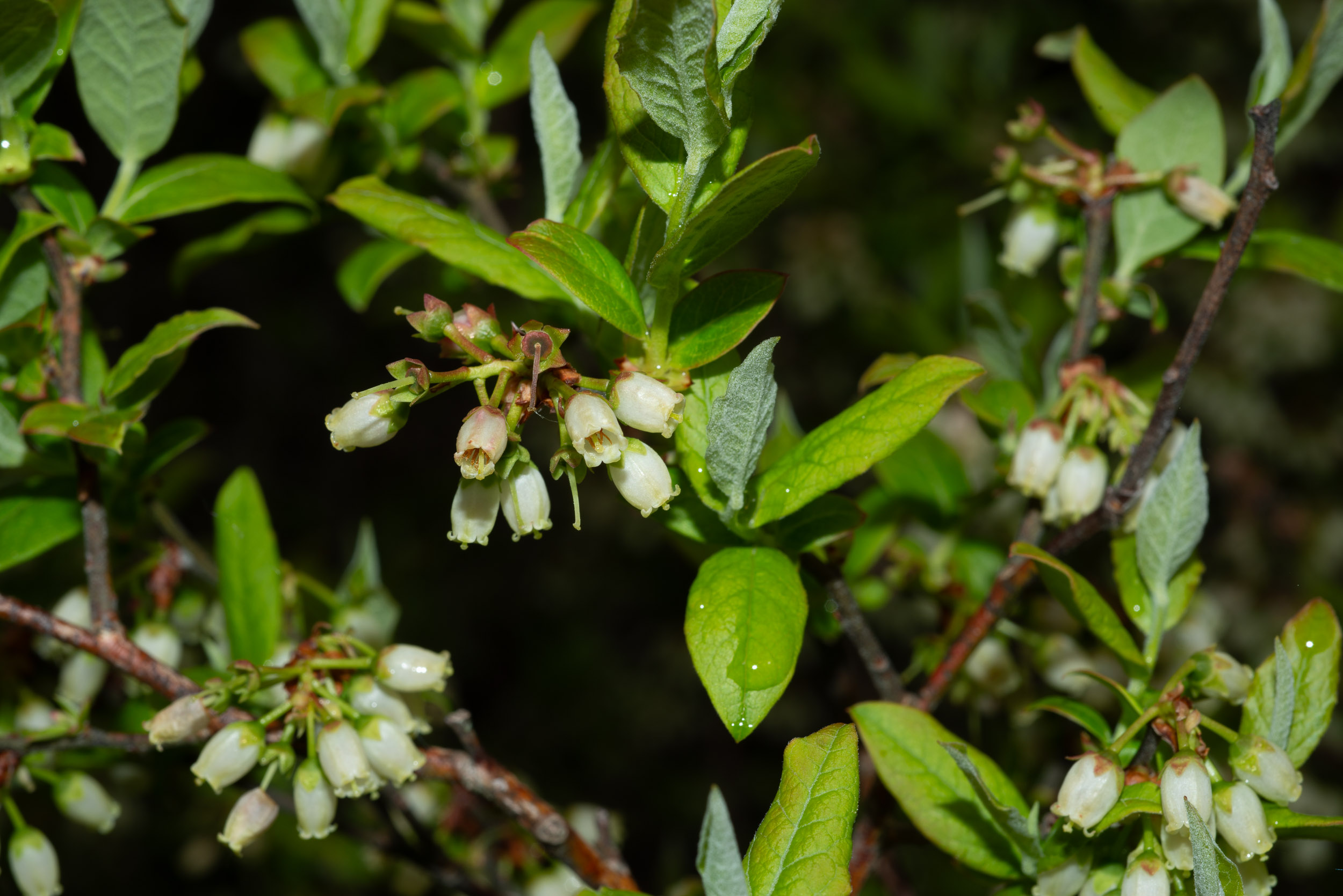
5/11/2013 · Townsend Wildlife Management Area, Townsend, Massachusetts · ≈ 7 × 4½″ (18 × 12 cm) ID is uncertain 

5/11/2013 · Townsend Wildlife Management Area, Townsend, Massachusetts · ≈ 7 × 4½″ (18 × 12 cm) ID is uncertain 

5/4/2017 · Nashua River Rail Trail, Groton Center, Groton, Massachusetts · ≈ 5 × 3½″ (13 × 9.2 cm) 

6/27/2012 · Townsend Wildlife Management Area, Townsend, Massachusetts · ≈ 5 × 3½″ (13 × 9.2 cm) ID is uncertain 

6/27/2012 · Townsend Wildlife Management Area, Townsend, Massachusetts · ≈ 5 × 3½″ (13 × 9.2 cm) ID is uncertain 
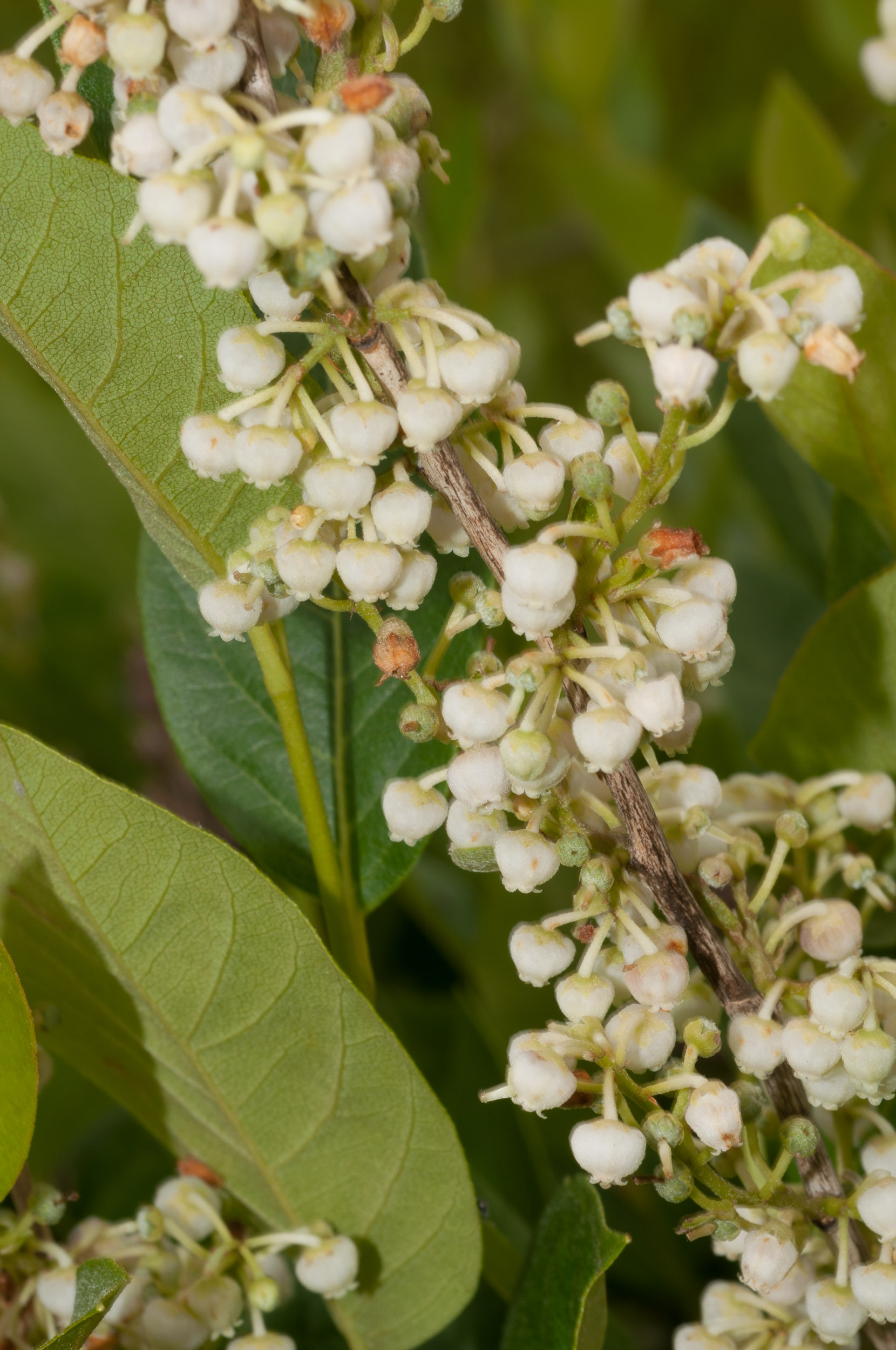
6/27/2012 · Townsend Wildlife Management Area, Townsend, Massachusetts · ≈ 3½ × 5″ (9.2 × 13 cm) ID is uncertain 
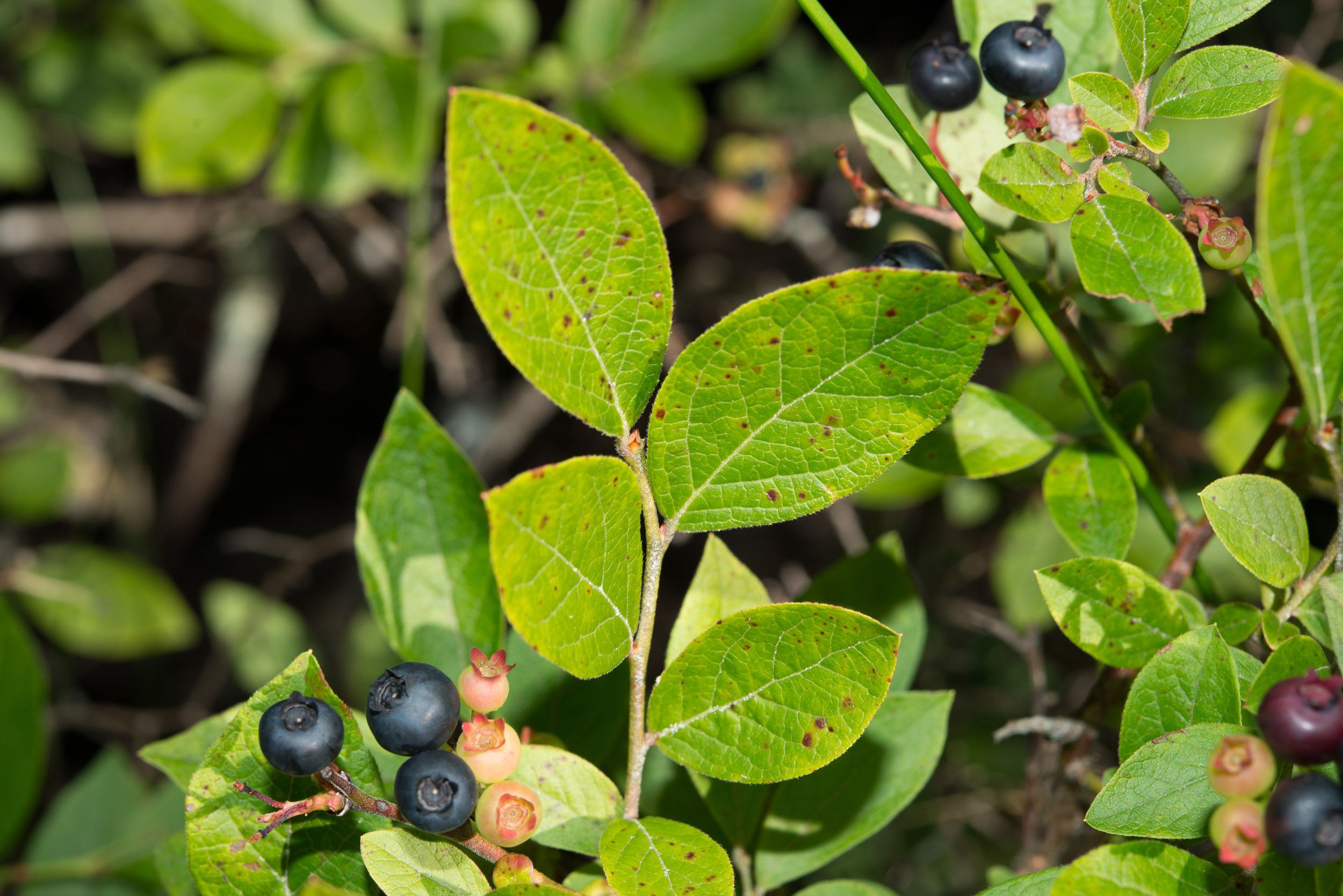
7/16/2013 · Townsend Wildlife Management Area, Townsend, Massachusetts · ≈ 8 × 5″ (19 × 13 cm) ID is uncertain 
| Kingdom | Plantae | Plants, but not fungi, lichens, or algae (from Stearn's Botanical Latin) |
| Subkingdom | Tracheobionta | Vascular plants—plants with a “circulatory system” for delivering water and nutrients |
| Division | Magnoliophyta | Flowering plants, also known as angiosperms |
| Class | Magnoliopsida | Dicotyledons—plants with two initial seed leaves |
| Subclass | Asteridae | A large class that encompasses asters |
| Order | Ericales | Tea, persimmon, blueberry, Brazil nut, azalea, many others |
| Family | Ericaceae | Heath or heather family |
| Genus | Vaccinium | Ancient Latin name for billberry |
| Species | fuscatum | “With brownish hairs” on the stem |
Vaccinium fuscatum description by Thomas H. Kent, not updated.

© FloraFinder.org. All rights reserved.