Woodwardia areolata (L.) T. Moore
Netted chain fern
Netted chain fern is native to eastern North America. It forms dense colonies in wet areas.
Identification: Stalks are purplish-brown. Sterile fronds are 2′ ⨉ 6″ (60 ⨉ 15 cm), oval in overall shape, with a sharp tip. Their pinnae are sharp-tipped, narrow, with wavy edges and fine teeth. They are winged where they join the rachis, except at the very bottom. Veins on the pinnae form a netlike pattern. Fertile fronds are narrower, more spread out. Fertile pinnae are curled as if protecting the sori, so much so that they appear very narrow. The sori are reddish brown, deeply embedded in the leaflets, and longer than they are wide. They appear in two parallel rows.
Habitats: Areas that remain wet year round: acidic bogs, seeps, and wet woods, rarely on rock of siliceous cliffs and ledges on northern edge of range. It tolerates brackish water.
Netted chain fern looks a little like sensitive fern, but the fertile fronds are very different, and leaf margins of netted chain fern are toothed, while those of sensitive fern are not.
Online References:
References:
Lorinseria areolata (L.) C. Presl
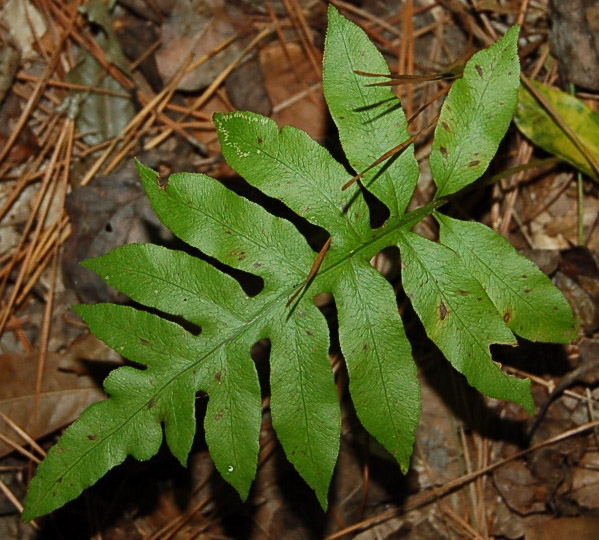
Sterile pinnae. · 10/21/2012 · By Jacquelyn Boyt 
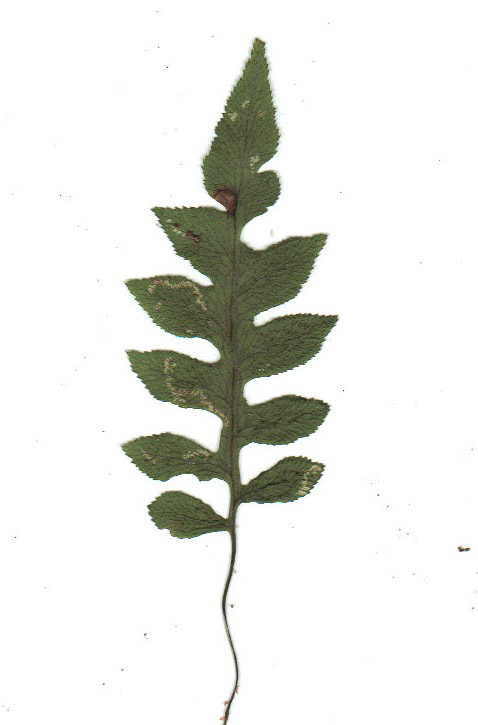
1/5/2026 · By Jacquelyn Boyt 

1/5/2026 · By Jacquelyn Boyt 
| Kingdom | Plantae | Plants, but not fungi, lichens, or algae (from Stearn's Botanical Latin) |
| Subkingdom | Tracheobionta | Vascular plants—plants with a “circulatory system” for delivering water and nutrients |
| Division | Pteridophyta | Ferns |
| Class | Filicopsida | “Leptosporangiate” (has to do with how their spores form) ferns—includes most ferns |
| Order | Polypodiales | Polypod ferns |
| Family | Blechnaceae | Ground-dwelling or climbing ferns, whose young fronds are often tinged with red |
| Genus | Woodwardia | For English botanist Thomas Jenkinson Woodward (1745–1820) |
| Species | areolata | Net-like, referring to leaf veins |

Woodwardia areolata description by Thomas H. Kent, not updated.

© FloraFinder.org. All rights reserved.