Carex blanda Dewey
Common woodland sedge, eastern woodland sedge
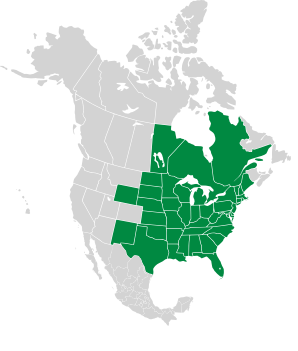
Common woodland sedge is native to central and eastern North America.
|
Desperately Seeking Carex With close to 800 species in North America, and 2000 worldwide, many Carex species are difficult to identify. You might want to consult this quick guide to Carex anatomy. |
Plants: Dense tufts of leafy culms are up to 1½′ tall ⨉ 1½′ around (53 ⨉ 45 cm), sometimes erect, sometimes sprawling. Culms are triangular in cross-section, and slightly winged.
Leaves: Leaves are flat or somewhat W-shaped in cross section, and 1/32–⅜″ (1–10 mm) wide. They extend past the flowers. They have a raised midrib on the undersides.
Flowers: Inflorescences usually have four spikes per stem. At the top is a staminate (male) spike, with 2-4 pistillate (female) spikes below. The staminate spike is ⅛–¾″ (6–20 mm) long, and narrow. The pistillate spikes are ¼–⅝ ⨉ ⅛″ (8–18 ⨉ 5 mm). They have bracts up to 6″ (15 cm) long. (The bracts resemble the leaves, but the leaves are basal.) The rachis, or stem of the inflorescence, is light green, triangular in cross-section, and slightly winged. Flowers appear in late spring.
Fruits: Achenes are 1/16–⅛″ long ⨉ 1/32–1/16″ wide (2.1–3.2 ⨉ 0.8–1.8 mm).
Habitats: Upland and bottomland woodlands, woodland openings, powerline clearances in wooded areas, savannas, thickets, degraded prairies, weedy meadows, lawns and gardens (particularly in shaded areas), vacant lots, and waste areas.
 |
Similar species. |
Online References:
References:
Carex laxiflora Lam. var. blanda (Dewey) Boott

1/5/2026 · Nashua River Rail Trail, Groton, Groton, Massachusetts 
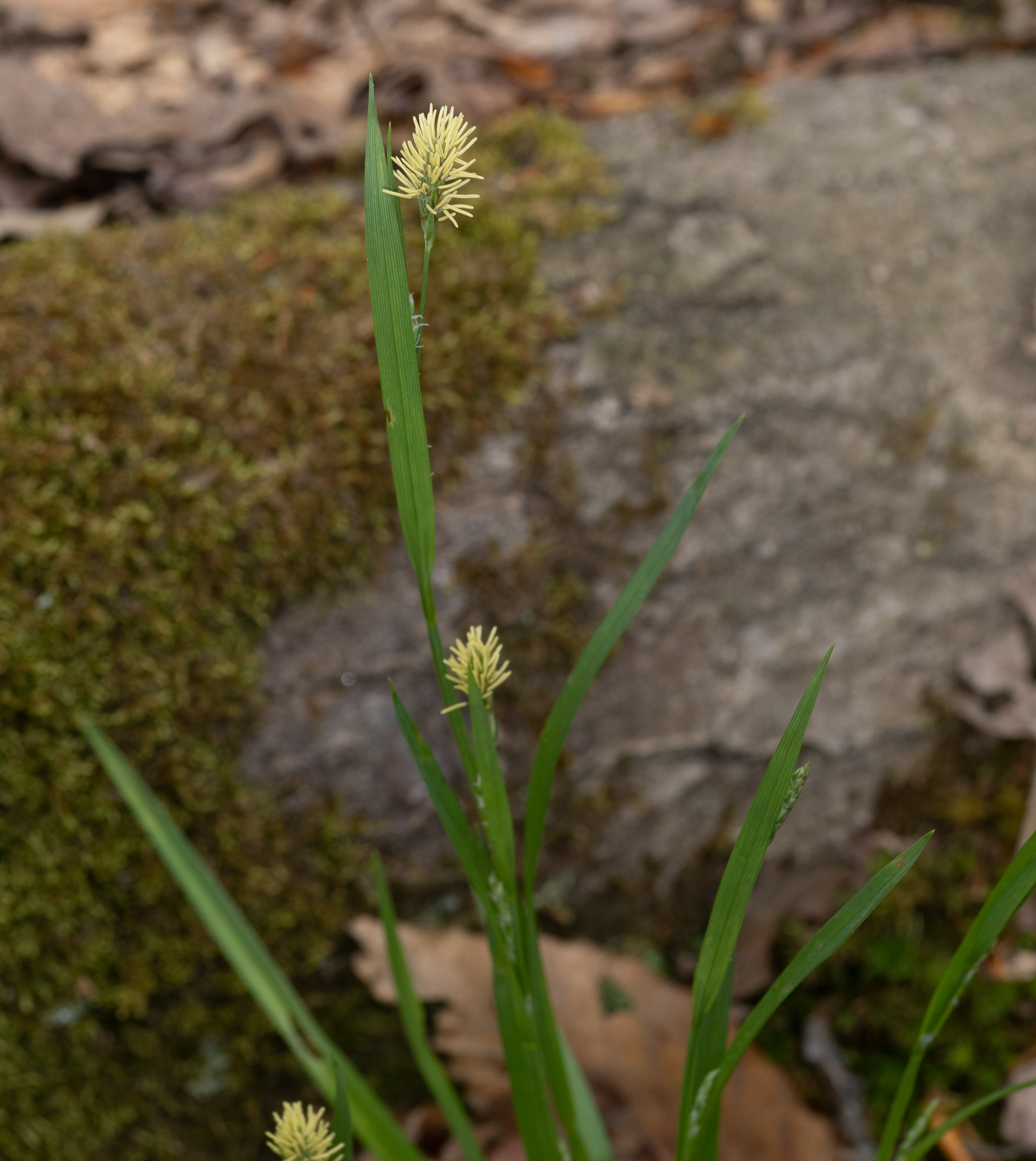
5/12/2023 · Long Reach Preserve, Harpswell, Maine 

1/8/2026 · Nashua River Rail Trail, Groton, Groton, Massachusetts 
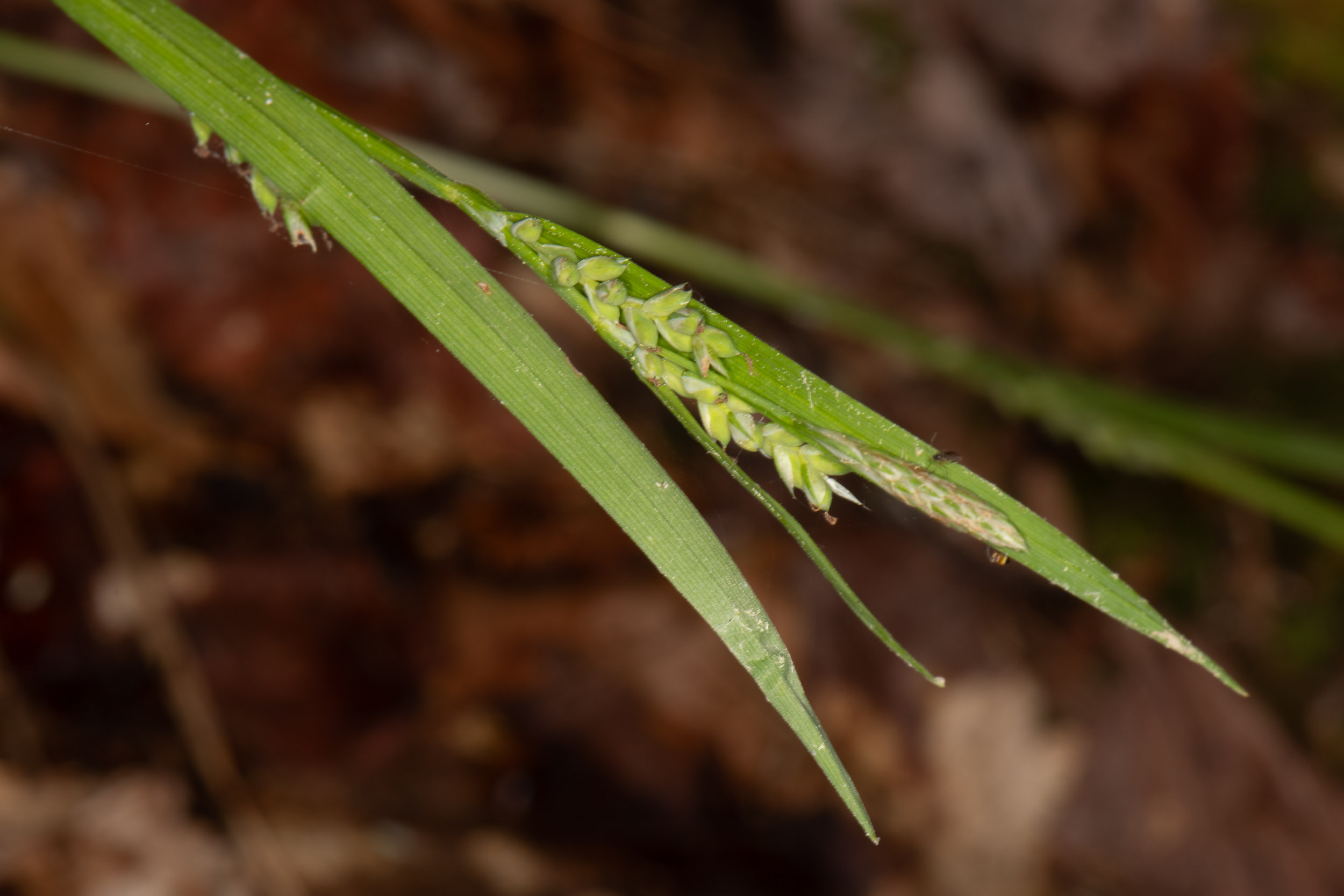
6/19/2021 · Long Reach Preserve, Harpswell, Maine · ≈ 5 × 3″ (12 × 8.4 cm) 
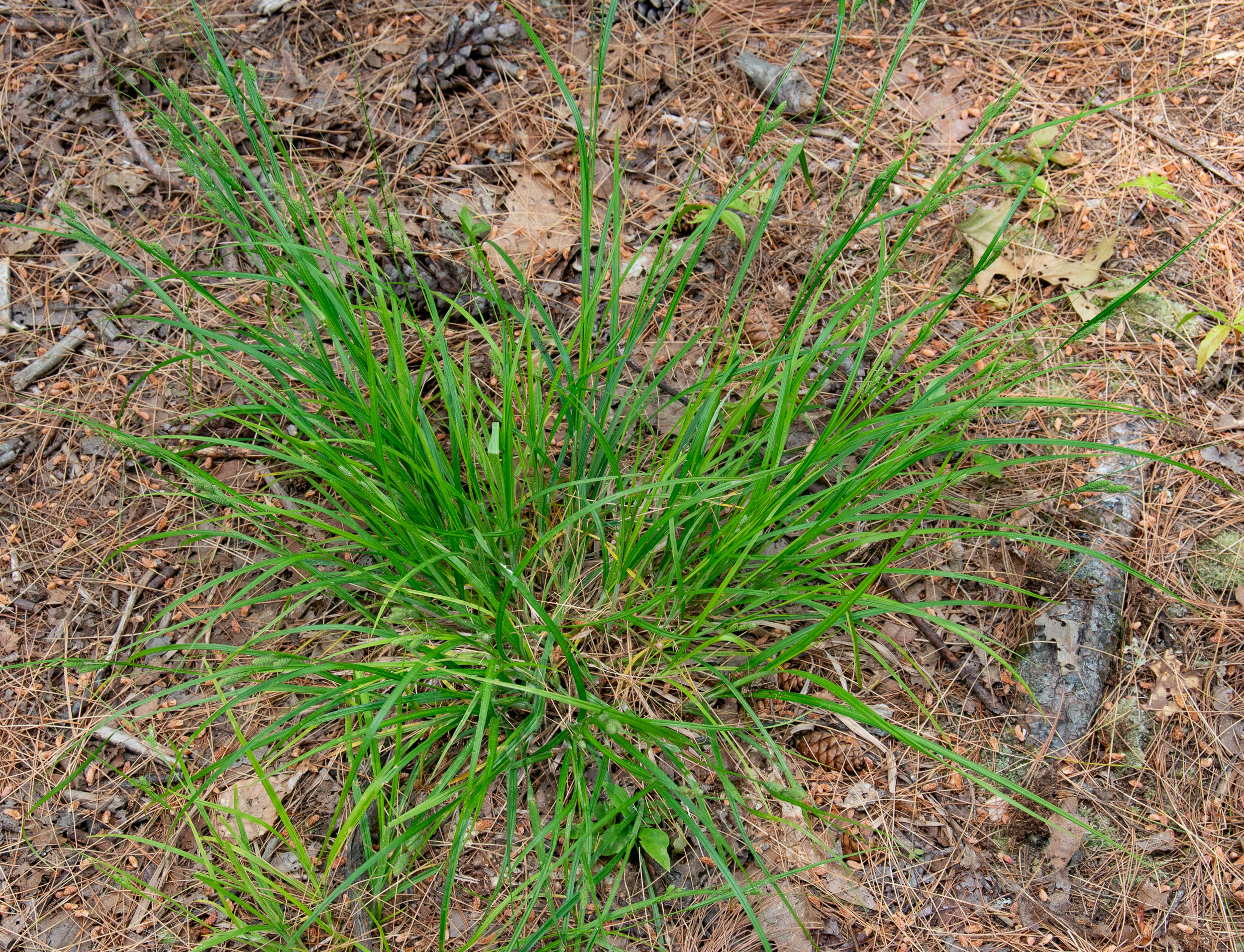
6/19/2021 · Long Reach Preserve, Harpswell, Maine · ≈ 3 × 2½′ (97 × 74 cm) 

6/19/2021 · Long Reach Preserve, Harpswell, Maine · ≈ 4½ × 7″ (11 × 17 cm) 

5/21/2014 · Beaver Brook Conservation Area, Hollis, New Hampshire · ≈ 5 × 8″ (12 × 19 cm) 
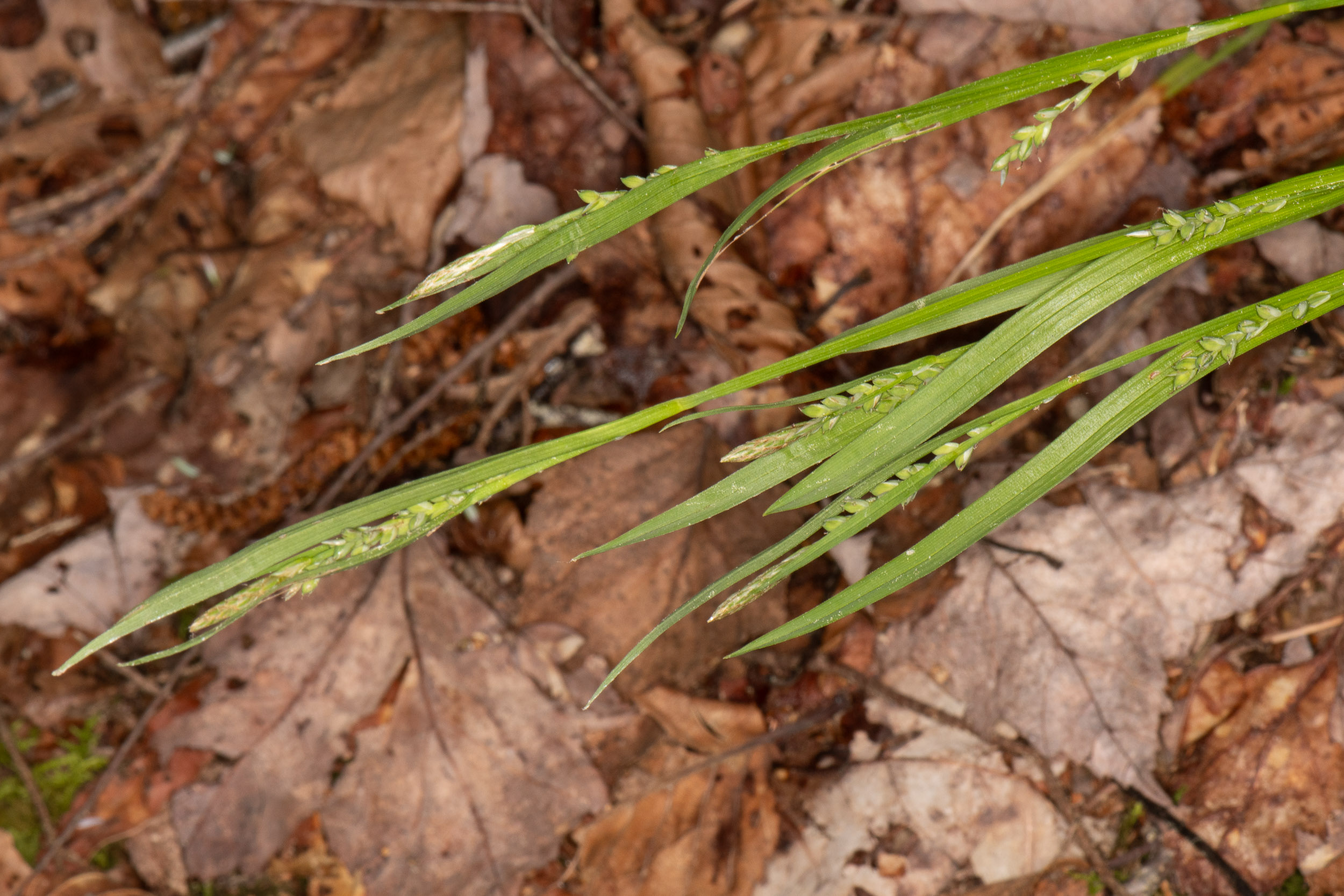
6/19/2021 · Long Reach Preserve, Harpswell, Maine · ≈ 8 × 5″ (20 × 13 cm) 
| Kingdom | Plantae | Plants, but not fungi, lichens, or algae (from Stearn's Botanical Latin) |
| Subkingdom | Tracheobionta | Vascular plants—plants with a “circulatory system” for delivering water and nutrients |
| Division | Magnoliophyta | Flowering plants, also known as angiosperms |
| Class | Liliopsida | Monocots (plants with a single seed leaf); includes the lily family |
| Subclass | Commelinidae | Dayflowers and spiderworts, and several others |
| Order | Cyperales | Flowering plants including grasses |
| Family | Cyperaceae | Sedge family |
| Genus | Carex | The “true” sedges |
| Species | blanda | “Mild, pleasing, or charming“ |
Carex blanda description by Thomas H. Kent, not updated.

© FloraFinder.org. All rights reserved.