Carex gynandra Schwein.
Nodding sedge
These sedges are native to North America.
|
Desperately Seeking Carex With close to 800 species in North America, and 2000 worldwide, many Carex species are difficult to identify. You might want to consult this quick guide to Carex anatomy. |
Plant: Nodding sedge is up to 4½′ (1.4 m) high, though specimens I have seen are a good deal shorter. Stems are triangular in cross section. They usually occur in tufts.
Flowers/seeds: Each stem supports two to five arched, narrow, cylindrical drooping carpellate seed spikes up to 4″ (10 cm) in length and ⅛–¼″ (3–9 mm) in diameter. Each stem also contains up to three staminate spikes.
Leaves: Leaves are U-shaped, grass-like, up to ⅜″ (1 cm) wide.
Carex gynandra is easily confused with, and often found near, C. crinita. “Easily confused” is something of an understatement: distinguishing these species requires a hand lens or scanner and a penchant for obscure botanical terminology. Scholarly papers have been written to provide evidence that they really are different.
 |
Similar species. |

Like most Carex, stems are triangular in cross section. This one is rather squashed from cutting. 

Carpellate spikes (left) are the most prominent. Staminate spikes (right) are smaller and may not persist for as long. 
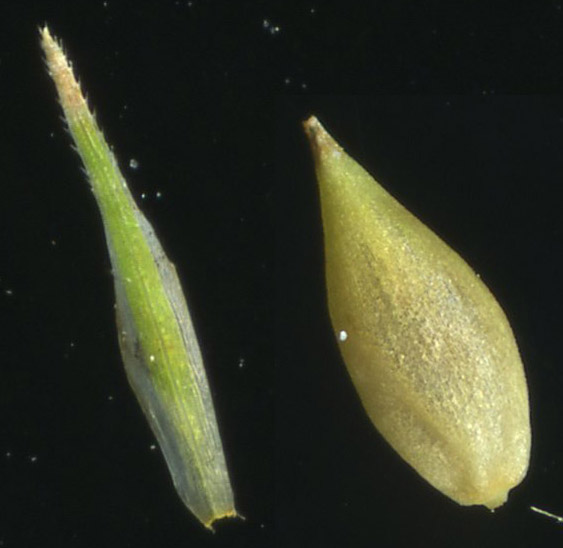
The carpellate spike consists of pistillate scales, (left), with awns that have notched tips; and perigynia (right). Each perigynium houses a developing achene (seed). This plant was found in the fall, but in the spring, tiny pistallate (female) flowers emerge, like sinuous filaments, from the beak of perigynium. 
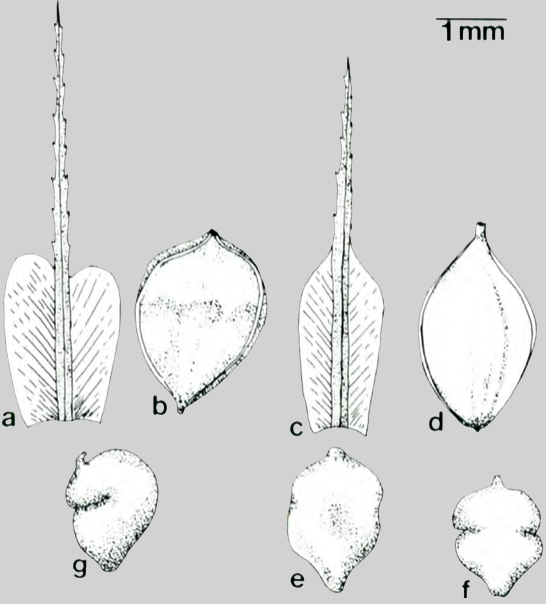
Representative perigynia, achenes, and scales. Carex crinita (left): pistillate scale (a), perigynium (b), achene (g); C. gynandra (right): pistillate scale (c), perigynium (d), achenes (e, g). Standley, Lisa A., “A Clarification of the Status of Carex crinita and C. gynandra,” Rhodora, Journal of the New England Botanical Club, 1983, Vol. 85, No. 841. 
Online References:
Www.biodiversitylibrary.org (“A Clarification of the Status of Carex crinita and C. gynandra,” Rhodora, Journal of the New England Botanical Club, 1983, Vol. 85, No. 841)
References:
Carex crinita Lam. var. gynandra (Schwein.) Schwein. & Torr.

6/16/2013 · Birch Point State Park, Owl’s Head, Maine · ≈ 6 × 7″ (14 × 17 cm) 
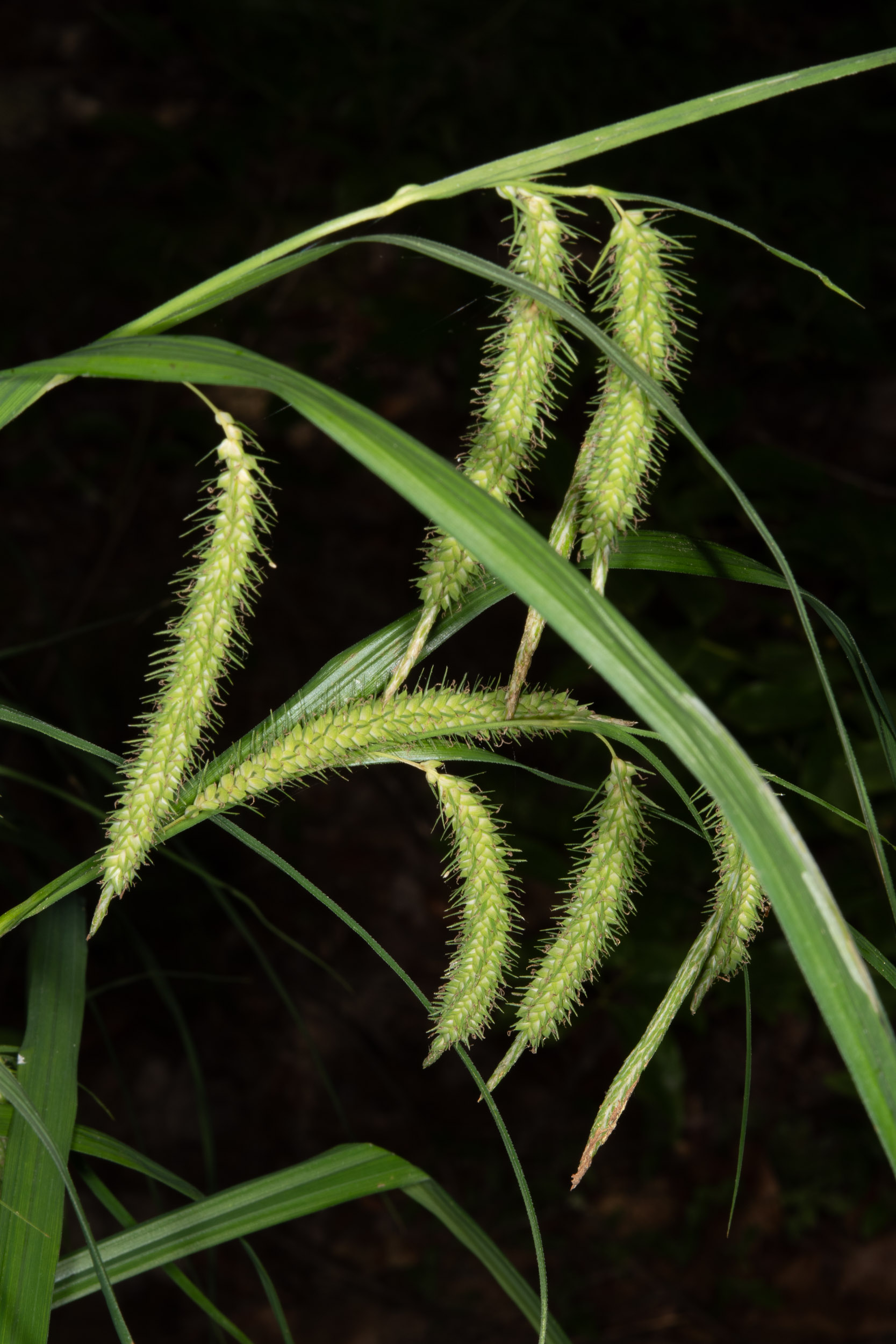
6/26/2024 · Morse Mountain, Phippsburg, Maine · ≈ 5 × 8″ (13 × 20 cm) 

7/6/2017 · Mt. Watatic, access road, Ashby, Massachusetts · ≈ 4 × 6″ (10 × 15 cm) 

7/12/2020 · Harraseeket Trail, Wolfe’s Neck Woods State Park, Freeport, Maine · ≈ 7 × 4½″ (18 × 12 cm) 

8/22/2020 · Warbler’s Way, Moose Alley, Hidden Valley Nature Center, Jefferson, Maine · ≈ 4 × 3½″ (10 × 8.7 cm)  ID is uncertain

7/5/2025 · Cathance River Nature Preserve, Topsham, Maine · ≈ 6 × 9″ (15 × 22 cm) 
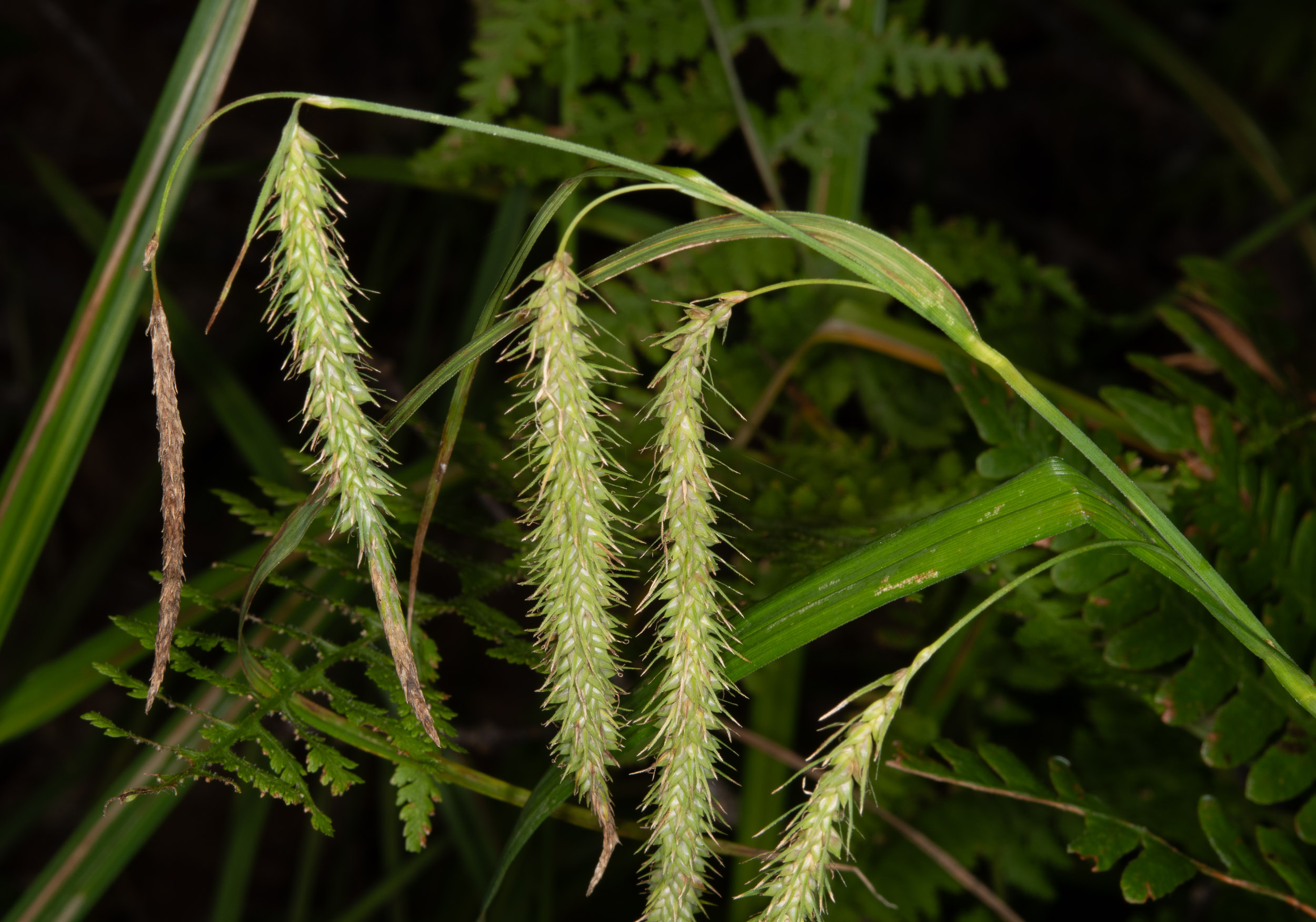
8/22/2020 · Warbler’s Way, Moose Alley, Hidden Valley Nature Center, Jefferson, Maine · ≈ 6 × 4″ (15 × 11 cm) ID is uncertain 

7/23/2017 · Pine Grove Furnace State Park, Pennsylvania · ≈ 4½ × 7″ (12 × 18 cm) 

6/21/2017 · Pearl Hill State Park, Townsend, Massachusetts · ≈ 6 × 10″ (16 × 24 cm) 

8/22/2020 · Warbler’s Way, Moose Alley, Hidden Valley Nature Center, Jefferson, Maine · ≈ 6 × 4½″ (14 × 12 cm) ID is uncertain 
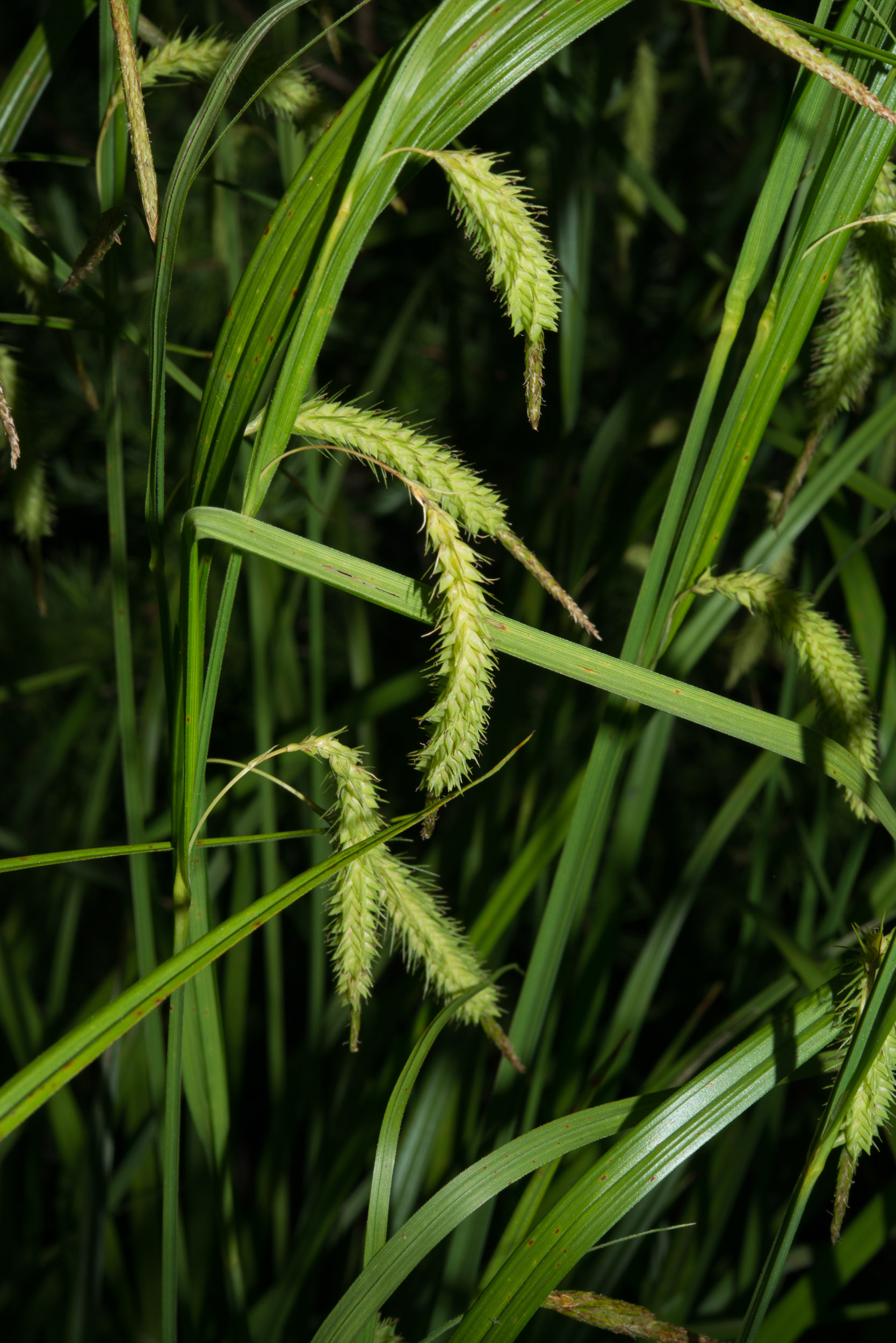
6/16/2013 · Birch Point State Park, Owl’s Head, Maine · ≈ 6 × 9″ (15 × 22 cm) 

6/23/2025 · Otter Brrok Preserve, Harpswell Heritage Land Trust, Harpswell, Maine · ≈ 9 × 6″ (22 × 15 cm) 

7/6/2017 · Mt. Watatic, access road, Ashby, Massachusetts · ≈ 4 × 6″ (10 × 15 cm) 

7/6/2017 · Mt. Watatic, access road, Ashby, Massachusetts · ≈ 3 × 5″ (8.4 × 12 cm) 

6/16/2013 · Birch Point State Park, Owl’s Head, Maine · ≈ 6 × 8″ (14 × 20 cm) 
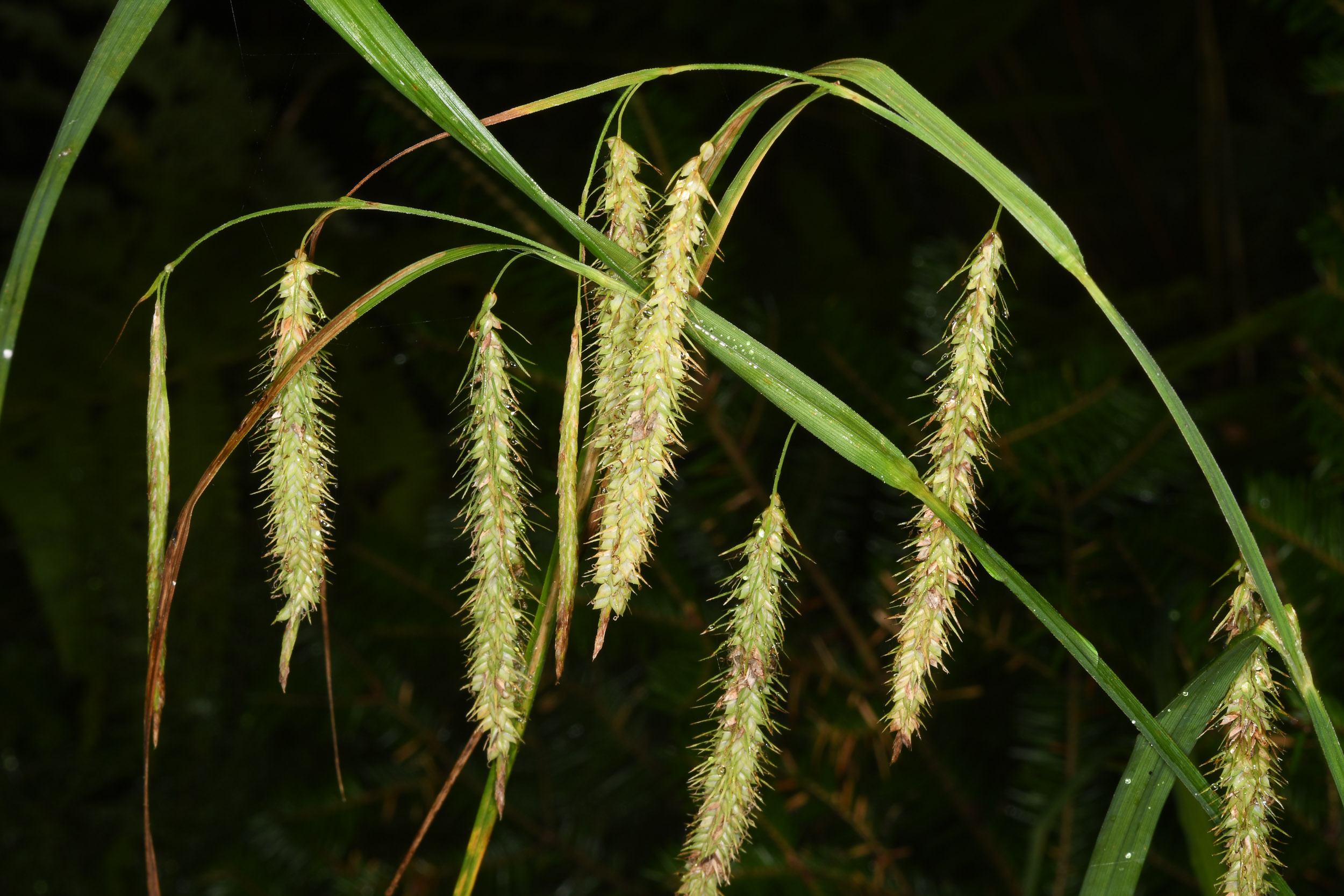
9/18/2016 · Edgar M. Tennis Preserve, Deer I, Maine ID is uncertain 
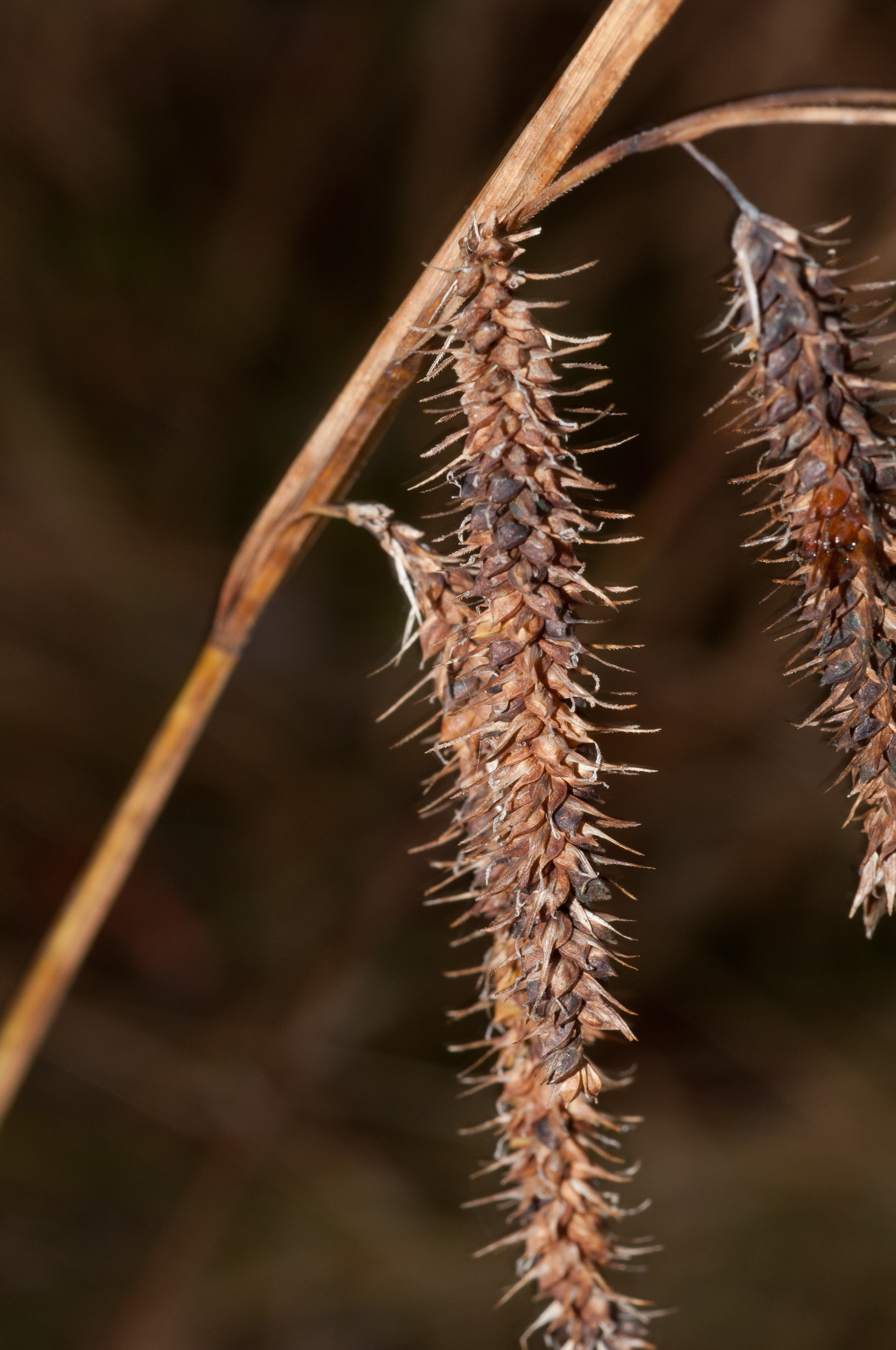
9/29/2012 · Franconia Notch Area, New Hampshire · ≈ 3 × 4½″ (7.9 × 11 cm) ID is uncertain 

7/23/2017 · Pine Grove Furnace State Park, Pennsylvania · ≈ 5 × 6″ (13 × 16 cm) 

8/8/2015 · Mt. Wachusett · ≈ 7 × 5″ (18 × 12 cm) ID is uncertain 

7/12/2020 · Harraseeket Trail, Wolfe’s Neck Woods State Park, Freeport, Maine · ≈ 5 × 6″ (13 × 16 cm) 
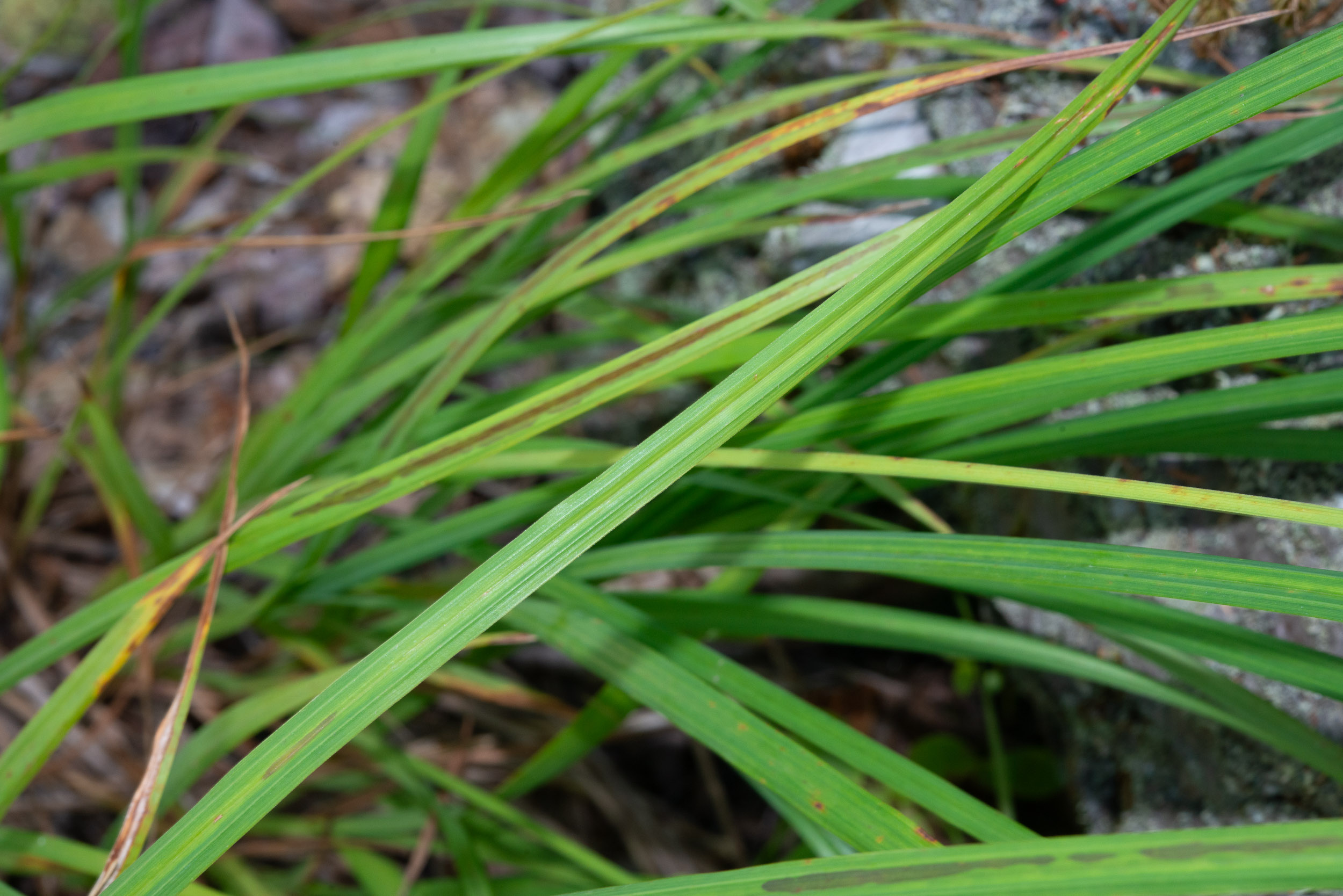
8/8/2015 · Mt. Wachusett · ≈ 9 × 6″ (22 × 15 cm) ID is uncertain 
| Kingdom | Plantae | Plants, but not fungi, lichens, or algae (from Stearn's Botanical Latin) |
| Subkingdom | Tracheobionta | Vascular plants—plants with a “circulatory system” for delivering water and nutrients |
| Division | Magnoliophyta | Flowering plants, also known as angiosperms |
| Class | Liliopsida | Monocots (plants with a single seed leaf); includes the lily family |
| Subclass | Commelinidae | Dayflowers and spiderworts, and several others |
| Order | Cyperales | Flowering plants including grasses |
| Family | Cyperaceae | Sedge family |
| Genus | Carex | The “true” sedges |
| Species | gynandra | Speculative: “gyn-” is Latin for woman; “andros” for man. This might refer to that male and female flowers occur on separate spikes |

Carex gynandra description by Thomas H. Kent, not updated.

© FloraFinder.org. All rights reserved.