Carex hormathodes Fernald
Marsh straw sedge
Marsh straw sedge is native to coastal areas of eastern North America.
|
Desperately Seeking Carex With close to 800 species in North America, and 2000 worldwide, many Carex species are difficult to identify. You might want to consult this quick guide to Carex anatomy. |
Plants: Dense tufts are 8–31″ (20–80 cm) tall.
Leaves: 1/32–⅛″ (1–3 mm) wide.
Flowers: Inflorescences are nodding, ⅞–2 ⨉ ⅛–⅝″ (2.5–6 cm ⨉ 5–16 mm), with three to nine distinct spikes Each spike is ellipsoid, ⅛–½ ⨉ ⅛–¼″ (6–15 ⨉ 4–8 mm). Pistillate scales are shorter and much narrower than the perigynia, and red-brown. Perigynia are reddish-brown, and ⅛–3/16 ⨉ ~1/16″ (3.8–5.6 ⨉ 1.9–2.8 mm) in size.
Fruits: Achenes are elliptic, 1/32–1/16 ⨉ ~1/32″ (1.5–1.8 ⨉ 0.9–1.1 mm).
Habitats: Atlantic coast beaches, and saline to fresh-tidal marshes.
Online References:
References:
Carex straminea Willd. ex Schkuhr var. invisa W. Boott
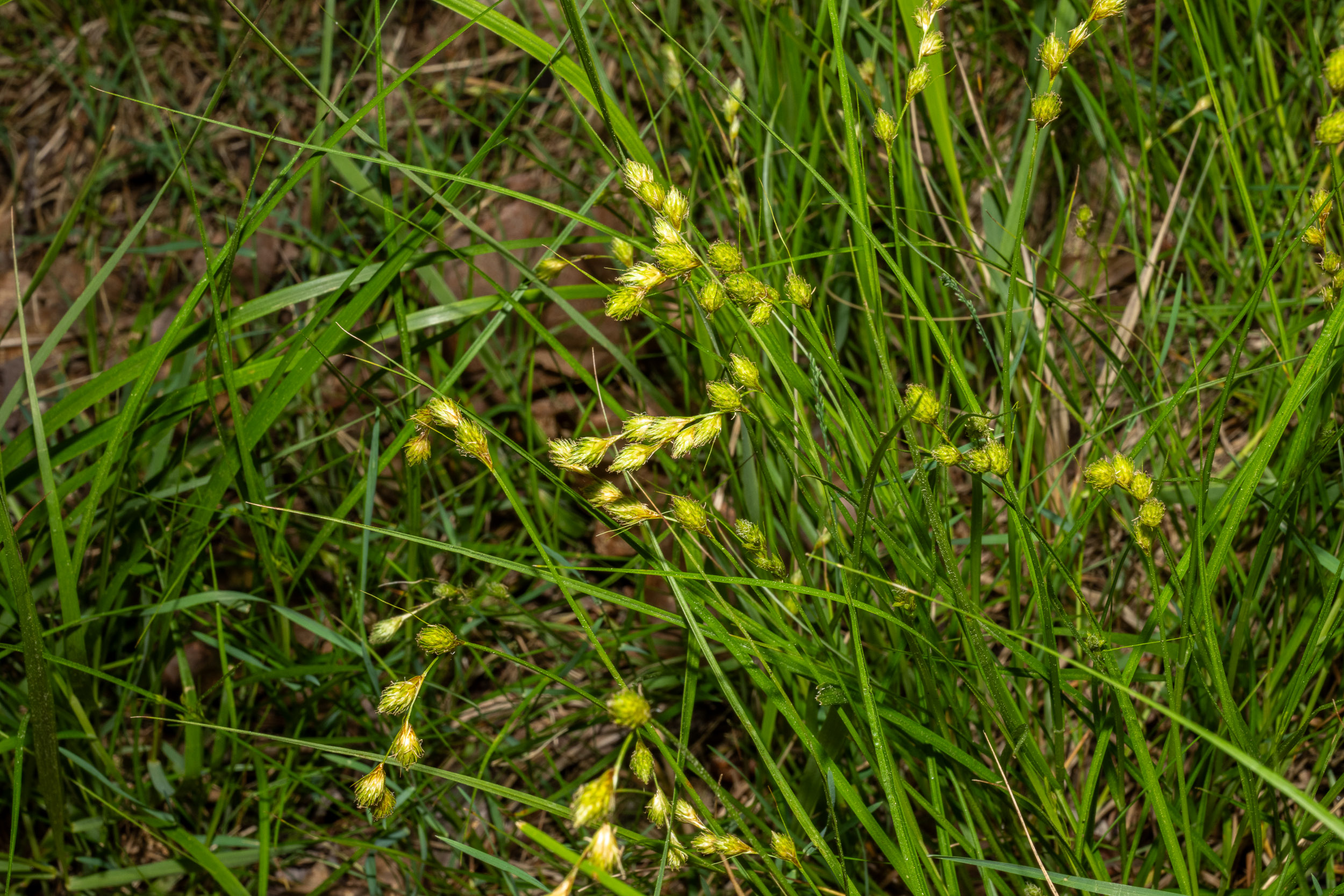
6/17/2025 · Devil’s Back, Orr’s Island, Maine · ≈ 11 × 8″ (28 × 19 cm)  ID is uncertain
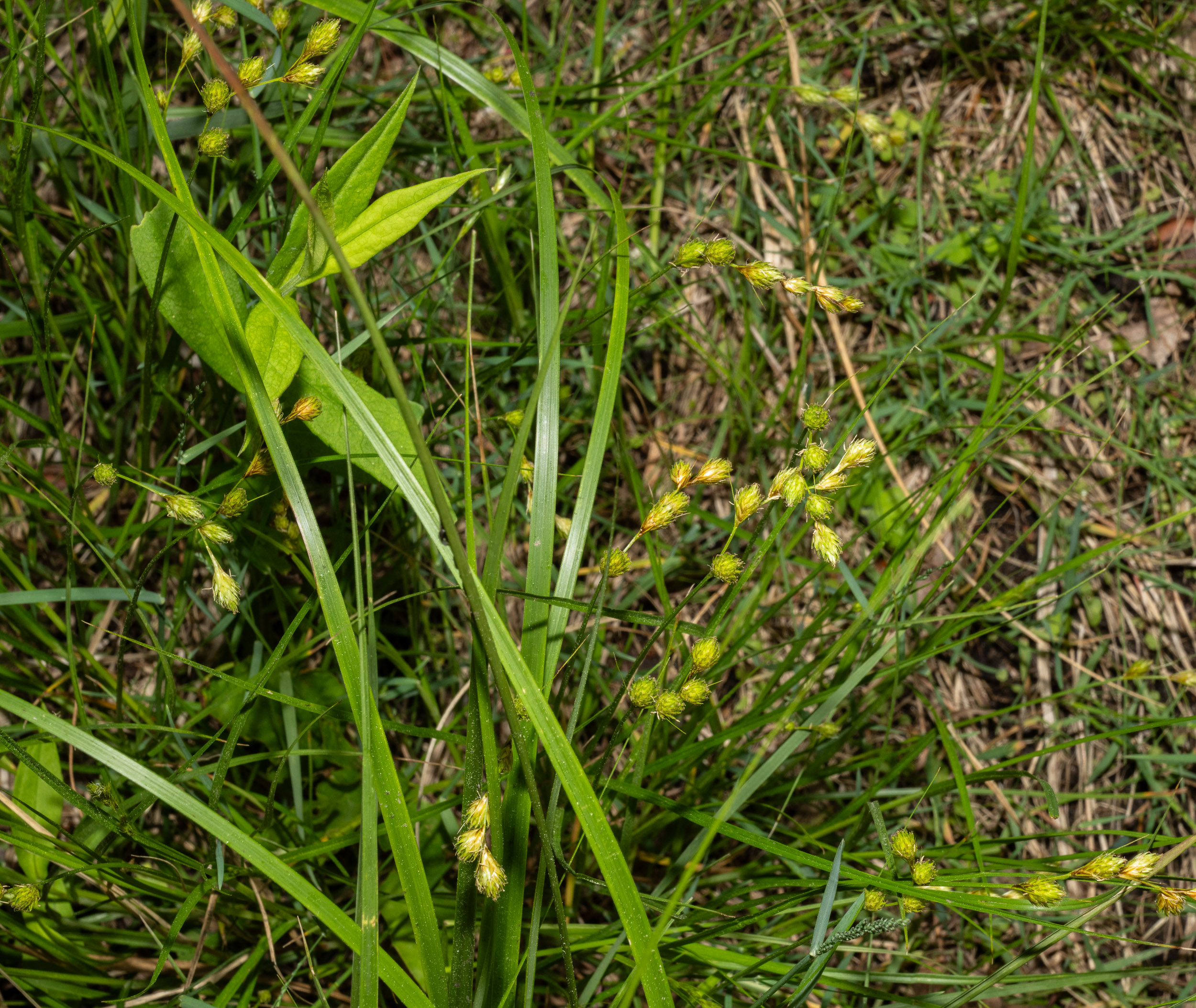
6/17/2025 · Devil’s Back, Orr’s Island, Maine · ≈ 10 × 8″ (25 × 21 cm) ID is uncertain 
| Kingdom | Plantae | Plants, but not fungi, lichens, or algae (from Stearn's Botanical Latin) |
| Subkingdom | Tracheobionta | Vascular plants—plants with a “circulatory system” for delivering water and nutrients |
| Division | Magnoliophyta | Flowering plants, also known as angiosperms |
| Class | Liliopsida | Monocots (plants with a single seed leaf); includes the lily family |
| Subclass | Commelinidae | Dayflowers and spiderworts, and several others |
| Order | Cyperales | Flowering plants including grasses |
| Family | Cyperaceae | Sedge family |
| Genus | Carex | The “true” sedges |
| Species | hormathodes | From Greek hormanthodes, ”necklace-like,“ for the spikes |

Carex hormathodes description by Thomas H. Kent, not updated.

© FloraFinder.org. All rights reserved.