Conocarpus erectus L.
Buttonwood, button mangrove, green buttonwood
Buttonwood is found in Bermuda, the coastal swamps of Florida, the Caribbean, and Central and South America. It is also found in the Galápagos Islands, but it does not occur in Mexico. It has horticultural value as a landscape planting, and for bonsai.
Plants: This drought-tolerant evergreen is 30–40′ (9.1–12 m) high and 20–30′ (6.1–9.1 m) around. Trees are erect, with an irregular branched crown. Bark is dark brown, with ridges and scales.
Leaves: Alternate and entire, with short petioles. Each leaf is elliptic to oval to lanceolate, and 1¼–4 ⨉ ½–1¼″ (3.2–10 ⨉ 1.3–3.2 cm) in size.
Flowers: Clusters of tiny white fuzzy-looking spherical flowers are 1–3″ (2.5–7.6 cm) long, and not showy.
Fruits: Small spherical clusters of reddish-brown fruits, looking like cones, appear interspersed among the leaves, attached to the stems. Each fruit is scaly, and has two wings.
Habitats: Brackish water in tidal lagoons and bays, and sometimes in inland habitats.
 |
Red, black, white, and button mangroves. |
Online References:
Conocarpus erectus L. var. sericeus Fors ex DC.
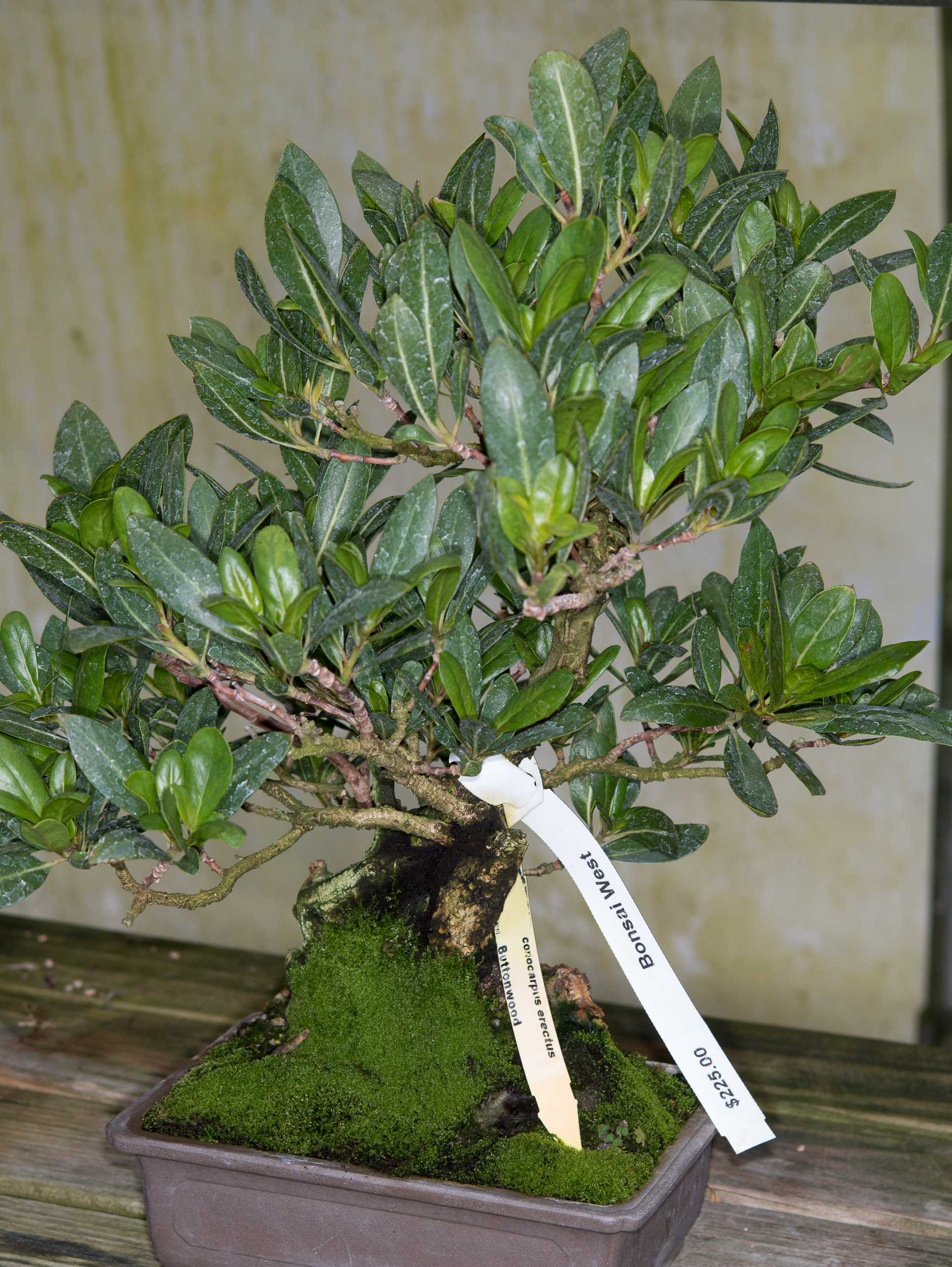
Bonsai. · 12/12/2016 · Bonsai West, Littleton, Massachusetts · ≈ 1 × 1½′ (34 × 46 cm) 
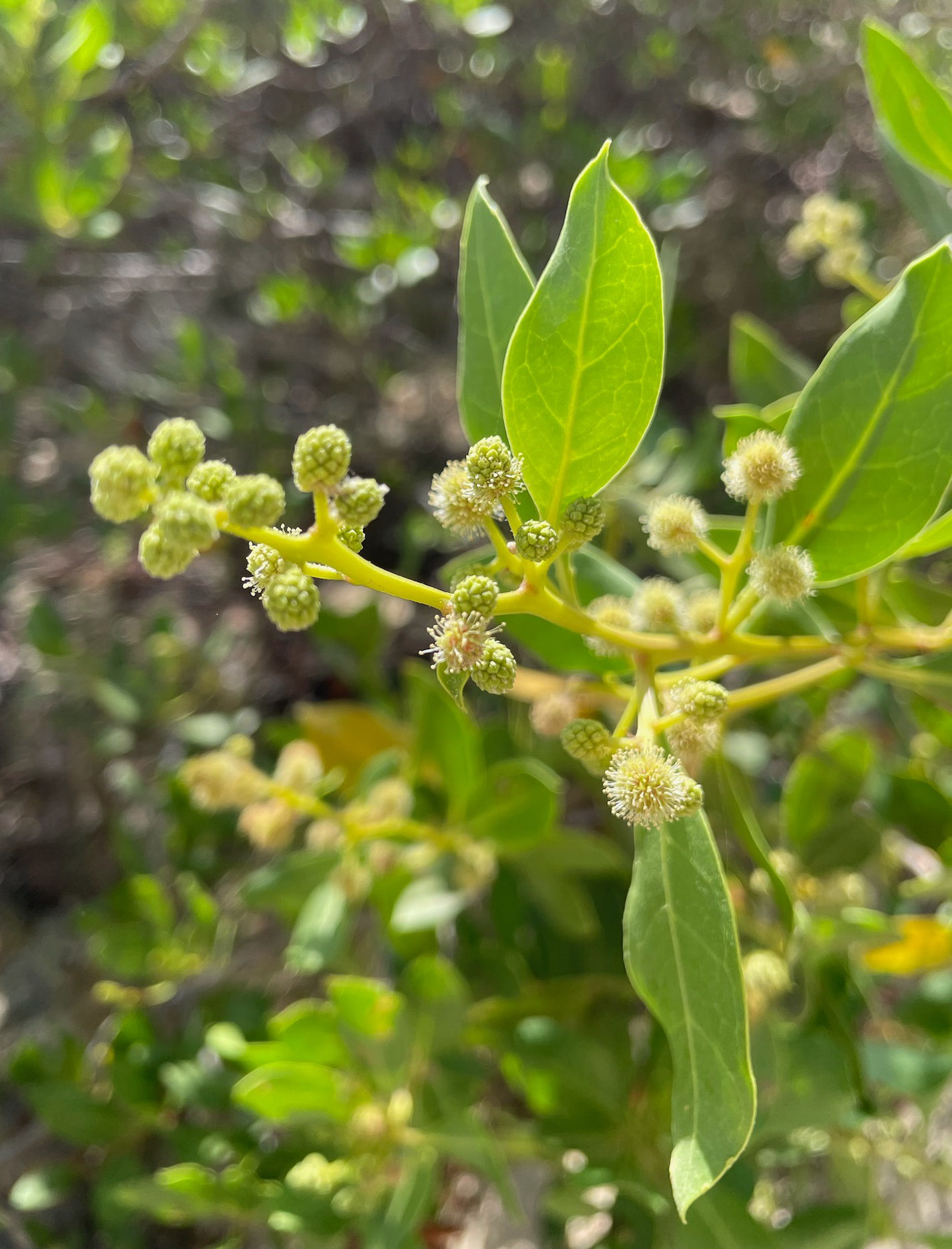
6/8/2024 · Anguilla · By Heather A. Kent 

6/8/2024 · Anguilla · By Heather A. Kent 
| Kingdom | Plantae | Plants, but not fungi, lichens, or algae (from Stearn's Botanical Latin) |
| Subkingdom | Tracheobionta | Vascular plants—plants with a “circulatory system” for delivering water and nutrients |
| Division | Magnoliophyta | Flowering plants, also known as angiosperms |
| Class | Magnoliopsida | Dicotyledons—plants with two initial seed leaves |
| Subclass | Rosidae | Roses, legumes, proteas, dogwoods, hydrangeas, mistletoes, euphorbias, grapes, many more |
| Order | Myrtales | Includes myrtles, leadwoods, loosestrifes, pomegranates, evening primroses, many others |
| Family | Combretaceae | Various trees, shrubs and lianas, including leadwood, other tropical and subtropical plants |
| Genus | Conocarpus | From the Greek κονος (konos), “cone,” and καρπος (karpos), “fruit” |
| Species | erectus | “Upright” |

Conocarpus erectus description by Thomas H. Kent, not updated.

© FloraFinder.org. All rights reserved.