Conocarpus erectus L.
Buttonwood, button mangrove, green buttonwood
Red, black, white, and button mangroves
Avicennia germinans
Rhizophora mangle
Laguncularia racemosa



|
Conocarpus erectus L. Buttonwood, button mangrove, green buttonwood Red, black, white, and button mangroves | |||
Avicennia germinans |
Rhizophora mangle |
Laguncularia racemosa |
|
|---|---|---|---|
| Common Name | |
|
|
| Plant | Shrubs or small trees up to 82′ (25 m) tall. While other mangroves grow on prop roots, black mangove does not. Instead, roots are equipped with pneumatophores, emerging upward like spears from the wet ground or water, or from low on the trunk. Trunks and heartwood are dark brown to black. Red, black, and white mangroves tend to occur together, with the red mangroves closest to the water, black between, and white further inland. | A shrub or tree 9½–23′ (3–7 m) tall, rarely reaching up to 79′ (24 m). Mature bark is gray and furrowed. Numerous prop roots (rhizophores) hang from the trunk and lower branches, helping to stabilize the plant, provide aeration, and exude excess salt. | Shrub or small tree 6½–49′ (2–15 m) tall. Back is gray-brown or reddish, with fissures. While red mangroves have hanging prop roots, and black mangroves have upward-pointing pneumatophores, white mangrove may have either of these in response to varying environmental conditions. Red, black, and white mangroves tend to occur together, with the red mangroves closest to the water, black between, and white further inland. |
| Leaves | Simple, lanceolate to elliptic, opposite, glossy leaves are 1¾–6″ (4.5–15 cm) long. Each leaf is thick and leatherlike, dark green above and gray to white below. Leaves excrete excess salt, so they may appear white. | Opposite, simple, obovate to elliptic. Margins are smooth and rolled under. Leaves are thick, leathery, and 2½–5 ⨉ ⅜–1¼″ (6.5–12 ⨉ 1–3.5 cm) in size. | Opposite, simple, oblong to oval, yellow-green, and 2–3½″ (5.5–9 cm) long. (Wikipedia lists leaf sizes of 4½–7 ⨉ ⅞–1¾″ (12–18 ⨉ 2.5–5 cm).) Each leaf lacks veins, and has a pair of raised glands, loosely resembling mosquito bites, at its base. Leaf edges, both above and below, have many tiny pits. Leaf petioles are ⅜–½″ (1–1.3 cm) long. |
| Flowers | White fragrant flowers with yellow centers appear in clusters at branch tips. Each flower has four lobes and four stamens, and is about ⅜″ (1 cm) around. They appear year round. | Small and pale yellow, present year round. | Panicles of greenish white fragrant flowers 2½–3″ (7–8 cm) long appear on axils or branch tips. Each bell-shaped flower has five petals and ten stamens, and is up to ⅛″ (5 mm) in size. |
| Fruit | Fruits—flattened capsules—drop from the tree, with seeds that germinate while the fruit floats on the water, a process called vivipary. | Called propagules, seeds in the fruits become fully mature before dropping to water, where they float to new locations. Fruits resemble green beans, and are 1–2″ (2.5–5 cm) long. | Reddish-brown drupes resembling lenses in shape are about ⅜–¾″ (1.2–2 cm) long, and ridged along the longer dimension. |
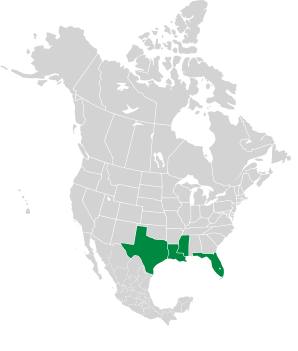
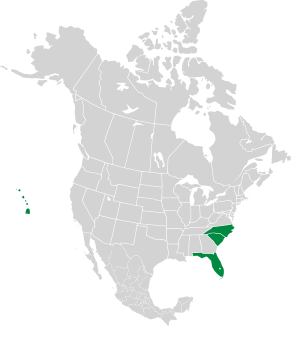
| Range/ Zones |
|
|
|
| Habitats | Just above the high tide line in saline (but not overly saline) waters. | Coastal zones in tropical and subtropical regions. | Bays, lagoons, and tidal creeks, well above high tide. |


Conocarpus erectus description by Thomas H. Kent, not updated.
© FloraFinder.org. All rights reserved.