|
Corema conradii (Torr.) Torr. ex Loudon
Broom crowberry
These unrelated species, both commonly called crowberries, are closely similar, and sometimes
appear together—one might say that crowberries of a feather flock together
|
| |
Empetrum nigrum |
You are here
Corema conradii |
| Common Name |

black crowberry |

broom crowberry |
| Plant |
Ground-hugging, dense, somewhat mosslike plant rarely more than 6″ (15 cm) in height. |
Up to 2′ (60 cm) high, forming scattered plants or sometimes dense stands. The habit is shrublike. Bark is gray to orange-red. |
| Leaves |
Needlelike alternate green leaves, each ⅛–¼″ (3–8 mm) long, appear on long shoots. In cross section, needles are deeply grooved, with their edges rolled under. Compared to broom crowberry, leaves are more densely spaced. |
Yellow-green, with linear needle-like leaves. Each leaf is up to 1/16–3/16 ⨉ ~1/32″ (3–6 ⨉ 0.5–0.8 mm), and has a leaf stalk. There are 2-4 leaves per node. |
| Flowers |
Inconspicuous, purplish brown, with one or both sexes appearing on a given plant. |
Tiny, reddish or purplish sepals, appearing in April to August. |
| Fruit |
Juicy rounded black berries (sometimes red) ⅛–3/16″ (4–6 mm) around, each containing 6-9 white seeds. |
Tiny gray drupes under 1/16″ (2 mm). |
| Range/ Zones |
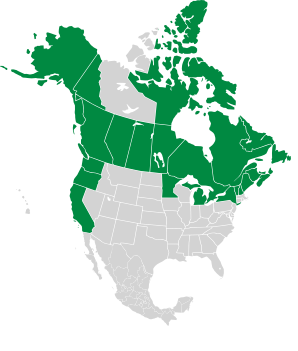
|
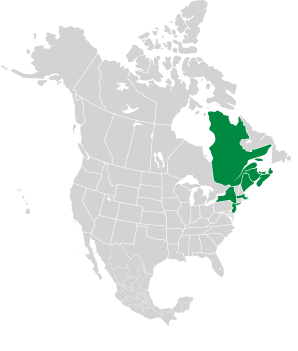
|
| Habitats |
Acid peat bogs, cold forests, in northern and polar regions. |
Grasslands, sandplains and barrens, shrublands, thickets, and rocky plateaus such as hilltops. |
© FloraFinder.org. All rights reserved.