Eurosta solidaginis
Goldenrod gall fly
The goldenrod gall fly creates spherical galls on several goldenrod species, most commonly on Solidago canadensis, S. gigantea, and S. altissima. Using its ovipositor, the female fly inserts eggs into developing buds. When they hatch, the larvae secrete chemicals that cause the plant to swell, producing a hardened round home for the larvae, as well as a food supply. Goldenrod gall flies are North American natives.
Identification: Galls are rounded, quite hard, and ⅜–¾″ (1–2 cm) in diameter. They are shiny green, with short hairs, turning brown in the fall. They are hardy against snow and ice in the winter, and the larvae resist freezing by creating sorbitol and glycerol, natural antifreezes. If they survive freezing and predation over the winter, they bore their way out in the spring.
Habitats: Goldenrod colonies from southern Canada to the southern United States border.
Online References:

10/31/2010 · Nashua River Rail Trail, Groton Center, Groton, Massachusetts · ≈ 3½ × 3½″ (9.6 × 9.2 cm) 

7/2/2014 · Conservation Area, Shirley St., Groton, Massachusetts · ≈ 5 × 8″ (12 × 19 cm) 

9/7/2021 · Tarbox Preserve, Topsham, Maine · ≈ 3½ × 5″ (9 × 13 cm) 
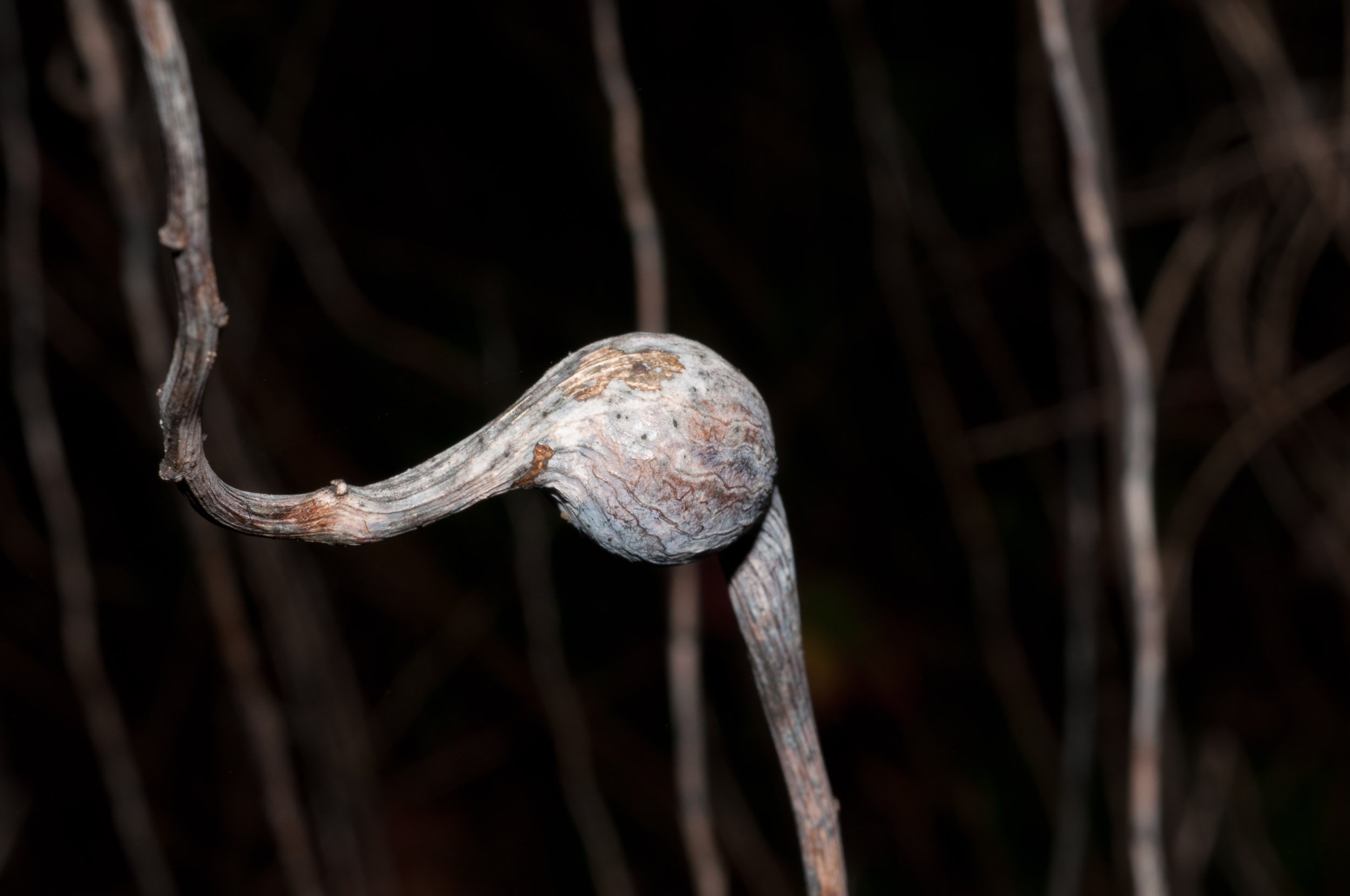
10/31/2010 · Nashua River Rail Trail, Groton Center, Groton, Massachusetts · ≈ 5 × 3½″ (13 × 9.2 cm) 
| Parents | Unknown | Genus is not in the current taxonomy |
| Genus | Eurosta | |
| Species | solidaginis |
Eurosta solidaginis description by Thomas H. Kent, not updated.

© FloraFinder.org. All rights reserved.